
Key Takeaways
-
GHK-Cu (copper tripeptide-1) has the most research backing for midlife skin, but evidence remains limited to small studies; topical results do not prove injectable or systemic peptide therapy is effective or safe.
-
Distinguish between topical cosmetic peptides (serums you apply) and clinician-guided peptide therapy (personalized medical plans); they serve different purposes and have different evidence levels.
-
Midlife skin changes stem from multiple causes—declining collagen, sun damage, hormone shifts, slower cell renewal—so no single peptide fixes everything; a comprehensive approach works best.
-
Peptides should complement, not replace, proven basics like daily sunscreen and dermatologist-recommended treatments such as retinoids; they are a supportive teammate, not the whole strategy.
-
Before choosing a peptide product, verify the specific peptide name on the ingredient list, confirm the delivery route (topical vs. injectable), and consult a qualified clinician if pregnant, breastfeeding, or managing a skin condition.
-
Small human studies of topical GHK-Cu report improvements in wrinkles and skin thickness, but formulation challenges and limited independent repetition mean results should be viewed as promising rather than definitive.
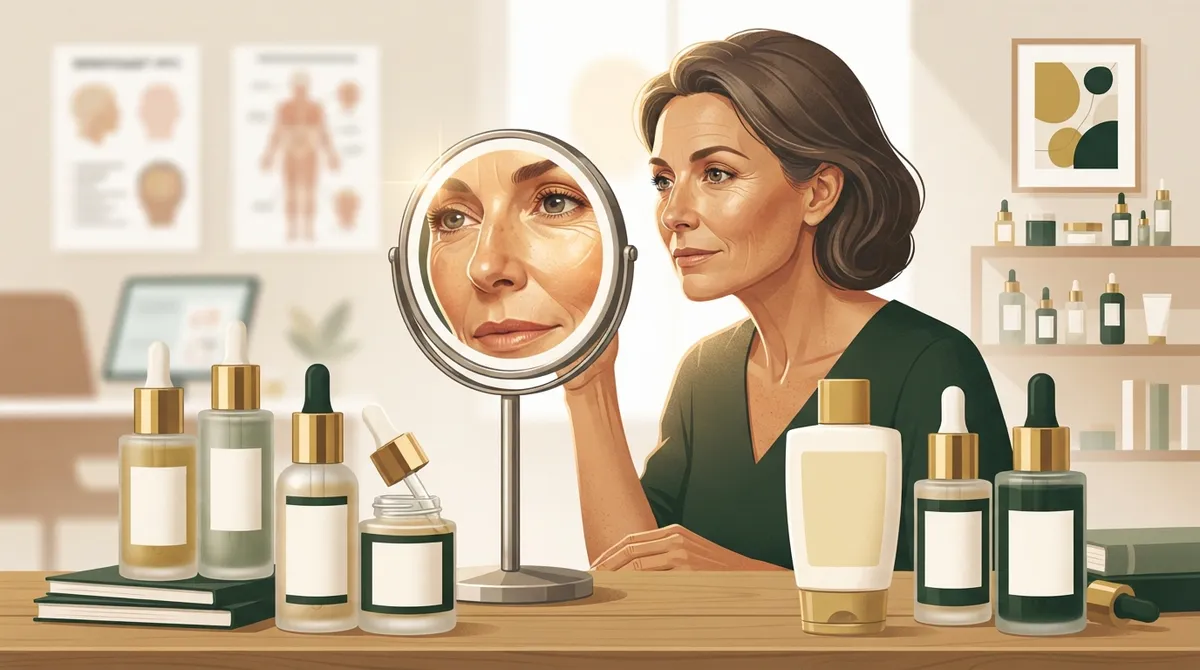
If you’ve looked in the mirror lately and noticed that your skin doesn’t bounce back the way it used to, you’re in good company. Somewhere around our 40s and 50s, skin tends to get thinner, drier, and a little less firm. Fine lines settle in. And suddenly the internet is full of people saying peptides are the answer.
Here’s the friendly truth: peptides are exciting, but the story is more nuanced than most ads suggest. The phrase best midlife skin peptide therapy can mean very different things. It might mean a copper peptide serum you apply to your face. It might mean a clinician-guided peptide plan. Those are not the same thing, and the research does not treat them as the same thing.
In this guide, we’ll walk through what peptides actually do for mature skin, which ones have the most research behind them, and how to tell cosmetic skincare from medical peptide therapy. We’ll keep it simple, honest, and useful. If you want a broader foundation first, our guide on 8 facts that explain what are peptides in 2026 is a great starting point.
What Does “Peptide Therapy” Mean for Midlife Skin?
Peptides are short chains of amino acids, the building blocks of proteins. Your skin is full of them naturally. Some act like tiny messengers that tell skin cells what to do. If you’re curious about the basics, what are peptides is explained well in plain language by WebMD.
When people say “peptide therapy for skin,” they usually mean one of three things:
- Topical cosmetic peptides: Serums and creams you apply to the skin. These are skincare products.
- Clinician-guided peptide therapy: Personalized plans from licensed providers, often based on blood work and your health goals.
- In-office treatments: Procedures a dermatology or aesthetics clinic may offer.
This difference matters a lot. Evidence for a topical ingredient does not prove that an injectable or systemic version is effective or safe. We’ll come back to this point because it’s the most important thing to understand before you spend a dollar.
Why Does Skin Change in Midlife?
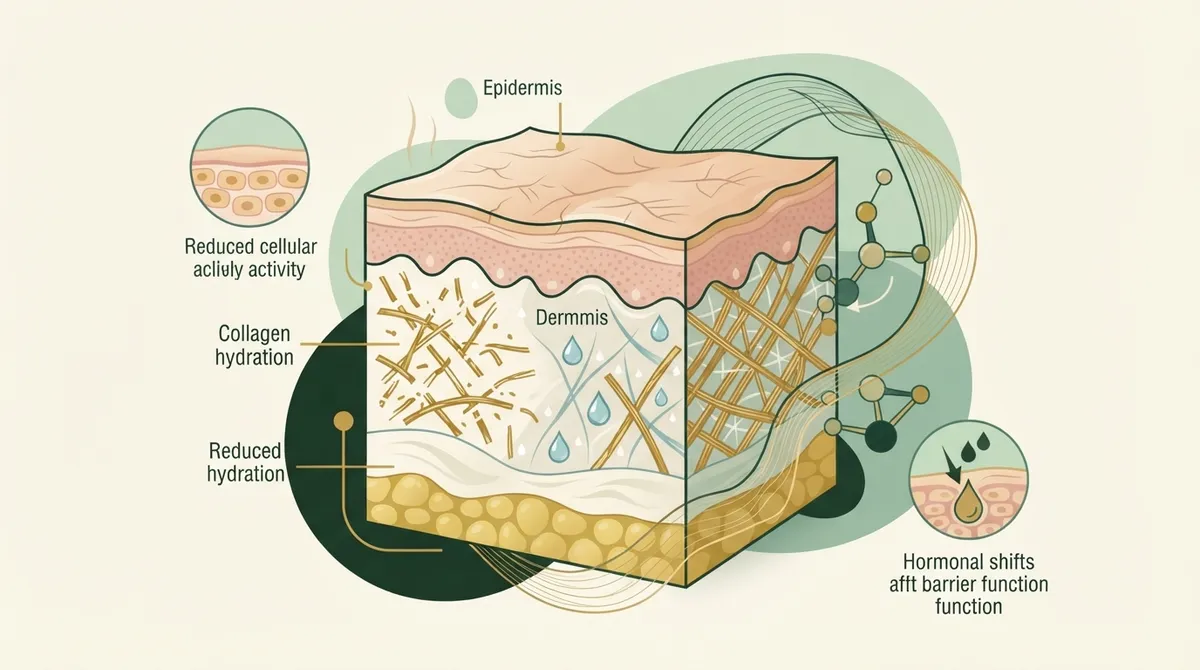
Before choosing any peptide approach, it helps to know what’s actually happening under the surface. Midlife skin changes come from several sources working together.
- Less collagen and elastin: These proteins give skin its firmness and spring. They slowly decline with age.
- Sun damage (photoaging): Years of UV exposure show up as wrinkles, rough texture, and uneven tone.
- Hormone shifts: Changes in estrogen and other hormones can lead to dryness and thinner skin, especially around perimenopause and menopause.
- Slower cell renewal: Skin takes longer to repair itself.
- Lifestyle factors: Sleep, stress, smoking, and nutrition all play a role.
Because the causes are mixed, no single peptide fixes everything. A smart plan looks at the whole picture, which is why a clinician visit can be so helpful.
Which Peptide Has the Most Research for Aging Skin?
If you ask which peptide gets the most attention for skin aging, the answer is GHK-Cu, also called copper tripeptide-1. It’s the most frequently cited peptide in topical skin research.
What the Lab Research Suggests
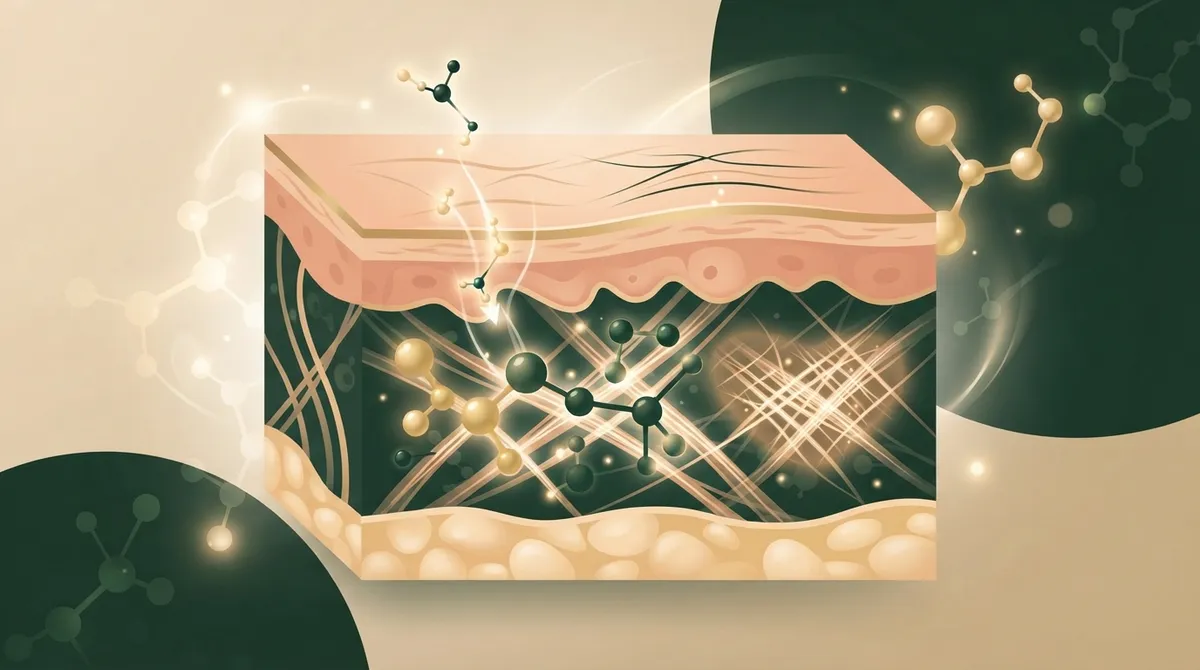
In laboratory settings, GHK-Cu appears to influence collagen and other components of the skin’s supporting structure. That’s the reason it gets so much buzz. But lab findings don’t automatically translate into real-world results on your face. A mechanism seen in a dish does not guarantee a visible change.
What Small Human Studies Report
Some small human studies of topical GHK-Cu report improvements in wrinkles, skin thickness, firmness, and overall appearance. Here are a few data points reported in published reviews:
| Study Detail | What Was Reported | Important Caveat |
|---|---|---|
| 12-week GHK-Cu facial cream in 71 women with photoaging | Improved skin density and thickness; reduced fine lines and wrinkle depth | Small study, not proof of broad effectiveness |
| One-month thigh skin study | Procollagen synthesis increased in 70% of GHK-Cu users, vs. 50% with vitamin C cream and 40% with retinoic acid | Percentages reflect that study’s measured outcome, not a general response rate |
| 8-week twice-daily nano-carrier GHK-Cu | Wrinkle volume reported 31.6% lower than a Matrixyl 3000 comparator and 55.8% lower than control serum; wrinkle depth 32.8% lower than control | Formulation-specific; small evidence base limits generalization |
These numbers are encouraging. But please read them with a calm, curious mind. They come from small studies, and some of the evidence appears in reviews rather than large, independently repeated trials.
The Honest Big Picture
A 2024 review of topical GHK-based anti-wrinkle products pointed out that clinical studies are surprisingly scarce, even though the biological reasoning looks promising. It also noted real formulation challenges, like how well the peptide gets into skin and how stable it stays in a product. You can read the review through the National Library of Medicine database and its related research articles.
So the fair summary is this: GHK-Cu is promising, but not definitive. That’s good news for curiosity and a gentle reminder to keep expectations realistic.
Topical Peptides vs. Clinician-Guided Peptide Therapy
This is where many people get confused, so let’s lay it out clearly.
| Feature | Topical Cosmetic Peptides | Clinician-Guided Peptide Therapy |
|---|---|---|
| How it’s used | Applied to skin as a cream or serum | Prescribed and monitored by a licensed provider |
| Main purpose | Cosmetic appearance of skin | Broader wellness goals, guided by labs and health history |
| Evidence level for skin | Small studies for some ingredients like GHK-Cu | Topical findings do not establish injectable or systemic effectiveness |
| Oversight | Usually none beyond product labeling | Provider evaluation, follow-up, and adjustments |
| Best for | Adding a supportive step to a skincare routine | People wanting a personalized, medically supervised plan |
Notice what the table does not say: that one is automatically “better.” They simply serve different purposes. A topical cosmetic use is also not the same as FDA approval for treating skin aging. The results for a cosmetic ingredient do not establish the safety, effectiveness, or right dose of compounded or injected GHK-Cu.
If you want to understand the safety side of clinician-guided plans, our article Is Peptide Therapy Safe? What You Really Need to Know walks through it step by step.
So, What Is the Best Midlife Skin Peptide Therapy?
Here’s the answer you can feel good about. The best midlife skin peptide therapy is not one magic ingredient. It’s a thoughtful, personalized approach that fits your skin, your health, and your goals.
A strong approach usually includes these pieces:
- A clear goal: Are you focused on fine lines, dryness, firmness, uneven tone, or overall vitality?
- The right category of product: Topical cosmetic peptides for skincare, or clinician-guided therapy for broader wellness goals.
- Proven basics first: Daily sunscreen and established dermatologic care remain the foundation.
- Professional input: A qualified clinician who reviews your history and labs.
- Patience: Skin changes take weeks to months, not days.
For the biggest-picture view of how peptides fit into healthy aging, see How to Pick the Best Peptides for Aging in 2026. And for a skin-specific look, What Peptides Do for Skin: A Real-World Guide for 2026 goes deeper.
Can Peptides Replace Retinol or Sunscreen?
Short answer: no. And that’s okay.
Peptides should not be treated as a replacement for sun protection or evidence-based dermatologic care. Sunscreen remains one of the most important things you can do for midlife skin. Retinoids and other dermatologist-recommended options also have a long track record.
Think of peptides as a possible teammate, not the whole team. They may complement a solid routine, but they shouldn’t push out the basics.
How to Choose a Peptide Product or Program Wisely
With so many options, a little homework goes a long way. Here’s a simple checklist to follow.
- Read the ingredient list. Look for the specific peptide name, such as copper tripeptide-1, rather than vague claims like “peptide complex.”
- Check the intended route. Is it a topical cream, or something meant to be injected? Never assume they’re interchangeable.
- Look at regulatory status. Understand whether a product is a cosmetic, a prescription, or a compounded preparation. Our guide on FDA-Approved vs. Compounded Peptides explains the differences.
- Be skeptical of big promises. Anyone claiming dramatic, guaranteed results is overselling.
- Talk to a qualified clinician. This matters most if you’re pregnant, breastfeeding, managing a skin condition, or considering injections.
Questions to Ask a Clinician Before You Start
Going into an appointment prepared helps you get the most out of it. Consider asking:
- What is my main skin concern, and what is causing it?
- Do you recommend a topical product, a medical plan, or both?
- What does the research say about this specific ingredient and formulation?
- What are the possible side effects, and who should avoid this?
- How will we track whether it’s working?
- What lab work do you recommend first?
If you’d like a ready-made list, 15 Peptide Consultation Questions to Ask in 2026 is a handy companion.
Where Hormones and Whole-Body Wellness Fit In
Skin doesn’t live in isolation. Hormone changes, sleep quality, stress, and nutrition all show up on your face. That’s one reason many people in midlife look at skin as part of a bigger wellness picture rather than a standalone fix.
For women especially, hormone shifts can be a big piece of the puzzle. You may want to explore How to Build a Women’s Wellness Peptide Plan to see how skin goals can fit alongside energy, sleep, and recovery. Men face their own midlife changes, too, and peptides for men may be worth a look.
How Allura Longevity Approaches Midlife Skin Goals
At Allura Longevity, we believe your plan should be built around you, not a one-size-fits-all trend. We offer personalized, medically supervised peptide therapy through telehealth, with licensed providers led by Ashley, a board-certified Family Nurse Practitioner.
Here’s how it works:
- Start with a $50 virtual consultation.
- Complete blood work through LabCorp.
- Receive a customized six-month treatment plan delivered to your home.
- Get ongoing monitoring and adjustments from your provider.
We’re licensed in Florida, Georgia, Texas, Connecticut, Indiana, Maryland, New York, and California. We’re happy to talk through your goals honestly, including what peptides can and cannot do for your skin. You can also learn more about peptides for women on our site.
Your Next Step Toward Healthier-Looking Skin
The best midlife skin peptide therapy is the one that’s honest, personalized, and built on a strong foundation of sun protection and proven care. GHK-Cu is the peptide with the most research attention, and small studies are encouraging. But the evidence is still limited, and topical results don’t prove that injectable or systemic peptide therapy works or is safe.
The good news? You don’t have to figure it out alone. A caring, knowledgeable provider can help you sort through the noise and build a plan that fits your life.
Ready to talk it through? Request a consultation with Allura Longevity today. Spots for new clients are limited each month, and you can reach us at (813) 510-6277.
This article is for educational purposes only and is not medical advice. Please consult a qualified clinician or dermatologist about your specific skin concerns and any treatment decisions.
FAQs
Q: What is the best peptide for midlife skin?
A: GHK-Cu (copper tripeptide-1) is the peptide most often studied for skin aging, and small studies report improvements in wrinkles and skin quality. That said, the evidence is limited and formulation-specific, so it’s best viewed as promising rather than proven. A qualified clinician can help you decide what fits your skin.
Q: Is topical copper peptide skincare the same as injectable peptide therapy?
A: Not at all, and it’s a really important difference! Research on a topical cosmetic ingredient does not show that an injectable or systemic peptide is effective or safe. Always check the route, ingredients, and regulatory status before trying anything.
Q: Is GHK-Cu FDA-approved for skin rejuvenation?
A: Topical cosmetic use isn’t the same as FDA approval as a treatment for skin aging. The results for cosmetic products don’t establish the safety, effectiveness, or proper dose of compounded or injected GHK-Cu, so it’s wise to talk with a clinician first.
Q: Can peptides replace retinol or sunscreen?
A: No, and that’s perfectly fine. Sunscreen and evidence-based dermatologic care stay the foundation of midlife skin health, and peptides are better thought of as a possible add-on, not a substitute.
Q: What should I ask a clinician before trying peptide therapy for skin?
A: Ask about your main concern, the evidence for the specific ingredient, possible side effects, and how progress will be tracked. It’s especially important to speak with a provider if you’re pregnant, breastfeeding, managing a skin condition, or considering injections.





