

Key Takeaways
-
BPC-157, the most marketed peptide for chronic pain, lacks FDA approval and relies mainly on animal studies; the only human study involved just 12 people with no control group, making placebo effects impossible to rule out.
-
Traditional chronic pain treatments like physical therapy, anti-inflammatory medications, and corticosteroid injections have decades of clinical evidence and FDA approval, while experimental peptides remain unproven and carry undefined long-term safety risks.
-
The FDA has flagged safety concerns with compounded peptides including potential immune reactions, product impurities, unclear dosing guidelines, and insufficient data on long-term effects—compounded products lack the standardization of FDA-approved drugs.
-
Different peptides (BPC-157, TB-500, KPV) should not be assumed equivalent; each has unique chemistry and safety profiles, yet none currently have strong controlled human trials proving effectiveness for chronic pain.
-
Before trying any peptide therapy, verify claims use human trials with control groups, check sample sizes, confirm FDA approval for your specific condition, and consult a licensed medical provider to rule out placebo effects.
-
Evidence-based chronic pain management combining proven treatments with personalized medical supervision outperforms experimental peptide protocols; peptides should complement, never replace, proper diagnosis and established clinical care.
If you live with chronic pain, you’ve probably searched online at 2 a.m. looking for something, anything, that might help. Maybe you’ve seen ads for peptide therapy promising to heal joints, calm inflammation, and get you back to your favorite activities. It’s exciting to imagine. But before you get your hopes up (or your wallet out), let’s have an honest, friendly chat about what the science actually says about peptide therapy chronic pain claims, and how it stacks up against tried-and-true pain care.
We’re going to walk through this together, no confusing medical jargon, no scary scare tactics. Just clear facts, so you can make a smart decision with your healthcare provider. And if you’re someone who’s already invested in your wellness journey, whether you’re optimizing your health, aging gracefully, or just trying to feel like yourself again, this guide is for you.

What Does “Peptide Therapy” Actually Mean?
Here’s the first thing to understand: “peptide therapy” isn’t one single treatment. It’s a broad marketing term that covers dozens of different peptides, each with its own research, risks, and rules. Some peptides, like those used for weight loss or hormone support, have strong clinical backing. Others, especially the ones marketed for chronic pain, are still in early, experimental stages.
Think of it like the word “medicine.” Aspirin and chemotherapy are both medicine, but they’re wildly different in evidence, safety, and approval status. The same logic applies here. If you want to understand the basics before diving deeper, check out this helpful breakdown of 8 Facts That Explain What Are Peptides in 2026.
Why BPC-157 Gets So Much Attention
BPC-157 is the peptide most often linked to chronic pain and injury recovery marketing. It’s promoted for helping joints, tendons, and soft tissue heal faster. Sounds amazing, right? Here’s the catch: most of that research comes from animal studies, not humans.
There is one small human report worth mentioning. A 2021 retrospective study looked at 12 people who received intra-articular BPC-157 injections for chronic knee pain. Eleven of them reported relief lasting more than six months. That sounds promising on the surface. But this study had no control group, was very small, and looked backward at results instead of testing them in a controlled way. That means we can’t rule out a placebo effect, and we definitely can’t call it proof that BPC-157 works for everyone.
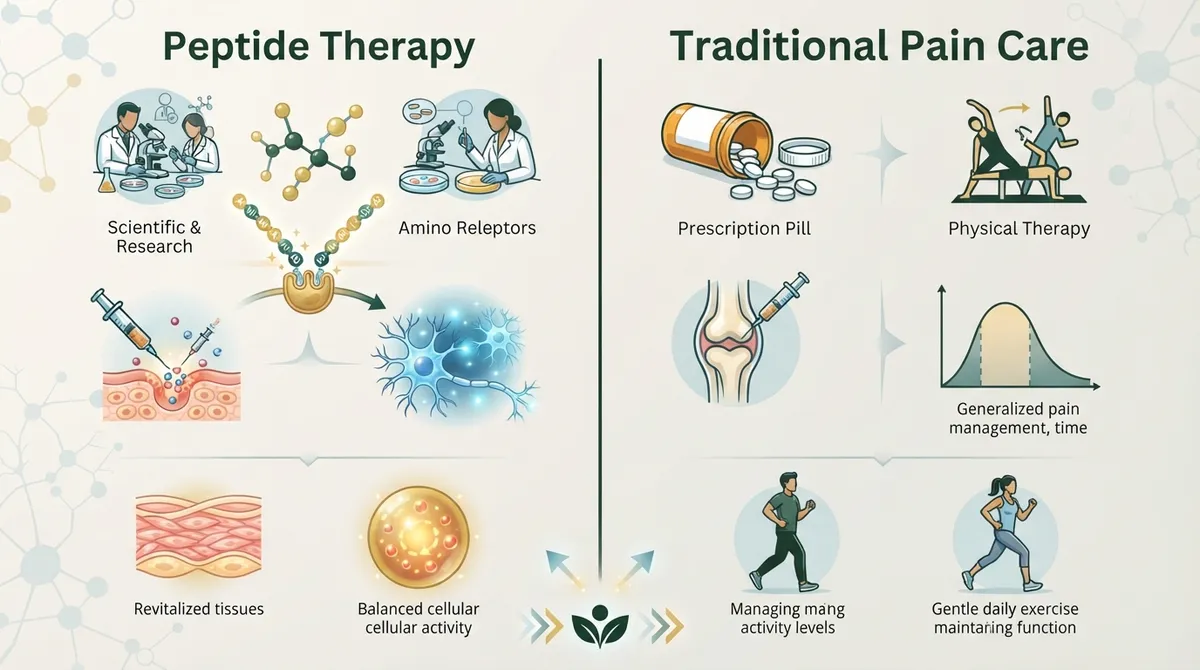
Peptide Therapy vs. Traditional Chronic Pain Treatments: A Side-by-Side Look
Let’s put things in perspective. Traditional chronic pain treatments have decades of research behind them. Experimental peptides, on the other hand, are still being studied. Here’s a simple comparison to help you see the difference.
| Factor | Traditional Pain Treatments | Experimental Peptides (e.g., BPC-157) |
|---|---|---|
| FDA Approval | Many options are FDA-approved | Not FDA-approved for chronic pain |
| Human Clinical Trials | Large, controlled studies | Very limited, mostly small or preclinical |
| Safety Data | Well established long-term | Insufficient, especially for injections |
| Standard of Care Status | Yes, recommended by pain specialists | No, considered experimental or wellness-based |
| Regulation of Products | Strict manufacturing standards | Compounded products face safety concerns |
This doesn’t mean peptides have no future in pain care. It just means we’re not there yet, at least not for chronic pain specifically. If you’re curious how peptide therapy fits into a broader wellness routine, our guide on How to Start Peptide Therapy Safely and See Real Results is a great next read.
What About TB-500 and KPV?
You may have also heard about TB-500 and KPV floating around chronic pain and recovery forums. Like BPC-157, these peptides are often discussed for tissue repair and inflammation. But here’s the important part: evidence for one peptide should never be applied to another.
Each peptide has its own unique chemical structure, mechanism, and safety profile. Just because BPC-157 shows some early promise doesn’t mean TB-500 or KPV automatically work the same way. Right now, none of these peptides have strong, controlled human trials proving they treat chronic pain effectively or safely. Want to dig deeper into TB-500 specifically? Take a look at 13 Facts About TB-500 Peptide You Need in 2026.
The FDA’s Safety Concerns
This part matters a lot. The FDA has flagged potential safety risks with certain compounded peptides, including BPC-157. Their concerns include:
- Immune system reactions the body might have to the peptide
- Impurities in compounded products that aren’t standardized
- Not enough safety information to know long-term risks
- Unclear dosing guidelines, especially for injections
Compounded products are not the same as FDA-approved drugs. And just because a peptide gets discussed by an advisory committee doesn’t mean it has been approved. That’s a common misunderstanding worth clearing up. For more on this distinction, read FDA-Approved vs. Compounded Peptides: What Wins?
How to Evaluate a Peptide Therapy Claim
So how do you tell the difference between real science and marketing hype? Here’s a simple checklist you can use anytime you see a bold peptide claim online.
- Ask if it’s backed by human trials. Animal studies are a starting point, not proof.
- Check the sample size. A study with 12 people is very different from one with 1,200.
- Look for a control group. Without one, you can’t rule out placebo effects.
- See if it’s FDA-approved for that specific use. Approval for one condition doesn’t cover all conditions.
- Talk to a licensed provider. They can help you separate fact from wishful thinking.
A 2024 review published in the Yale Journal of Biology and Medicine emphasized that more high-quality research, including randomized clinical trials, is needed before we can draw firm conclusions about peptide safety and effectiveness. That’s not us being negative, it’s just where the science currently stands.
What Evidence-Based Chronic Pain Care Looks Like
While experimental peptides get a lot of buzz, there are proven approaches that pain specialists recommend today. These aren’t as flashy, but they have real research behind them.
| Approach | What It Involves | Evidence Level |
|---|---|---|
| Physical Therapy | Guided movement and strengthening exercises | Strong, widely recommended |
| Anti-inflammatory Medications | Prescription or over-the-counter options | Well established |
| Lifestyle Changes | Sleep, nutrition, weight management | Supported by many studies |
| Hormone or Metabolic Support | Addressing underlying imbalances | Growing evidence base |
| Injections (corticosteroid, etc.) | Targeted relief for specific joints | Established, used clinically for decades |
Interestingly, some people combine evidence-based care with wellness-focused peptide support for things like energy, recovery, and inflammation management, not as a replacement, but as part of a bigger picture. If that sounds appealing, our article on Which Peptides for Inflammation Actually Work? offers helpful context.
Why Personalized, Medically Supervised Care Matters
Here’s the thing we want you to walk away with: peptides are not one-size-fits-all, and neither is your pain. What works for your neighbor’s shoulder injury may not be right for your knee pain, your labs, or your medical history.
This is exactly why Allura Longevity focuses on personalized treatment plans built around your actual blood work and health goals, not a generic protocol pulled from an online forum. Our licensed providers, led by Ashley, a board-certified Family Nurse Practitioner, take the time to understand your full picture before recommending anything. That’s a very different experience than ordering a product online and hoping for the best.
If you’re weighing your options for pain-related peptide support alongside more established care, our guide on Peptide Therapy vs. Standard Spine Pain Treatment can help you compare approaches thoughtfully.
What to Expect When You Start With Allura Longevity
We keep things simple and transparent. Here’s the general process:
- A $50 virtual consultation to discuss your health history and goals
- Blood work through LabCorp to understand what’s happening inside your body
- A customized six-month treatment plan based on your unique labs
- Peptides and medications shipped directly to your home
- Ongoing monitoring and adjustments from licensed providers
This isn’t about chasing trends. It’s about pairing your goals, whether that’s more energy, better recovery, or overall vitality, with real medical guidance. To learn more about what a well-run program should include, take a look at What a Peptide Therapy Wellness Clinic Really Offers.
A Word on Safety Before You Start Anything
We always want to be your straight-talking friend here, not just a business trying to sell you something. So let’s be clear: peptides should never replace a proper diagnosis or urgent medical care. If your pain is new, sudden, or getting worse, please see a doctor right away.
According to the what are peptides overview from WebMD, peptides are short chains of amino acids that play many roles in the body, but that doesn’t mean every peptide is safe or proven for every use. Research published by the National Library of Medicine reinforces that rigorous, controlled studies are still needed before many wellness peptides can be considered reliable chronic pain treatments.
If you’re already exploring peptide options for recovery or inflammation, it helps to understand proper administration too. Our resource on How to Prepare for Safe, Effective Peptide Injections walks through the basics safely.
The Bottom Line: Which One Wins?
Honestly? It’s not really a competition. Traditional, evidence-based pain treatments remain the gold standard for managing chronic pain right now. Experimental peptides like BPC-157 show interesting early signals, but they’re not proven, not FDA-approved for pain, and not without risk.
The smartest path forward is combining what we know works with careful, personalized guidance from licensed medical providers, not guesswork from an online supplier. That’s the difference between hoping for results and actually working toward them safely.
Feeling ready to take the next step toward feeling like yourself again? Our team at Allura Longevity would love to build a personalized plan around your labs, your goals, and your health history. Spots fill up each month, so if you’re curious whether peptide therapy fits into your wellness journey, request a consultation today and let’s talk it through together. You can also reach us directly at (813) 510-6277.
FAQs
Q: Does peptide therapy work for chronic pain?
A: Right now, the honest answer is: we don’t fully know yet. Some peptides like BPC-157 show early promise in small studies, but there isn’t strong human evidence proving they reliably treat chronic pain. It’s best to talk with a licensed provider who can look at your full health picture before trying anything experimental.
Q: Is BPC-157 approved by the FDA for pain?
A: No, BPC-157 is not FDA-approved for chronic pain or any other condition. The FDA has actually flagged safety concerns about certain compounded versions of this peptide, so it’s important to be cautious and informed before considering it.
Q: What does research say about BPC-157 for knee pain?
A: There’s one small 2021 study where 11 out of 12 people reported relief after intra-articular BPC-157 injections for knee pain. That sounds encouraging, but the study was tiny, had no control group, and can’t rule out a placebo effect. We need much bigger, well-designed trials before drawing real conclusions.
Q: Are peptide injections safe for chronic pain?
A: Safety really depends on the specific peptide, the source, and how it’s administered. Many wellness peptides, including BPC-157, don’t have enough human safety data yet, especially for long-term use or injections. Always work with a licensed medical provider who can guide you safely.
Q: What evidence-based treatments are available for chronic musculoskeletal pain?
A: Physical therapy, anti-inflammatory medications, lifestyle changes, and targeted injections like corticosteroids all have decades of research behind them. These remain the most reliable starting points, and they can often be paired thoughtfully with personalized wellness support.





