

Key Takeaways
-
GLP-1 coverage varies dramatically by medication, diagnosis, and insurance type—the same active ingredient sold under different brand names (e.g., semaglutide as Ozempic for diabetes vs. Wegovy for weight loss) may have completely different coverage status.
-
Starting July 1, 2026, Medicare beneficiaries can access GLP-1 obesity medications through a new Bridge program with a flat $50 monthly copayment, requiring BMI 35+ or lower BMI with qualifying conditions like prediabetes or cardiovascular disease.
-
Insurance typically does not cover consultation fees, membership costs, compounded versions, or monitoring services provided by peptide therapy clinics—only the FDA-approved branded medications themselves may be covered.
-
To determine coverage, call your insurer with specific questions about the exact brand name and indication needed, check your plan's formulary for prior authorization requirements, and gather documentation of diagnosis, BMI, and previous weight-loss attempts.
-
Compounded semaglutide or tirzepatide are generally not covered by insurance since insurers only reimburse FDA-approved branded products, making telehealth peptide therapy a viable cash-pay alternative when insurance denies coverage.
-
Commercial plans vary widely on weight-loss coverage, Medicare historically restricted it, and only 13 state Medicaid programs covered GLP-1 for obesity as of January 2026—making your specific state and plan type critical factors.
If you’ve been wondering whether your health plan will pick up the tab for a GLP-1 medication, you’re definitely not alone. This is one of the most common questions we hear from clients exploring peptide therapy, and honestly, the answer is a little more complicated than a simple yes or no. Insurance coverage for GLP-1 medications depends on your specific drug, your diagnosis, your insurance plan, and a bunch of other moving pieces. Grab a cup of coffee, and let’s break it all down together in plain, friendly language.
Whether you’re a busy professional squeezing in research between meetings, a wellness seeker who already tracks every supplement you take, or someone simply trying to feel more like yourself again, understanding your coverage options matters. It can be the difference between paying full price and finding a path that actually fits your budget. Let’s walk through exactly how GLP-1 insurance coverage works in 2026, and how peptide therapy clinics like ours fit into the picture.

What Exactly Are GLP-1 Medications, and Why Does Coverage Get Confusing?
GLP-1 medications are a class of injectable treatments originally designed to help manage type 2 diabetes. Over time, researchers discovered they also support significant weight loss, which sparked huge demand from people outside the diabetes community. If you want a deeper dive into how these treatments work at a biological level, our guide on understanding GLP-1 peptide therapy in 2026 is a great place to start.
The confusion around coverage happens because the same active ingredient can be sold under different brand names for different purposes. For example, semaglutide is sold as Ozempic for diabetes and Wegovy for weight loss. Insurance companies often treat these as completely separate products, even though the medicine inside is nearly identical.
Common FDA-Approved GLP-1 Medications
- Ozempic (semaglutide) — approved for type 2 diabetes
- Wegovy (semaglutide) — approved for chronic weight management
- Mounjaro (tirzepatide) — approved for type 2 diabetes
- Zepbound (tirzepatide) — approved for chronic weight management
Just because your plan covers one of these doesn’t mean it covers all of them. That’s the tricky part insurers don’t always explain clearly upfront.
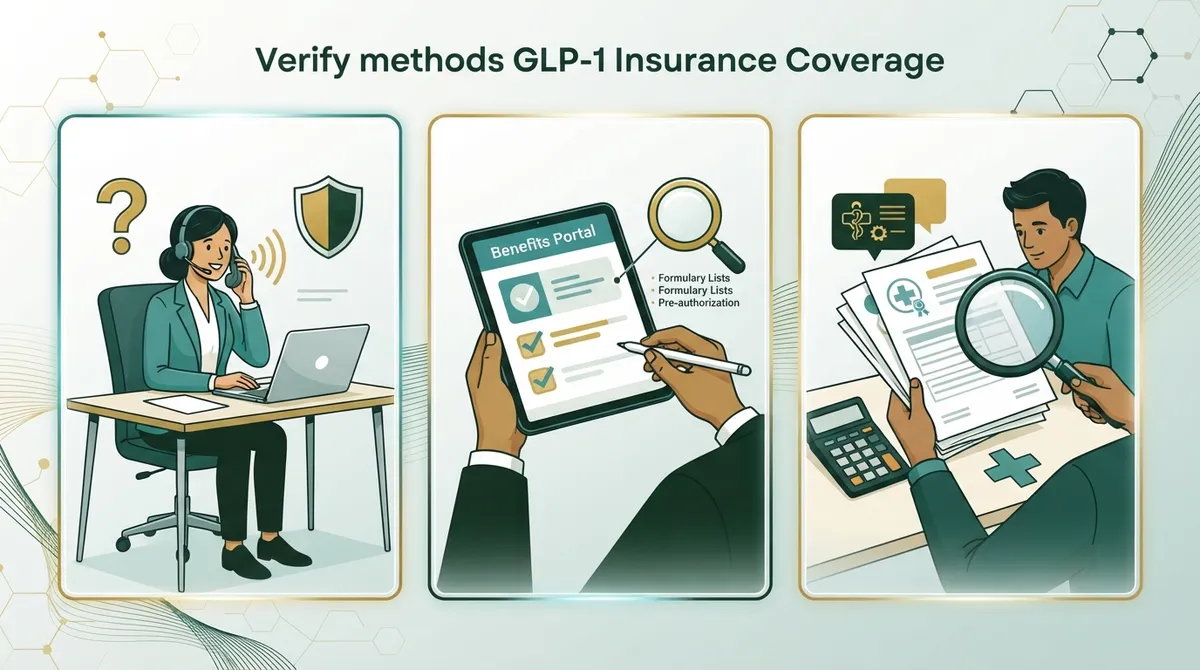
3 Ways to Check If GLP-1 Is Covered by Insurance
Instead of guessing or spending hours on hold with your insurance company, here are three practical steps you can take today to get real answers.
1. Review Your Plan’s Formulary and Prior Authorization Rules
Every insurance plan has something called a formulary, which is basically a list of drugs it covers. Start by searching your plan’s formulary for the specific GLP-1 medication name, not just the general category. Many plans require prior authorization, meaning your provider must submit documentation proving medical necessity before approval.
Common documentation requirements include:
- A confirmed diagnosis, such as type 2 diabetes
- Proof of a specific BMI threshold, often 30 or higher, or 27 with related health conditions
- Evidence you’ve tried diet and exercise first
- Records of related conditions like high blood pressure or sleep apnea
2. Call Your Insurer and Ask Direct Questions
Sometimes the fastest way to get clarity is simply picking up the phone. When you call, be specific. Instead of asking “do you cover GLP-1 drugs,” ask “is Zepbound covered for weight loss under my plan, and what are the prior authorization requirements?” Insurance representatives respond much better to precise questions.
Here’s a quick numbered checklist to bring with you when you call:
- Confirm the exact brand name and dosage you’re asking about
- Ask if the covered indication is diabetes, weight loss, or both
- Request the BMI or health condition thresholds required for approval
- Ask about copay amounts and whether prior authorization is needed
- Find out if there’s an annual renewal or re-verification process
3. Understand the Difference Between Drug Coverage and Clinic Services
This is the part people often miss. Even if your insurance covers the actual medication, it typically does not cover consultation fees, membership costs, compounded versions of the drug, or ongoing monitoring provided by a peptide therapy clinic. These cash-pay services exist separately from your pharmacy benefit. Learning how to find out if insurance covers peptide therapy before you start can save you from unexpected bills later.
Coverage Differences by Insurance Type
Not all insurance is created equal, and GLP-1 coverage varies dramatically depending on whether you have commercial insurance, Medicare, or Medicaid. Here’s a simplified breakdown to help you understand where you might stand.
| Insurance Type | Diabetes Coverage | Weight Loss Coverage | Key Notes |
|---|---|---|---|
| Commercial/Employer Plans | Generally available | Varies widely; many exclude it | Prior authorization and BMI documentation often required |
| Medicare Part D | Covered for medically accepted uses | Historically restricted by law | New GLP-1 Bridge program launches July 1, 2026 |
| Medicaid | Stronger coverage for diabetes | Optional; state-dependent | Only 13 states covered obesity treatment via fee-for-service as of January 2026 |
The New Medicare GLP-1 Bridge Program: What You Need to Know
Here’s some genuinely exciting news for Medicare beneficiaries. Starting July 1, 2026, the temporary Medicare GLP-1 Bridge program will offer eligible Part D beneficiaries access to certain obesity medications, including Wegovy, Zepbound KwikPen, and Foundayo, for a flat $50 monthly copayment. This program is scheduled to run through December 31, 2027, giving people a meaningful window to access these treatments affordably.
To qualify, beneficiaries generally need a BMI of 35 or higher, or a lower BMI paired with conditions like prediabetes, cardiovascular disease, uncontrolled hypertension, chronic kidney disease, or heart failure. It’s worth noting this $50 payment doesn’t count toward your Part D deductible or annual out-of-pocket limit, so it’s a separate, simplified pricing structure designed specifically for this bridge period.
Quick Facts About the Medicare GLP-1 Bridge
- Flat $50 copayment per 30-day supply
- Runs from July 1, 2026 through December 31, 2027
- Requires BMI 35+, or lower BMI with qualifying conditions
- Separate from standard Part D coverage for diabetes-related prescriptions
Why Compounded Peptides Work Differently Than Branded Drugs
Many people exploring peptide therapy wonder if compounded semaglutide or tirzepatide gets the same insurance treatment as brand-name versions. Unfortunately, the answer is usually no. Insurance companies base their coverage decisions around FDA-approved products, and compounded medications typically fall outside that framework entirely.
This doesn’t mean compounded peptides aren’t valuable or effective. It simply means you should plan to treat them as a self-pay or membership-based service rather than expecting reimbursement. If you want to understand this distinction more clearly, our article comparing FDA-approved versus compounded peptides lays out the pros and cons of each path.
Steps to Take Before Starting GLP-1 Therapy
Once you’ve done your insurance homework, it’s time to think practically about how to move forward. Here’s a numbered game plan that keeps things simple.
- Get comprehensive blood work done to establish your baseline health markers
- Schedule a consultation with a licensed provider who understands GLP-1 and peptide options
- Ask your provider to help document medical necessity if you’re pursuing insurance coverage
- Compare cash-pay peptide therapy options if insurance coverage is denied or limited
- Set a six-month check-in to reassess your plan and adjust dosing as needed
This approach mirrors what we recommend to every new client. If you’re curious about the full process, check out our guide on how to start peptide therapy safely and see real results.
When Insurance Says No: What Are Your Options?
Getting a prior authorization denial can feel discouraging, but it’s actually pretty common and doesn’t mean you’re out of options. According to the National Library of Medicine, GLP-1 receptor agonists have demonstrated meaningful benefits for metabolic health, which is exactly why so many people pursue them even without full coverage.
Common Reasons for Denial
- Your diagnosis doesn’t match the drug’s approved indication
- Your BMI doesn’t meet the plan’s specific threshold
- Missing documentation of prior weight-loss attempts
- The specific brand isn’t on your plan’s formulary
If this happens, many clients turn to telehealth peptide therapy as a straightforward alternative. This is where personalized, medically supervised programs really shine. At Allura Longevity, care begins with an affordable $50 virtual consultation, followed by comprehensive blood work through LabCorp, so your provider can build a treatment plan around your actual biology rather than a generic protocol.
How Telehealth Peptide Therapy Fills the Coverage Gap
This is really where peptide therapy clinics offer something insurance often can’t. Even when your insurance won’t cover a GLP-1 for weight loss, a personalized telehealth program can still get you started with proper medical supervision, ongoing monitoring, and dosage adjustments over time.
Here’s what makes this option appealing for people juggling busy schedules or complicated insurance situations:
- No waiting on prior authorization approvals that can take weeks
- Treatment plans tailored to your blood work and personal health goals
- At-home delivery, so you skip pharmacy trips entirely
- Ongoing check-ins with licensed providers to track your progress
Our team, led by board-certified Family Nurse Practitioner Ashley, designs six-month treatment plans that adjust as your body responds. This kind of continuous, hands-on care is something a standard insurance-covered prescription often doesn’t include. To see how this compares with a local option, take a look at our breakdown of local clinic versus telehealth peptide therapy.
Comparing Cash-Pay Peptide Therapy vs. Insurance-Covered Prescriptions
| Feature | Insurance-Covered GLP-1 | Telehealth Peptide Therapy |
|---|---|---|
| Approval Time | Days to weeks (prior authorization) | Often same week |
| Personalization | Standard dosing protocols | Customized to blood work and goals |
| Ongoing Monitoring | Varies by provider | Included with regular provider check-ins |
| Delivery | Pharmacy pickup | Shipped directly to your home |
Tips for Managing Costs While You Wait for Coverage Decisions
Waiting on insurance approvals can feel like watching paint dry, especially when you’re eager to start feeling better. Here are a few friendly suggestions to keep momentum going.
- Ask your provider about manufacturer savings cards or patient assistance programs
- Explore telehealth options that don’t require insurance pre-approval
- Keep detailed records of all denials and appeals in case you need to escalate
- Consider a shorter-term self-pay plan while your appeal is processed
If cost is a major concern, our article on retail versus self-pay GLP-1 costs without insurance breaks down real numbers so you can budget with confidence.
Bringing It All Together
Understanding whether GLP-1 is covered by insurance really comes down to three things: your specific medication, your diagnosis, and your plan’s rules. Type 2 diabetes coverage tends to be more consistent, while weight-loss-only coverage remains inconsistent across commercial plans, Medicare, and Medicaid. The good news is that new programs, like the Medicare GLP-1 Bridge launching in July 2026, are slowly expanding access for more people.
In the meantime, personalized peptide therapy through telehealth offers a reliable, flexible path forward, regardless of what your insurance decides. If you’re ready to explore a plan built around your own blood work, goals, and lifestyle, our friendly team is here to help. You can learn more about what are peptides and how they support metabolic health before you dive in. Ready to take the next step? Request a consultation with Allura Longevity today, and let’s build a plan that actually works for your body and your budget. Spots fill up quickly each month, so don’t wait too long to reach out.
FAQs
Q: Does insurance cover GLP-1 medications for weight loss?
A: It really depends on your specific plan and medication. Some commercial plans do cover weight-loss GLP-1s like Wegovy or Zepbound, but many still exclude them entirely, so it’s worth calling your insurer directly to check your formulary.
Q: Will Medicare cover GLP-1 medications for obesity?
A: Traditional Medicare has historically restricted coverage for weight-loss-only prescriptions, but exciting news is on the way. Starting July 1, 2026, the Medicare GLP-1 Bridge program will offer eligible beneficiaries certain obesity medications for just $50 a month through December 2027.
Q: Does Medicaid pay for Wegovy or Zepbound?
A: It depends entirely on your state. As of January 2026, only 13 state Medicaid programs covered GLP-1 medications for obesity through fee-for-service Medicaid, so coverage really varies from place to place.
Q: Does insurance cover compounded semaglutide or tirzepatide?
A: Generally, no. Insurance companies base coverage decisions around FDA-approved branded products, so compounded versions typically aren’t reimbursed, even if the branded equivalent is covered on your plan.
Q: How can I check whether my health plan covers peptide therapy or a GLP-1 prescription?
A: Start by reviewing your plan’s drug formulary online, then call your insurer with specific questions about the exact medication and indication you need. It also helps to ask your peptide therapy provider for documentation support during the prior authorization process.





