
Key Takeaways
-
Yes, your body naturally produces peptides daily, acting as hormones, neurotransmitters, and immune signals, with insulin and oxytocin as well-known examples.
-
Not every therapy peptide matches your body's version: some are exact copies, while others are modified, trimmed fragments, or fully lab-designed sequences.
-
'Natural' does not mean safe; a naturally occurring molecule like insulin can cause harm at the wrong dose or route, so judge each peptide on its own merits.
-
Check regulatory status before starting: FDA-approved drugs are reviewed for specific uses, while compounded peptides are not FDA-approved and need extra scrutiny on quality and safety.
-
Ask for the exact peptide name, dose, route, and human clinical evidence for your specific goal, and get baseline labs and ongoing monitoring from a licensed provider.
-
Watch for red flags such as 'safe because it's natural' claims, dramatic promises without risk discussion, no bloodwork, vague sourcing, and pressure to buy quickly or in bulk.
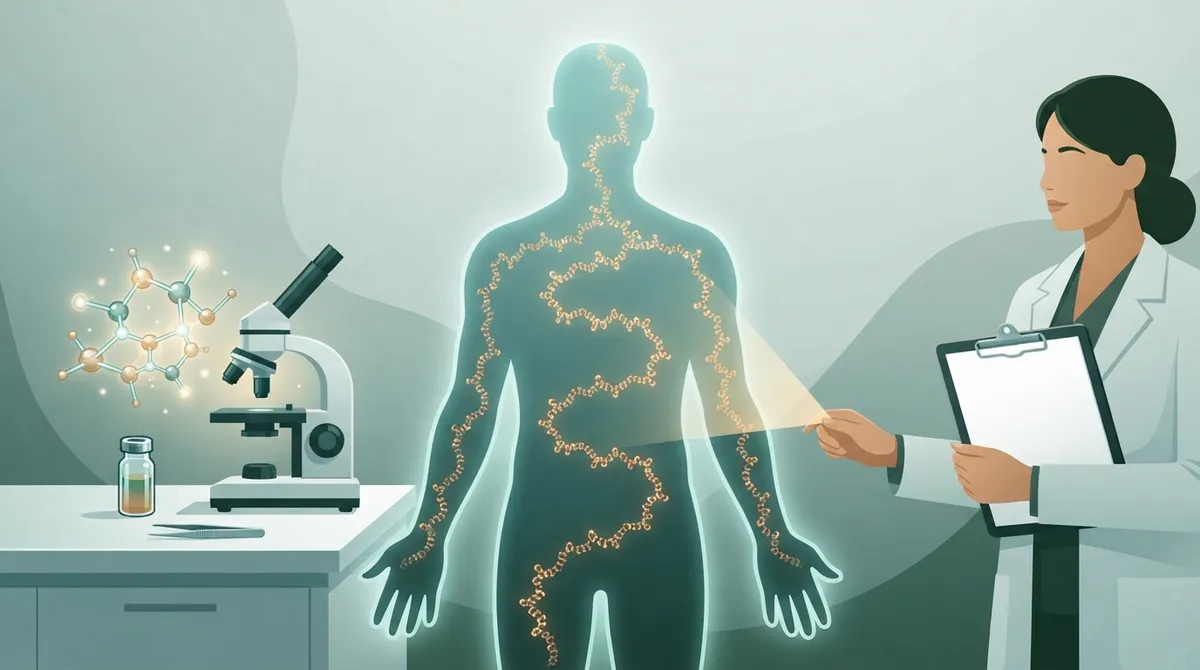
Here’s a question we hear all the time: are peptides naturally occurring? It’s a smart thing to ask, especially if you’re thinking about peptide therapy to boost your energy, recovery, sleep, or long-term vitality. The short answer is yes. Your body makes peptides every single day.
But here’s where it gets interesting. Just because your body makes a peptide doesn’t mean every peptide product is the same as what’s inside you. Some therapies copy a natural peptide. Others change it, trim it, or build a brand-new sequence in a lab.
That matters, because the word “natural” can sound like a safety stamp. It isn’t one. In this friendly guide, we’ll walk you through what peptides really are, which ones your body makes, how therapy peptides differ, and how to judge any product with a clear head. Think of it as a simple checklist you can use before you ever say yes to a treatment.
What Peptides Are and Where They Come From
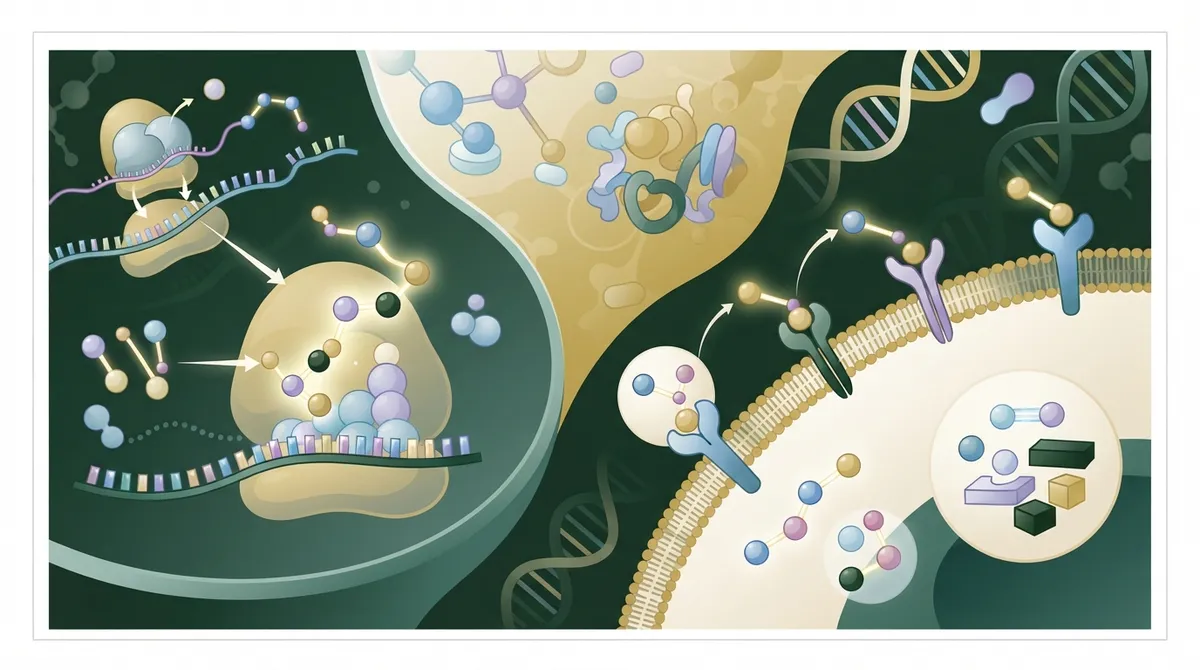
Peptides are short chains of amino acids. Amino acids are the small building blocks that make up proteins. When just a few link together, you get a peptide. When many more link up and fold into complex shapes, you get a protein.
Peptide hormones commonly range from about 3 to 200 amino acids in length, according to National Library of Medicine resources. That’s a wide range, and it’s one reason peptides do so many different jobs.
So, are peptides naturally occurring? Absolutely. Your body uses peptides as:
- Hormones that send messages through your bloodstream
- Neurotransmitters that help brain cells talk to each other
- Immune signals that help your defenses respond
- Other biological messengers that guide repair, growth, and metabolism
If you’d like a quick primer, our guide 8 Facts That Explain What Are Peptides in 2026 covers the basics. You can also read this overview of what are peptides for another beginner-friendly take.
Examples of Naturally Occurring Peptides in Your Body
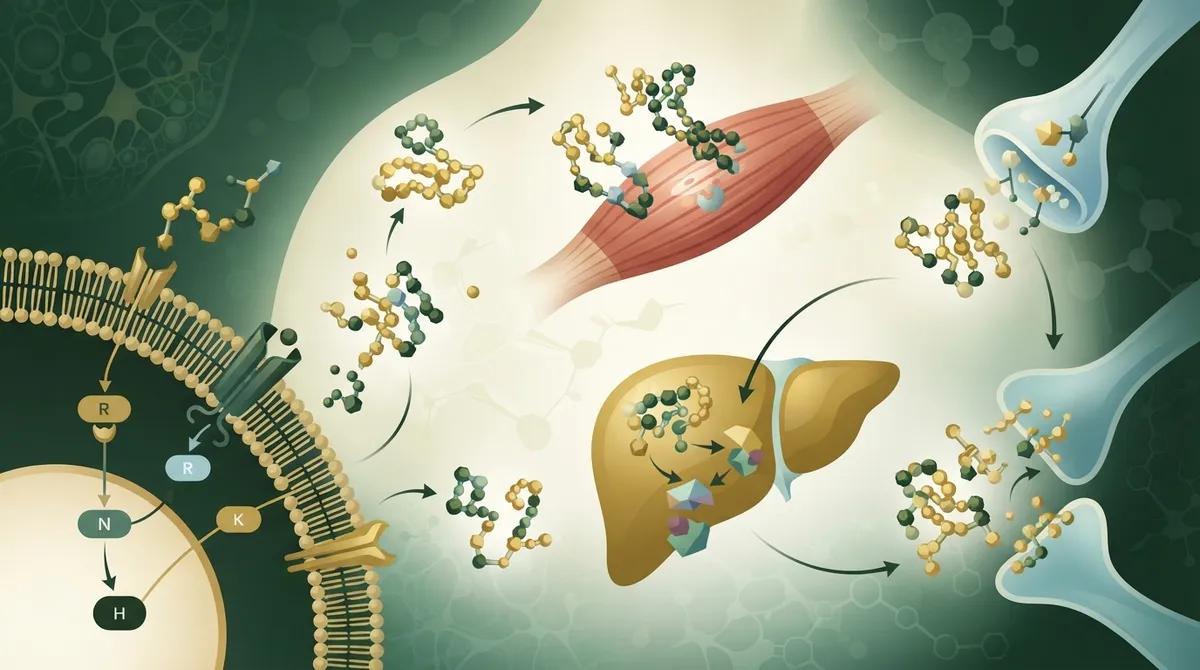
You may already know some of these names. They’re proof that peptides are a normal, healthy part of human biology.
| Peptide | Size | What It Does |
|---|---|---|
| Insulin | 51 amino acids (two chains) | Helps manage blood sugar |
| Oxytocin | 9 amino acids | Supports bonding and certain reproductive functions |
| Vasopressin | 9 amino acids | Helps regulate water balance |
| ACTH | Cut from a 241-amino-acid precursor | Signals the adrenal glands |
| Endorphin-related peptides | Cut from the same precursor | Involved in pain and stress response |
A few fun facts stand out here. Insulin is made of two chains linked by three disulfide bonds. Oxytocin and vasopressin are both nine amino acids long, yet they differ by only two residues. And a big precursor called proopiomelanocortin gets sliced into several active peptides, including ACTH and endorphin-related products.
In other words, your body is a busy little peptide factory. How much of each peptide it makes, and where, depends on your genes, age, stress, sleep, nutrition, and overall health.
Are Therapy Peptides the Same as the Ones Your Body Makes?
Not always. This is the part many people miss, so let’s slow down and sort it out.
A peptide used in therapy can fall into one of several groups:
- An exact copy of a peptide your body makes
- A modified version that lasts longer or acts differently
- A fragment of a larger natural peptide or protein
- A fully synthetic sequence designed in a lab
Most therapy peptides are made in a lab anyway, even when they copy a natural one. Lab-made doesn’t mean bad. It just means we should ask better questions. For a deeper look at how these differ, check out Is Peptide Therapy Natural? What the Label Really Means.
Quick Comparison: Natural vs. Therapeutic Peptides
| Feature | Made by Your Body | Therapeutic Peptide Product |
|---|---|---|
| Source | Produced inside your cells | Usually manufactured in a lab |
| Sequence | Natural | Exact copy, modified, fragment, or new design |
| Dose control | Regulated by your body | Set by a prescriber |
| Route | Released where it’s needed | Often injected or applied |
| Oversight | Not applicable | Depends on the product and its regulatory status |
Why “Natural” Doesn’t Automatically Mean Safe
We love a good “natural” label as much as anyone. But here’s the honest truth: a naturally occurring molecule can still cause problems at the wrong dose or when given in an untested way.
Think about insulin. It’s 100 percent natural to your body. Yet too much insulin from a medication can be dangerous. The same idea applies across peptide therapy. The molecule’s origin doesn’t tell you whether a product is safe, effective, or right for you.
So when someone says, “It’s just a natural peptide,” gently hit pause. Better questions are:
- Which exact peptide is this, and what’s the evidence for my goal?
- How is it made, and who tested it?
- What dose and route are being used?
- Who is watching my labs and symptoms?
This is a big reason medical supervision matters. If you’re curious about safety in more detail, read Is Peptide Therapy Safe? What You Really Need to Know.
FDA Status: Approved vs. Compounded Peptides
Here’s another place where clarity helps. Some peptide-based medicines have been reviewed and approved for specific uses. That approval applies to the exact product and the exact indication. It doesn’t magically validate other peptides or unapproved claims.
Compounded drugs are different. They are not FDA-approved. The FDA has raised concerns about certain bulk peptide substances, including potential immunogenicity (your immune system reacting to the product), peptide-related impurities, and limited safety information for proposed routes of administration. BPC-157 is one peptide the agency has specifically discussed in this context.
Rules can shift, too. The FDA’s Pharmacy Compounding Advisory Committee has had peptide topics on its schedule in 2026, so always check current FDA information before making decisions. We break the topic down further in FDA-Approved vs. Compounded Peptides: What Wins? and How to Verify FDA Approval Before Peptide Therapy.
FDA Status Cheat Sheet
| Product Type | What It Means | What to Ask |
|---|---|---|
| FDA-approved peptide drug | Reviewed for a specific use and product | Is my use the approved use? |
| Compounded peptide | Prepared by a pharmacy, not FDA-approved | Who compounds it, and how is quality checked? |
| “Research” or unregulated peptide | Not intended for human treatment | Why is this being offered to patients at all? |
How to Judge Any Peptide Therapy, Step by Step
Ready for the practical part? Whether you’re a data-loving biohacker or a busy pro who just wants a straight answer, this simple process works for everyone.
- Name the exact peptide. “Peptide therapy” is a huge umbrella. Get the specific name, dose, and route.
- Find out if it’s a copy, a modified version, or a new design. This tells you how closely it matches what your body makes.
- Check the regulatory status. Is it FDA-approved for a specific use, or is it compounded? Confirm with current FDA information.
- Look at the evidence for your goal. Human clinical data is stronger than animal studies or marketing claims.
- Ask about quality and sourcing. Purity, impurities, and pharmacy standards matter a lot.
- Get baseline labs. Blood work helps your provider personalize care and track changes. Our post on lab work for peptide therapy explains what to test and why.
- Make sure a licensed provider is monitoring you. Follow-ups and dose adjustments should be part of the plan.
Want to go deeper on the planning side? How to Start Peptide Therapy Safely and See Real Results is a great next read.
Red Flags That Should Slow You Down
Reading the room is part of staying safe. Watch out for these warning signs:
- Claims that a peptide is “safe because it’s natural”
- Promises of dramatic results with no mention of risks
- No blood work, no health history, and no provider review
- Vague answers about where a product comes from
- Pressure to buy quickly or in bulk
Recent reporting has also pointed out that unregulated peptides are everywhere, but proof of effectiveness and safety often isn’t. That’s exactly why a careful, evidence-first mindset pays off. For extra guidance, see How to Spot and Avoid Peptide Therapy Risks.
Why Personalization and Supervision Make a Difference
Since your own peptide levels, hormones, and health goals are unique, a one-size-fits-all approach rarely makes sense. That’s where personalized care shines.
At Allura Longevity, licensed medical providers design treatment plans based on your blood work and goals. Care starts with a $50 virtual consultation, followed by LabCorp bloodwork and a customized six-month plan delivered to your door. Your team, led by board-certified Family Nurse Practitioner Ashley, keeps monitoring and adjusting along the way. It’s a convenient setup for busy schedules, and it keeps real medical oversight in the loop.
Allura offers care through telehealth in Florida, Georgia, Texas, Connecticut, Indiana, Maryland, New York, and California. Whether you’re exploring peptides for women or peptides for men, the goal is the same: a plan built around you, not a trend.
The Bottom Line
So, are peptides naturally occurring? Yes. Your body makes them constantly, and they help run everything from blood sugar to mood to repair. But a peptide product in a vial isn’t automatically the same as what your body makes, and it isn’t automatically safe or effective just because it sounds natural.
The smartest move is to judge each peptide on its own: its exact identity, its evidence, its quality, its regulatory status, and the medical team watching over it. Stay curious, ask good questions, and don’t be shy about wanting proof. You deserve nothing less.
Ready to explore peptide therapy with licensed providers and a plan built around your labs and goals? Request a consultation with Allura Longevity today, or call (813) 510-6277. Spots for new clients are limited each month, so reach out while there’s room.
This article is for education only and isn’t medical advice. Talk with a licensed provider about your own health situation.
FAQs
Q: Are peptides naturally produced by the human body?
A: Yes! Your body makes peptides all day long, and they work as hormones, brain messengers, and immune signals. Insulin and oxytocin are two well-known examples.
Q: Are peptide therapy products the same as the peptides my body makes?
A: Not always. Some therapy peptides are exact copies, while others are modified, trimmed-down fragments, or brand-new lab designs. That’s why each peptide needs to be judged on its own.
Q: What’s the difference between an FDA-approved peptide drug and a compounded peptide?
A: An FDA-approved drug has been reviewed for a specific product and use. A compounded peptide is prepared by a pharmacy and is not FDA-approved, so quality, evidence, and safety information need extra attention.
Q: Can naturally occurring peptides cause side effects when used as treatment?
A: They can. A natural molecule can still cause problems at the wrong dose or when given by an untested route, which is why medical supervision and follow-up labs really matter.
Q: How can I tell whether a peptide therapy is backed by clinical evidence?
A: Ask for the exact peptide name, the regulatory status, and the human clinical data for your goal. A licensed provider should be happy to explain the evidence, the risks, and how they’ll monitor you.





