
Key Takeaways
-
The best home delivery peptide program is led by a licensed clinician who reviews your health history and labs before anything ships, and offers ongoing follow-up after delivery.
-
Always ask whether a peptide is FDA-approved or compounded; compounded drugs are not reviewed by the FDA for safety, effectiveness, or quality before marketing.
-
Verify the prescriber's license and the dispensing pharmacy's license through your state boards, and ask for the exact active ingredient rather than a brand nickname or proprietary blend.
-
The FDA has flagged certain peptides, such as GHRP-2, for possible safety risks, and policies change, so ask your clinician to confirm the current status of any ingredient.
-
Avoid programs that guarantee results, skip bloodwork, use vague ingredient lists, apply pressure tactics, or sell products labeled "research use only" for human use.
-
Follow storage and handling instructions exactly, since many peptides need refrigeration and protection from heat and light, and keep a log of doses and side effects.
Getting peptide therapy delivered to your front door sounds wonderful, right? No waiting rooms, no traffic, no rearranging your whole day. But here’s the thing: convenience alone doesn’t make a program good. When you’re searching for the best home delivery peptide therapy program, the real question is whether the care behind the box is safe, legal, and built around you.
If you’re a busy professional, a health optimizer, or someone who tracks every lab number, you already know that shortcuts rarely pay off. The peptide world has plenty of flashy marketing, fast shipping promises, and bold claims. What it needs more of is clear, honest guidance.
In this guide, we’ll walk through what a quality program actually looks like in 2026. You’ll learn how to check licenses, ask smart questions, spot red flags, and understand the difference between FDA-approved and compounded products. Think of this as a friendly checklist from someone who wants you to feel confident, not confused.

What “Best” Really Means for Home Delivery Peptide Therapy
Let’s clear something up first. The “best” program is not the one with the longest peptide menu, the fastest shipping, or the loudest ads. The best program is led by a clinician, uses legally prescribed treatments, and keeps you safe from start to finish.
That means a licensed provider reviews your health history and labs before anything ships. It also means you get clear answers about what you’re taking and why. Honest programs never guarantee results, because no ethical clinician can.
Here are the building blocks of a strong home delivery program:
- Clinical appropriateness: The treatment fits your goals, labs, and health history.
- Regulatory clarity: You know if a product is FDA-approved or compounded.
- Pharmacy quality: A properly licensed pharmacy prepares and ships your medication.
- Ongoing oversight: A real person follows up, adjusts your plan, and tracks side effects.
If a program skips any of these, keep looking. Your health is worth the extra few minutes of research.
Understand the Difference: FDA-Approved vs. Compounded Peptides
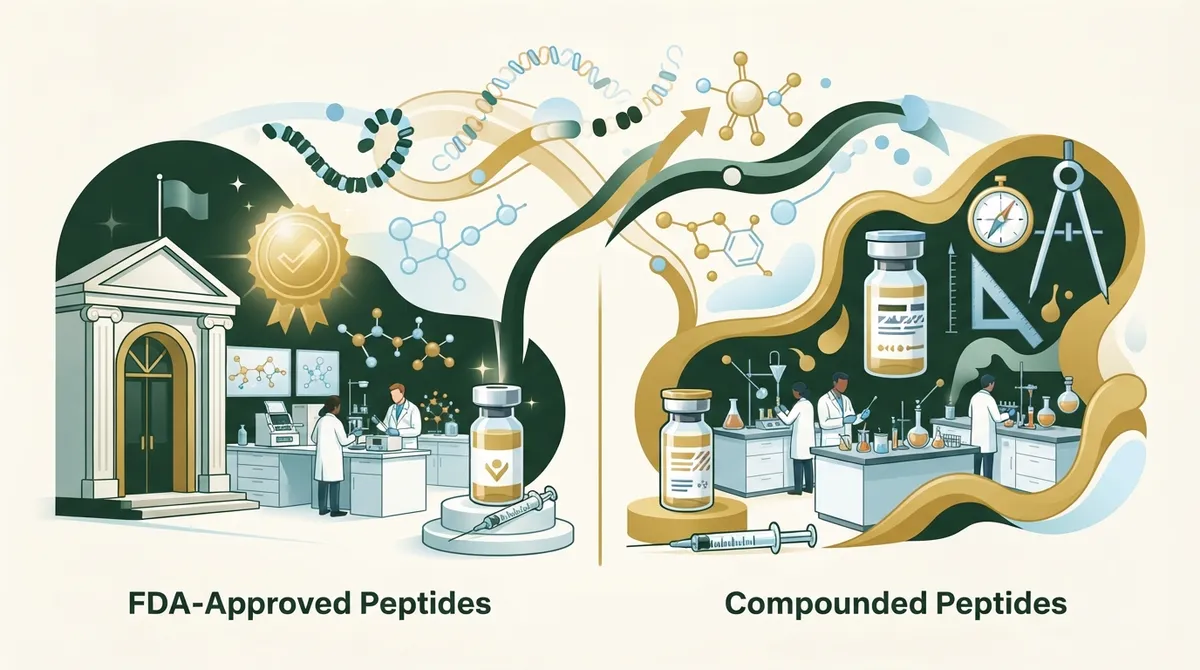
This is the part many people miss, so let’s slow down and make it simple. Some peptide medicines are FDA-approved for specific conditions. That approval covers a specific drug for a specific use. It does not stretch to every peptide you see online.
Compounded drugs are different. They are made by pharmacies for individual patients when a prescriber decides it’s appropriate. The FDA does not review compounded drugs for safety, effectiveness, or quality before they are marketed. That doesn’t make compounding bad. It just means the oversight looks different, and your clinician and pharmacy carry more responsibility.
For a deeper look at this topic, you may enjoy our guide on approved peptides vs. wellness peptides.
| Feature | FDA-Approved Peptide Drug | Compounded Peptide | “Research Use Only” Product |
|---|---|---|---|
| FDA review before sale | Yes, for specific uses | No | No |
| Requires a prescription | Yes | Yes | Not applicable |
| Made by licensed pharmacy | Licensed manufacturer | 503A pharmacy or 503B facility | Often unclear |
| Safe for human use | For approved indication | Depends on ingredient and oversight | Not intended for humans |
That last column matters. Online “research use only” products are not the same as prescription medicine, and they should never be treated as safe for human use.
Know the Rules: 503A and 503B in Plain English
Compounding happens in two main settings. A 503A pharmacy prepares medication for an individual patient based on a prescription. A 503B outsourcing facility can make larger batches under stricter manufacturing standards.
The FDA limits which bulk substances these facilities may use. The rules differ between 503A and 503B, and the lists can change. So a prescription or a pharmacy license alone does not prove that a specific peptide is appropriate or permitted.
The FDA has also flagged certain peptides proposed for compounding as having possible safety risks. These include concerns about immune reactions, peptide-related impurities, and limited human safety data. GHRP-2 is one example the agency has mentioned among nominated substances. Because policies shift, always ask your clinician to verify the current status of the exact ingredient you’re considering.
If you want to see how safety fits into the bigger picture, take a look at how to weigh the risks of peptide therapy safely.
The Home Delivery Program Checklist
Ready to evaluate a program? Use this step-by-step list. You can even screenshot it and keep it handy while you shop around.
- Confirm the clinician’s credentials. Ask who the prescriber is, what license they hold, and whether they’re licensed in your state.
- Ask for the exact active ingredient. Not a brand nickname or a “proprietary blend.” The real name.
- Ask about the indication. What specific goal or condition is this peptide being used for?
- Find out if it’s FDA-approved or compounded. A trustworthy provider answers this without hesitation.
- Get the pharmacy’s name and license. You should be able to verify it with your state board of pharmacy.
- Review lab requirements. Quality programs start with bloodwork, not guesswork.
- Learn the monitoring plan. How often will someone check in, and how are side effects reported?
- Check storage and shipping details. Peptides often need refrigeration and careful handling.
This process takes a little effort, but it pays off. It’s the same approach we recommend in our post on peptide consultation questions to ask.
Why Labs and Medical Oversight Matter So Much
If you’re a biohacker or data-driven optimizer, you’ll love this part. The best programs treat labs as the starting line, not an afterthought. Your bloodwork shows where you are today, which helps your provider decide whether peptide therapy makes sense at all.
Labs also give you a baseline to measure against. Without one, you’re just guessing about whether anything is working. Understanding what to test and why helps you ask better questions and spot programs that skip this step.
Medical oversight doesn’t stop after the first shipment, either. A responsible program should offer:
- A thorough evaluation by a qualified, licensed clinician
- A plain-language explanation of evidence, alternatives, and risks
- Clear instructions on dosing, missed doses, storage, and handling
- Scheduled follow-ups and plan adjustments
- An easy way to report side effects or concerns
When a clinic can’t offer these, the shipping speed doesn’t matter much.
How Home Delivery Actually Works
Curious what the process looks like from your couch? A well-run telehealth program is simpler than most people expect. You complete a virtual visit, get labs done, review your plan with a provider, and receive your medication at home with written instructions.
Here’s a quick snapshot of how a typical flow compares to visiting a traditional clinic:
| Step | Home Delivery Telehealth | Traditional In-Person Clinic |
|---|---|---|
| Initial consultation | Video visit from anywhere | Office appointment |
| Lab work | Local lab draw or at-home options | Often drawn on-site |
| Treatment plan | Reviewed virtually | Reviewed in office |
| Medication access | Shipped to your door | Picked up or administered in clinic |
| Follow-ups | Virtual check-ins | Return visits |
Want a closer look at the process? Our explainers on how peptide therapy delivered to your home works and how peptide medications ship safely walk through each step.
Red Flags to Watch For
Most people are honest, but a few warning signs should make you pause. If you spot any of these, take a step back.
- Guaranteed results. No legitimate provider can promise outcomes.
- No labs required. Skipping bloodwork means skipping safety.
- Vague ingredient lists. You deserve to know exactly what you’re injecting.
- Claims that a peptide is “FDA-approved” when only a different product is. This is a common marketing trick.
- No named pharmacy or prescriber. Transparency is non-negotiable.
- Pressure tactics or countdown timers. Good care doesn’t rush you.
It’s also smart to read reviews with a careful eye. Our post on how to read peptide therapy reviews the right way can help you separate real feedback from hype.
Who Benefits Most From a Home Delivery Model?
Home delivery fits a lot of lifestyles. If you’re juggling meetings, travel, or family, telehealth removes a big barrier. If you’re in midlife or beyond and want to protect your energy and vitality, a steady, supervised plan can feel more manageable than sporadic office visits.
Biohackers often love the data-first approach, since labs and follow-ups create a clear paper trail. Wellness seekers who already invest in supplements and preventive care may find a personalized plan a natural next step.
Common goals people bring to a program include:
- Better energy, sleep, and mental clarity
- Skin rejuvenation and recovery support
- Metabolic and weight management support
- Sexual wellness and hormone balance
Everyone’s body is different, so results vary. If you’re curious about timing, our guide on a realistic peptide therapy timeline sets honest expectations.
Where Allura Longevity Fits In
At Allura Longevity, we built our approach around the checklist above. We offer personalized, medically supervised peptide therapy through telehealth, and we believe it’s the best telehealth option for people who want convenience without cutting corners.
Here’s how it works. You start with a $50 virtual consultation. Next, you complete blood work through LabCorp so your plan is based on real data. Then our licensed providers, led by Ashley, a board-certified Family Nurse Practitioner, design a customized six-month treatment plan. Your medication is delivered right to your home, and ongoing monitoring means your plan can be adjusted as your needs change.
Our services support goals like improved energy and sleep, skin rejuvenation, muscle recovery, metabolism, sexual wellness, weight loss with GLP-1 medications, injury recovery with BPC-157, and testosterone replacement. We’re licensed in Florida, Georgia, Texas, Connecticut, Indiana, Maryland, New York, and California.
You can also learn more about how to choose a peptide therapy clinic you trust and what a nationwide telehealth peptide clinic does to see how we compare to your own checklist.
Store and Handle Your Peptides Properly
Once your box arrives, handling matters. Many peptides are sensitive to heat and light, so storage instructions are not optional. A good program gives you written guidance and a way to ask questions.
General habits that help:
- Open your package promptly and check that everything matches your prescription.
- Follow the storage directions exactly, including refrigeration when required.
- Use clean technique and never share supplies.
- Keep a simple log of doses, dates, and any side effects.
If you plan to inject at home, our guide on how to get peptides administered safely at home is a helpful companion.
Start Your Search With Confidence
Finding the best home delivery peptide therapy program comes down to a few simple ideas. Look for licensed clinicians, clear answers about approval status, a verified pharmacy, lab-based planning, and real follow-up. Skip anything that promises miracles or hides the details.
You deserve care that’s as thoughtful as it is convenient. Take your time, ask your questions, and trust your gut when something feels off. The right program will welcome your curiosity.
Ready to see what a personalized, medically supervised plan looks like? Request a consultation with Allura Longevity today, or call (813) 510-6277. We take a limited number of new clients each month, so reach out soon to hold your spot. For background reading, you can also explore what are peptides from WebMD, review research through the National Library of Medicine, and see the FDA’s guidance on bulk drug substances used in compounding.
FAQs
Q: What is the best peptide therapy program that delivers medication to your home?
A: The best program is led by a licensed clinician, starts with a health review and lab work, and uses a properly licensed pharmacy. It also explains whether your medication is FDA-approved or compounded and provides ongoing follow-up. Fast shipping and a long peptide menu matter far less than safety and personalization.
Q: Are peptide therapies delivered by mail FDA-approved?
A: It depends on the specific product. Some peptide medicines are FDA-approved for particular conditions, but many peptides offered through telehealth are compounded, which means the FDA hasn’t reviewed them for safety, effectiveness, or quality before marketing. Always ask your provider for the exact ingredient and its regulatory status.
Q: How can I check whether an online peptide clinic and its pharmacy are legitimate?
A: Ask for the prescriber’s name and license, plus the dispensing pharmacy’s name and license number. You can verify both through your state’s licensing boards. Legitimate clinics are happy to share this and will require an evaluation and labs before prescribing.
Q: What safety risks should I consider before starting peptide therapy?
A: Risks can include uncertain dose or purity, contamination, immune reactions, and limited human evidence for some peptides. Working with a licensed clinician, using a verified pharmacy, and following monitoring and storage instructions helps reduce these risks. Avoid any product labeled “research use only.”
Q: How should peptide medications be stored and shipped?
A: Many peptides need refrigeration and protection from heat and light, so quality programs ship with clear handling instructions. When your package arrives, check it against your prescription and store it exactly as directed. If anything looks damaged or feels off, contact your provider right away.





