
Key Takeaways
-
Telehealth clinics don't ship medications directly—prescriptions go electronically to licensed dispensing pharmacies that handle preparation, labeling, and shipment to your home.
-
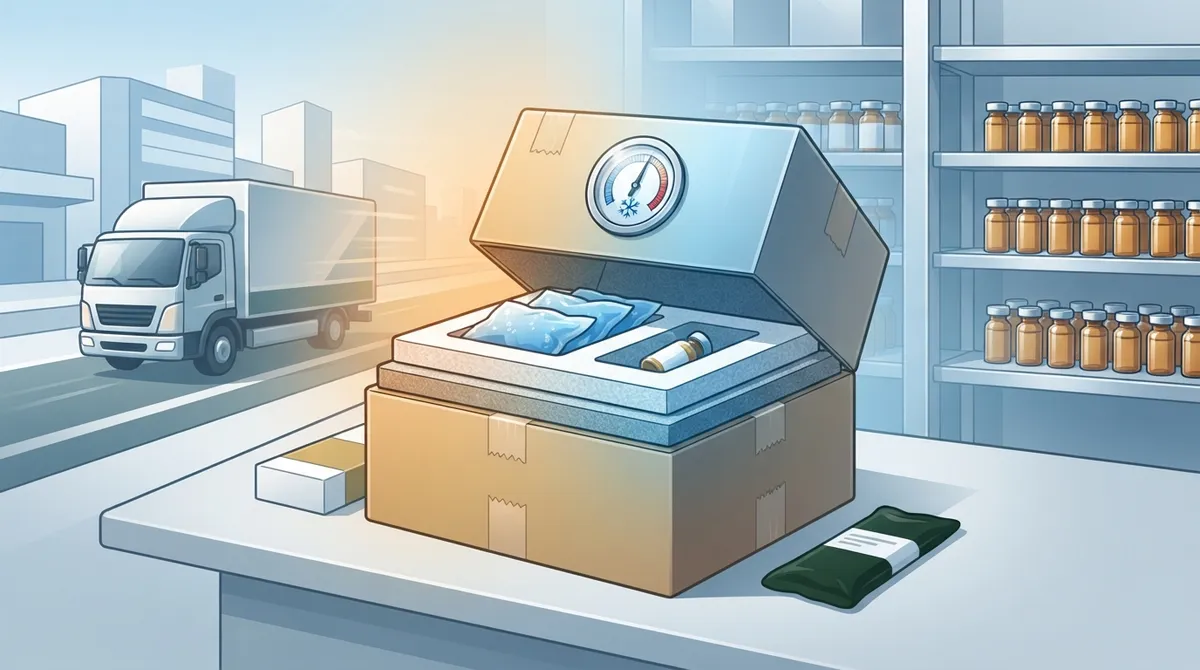
Many peptides require temperature-controlled shipment (2-8°C) using insulated boxes with gel packs and expedited overnight/two-day delivery to prevent potency loss during transit.
-
If your package arrives warm, frozen, or damaged, don't use it; contact the pharmacy immediately to determine safety, as peptide effectiveness can be compromised without visible changes.
-
Telehealth providers and dispensing pharmacies must be licensed in your specific state—legitimate clinics only operate where they hold proper licensing, affecting legal shipment eligibility.
-
Verify pharmacy legitimacy by checking your state's board of pharmacy database for active licenses and asking whether medication is compounded via a 503A or 503B facility before trusting shipment.
-
Plan to receive packages promptly, especially during extreme temperatures; most pharmacies target 24-48 hour fulfillment with specific hold-time limits determined by stability testing, not industry-wide standards.
So you just booked your first telehealth visit for peptide therapy, and now you’re wondering how your medication is actually going to reach your door. Will it show up in a plain box? Does it need to stay cold? What happens if the mail carrier leaves it on your porch in the summer heat? These are great questions, and honestly, you deserve clear answers before your first shipment ever arrives.
Understanding how are medications shipped from telehealth clinics can ease a lot of worry, especially when you’re trusting a company with something as important as your health. Peptides like BPC-157, GLP-1 medications, or growth hormone secretagogues are often temperature-sensitive, so the shipping process matters just as much as the prescription itself. Let’s walk through exactly what happens behind the scenes, step by step, so you feel confident and informed every time a package lands on your doorstep.

The Journey From Prescription to Your Doorstep
Most people assume the telehealth platform itself mails out the medication. That’s actually not how it works most of the time. Here’s the real path your peptide takes before it reaches you.
Step-by-Step: How the Process Works
- Intake and evaluation: You complete health forms and bloodwork, then a licensed provider reviews your results and goals during your virtual visit.
- Prescription is written: If peptide therapy is appropriate for you, the provider issues an individualized prescription based on your labs and health history.
- Prescription is sent electronically: The prescription goes straight to a licensed dispensing pharmacy, not back through the telehealth company.
- Pharmacy prepares your medication: The pharmacy compounds, labels, and packages your peptide according to your exact dose and formulation.
- Medication ships directly to you: The pharmacy—not the clinic—ships your package, often using expedited or temperature-controlled delivery.
This means the telehealth clinic and the pharmacy are two separate, regulated entities working together. If you want to learn more about how this process fits into starting treatment, check out How to Start Peptide Therapy Safely and See Real Results.
Why Temperature Control Matters So Much for Peptides
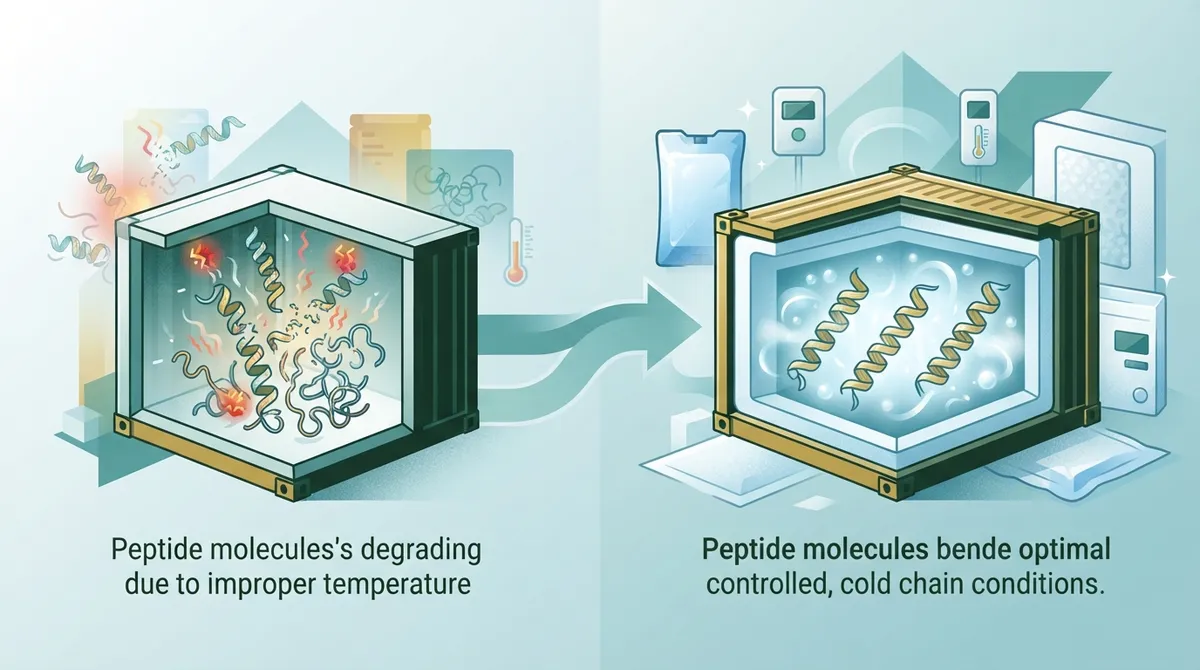
Peptides are delicate. Many liquid or reconstituted peptide formulations need to stay refrigerated to remain effective. Some lyophilized (freeze-dried) powders can tolerate room temperature, but this depends entirely on the specific formulation and the pharmacy’s stability testing—not just a general assumption about peptides.
According to FedEx’s temperature-control guidance, pharmaceutical cold-chain shipping generally falls into three categories:
| Shipping Category | Typical Temperature Range | Common Use Case |
|---|---|---|
| Refrigerated | 2–8°C (35–46°F) | Reconstituted or liquid peptide injections |
| Controlled Room Temperature | 15–25°C (59–77°F) | Some stable lyophilized powders |
| Frozen | -10°C to -25°C (14°F to -13°F) | Select specialty formulations (less common for peptides) |
Your pharmacy determines the correct category for your specific peptide, based on lab-tested stability data. This is not a one-size-fits-all situation, so always follow the storage instructions printed right on your label.
What Goes Into a Temperature-Controlled Shipment
If your peptide needs refrigeration, the pharmacy doesn’t just toss it in a padded envelope and hope for the best. Cold-chain shipments are carefully engineered to protect your medication during transit.
- Insulated boxes designed to hold temperature for a set number of hours
- Preconditioned gel packs placed strategically around the medication
- Tamper-resistant outer packaging for safety and security
- Expedited carrier service, usually overnight or two-day air through UPS or FedEx
- Tracking numbers so you always know where your package is
Some pharmacies also include temperature indicators or data loggers inside the box, though this isn’t standard for every single shipment. If you’re curious about which peptides commonly require this extra care, take a look at 9 BPC-157 Peptide Facts to Know Before You Start.
503A vs. 503B Pharmacies: What’s the Difference?
You may notice your peptide comes from a “compounding pharmacy.” There are two main types, and knowing the difference helps you understand what you’re receiving.
| Pharmacy Type | What It Means | Shipping Implications |
|---|---|---|
| 503A Compounding Pharmacy | Prepares individual, patient-specific prescriptions | Ships one prescription at a time, tailored to your dose |
| 503B Outsourcing Facility | Produces larger batches under stricter FDA oversight | May supply pharmacies or clinics in bulk, with different distribution rules |
Both types must follow state licensing rules, and the legal requirements for shipping differ between them. If you want a deeper dive into this topic, our article on 503A vs. 503B: Which Peptide Compounding Wins? breaks it down clearly.
What Your Package Label Should Include
Every legitimate compounded peptide shipment should arrive with a clear, patient-specific label. This isn’t just a formality—it’s your safety net.
- Your full name and prescribing provider’s information
- The exact medication name, strength, and concentration
- Clear directions for use and dosing
- Beyond-use date or expiration information
- Pharmacy name, address, and contact information
- Storage instructions (refrigerate, freeze, or room temperature)
Labeling requirements can vary slightly by state, but a trustworthy pharmacy will always make this information easy to find. Learn more about safe sourcing in How to Get Prescription Peptides Safely in 2026.
What to Do If Your Shipment Arrives Wrong
Even with the best packaging, things can occasionally go sideways. Maybe the box sat on your porch too long, or the ice packs melted faster than expected. Here’s what to do.
- Don’t use it yet. If the package feels warm, was frozen when it shouldn’t be, or looks damaged or leaking, pause before doing anything else.
- Contact the dispensing pharmacy right away. They can tell you whether the medication is still safe or needs to be replaced.
- Don’t judge potency by appearance alone. A peptide can look fine and still have lost effectiveness from a temperature excursion.
- Keep the packaging. This helps the pharmacy investigate what happened and process a replacement faster.
A responsible pharmacy will have a clear policy for replacing compromised shipments. If a company can’t explain their process, that’s a red flag worth noting.
How Long Can Peptides Stay Unrefrigerated?
There’s no universal answer here, and that’s important to understand. A pharmacy’s packaging validation typically specifies a maximum “hold time”—often 24 to 48 hours—under certain conditions. This number comes from real stability testing, not guesswork.
This is why prompt delivery matters so much. Many telehealth pharmacies aim for 24- to 48-hour fulfillment with expedited two-day shipping, but this is not an industry-wide guarantee. Always plan to be available to receive your package quickly, especially during hot summer months or freezing winter days.
Legal Shipping: Not Every State Works the Same Way
Here’s something many people don’t realize: telehealth prescribing and pharmacy shipping are regulated separately. Your provider must be licensed in the state where you’re physically located during your visit. The pharmacy must also be permitted to ship into your state.
This is why reputable telehealth peptide clinics only operate in states where they hold proper licensing. Allura Longevity, for example, is licensed in Florida, Georgia, Texas, Connecticut, Indiana, Maryland, New York, and California, ensuring every shipment follows the correct legal pathway for that state.
State rules can also affect refill limits, compounding restrictions, and direct-to-patient shipping rules. This is one more reason working with an established, transparent provider matters so much. You can read more about verifying legitimacy in How to Find Legal Peptide Therapy You Can Trust.
How to Verify Your Pharmacy Is Legitimate
Before you trust any package with your health, it’s smart to do a little homework. Here’s how to check that everything is above board.
- Confirm the pharmacy holds an active state license (most state boards of pharmacy have searchable databases)
- Ask whether the medication is compounded, and if so, by a 503A or 503B facility
- Ask how the pharmacy handles quality testing and adverse-event reporting
- Ask what happens if a shipment is damaged, late, or arrives outside temperature range
- Look for a real prescriber name and licensed clinic behind the prescription
Compounded medications aren’t FDA-approved the same way commercial drugs are, so this extra diligence protects you. According to the National Library of Medicine, quality assurance in compounding pharmacies varies, which makes provider transparency essential.
Signature Requirements and Delivery Details
Some peptide shipments require a signature on delivery, especially for higher-value medications or certain state regulations. This isn’t the norm for every shipment, but it does happen. Make sure someone is available to receive the package, or consider having it sent somewhere with reliable daytime access, like a workplace.
Avoid letting packages sit in a hot mailbox, on a sun-exposed porch, or in a freezing garage overnight. If you know you’ll be traveling, it’s worth coordinating delivery timing with your care team in advance.
Why This Process Matters for Your Results
Understanding how medications are shipped from telehealth clinics isn’t just trivia—it directly affects whether your peptide therapy actually works. A peptide that’s been mishandled in transit may lose potency before it ever reaches your fridge. That’s frustrating when you’re investing time and money into feeling better.
This is exactly why choosing a provider with a strong, validated shipping process matters as much as the treatment plan itself. Whether you’re using peptides for fat loss, GLP-1 weight management, or recovery support like wound healing peptides, the medication has to arrive in good condition to do its job.
What Makes Allura Longevity’s Shipping Process Different
At Allura Longevity, every client starts with a simple $50 virtual consultation, followed by bloodwork through LabCorp. From there, a customized six-month treatment plan is built around your actual lab results and goals, not guesswork. Peptides are shipped directly to your home with careful attention to proper packaging and timing.
Care doesn’t stop once the package arrives, either. Ashley, a board-certified Family Nurse Practitioner, leads ongoing monitoring and adjusts your plan as needed. This kind of continuous support is a big part of what makes peptides for women and peptides for men programs feel less like a one-time purchase and more like real, personalized healthcare.
To understand what these customized plans typically include, take a look at 12 Peptide Wellness Program Features Worth Seeking.
Quick Reference: What a Good Shipping Experience Looks Like
| What to Expect | Why It Matters |
|---|---|
| Tracking number provided | Lets you plan for prompt pickup |
| Insulated packaging with gel packs (if needed) | Protects temperature-sensitive peptides |
| Clear, patient-specific label | Confirms dose, storage, and provider details |
| Fast, responsive pharmacy support | Helps resolve shipping issues quickly |
| State-licensed dispensing pharmacy | Ensures legal, safe medication delivery |
According to WebMD’s overview of what peptides are, these short chains of amino acids can be sensitive to their environment, which is exactly why shipping conditions matter so much for injectable formulations.
Bringing It All Together
Shipping might seem like the boring part of peptide therapy, but it’s actually one of the most important pieces of the puzzle. From the moment your provider writes your prescription to the moment that insulated box lands on your porch, every step is designed to protect the integrity of your medication.
Knowing what to expect—and what to do if something looks off—puts you back in control of your own care. You don’t have to just hope everything went smoothly. You can check labels, verify licensing, and reach out to your pharmacy with confidence.
If you’re ready to experience personalized peptide therapy with transparent, careful shipping and a team that actually answers your questions, now is a great time to get started. Spots are limited each month, so don’t wait too long. Request a consultation today and let Allura Longevity’s licensed providers build a plan that’s truly built around you.
FAQs
Q: How do telehealth clinics ship peptide medications to patients?
A: Your telehealth provider sends your prescription electronically to a licensed dispensing pharmacy, and that pharmacy prepares, labels, and ships your medication straight to your home. The telehealth clinic itself doesn’t handle the actual mailing, so you can think of it as a team effort between your provider and the pharmacy.
Q: Do peptide injections need to be shipped refrigerated?
A: Many liquid or reconstituted peptides do need refrigeration, while some lyophilized powders can handle room temperature just fine. It really depends on your specific formulation, so always check your pharmacy’s storage instructions rather than assuming based on general peptide info.
Q: What should I do if my peptide medication arrives warm or frozen?
A: Don’t use it right away! Contact your dispensing pharmacy first and let them know what happened, since they can determine if the medication is still safe or needs replacing. It’s always better to ask than to guess when it comes to something you’re putting in your body.
Q: Are medications from online peptide clinics legally shipped to every state?
A: Not quite, and this is such an important thing to know. Telehealth providers and pharmacies must be licensed in your specific state, which is why trustworthy clinics like Allura Longevity only operate in states where they hold proper licensing, such as Florida, Texas, and California.
Q: How can I verify the pharmacy that ships my telehealth medication?
A: You can check your state’s board of pharmacy website to confirm the pharmacy’s license is active and in good standing. It also helps to ask your provider directly whether the pharmacy is a 503A or 503B facility, since that tells you more about how your medication was prepared.





