

Key Takeaways
-
Hormonal balance treatment requires identifying specific underlying conditions like hypothyroidism, low testosterone, or PCOS through proper blood work before starting any treatment, not addressing vague symptoms with generic fixes.
-
Most popular peptides like BPC-157, CJC-1295, and ipamorelin lack FDA approval for general hormone balancing and have limited clinical evidence; only GLP-1 receptor agonists have solid FDA approval for metabolic health benefits.
-
Compounded peptide products pose serious safety risks with 990+ adverse-event reports for compounded semaglutide alone; always use FDA-approved medications through licensed providers and regulated pharmacies, never research-use-only products.
-
Legitimate peptide therapy providers require pre-treatment blood work, employ licensed medical professionals, provide ongoing monitoring, and are transparent about FDA approval status rather than making pressure-based sales claims.
If you’ve been Googling “hormonal balance treatment” at 1am, feeling exhausted, foggy, or just not like yourself, you’re definitely not alone. Here’s the thing though: “hormonal balance” isn’t actually one specific medical condition. It’s more like an umbrella phrase that covers a lot of different symptoms and causes. And that matters a lot when you’re trying to find a treatment that actually works instead of just draining your wallet.
The good news? Peptide therapy has opened up some genuinely exciting, science-backed options for supporting your metabolism and hormone-related health. The trickier news is that the internet is full of miracle claims about peptides that simply aren’t backed by solid evidence or FDA approval. In this guide, we’ll walk through what real hormonal balance treatment looks like today, which peptides have legitimate uses, and how to protect yourself from products that could do more harm than good. Whether you’re a busy professional squeezing in telehealth visits between meetings or a wellness seeker ready to go deeper with your health, this one’s for you.

What Does Hormonal Balance Treatment Actually Mean?
Let’s clear something up right away. “Hormonal balance” is a wellness term, not a diagnosis you’ll find in a medical textbook. Real treatment starts by figuring out what’s actually going on in your body, not by throwing a generic fix at vague symptoms.
A good provider will look for specific, identifiable conditions such as:
- Hypothyroidism or an underactive thyroid
- Low testosterone (hypogonadism) in men
- Polycystic ovary syndrome (PCOS)
- Menopause or perimenopause symptoms
- Adrenal-related conditions
- Obesity-related metabolic dysfunction, including insulin resistance
Once your provider knows what’s actually happening, they can talk about which treatments, including peptide therapy, might genuinely help. If you want to understand the building blocks behind these therapies, this breakdown of what are peptides in 2026 is a great place to start.
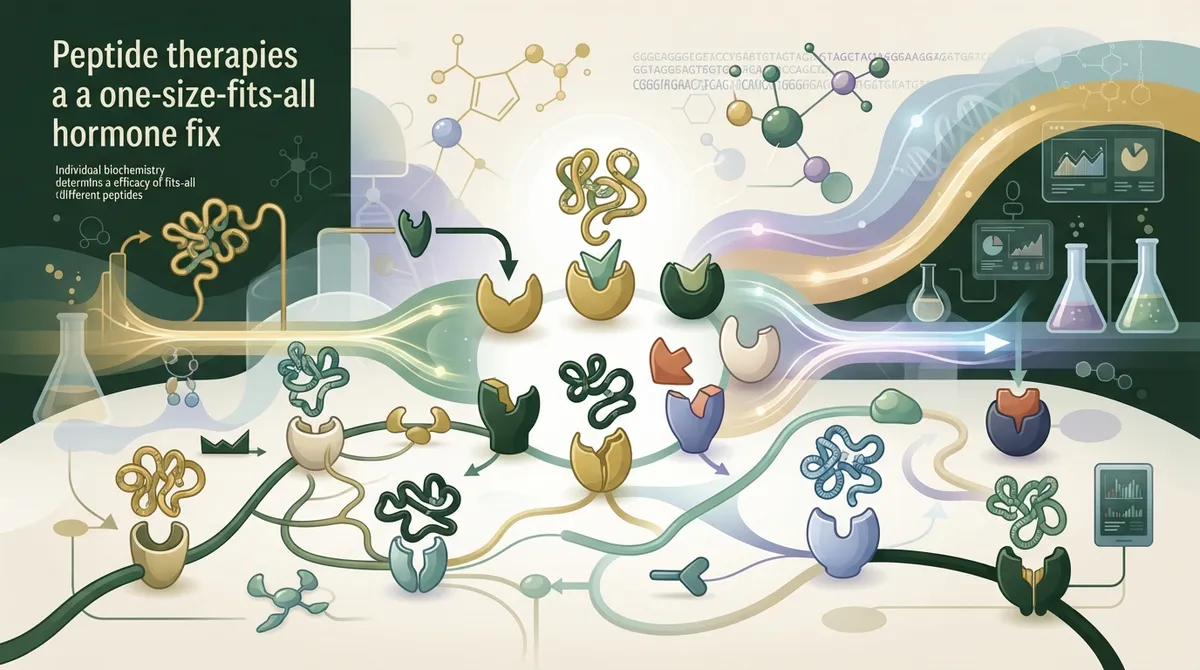
Why Peptides Aren’t a One-Size-Fits-All Hormone Fix
Peptides are small chains of amino acids that act like little messengers in your body. Some mimic natural hormones, some stimulate your body to produce more of something, and others block certain pathways altogether. According to what are peptides, these molecules can influence everything from muscle repair to metabolic signaling.
But here’s the honest truth: peptide therapy doesn’t magically restore every hormone to some perfect, idealized level. Whether a peptide is appropriate for you depends on your diagnosis, your labs, your symptoms, and your overall health history. That’s exactly why Allura Longevity builds every plan around real blood work through LabCorp, not guesswork.
FDA-Approved Peptides With Real Endocrine Benefits
Some peptide-based medicines do have solid, FDA-approved uses that touch on metabolic and hormonal health. GLP-1 receptor agonists like semaglutide and tirzepatide are the best-known examples. They’re approved for type 2 diabetes and, in certain formulations, chronic weight management.
These medications can indirectly support hormonal health by:
- Improving blood sugar control and insulin sensitivity
- Reducing appetite and supporting sustainable weight loss
- Lowering inflammation linked to metabolic dysfunction
- Potentially easing some obesity-related PCOS symptoms
- Supporting cardiovascular risk reduction in specific approved products
That said, GLP-1 drugs are not an approved, universal treatment for PCOS or fertility issues. They’re powerful tools for the right person, not a cure-all. If you’re curious how these medications work in more depth, check out How to Understand GLP-1 Peptide Therapy in 2026.
Peptides You’ve Probably Heard About (And What They’re Really For)
You’ve probably seen names like BPC-157, CJC-1295, ipamorelin, or sermorelin floating around wellness forums promising to “balance your hormones.” Let’s be real with each other for a second: most of these do not have FDA approval for general hormone balancing, and the research behind them is often limited, early-stage, or specific to narrow conditions.
| Peptide | Common Claim Online | Actual Regulatory Status |
|---|---|---|
| Semaglutide / Tirzepatide | Hormone and metabolic balance | FDA-approved for diabetes, weight management (specific products) |
| BPC-157 | Healing and hormone support | Not FDA-approved; research-stage evidence |
| CJC-1295 / Ipamorelin | Growth hormone and anti-aging balance | Not FDA-approved for general use; limited clinical data |
| Sermorelin | Hormone optimization | Specialist growth-hormone uses; not a broad hormone-balance treatment |
| GnRH Analogs | Reproductive hormone balance | Approved for narrow specialist indications only |
This doesn’t mean these peptides are useless. It means they need to be used thoughtfully, under medical supervision, and for the right reasons. Our guide on 9 BPC-157 Peptide Facts to Know Before You Start is worth a read if you’re considering this one specifically.
The Real Risks of Compounded and Research-Use-Only Peptides
This part matters a lot, so let’s slow down. Compounded peptide products are not reviewed by the FDA for safety, effectiveness, or quality before they hit the market. That’s a big deal.
According to the FDA, as of May 31, 2026, there have been 990 adverse-event reports tied to compounded semaglutide and more than 730 reports linked to compounded tirzepatide. Some of these events involved dosing errors, like incorrect measurements, overly rapid titration, and doses that were way too high, leading to nausea, vomiting, and even hospitalizations.
In September 2025, the FDA sent more than 50 warning letters to companies marketing compounded GLP-1 products. The agency was clear: compounded drugs are not the same as FDA-approved medicines and shouldn’t be advertised that way. The FDA has also stated that substances like retatrutide and cagrilintide cannot legally be used in compounding and haven’t been proven safe or effective for any condition.
Here’s a simple rule of thumb to protect yourself:
- Never buy injectable peptides labeled “research use only” for personal use
- Always work with a licensed clinician and a properly regulated pharmacy
- Ask where the product is sourced and how it’s tested
- Confirm proper storage, concentration, and administration instructions
- Make sure follow-up monitoring is part of the plan
For a deeper dive into telling the difference between safe and risky options, see FDA-Approved vs. Compounded Peptides: What Wins?.
How to Start Hormonal Balance Treatment the Right Way
Ready to actually get somewhere with your hormone health? Here’s a simple, step-by-step approach that reputable telehealth providers, including Allura Longevity, generally follow.
- Schedule a medical evaluation to review your symptoms, health history, and current medications
- Get targeted lab work done, ideally through an accredited lab like LabCorp
- Discuss your results with a licensed provider who explains what they actually mean
- Review both approved and investigational treatment options honestly, including pros and cons
- Start a personalized plan with clear monitoring checkpoints
- Adjust your protocol based on follow-up labs and how you’re feeling
This process takes the guesswork out of things. It also protects you from starting a treatment that isn’t actually right for your body. If you’re new to this whole world, How to Start Peptide Therapy Safely and See Real Results walks through what to expect from day one.
What Tests Should Happen Before You Start
Good hormone care doesn’t start with a prescription. It starts with data. Common labs might include thyroid panels, sex hormone levels, fasting insulin and glucose, and inflammatory markers, depending on your symptoms.
Keep in mind that hormone levels shift based on timing, your menstrual cycle phase, age, illness, and even the time of day you’re tested. One slightly off number usually isn’t a reason to panic or jump straight into treatment. Context matters, and so does a provider who takes the time to explain it, according to research published by the National Library of Medicine.
Peptide Therapy vs. Traditional Hormone Replacement
People often mix these two up, so let’s clear the air. Peptide therapy and hormone replacement therapy (HRT) are related but different approaches.
| Approach | What It Does | Common Use Cases |
|---|---|---|
| Hormone Replacement Therapy | Replaces hormones directly (estrogen, progesterone, testosterone) | Menopause symptoms, low testosterone |
| GLP-1 Peptide Therapy | Improves metabolic pathways affecting appetite and insulin | Weight management, type 2 diabetes |
| Growth-Hormone Peptides | Stimulates natural hormone pathways | Specialist-directed, limited general approval |
These treatments aren’t interchangeable, and combining them requires careful medical oversight. If you’re weighing your options, How to Choose Between Bioidentical Hormones and Peptides breaks it down further, and our guide on Testosterone vs. Peptides for Women: Which Wins? is helpful too.
Signs You’ve Found a Legitimate Peptide Therapy Provider
Not every clinic promising “hormone balance” is playing by the same rules. Here’s what to look for:
- Requires blood work before prescribing anything
- Employs licensed medical providers, not just sales reps
- Is transparent about FDA approval status of any peptide offered
- Provides ongoing monitoring, not a one-time prescription
- Clearly explains risks, benefits, and alternatives
- Never pressures you into buying “research use only” products
Allura Longevity checks every one of these boxes. Care is led by Ashley, a board-certified Family Nurse Practitioner, and every plan starts with a $50 virtual consultation and real lab work through LabCorp. From there, you get a customized six-month plan delivered right to your door, with ongoing check-ins to make sure things are actually working for your body.
Bringing It All Together
Chasing “hormonal balance” doesn’t have to mean guessing your way through unregulated products or vague online promises. Real progress comes from a proper evaluation, targeted testing, and a treatment plan built around your actual biology. Whether that means an FDA-approved GLP-1 medication, a specialist-use peptide, or traditional hormone replacement, the right choice depends entirely on you.
We know this can feel overwhelming, especially when you’re juggling work, family, and just trying to feel like yourself again. That’s exactly why Allura Longevity built a telehealth model that fits real life: convenient virtual visits, home lab kits, and peptides delivered straight to your door. Spots for new clients open up each month, so if you’re ready to get real answers instead of more guessing, request a consultation today and take that first honest step toward feeling better.
FAQs
Q: What does hormonal balance treatment mean in peptide therapy?
A: It means finding the actual cause behind your symptoms first, like thyroid issues or low testosterone, then choosing a treatment based on that diagnosis. Peptide therapy isn’t a magic fix, but it can genuinely help when it’s matched to the right condition and backed by real lab work.
Q: Can GLP-1 medications like semaglutide improve hormone balance?
A: They can help indirectly by improving insulin sensitivity, reducing appetite, and supporting weight loss, which sometimes eases obesity-related hormonal issues. That said, they’re approved for diabetes and weight management specifically, not as a general hormone-balancing treatment.
Q: Are BPC-157, CJC-1295, or ipamorelin approved for hormonal balance?
A: Nope, not for general hormone balance. These peptides are popular online, but they’re not FDA-approved for that use, and the research behind them is still pretty limited. Always talk to a licensed provider before trying them.
Q: Is compounded semaglutide as safe as the FDA-approved version?
A: Not necessarily. The FDA has received hundreds of adverse-event reports tied to compounded semaglutide and tirzepatide, including dosing errors and hospitalizations. Working with a licensed provider and a properly regulated pharmacy is always the safer route.
Q: What tests should I get before starting peptide therapy?
A: Your provider will likely recommend blood work covering thyroid function, sex hormones, blood sugar, and sometimes inflammatory markers, depending on your symptoms. At Allura Longevity, this happens through LabCorp before any treatment plan is created, so nothing is left to guesswork.





