
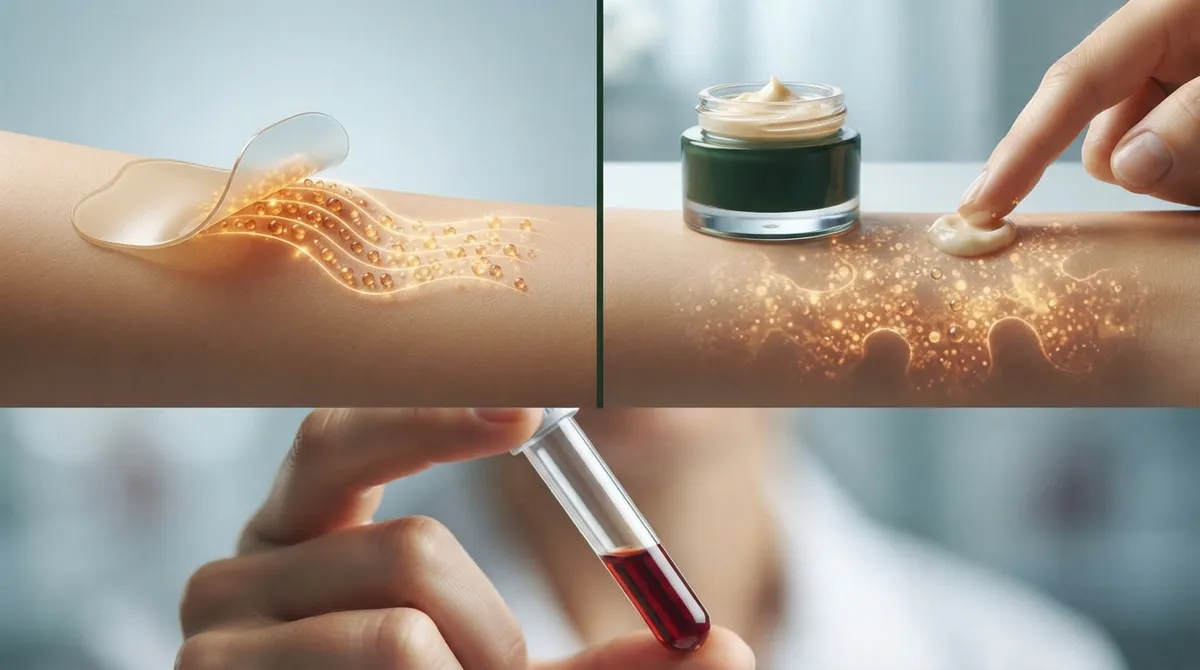
Key Takeaways
-
Transdermal patches provide more consistent, premeasured hormone doses with lower skin-transfer risk, while creams offer easier dose adjustment but require daily application and carry transfer risks, especially with testosterone gels.
-
Compounded bioidentical hormone creams absorb significantly less effectively than FDA-approved patches and gels according to recent studies, so product quality and regulatory approval matter more than marketing claims about bioidentical hormones.
-
Both creams and patches work equally well for menopause symptoms like hot flashes and night sweats; the choice should be based on skin sensitivity, daily routine consistency, and household exposure risks rather than symptom-relief superiority.
-
Regular blood testing at specific intervals (2-8 hours post-application for gels, 3-12 hours for patches) and symptom monitoring within the first few months are essential for safe, effective hormone therapy adjustment.
-
Testosterone therapy should target mid-normal hormone levels for your age group and requires baseline bloodwork to rule out other causes; it's not appropriate for general anti-aging or energy without a proper medical diagnosis.
-
Peptide therapy and hormone replacement are completely different treatment categories with separate evidence and mechanisms; they should never be marketed as enhancing each other's safety or effectiveness.
If you’re exploring hormone therapy, you’ve probably hit this fork in the road: cream or patch? It feels like a small choice, but it can shape how you feel every single day. Good news—you don’t have to figure this out alone or guess your way through it.
At Allura Longevity, we believe hormone decisions deserve real answers, not vague marketing promises. This guide breaks down hormone therapy creams versus patches in plain language, so you can walk into your next conversation with your provider feeling confident. We’ll also touch on how this fits alongside peptide therapy, since many of our clients are curious about combining approaches for whole-body wellness.
One quick but important note: hormone creams and patches deliver hormones like estradiol or testosterone. Peptides such as BPC-157 or GLP-1 medications are a completely different category. They work differently, have different research behind them, and shouldn’t be confused with hormone replacement. We’ll keep that distinction clear throughout.

What Hormone Cream and Patches Actually Do
Both creams and patches are called “transdermal” delivery methods. That’s a fancy way of saying the hormone soaks through your skin and into your bloodstream. This matters because it skips a step your liver would otherwise have to handle if you swallowed a pill.
Skipping that liver step is a big reason many providers lean toward transdermal options. According to National Library of Medicine research, avoiding this “first-pass” effect can matter for people with certain cardiovascular or gallbladder risk factors. But transdermal doesn’t mean risk-free. Every hormone therapy needs a personalized risk check first.
How Creams Work
Creams and gels get rubbed onto your skin daily. The hormone absorbs gradually. Many people like the flexibility here—your provider can adjust your dose more easily than with a fixed patch.
How Patches Work
Patches stick directly onto your skin and release a steady, premeasured amount of hormone over one to several days. You apply them less often than cream, which some people find more convenient.
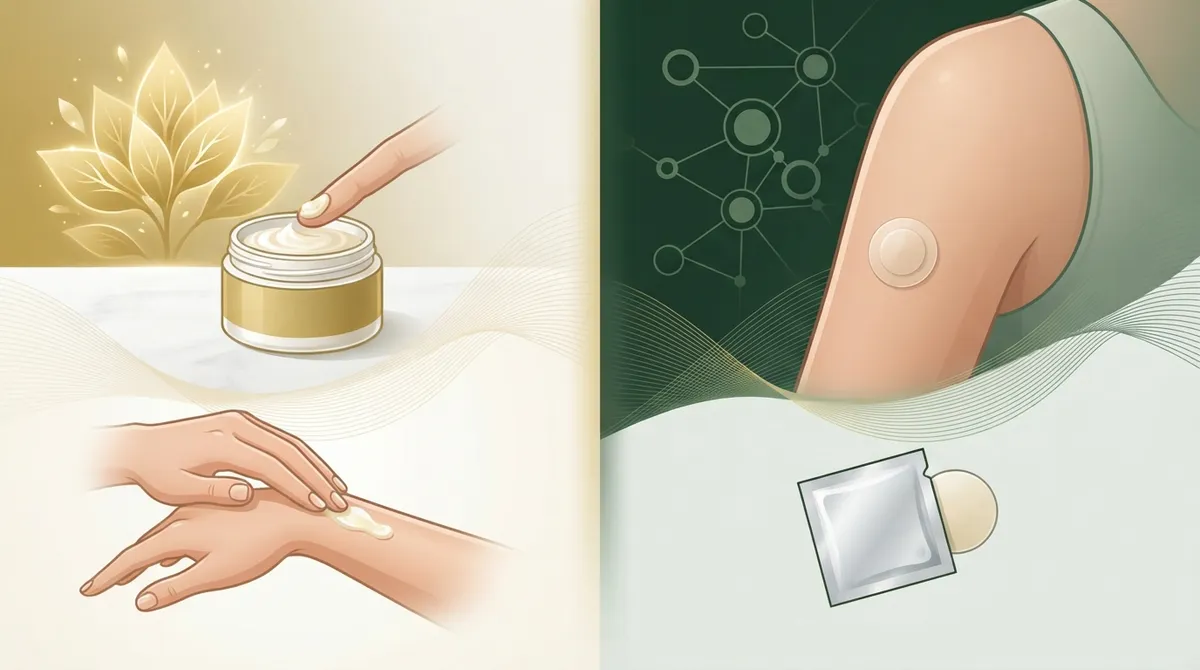
Hormone Cream vs. Patches: Side-by-Side Comparison
Let’s put these two options next to each other so you can see the real differences at a glance.
| Factor | Hormone Cream/Gel | Hormone Patch |
|---|---|---|
| Application frequency | Daily | Every 1–7 days, depending on product |
| Dose consistency | Can vary by skin, site, timing | More standardized, premeasured |
| Skin reactions | Less common, but transfer risk possible | Adhesive irritation is more common |
| Water/sweat resistance | Needs dry time before contact | Can loosen with swimming or sweating |
| Dose flexibility | Easier to titrate up or down | Limited to available patch strengths |
| Skin-to-skin transfer risk | Possible, especially with testosterone gel | Very low once applied |
Notice there’s no clear universal winner here. The Endocrine Society Clinical Practice Guideline and the North American Menopause Society both point out that transdermal estrogen options—patches, gels, and sprays—work similarly well for relieving hot flashes. The right pick really comes down to your lifestyle and your body’s response.
Estrogen Therapy: Cream or Patch for Menopause Symptoms
If you’re dealing with hot flashes, night sweats, or mood swings tied to menopause, you have real options. The 2022 NAMS position statement lists transdermal patches, gels, and sprays as effective choices for these symptoms. There’s no strong evidence that one transdermal form beats another for symptom relief.
Here’s what tends to guide the decision:
- Skin sensitivity. If adhesives irritate your skin, cream may be gentler.
- Daily routine. If you forget things easily, a patch you change weekly might fit better than a daily cream.
- Absorption needs. If your provider wants tighter dose control, a patch’s steady release may be preferred.
- Uterus status. If you still have your uterus and use systemic estrogen, you’ll likely need added progestogen to protect your uterine lining, regardless of cream or patch.
One more thing worth flagging: compounded bioidentical hormone creams are not automatically the same as FDA-approved patches or gels. A recent comparative study found compounded transdermal estradiol cream absorption was significantly lower than FDA-approved gel and patch products tested. This doesn’t mean every compounded cream underperforms, but it does mean quality control and testing matter more than marketing language.
Testosterone Replacement: Gel, Cream, or Patch
Testosterone therapy follows a similar logic but with a few extra wrinkles. Gels and creams are popular because they’re easy to apply, but they carry a real risk of transferring to a partner or child through skin contact. Patches avoid that transfer risk but tend to cause more local skin irritation.
The Endocrine Society’s testosterone guidance offers helpful starting benchmarks:
- 1% testosterone gel: commonly started around 50–100 mg per day
- Patches: designed to deliver roughly 2–4 mg of testosterone over 24 hours
- Blood testing for gel users: typically drawn 2–8 hours after application
- Blood testing for patch users: typically drawn 3–12 hours after application
Your provider should aim for testosterone levels in the mid-normal range for your age group—not sky-high numbers. Testosterone therapy isn’t meant to be used casually for general energy or anti-aging purposes without a proper diagnosis. That’s why bloodwork always comes first.
Common Side Effects to Watch For
No hormone delivery method is side-effect-free. Knowing what to expect helps you catch problems early and talk to your provider with confidence.
| Delivery Method | Common Side Effects |
|---|---|
| Cream/Gel | Skin irritation at application site, potential transfer to others, absorption inconsistency |
| Patch | Adhesive redness or itching, patch falling off during exercise or swimming |
If you notice ongoing irritation, unexpected weight changes, mood shifts, or symptoms that don’t improve, tell your provider. Regular monitoring—not guesswork—is what keeps hormone therapy safe and effective long term.
Steps to Decide Between Cream and Patch
Feeling a little overwhelmed? Here’s a simple process to help you and your provider land on the right choice.
- Get baseline bloodwork. This shows your current hormone levels and rules out other causes for your symptoms.
- Talk through your daily habits. Do you shower right after waking up? Sweat heavily at the gym? These details matter for absorption.
- Consider your skin history. Sensitive skin or adhesive allergies point toward cream. Inconsistent daily routines point toward patches.
- Review household exposure risk. If you live with kids or a partner, transfer risk from gels may be a dealbreaker.
- Start low, monitor, and adjust. Your provider should recheck levels and symptoms within the first few months and fine-tune your plan.
This is exactly the kind of individualized process we walk clients through. If you’re also curious how peptide therapy might complement your wellness goals, our guide on how to choose between bioidentical hormones and peptides breaks down the differences even further.
Where Peptide Therapy Fits Into the Bigger Picture
Here’s something we want to be crystal clear about: peptides are not hormone replacement, and they shouldn’t be marketed as boosting the safety or effectiveness of estrogen or testosterone delivery. That said, many of our clients pursue peptide therapy for goals hormone therapy doesn’t directly address—things like recovery, metabolic support, or sleep quality.
For example, someone using estradiol patches for menopause symptoms might also explore peptides for women to support energy or skin health as a separate, complementary piece of their wellness plan. Similarly, men using testosterone therapy sometimes look into peptides for men for muscle recovery or metabolic goals. These are distinct treatment categories with different evidence, so it’s important your provider treats them as separate conversations rather than blending the marketing.
If you’re new to this world entirely, our article on 8 facts that explain what are peptides in 2026 is a great starting point. You can also learn more about the science from what are peptides for a general overview.
Why Personalized Monitoring Matters So Much
Whether you go with cream, gel, or patch, the real secret to success isn’t the delivery method—it’s the monitoring behind it. Absorption varies by skin type, application site, and even the time of day you apply it. That’s why cookie-cutter dosing rarely works well.
At Allura Longevity, every treatment plan starts with a $50 virtual consultation and comprehensive bloodwork through LabCorp. From there, our licensed providers, led by board-certified Family Nurse Practitioner Ashley, build a custom six-month plan based on your actual lab results and goals. Everything ships straight to your door, and we check in regularly to adjust your plan as your body responds.
We proudly serve clients across Florida, Georgia, Texas, Connecticut, Indiana, Maryland, New York, and California, all through convenient, nationwide telehealth. If you want to learn more about starting safely, check out our guide on how to start peptide therapy safely and see real results.
Questions to Bring to Your Next Appointment
Walking into your appointment prepared makes a huge difference. Here are a few smart questions to ask:
- Is this an FDA-approved product, or is it compounded?
- How will we monitor my hormone levels after I start?
- What symptoms should prompt me to call you right away?
- If I have a uterus, do I need added progestogen?
- How does this interact with anything else I’m taking, including peptides?
Asking these upfront helps you avoid surprises and builds a trusting relationship with your provider from day one.
Ready to Take the Next Step?
Choosing between hormone cream and patches doesn’t have to feel confusing or overwhelming. With the right bloodwork, honest conversation, and ongoing monitoring, you can find the option that actually fits your life. And if you’re curious how peptide therapy might round out your wellness routine, we’re here to help you explore that too—separately and safely.
Spots fill up fast each month, so if you’re ready to get personalized answers backed by real lab data, request a consultation with our team today. You can also call us directly at (813) 510-6277 to speak with someone who genuinely wants to help you feel your best.
FAQs
Q: Is hormone cream or a patch better for menopause symptoms?
A: Honestly, both work well for most people! Research shows transdermal patches, gels, and creams relieve hot flashes similarly. The best choice usually comes down to your skin sensitivity, daily routine, and how your provider wants to monitor your dose.
Q: Can hormone cream or gel cause hormone transfer to another person?
A: Yes, this is a real possibility, especially with testosterone gels and creams applied to the skin. Patches carry a much lower transfer risk once they’re properly applied. If you live with kids or a partner, this is worth discussing with your provider upfront.
Q: Are compounded bioidentical hormone creams as effective as FDA-approved patches?
A: Not always, and that’s an important thing to know. A recent study found compounded estradiol cream absorption was notably lower than FDA-approved gels and patches. That doesn’t mean every compounded product is inferior, but it does mean quality and testing matter a lot.
Q: How should hormone levels be monitored after starting a patch, cream, or gel?
A: Monitoring timing depends on the product. For testosterone gel, levels are often checked 2 to 8 hours after application; for patches, it’s usually 3 to 12 hours later. Your provider will also track symptoms and adjust your dose based on real lab results, not guesswork.
Q: Can peptide therapy be combined with estrogen or testosterone replacement?
A: Peptides and hormone replacement are different treatment categories, so they’re never automatically combined or interchangeable. That said, many people pursue both as separate parts of a broader wellness plan, with each addressing different goals like recovery, energy, or metabolic support.





