

Key Takeaways
-
Most peptides marketed for anti-aging lack strong human evidence; BPC-157 and TB-500 have 35 of 36 studies in animals only, and epitalon has no Western human trials despite rodent lifespan claims of 12-24%.
-
FDA-approved peptide medicines exist for specific conditions, but most general anti-aging peptides are not FDA-approved for age-reversal; quality control issues like bacterial endotoxins in 8% of sampled products make regulated pharmacy sourcing essential.
-
Topical peptides like GHK-Cu show modest benefits for skin hydration and brightness, but injectable peptides for systemic anti-aging lack sufficient long-term safety data and require medical supervision with baseline bloodwork and ongoing monitoring.
-
Personalized, medically-supervised peptide plans with licensed provider oversight, regular bloodwork, and dose adjustments are far more effective than self-directed protocols, as individual hormone levels and health history determine which peptides actually work for each person.
Scrolling through social media, you’ve probably seen ads promising peptides that erase wrinkles, boost your energy, and turn back your biological clock. It’s exciting stuff. But if you’re a busy professional trying to feel sharper, an aging adult wanting more vitality, or a biohacker who loves data and results, you deserve real answers, not just hype. Anti aging peptide therapy is a hot topic in 2026, and it’s worth understanding what’s actually backed by evidence versus what’s just clever marketing.
Here’s the good news: some peptide-based treatments do have solid science behind them, especially when prescribed and monitored by a licensed medical provider. The key is knowing which peptides have real support, which ones are still experimental, and how to get personalized, medically supervised care instead of guessing on your own. This guide breaks it all down in simple terms, so you can make smart, confident choices for your health journey.

What Anti Aging Peptide Therapy Actually Means
Let’s clear something up right away. “Anti aging peptide therapy” isn’t one single treatment. It’s a broad term that covers many different things, from FDA-approved medicines to unregulated compounds sold online with big promises.
Peptides are small chains of amino acids that act like messengers in your body, telling cells what to do. Some peptides are approved for specific medical uses, like managing metabolic conditions. Others are still being studied and lack strong human research. And some are just topical skincare ingredients marketed for smoother, brighter skin. Understanding what peptides actually are helps you separate real science from wishful thinking.
Categories You’ll Commonly Encounter
- FDA-approved peptide medicines used for defined medical conditions
- Growth-hormone secretagogues like CJC-1295 and ipamorelin
- Investigational tissue-repair peptides such as BPC-157 and TB-500
- Topical or oral peptides marketed for skin hydration and brightness
- Longevity-focused compounds like epitalon and MOTS-c with limited human data
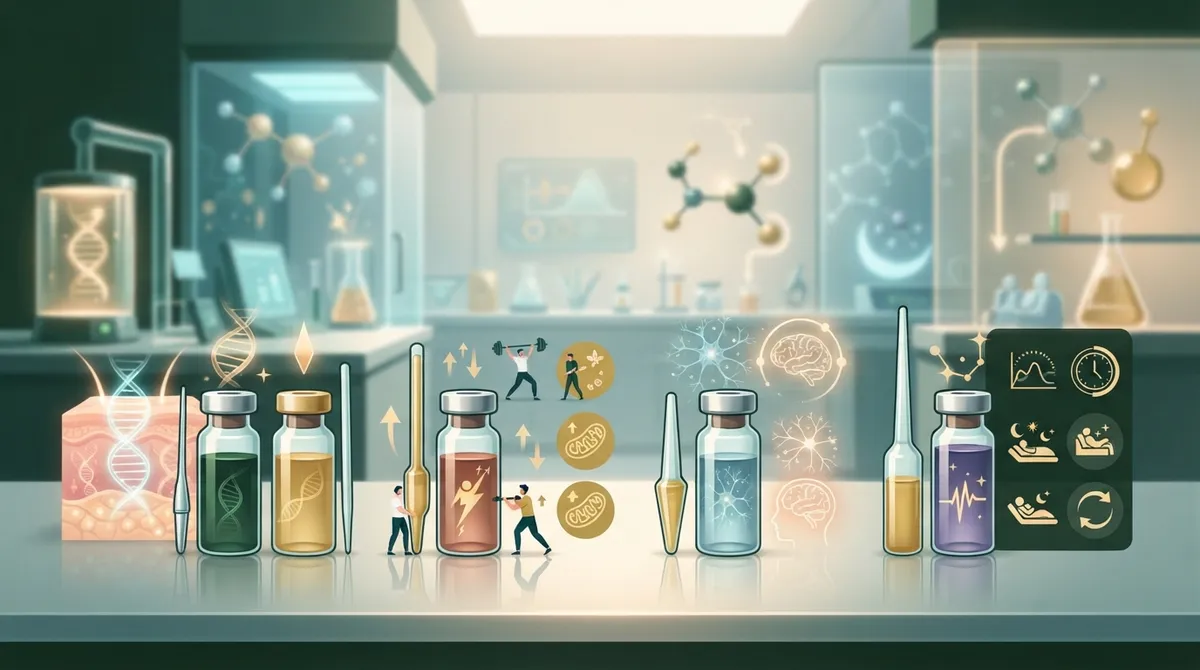
Which Peptides Are Actually Used for Anti Aging Goals
Not all peptides are created equal, and the amount of research behind each one varies a lot. Here’s a quick breakdown of some popular names you might have heard about.
| Peptide | Common Claim | Level of Human Evidence |
|---|---|---|
| GHK-Cu | Skin repair, collagen support (topical) | Moderate for topical use, limited for injectable |
| BPC-157 | Tissue repair, recovery | Mostly animal studies, sparse human data |
| TB-500 | Inflammation, healing | Limited, small uncontrolled studies |
| Epitalon | Longevity, lifespan extension | Rodent studies only, no human trials |
| CJC-1295 / Ipamorelin | Growth hormone support, body composition | Small studies, short-term data |
According to a 2025 clinical review, growth hormone administration is not currently recommended as an anti-aging treatment for healthy older adults, mainly because long-term safety data is still missing. This doesn’t mean these therapies have zero value. It means they need to be approached carefully, with realistic expectations and medical guidance.
What the Research Really Says About Popular Compounds
GHK-Cu and Skin Health
Of all the trendy anti aging peptides, GHK-Cu has some of the more credible support, but mostly for topical use. Studies suggest it may help with wound healing and support collagen-related processes in skin. However, evidence for injectable GHK-Cu as a systemic anti-aging treatment is still thin, so don’t expect it to work like a fountain of youth in a syringe.
BPC-157 and TB-500 for Recovery
These two peptides are everywhere in recovery and wellness circles. But here’s an important stat: a review of BPC-157 research found that 35 of 36 published studies were done in animals, not people. There’s currently no published Phase 1 human safety trial. If you’re curious about this compound, our article on BPC-157 peptide facts to know before you start goes into more depth.
Epitalon and Longevity Claims
Epitalon gets a lot of buzz for potential lifespan extension. A 2025 review noted rodent studies showing lifespan increases of roughly 12% to 24%. Sounds amazing, right? But there are no Western randomized controlled trials in humans, and no solid long-term safety data. Animal results simply can’t be assumed to carry over to people.
Topical and Oral Peptides for Skin
If your main goal is smoother, more hydrated skin, topical and oral peptides may offer modest help. A 2025 systematic review found improvements in hydration and brightness, though effects on skin elasticity were inconsistent. This supports skincare benefits, not full-body age reversal.
Are Anti Aging Peptide Injections FDA Approved?
This is one of the most common questions people ask, and it deserves a clear answer. Most peptides marketed for general anti-aging or longevity purposes are not FDA approved for that specific use. Some peptide-based medicines are approved for particular conditions, like certain metabolic treatments, but that approval doesn’t extend to age-reversal claims.
For example, tirzepatide is an FDA-approved peptide-based medicine with safety data from more than 7,700 clinical trial participants. That’s solid evidence, but it supports its approved medical use, not blanket anti-aging promises. Understanding the difference between FDA-approved and compounded peptides can help you ask the right questions before starting any treatment.
How to Approach Anti Aging Peptide Therapy Safely
If you’re excited about trying peptide therapy for wellness or longevity goals, that’s great. Just make sure you go about it the right way. Here’s a simple step-by-step process to follow.
Steps to Start Safely
- Get a medical evaluation, including bloodwork, before starting any peptide
- Discuss your current medications and health history with a licensed provider
- Choose peptides sourced from regulated pharmacies, not unverified online sellers
- Set realistic goals based on evidence, not marketing hype
- Schedule regular follow-ups to monitor bloodwork and adjust your plan
- Report any side effects to your provider right away
This process matters because quality control is a real concern in this industry. One private testing study found bacterial endotoxins in about 8% of sampled peptide products. That’s a strong reminder to only use products obtained through legitimate, regulated channels.
Potential Risks and Side Effects to Know
No treatment is without risk, and anti aging peptide therapy is no exception. Being informed helps you make better decisions and spot problems early.
- Edema, joint pain, or muscle discomfort with growth-hormone-related peptides
- Possible impact on blood sugar regulation
- Endocrine or hormonal imbalances with unsupervised use
- Infection or tissue injury from poorly sourced injectables
- Immune reactions from contaminated or mislabeled products
- Gastrointestinal effects like nausea with certain peptide-based medicines
This is exactly why working with a licensed provider matters so much. Learn more about how to start peptide therapy safely and see real results before jumping into any protocol.
Topical vs Injectable Peptides: What’s the Difference
| Feature | Topical Peptides | Injectable Peptides |
|---|---|---|
| Application | Applied to skin (creams, serums) | Administered via injection under medical guidance |
| Evidence Strength | Moderate for skin hydration and appearance | Varies widely, often limited |
| Regulation | Cosmetic products, less regulated | Should be prescribed by a licensed provider |
| Common Goals | Wrinkle reduction, hydration, brightness | Recovery, hormone support, longevity goals |
Both approaches can play a role in a wellness routine, but they serve different purposes. If you’re serious about results, understanding how to pick the best peptides for aging starts with knowing this distinction.
Why Personalized, Medically Supervised Plans Matter
Here’s the truth: what works for one person might not work for you. Your hormone levels, health history, and goals are unique. That’s why cookie-cutter peptide protocols often fall short, and why personalized plans built from real bloodwork make such a difference.
At Allura Longevity, clients start with an affordable $50 virtual consultation, complete bloodwork through LabCorp, and receive a customized six-month treatment plan. Everything is delivered right to your door, and licensed providers, led by board-certified Family Nurse Practitioner Ashley, monitor your progress and adjust your plan as needed. This kind of ongoing oversight is what separates responsible peptide therapy from guesswork.
What to Look for in a Provider
- Requires bloodwork before prescribing any peptide
- Offers licensed medical oversight, not just self-directed dosing
- Provides transparent information about risks and realistic outcomes
- Sources peptides through regulated pharmacy channels
- Offers ongoing check-ins and plan adjustments
If you’re comparing options, our guide on local clinic vs telehealth peptide therapy can help you decide what fits your lifestyle best.
Setting Realistic Expectations
It’s important to say this clearly: no peptide therapy has been proven to reverse biological aging or extend human lifespan. That doesn’t mean these therapies are worthless. Many people report real improvements in energy, sleep, recovery, and skin appearance when treatment is personalized and monitored properly.
The key is separating flashy marketing from grounded medical care. According to the National Library of Medicine, therapeutic peptides show promise across several areas of gerontology, but researchers stress the need for more controlled human trials before broad claims can be made. Being an informed patient means asking good questions and trusting evidence over hype.
Bringing It All Together
Anti aging peptide therapy sits at an exciting intersection of science and wellness, but it’s still evolving. Some treatments, like topical peptides for skin or FDA-approved peptide medicines, have decent evidence behind them. Others, like BPC-157 or epitalon for longevity, are promising but still experimental in humans.
The smartest path forward is simple: get proper testing, work with a licensed provider, and choose quality over hype. Whether you’re focused on energy, recovery, or simply feeling like yourself again, a customized approach beats guessing every time. To understand peptides more broadly, check out this helpful overview on what are peptides and how they function in the body.
Ready to find out what a personalized, medically supervised peptide plan could look like for you? Request a consultation with Allura Longevity today. Spots are limited each month, so don’t wait to start your journey toward feeling more vibrant, energized, and confident in your own skin.
FAQs
Q: What is anti aging peptide therapy and how does it work?
A: Anti aging peptide therapy is a broad term covering various peptide-based treatments, from FDA-approved medicines to topical skincare products and investigational compounds. It generally works by supporting processes like tissue repair, hormone balance, or skin hydration, though the strength of evidence varies a lot by peptide. The best approach involves a licensed provider who tailors treatment based on your bloodwork and goals, like the personalized plans offered through Allura Longevity.
Q: Are BPC-157, TB-500, epitalon, CJC-1295, or ipamorelin safe?
A: These peptides are popular in wellness circles, but human safety data is still limited for most of them. For example, most BPC-157 research has been done in animals, not people, so long-term human safety isn’t fully established yet. That’s why it’s so important to only use these compounds under medical supervision, with proper monitoring along the way.
Q: Do peptides actually reduce wrinkles or make you look younger?
A: Some topical peptides, like GHK-Cu, show modest benefits for skin hydration and brightness in studies. However, evidence doesn’t support the idea that peptides can dramatically reverse aging or replace a full skincare and wellness routine. Think of them as one helpful tool, not a magic fix.
Q: What blood tests and medical monitoring are needed during peptide therapy?
A: Before starting any peptide protocol, it’s smart to complete bloodwork that checks hormone levels, metabolic markers, and overall health status. Ongoing monitoring lets your provider adjust dosages and catch any side effects early. At Allura Longevity, this process starts with LabCorp testing and continues with regular check-ins throughout your six-month plan.
Q: How do topical peptides differ from injectable peptide treatments?
A: Topical peptides are applied directly to the skin and are mainly used for cosmetic goals like hydration and brightness. Injectable peptides are administered under medical guidance and are often used for recovery, hormone support, or other wellness goals. Both have different levels of evidence and risk, so it helps to understand which category fits your needs before choosing a treatment path.





