

Key Takeaways
-
The phrase 'sexual wellness peptide protocol' is a marketing term, not a standard medical plan; safe care starts with a licensed clinician evaluation rather than picking a peptide off a menu.
-
Bremelanotide (PT-141, Vyleesi) is the only peptide in the article FDA-approved for sexual health, and only for acquired, generalized HSDD in premenopausal women.
-
Bremelanotide is contraindicated in people with uncontrolled high blood pressure or cardiovascular disease, and it can temporarily raise blood pressure, so a clinician should review your history first.
-
The FDA label advises stopping bremelanotide if symptoms have not improved after eight weeks, and limits use to one dose in 24 hours, at least 45 minutes before sexual activity.
-
Bremelanotide is not FDA-approved for men and works differently from PDE5 inhibitors like Viagra, so the two are not interchangeable for erectile concerns.
-
Kisspeptin, oxytocin, Melanotan II, and BPC-157 are not FDA-approved for sexual dysfunction, and unverified online products may carry uncertain quality, dosing, and safety risks.
Let’s be honest: talking about libido, desire, and intimacy can feel awkward. But if your spark has dimmed, you are far from alone, and you deserve real answers instead of hype. Search online and you will see the phrase sexual wellness peptide protocol everywhere. Here is the friendly truth: it is a marketing phrase, not a standard medical plan.
That does not mean there is nothing to explore. It means the smartest path starts with a good evaluation, honest expectations, and a licensed clinician who knows the difference between what is approved and what is experimental. In this guide, we will walk through how to build a safe, sensible approach step by step. You will learn what the evidence supports, what it does not, and how to avoid common traps.
Whether you are a health optimizer, a busy professional, or simply someone who wants to feel more like yourself again, this guide is written for you. Think of it as a calm, clear conversation with a friend who has done the homework.
What a Sexual Wellness Peptide Protocol Really Means
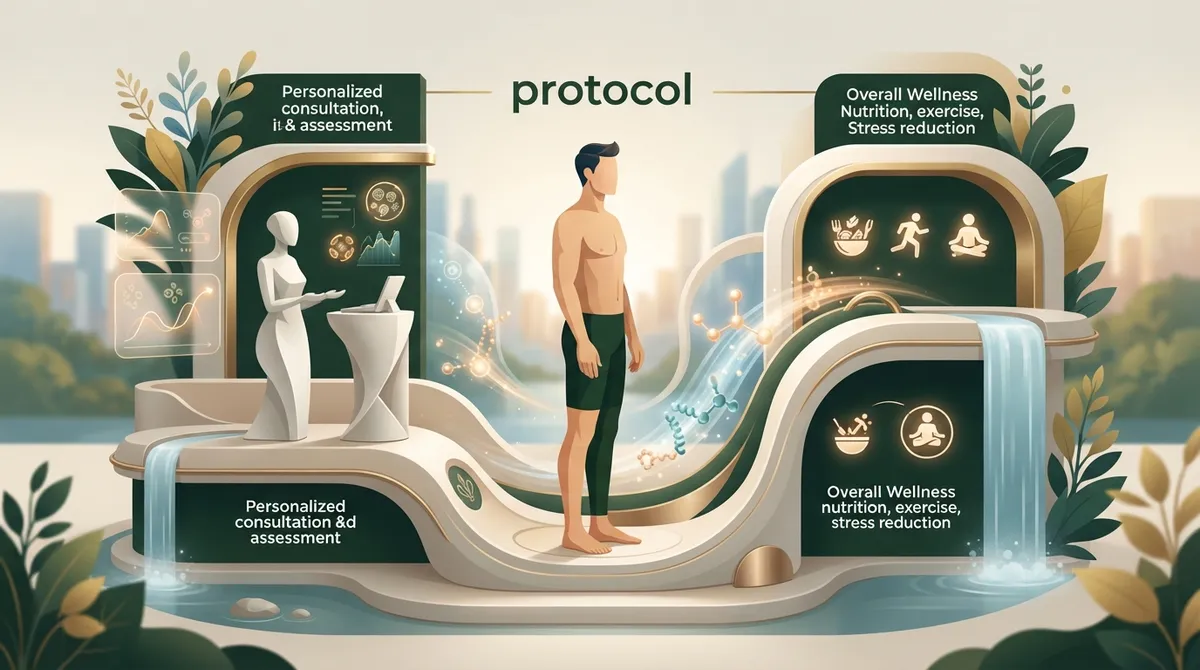
A sexual wellness peptide protocol is a loose label. It usually describes a plan that uses one or more peptides to support desire, arousal, or intimacy. But there is no single, agreed-upon regimen that works for everyone.
Peptides are short chains of amino acids that act as signals in the body. If you want a quick refresher, our guide on 8 Facts That Explain What Are Peptides in 2026 covers the basics, and what are peptides is a helpful plain-language overview from WebMD.
Here is the key point. Sexual concerns have many possible causes. Low desire, erectile difficulty, pain, and trouble with arousal are different issues. A good plan starts by figuring out which one you are dealing with, not by picking a peptide off a menu.
The One Peptide With FDA Approval for Sexual Health
Among peptides, one stands out: bremelanotide, also called PT-141 and sold under the brand name Vyleesi. It is the only peptide identified in the research for this article as FDA-approved for a sexual-health indication. It was approved in 2019.
Its approved use is narrow. It is for acquired, generalized hypoactive sexual desire disorder (HSDD) in premenopausal women. That means low desire that causes personal distress and is not mainly explained by another medical condition, a medication, or a relationship problem.
How the FDA Label Describes Use
According to the FDA label, bremelanotide is given as a 1.75 mg subcutaneous injection in the abdomen or thigh. The label says to take it at least 45 minutes before anticipated sexual activity, and no more than one dose in 24 hours. If symptoms have not improved after eight weeks, the label says to stop.
It is also not indicated for men, for postmenopausal women, or for improving sexual performance. You can read the full prescribing details on the FDA label for Vyleesi.
Who Should Not Use It
Bremelanotide is contraindicated in people with uncontrolled high blood pressure or known cardiovascular disease. It can cause a temporary rise in blood pressure. Common side effects, reported in more than 4% of patients in the label, include:
- Nausea
- Flushing
- Injection-site reactions
- Headache
- Vomiting
This is why a clinician needs to review your history, your medications, and any pregnancy considerations before prescribing. For more on this topic, see 9 Intimate Wellness Facts About PT-141 in 2026.
Step-by-Step: How to Build Your Protocol the Safe Way
Here is a simple, friendly roadmap. Following these steps helps you stay safe and avoid wasting money.
- Name your concern clearly. Is it low desire, trouble with arousal, erectile difficulty, or discomfort? Write down when it started and how often it happens.
- Rule out other causes. Stress, sleep problems, mood changes, relationship strain, and medications can all affect intimacy.
- Get a medical evaluation. A licensed clinician should review your history, current medications, and blood pressure.
- Check your labs. Hormones, thyroid, blood sugar, and other markers can point to fixable issues.
- Decide on an approved or evidence-based option first. Start with what has real regulatory backing and clear safety guidance.
- Set follow-up checkpoints. Plan to review results, side effects, and goals with your provider.
Notice what is missing from this list: buying random vials online. A protocol is only as safe as the evaluation behind it.
What a Clinician Should Evaluate First
Before any peptide is discussed, a thoughtful provider looks at the whole picture. Sexual health is tied to heart health, hormones, mood, sleep, and relationships.
| Area to Review | Why It Matters |
|---|---|
| Blood pressure and heart health | Some options can raise blood pressure temporarily |
| Current medications | Many drugs can lower desire or affect arousal |
| Hormone and metabolic labs | Low or imbalanced hormones can change desire and function |
| Mental health and stress | Anxiety, low mood, and burnout often dampen desire |
| Pain or physical changes | Pain needs its own diagnosis and treatment plan |
| Relationship factors | Communication and connection strongly shape desire |
If hormones are part of the story, you may also like How to Know If You Need Hormone Therapy in 2026 and 6 Real Treatments for Low Libido in Women (2026).
Peptides People Ask About (and What the Evidence Says)
Many peptides get mentioned in sexual wellness conversations. It helps to separate the approved from the experimental. Here is a quick comparison.
| Peptide | FDA Status for Sexual Dysfunction | What to Know |
|---|---|---|
| Bremelanotide (PT-141, Vyleesi) | Approved for HSDD in premenopausal women | Narrow label; use outside it is off-label |
| Kisspeptin | Not approved | Limited human evidence; quality and safety concerns with unregulated products |
| Oxytocin | Not approved for sexual dysfunction | Evidence varies and is limited |
| Melanotan II | Not approved | Safety and quality uncertainty |
| BPC-157 | Not approved | Not an established sexual health treatment |
To learn more about some of these, check out Kisspeptin vs. Gonadorelin: Which Fertility Peptide Wins? and 6 Facts About Melanotan Peptide You Should Know.
Approved Versus Compounded: Why the Difference Matters
This is one of the most important sections to read twice. FDA-approved drugs go through review for safety, effectiveness, and quality. Compounded drugs do not get that same review before they are marketed.
The research for this article also notes that kisspeptin and BPC-157 have appeared in FDA Category 2 bulk-substance discussions. That category reflects safety concerns or a lack of enough safety information. Regulatory status can change, so always check current FDA materials.
The practical takeaway is simple. Online or unverified products may have uncertain quality, dosing, and safety. A reputable clinician will be upfront about what is approved, what is off-label, and what is experimental. To go deeper, read FDA-Approved vs. Compounded Peptides: What Wins? and Approved vs. Compounded Peptides for Sexual Wellness: Which?
What About Men and Erectile Concerns?
Here is where marketing often gets ahead of the science. Bremelanotide is not FDA-approved for men. Using it in men is off-label and should not be presented as an established treatment.
It also works differently from PDE5 inhibitors, the medicines commonly used for erectile dysfunction. Because the mechanisms are different, the two are not interchangeable. If erectile concerns are your focus, a clinician can walk you through your options, including PT-141 vs. Viagra: Which Wins for Men’s Sexual Health? and our list of 5 Erectile Dysfunction Treatment Mistakes to Avoid in 2026.
Men may also want to review peptides for men, while women can explore peptides for women, both with a licensed provider guiding the process.
Common Mistakes That Waste Money (and Risk Safety)
Let’s keep this light but honest. Here are the traps we see most often:
- Self-injecting unverified products. If you cannot confirm quality and dosing, you are guessing.
- Expecting a magic switch. No peptide guarantees desire or performance.
- Skipping the root cause. Stress, sleep, hormones, and relationships often matter more than any vial.
- Ignoring blood pressure. This is a real safety factor with some options.
- Staying on a plan that is not working. The FDA label itself suggests stopping bremelanotide after eight weeks without improvement.
For a broader look at avoidable errors, see 11 Sexual Dysfunction Treatment Mistakes to Avoid in 2026.
Where Lifestyle and Hormones Fit In
Peptides are rarely the whole story. Sleep, exercise, stress, alcohol, and nutrition all shape desire. So do hormones like testosterone, estrogen, and progesterone, depending on your situation.
That is why a personalized plan beats a one-size-fits-all protocol. A plan built around your labs and goals can address several pieces at once. If you are curious about the bigger picture, our guide on 8 Peptide Facts That Redefine Sexual Wellness in 2026 is a good next read.
You can also explore the research landscape through the National Library of Medicine, which hosts peer-reviewed studies on peptides and related therapies.
How Telehealth Makes Safe Care Easier
For busy professionals and anyone who prefers privacy, telehealth removes a lot of friction. You can talk with a licensed provider from home, complete labs at a local draw site, and receive prescribed treatment at your door when appropriate.
At Allura Longevity, personalized peptide therapy is delivered through telehealth, with plans built around your blood work and goals. Care is led by licensed providers, including a board-certified Family Nurse Practitioner, and includes ongoing monitoring. Allura Longevity is licensed in Florida, Georgia, Texas, Connecticut, Indiana, Maryland, New York, and California.
If you want to understand the process, read How to Get Prescription Peptides Safely in 2026 and 15 Peptide Consultation Questions to Ask in 2026.
Questions to Ask Before You Start
Bring a short list to your appointment. Here are a few good ones:
- Is this treatment FDA-approved for my specific concern, or is it off-label?
- What are the risks given my blood pressure, health history, and medications?
- Where does the product come from, and how is quality verified?
- How will we measure whether it is working?
- When should we stop or change the plan?
A trustworthy provider will welcome these questions. If someone dodges them, that is a red flag worth noticing.
Your Next Step Toward Feeling Like Yourself Again
The best sexual wellness peptide protocol is not a secret stack. It is a thoughtful, personalized plan built on a real evaluation, honest expectations, and clinician oversight. Start with your specific concern, check for underlying causes, and favor options with clear regulatory standing.
You do not have to figure this out alone. If you are ready for a private, judgment-free conversation, request a consultation with Allura Longevity and let a licensed provider help you map out a safe next step. New client spots are limited each month, so reach out soon, or call (813) 510-6277.
This article is for educational purposes and is not medical advice. Talk with a qualified clinician about your individual needs.
FAQs
Q: What is a sexual wellness peptide protocol?
A: It is a marketing phrase, not a standardized medical regimen. A safe approach starts with identifying your specific concern, such as low desire, arousal trouble, or erectile difficulty, and then building a plan with a licensed clinician.
Q: Is PT-141 (bremelanotide) FDA-approved for low libido?
A: Yes, but only in a narrow way. Bremelanotide (Vyleesi) is FDA-approved for acquired, generalized HSDD in premenopausal women when low desire causes distress and is not mainly explained by another condition, medication, or relationship issue.
Q: Does PT-141 work for erectile dysfunction in men?
A: It is not FDA-approved for men, so using it that way is off-label and not an established treatment. It also works differently from PDE5 inhibitors, so talk with a clinician about options that fit your health history.
Q: Are kisspeptin, oxytocin, or Melanotan II approved for sexual dysfunction?
A: No, none of them are FDA-approved for treating sexual dysfunction. Human evidence is limited for several of them, and unverified products can have uncertain quality, dosing, and safety.
Q: Are compounded sexual wellness peptides safe and regulated?
A: The FDA does not review compounded drugs for safety, effectiveness, or quality before they are marketed. That is why it matters to work with a licensed provider who is transparent about sourcing and what is approved versus experimental.





