
Key Takeaways
-
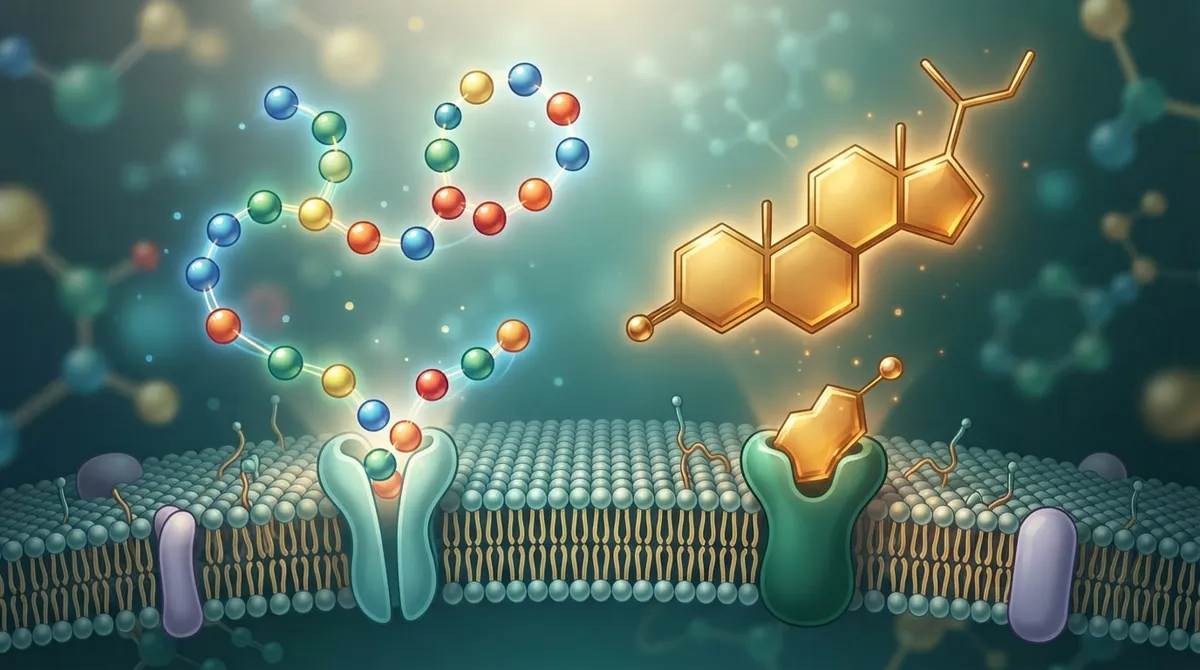
A peptide is defined by its structure (a chain of amino acids), while a hormone is defined by its function (a chemical messenger), so one molecule can be both, either, or neither.
-
Not all hormones are peptides: steroid hormones like cortisol, estrogen, and testosterone come from cholesterol, and thyroid hormones are amino-acid derived.
-
Peptide hormones such as insulin are generally water-soluble and bind cell-surface receptors, while steroid hormones are lipid-soluble and often act on receptors inside the cell.
-
Many therapeutic peptides, like BPC-157, do not behave like classic hormones and may act locally, so each peptide needs its own evidence, formulation, and safety review.
-
The phrase 'peptide therapy' does not confirm FDA approval or effectiveness; approval applies to specific products for specific uses, and compounded products are not approved the same way.
-
Before starting, ask a licensed clinician which exact molecule is recommended, what evidence supports it for your goal, how quality is verified, and which lab tests will guide your plan.
You have probably heard both words tossed around at the gym, in your doctor’s office, or in your social feed. Peptides. Hormones. Sometimes they sound like the same thing. Sometimes they sound like rivals. So which is it?
Here is the friendly, simple answer: they are not opposites, and they are not twins. They describe two different things. One word tells you what a molecule is made of. The other tells you what a molecule does.
If you are a health optimizer, a busy professional, or someone who loves digging into the data on your own body, this distinction matters. It shapes how a therapy works, what evidence backs it, and what questions you should ask before you start. In this guide, we will walk through how peptides differ from hormones in plain language, with real examples, easy comparisons, and a few safety pointers along the way. Grab a coffee. Let’s make this clear together.
The Short Answer: Structure vs. Job
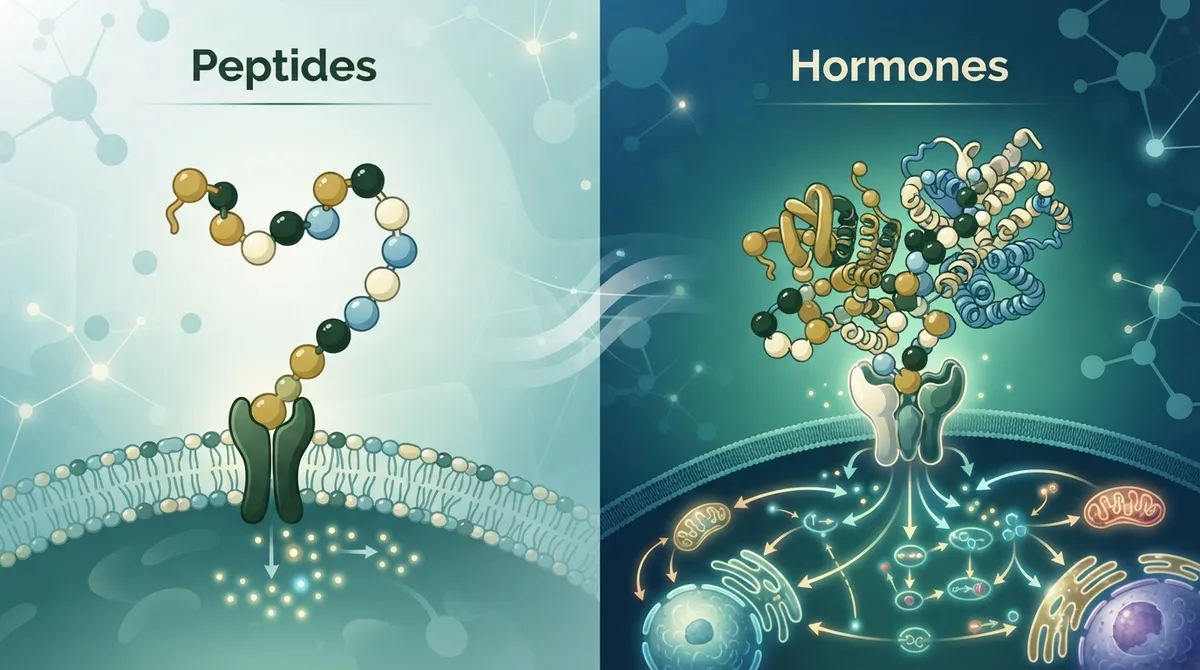
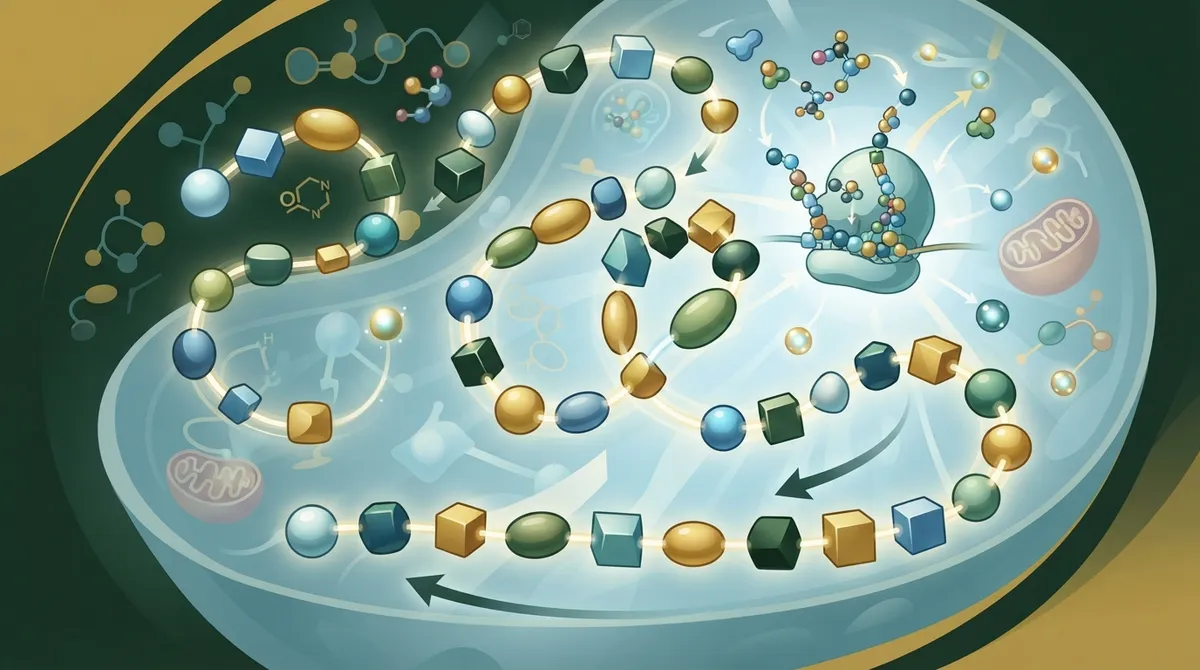
A peptide is defined by its structure. It is a short chain of amino acids linked together by peptide bonds. Think of amino acids as beads and the peptide as the string of beads.
A hormone is defined by its job. It is a chemical messenger released by cells that travels to other tissues and tells them what to do. Think of it as a text message sent through your bloodstream.
Because one word describes shape and the other describes role, the two categories overlap. Some peptides are hormones. Many peptides are not. And many hormones are not peptides at all.
- Peptide: a chain of amino acids (the “what it is”).
- Hormone: a signaling substance that carries messages between tissues (the “what it does”).
- Peptide hormone: a molecule that is both at the same time, like insulin.
If you want a quick refresher on the basics, what are peptides is a helpful starting point from a trusted health source.
What Exactly Is a Peptide?
Your body makes thousands of peptides. They are built from the same 20 amino acids that make up proteins. The difference is mostly size. Peptides are shorter chains. Proteins are longer and fold into more complex shapes.
Where does the line sit? Honestly, it depends on who you ask. One NIH-hosted overview describes peptide hormones as ranging from roughly 3 to about 200 amino acids. The boundary between “peptide” and “protein” shifts by convention and by regulatory context, so do not worry if you see slightly different numbers in different places.
Peptides do all kinds of jobs in the body. Some act as hormones. Some act locally, right where they are made. Some help with immune signaling, tissue repair, or nerve communication. That variety is exactly why “peptide therapy” is such a broad phrase.
What Exactly Is a Hormone?
Hormones are the body’s long-distance messengers. A gland or cell releases one, it travels through the blood, and it lands on target tissues that have the right receptors. Then it triggers a response, like a key turning in a lock.
Here is the part that surprises many people: hormones come in several chemical families. They are not all peptides. The main groups look like this:
- Peptide and protein hormones: insulin, glucagon, oxytocin, vasopressin, and several pituitary hormones.
- Steroid hormones: made from cholesterol. Cortisol, estrogen, progesterone, and testosterone belong here.
- Amino-acid derived hormones: thyroid hormones and epinephrine are examples.
So when someone says “hormone therapy,” they are often talking about steroid hormones like estrogen or testosterone. When someone says “peptide therapy,” they are talking about a very different class of molecules, even though a few peptides do act like hormones. For a deeper dive on this exact topic, our readers often enjoy Hormone Therapy vs. Peptide Therapy: Which Wins?
Peptides vs. Hormones: Side-by-Side Comparison
Sometimes a table says it best. Here is a quick comparison of the two concepts.
| Feature | Peptides | Hormones |
|---|---|---|
| What defines it | Chemical structure (amino acid chain) | Function (chemical messenger) |
| Chemical makeup | Always amino acids linked by peptide bonds | Can be peptides, steroids, or amino-acid derivatives |
| Where they act | Locally or system-wide | Usually travel through blood to distant targets |
| Examples | BPC-157, ipamorelin, GLP-1 agonists, collagen peptides | Insulin, cortisol, estrogen, testosterone, thyroid hormone |
| Overlap | Some are hormones (insulin, oxytocin) | Some are peptides (insulin, glucagon) |
Notice the overlap row. That is the key to understanding everything else in this article.
How Peptide Hormones Differ From Steroid Hormones
Since peptide hormones and steroid hormones both count as hormones, it helps to know how they behave differently. These are broad patterns, not strict rules, and there are exceptions.
| Trait | Peptide Hormones | Steroid Hormones |
|---|---|---|
| Built from | Amino acids | Cholesterol |
| Solubility | Generally water-soluble | Generally lipid-soluble |
| Storage | Often stored in secretory vesicles | Typically made on demand |
| Receptor location | Usually on the cell surface | Often inside the cell |
| Examples | Insulin, glucagon, oxytocin | Cortisol, estrogen, testosterone |
In everyday terms, peptide hormones knock on the front door of the cell. Steroid hormones often slip right through the wall and talk directly to the cell’s control center. That difference helps explain why different therapies feel and work so differently.
Where the Two Overlap: Peptide Hormones You Already Know
Plenty of famous molecules are both peptides and hormones. You may even use one or know someone who does.
- Insulin: a peptide hormone that helps your cells take in sugar.
- Glucagon: a peptide hormone that raises blood sugar when needed.
- Oxytocin: the “bonding” hormone, also a peptide.
- Vasopressin: a peptide hormone that helps manage water balance.
Some modern medications are versions or analogues of natural peptide hormones too. GLP-1 receptor agonists, which many people know from weight management care, are a good example. If that topic interests you, our guide on how GLP-1 works for weight loss breaks it down simply.
Peptides That Are Not Hormones
Now for the other half of the picture. Many therapeutic peptides do not behave like classic hormones at all. They may act locally, influence signaling pathways, or target specific tissues instead of traveling the whole body as a messenger.
That is why lumping every peptide into the “hormone” bucket leads to confusion. A peptide’s natural occurrence also does not automatically prove it is safe or effective. Each molecule needs to be judged on its own evidence, its formulation, its route of delivery, and the condition it is meant to address.
Curious how this plays out in practice? Our explainer on how peptide therapy mechanisms work in your body shows how different peptides can send very different signals.
How Do Peptide Therapies Work in the Body?
Peptide drugs can do several things. They can mimic a natural signal, replace a missing one, block an unwanted one, or gently nudge a pathway in a new direction. Some are close copies of natural peptide hormones. Others are engineered or act through entirely different routes.
Here is a simple way to picture it. Your cells have receptors, like tiny docking stations. A peptide fits into a specific docking station and sends a message inside. Different peptides fit different stations, so they produce different effects.
That precision is what makes peptide therapy interesting to biohackers and wellness seekers. But precision also means you cannot treat all peptides as equals. A product’s mechanism, evidence, and risks depend on the specific molecule.
If you are weighing options, you might like how to choose between peptide therapy vs hormone therapy for a decision-friendly walkthrough.
Why the Difference Matters for Your Health Goals
Knowing the difference is not just trivia. It changes the questions you ask and the expectations you set. Here is how it plays out for common goals.
| Goal | Often Discussed Approach | Why the Distinction Matters |
|---|---|---|
| Low testosterone symptoms | Testosterone therapy (a steroid hormone) | Replaces a hormone directly; different from peptides that may support signaling |
| Weight management | GLP-1 medications (peptide-based) | Peptide analogues of a natural hormone signal |
| Recovery and tissue support | Peptides like BPC-157 | Not a classic hormone; evidence varies |
| Menopause symptoms | Bioidentical hormone therapy (BHRT) | Replaces steroid hormones like estrogen and progesterone |
Many people also use the two approaches together under medical guidance. We explore that idea in Can Peptides Support Hormone Therapy? What to Know in 2026.
What About Safety and FDA Status?
This part deserves a calm, clear-eyed look. The phrase “peptide therapy” is broad. It does not tell you whether a product is FDA-approved, effective, or right for you. Approval applies to a specific product for a specific use.
Here is some helpful context on approvals. A 2025 review reported 50 novel FDA therapeutic approvals in 2024, including 2 peptide therapeutics (4%). It also reported 55 approvals in 2023 with 9 peptide therapeutics (16.3%). A separate 2024 review found peptide therapeutics made up about 11.4% of 420 novel FDA-approved therapeutics from 2015 to 2024. Counts vary depending on how “peptide” is defined, so treat them as rough guides, not hard rules.
Compounded drugs are different from commercially approved drugs. The FDA has raised concerns about some bulk substances used in compounding, including impurities, limited characterization, and limited human safety data. That is why working with licensed clinicians matters so much. You can explore the wider research landscape through the National Library of Medicine.
For a balanced look at this topic, see Approved vs. Compounded Peptides for Sexual Wellness and Is Peptide Therapy Safe? What You Really Need to Know.
Questions to Ask Before You Start
Whether you are curious about peptides, hormones, or both, a good conversation with a licensed provider is your best tool. Here are smart questions to bring along:
- What is the specific molecule, and is it FDA-approved for my goal?
- What evidence supports it for my condition, route, and dose?
- Is the product compounded, and how is its quality verified?
- Which lab tests will guide my plan, and how often will we recheck?
- What side effects should I watch for, and who do I call if I have concerns?
Lab work is the foundation of a smart plan. Our guide on lab work for peptide therapy explains what to test and why. And if you are prepping for a first visit, 15 Peptide Consultation Questions to Ask in 2026 is a great cheat sheet.
How Allura Longevity Approaches Peptides and Hormones
At Allura Longevity, we believe you should never have to guess. Our telehealth model is built around personalization and medical oversight. You begin with a $50 virtual consultation, complete blood work through LabCorp, and receive a customized six-month treatment plan delivered to your door.
Licensed providers, led by Ashley, a board-certified Family Nurse Practitioner, design and adjust your plan based on your labs and goals. Services span peptide therapy, GLP-1 weight loss support, BPC-157 for injury recovery, and testosterone replacement. Care is available nationwide through telehealth, and we are licensed in Florida, Georgia, Texas, Connecticut, Indiana, Maryland, New York, and California.
Curious how a plan comes together? Peek at 15 Ways a Peptide Therapy Plan Gets Personalized (2026) or How to Start Peptide Therapy Safely and See Real Results.
Common Myths, Gently Busted
Let’s clear up a few popular mix-ups so you can feel confident in your next conversation.
- Myth: All peptides are hormones. Reality: many peptides act locally or through other pathways and are not hormones.
- Myth: All hormones are peptides. Reality: steroid hormones and others have totally different chemistry.
- Myth: Peptide products are all equivalent. Reality: each molecule has its own evidence, risks, and regulatory status.
- Myth: Natural means safe. Reality: being found in the body does not prove a product is safe or effective.
Ready to Sort Peptides From Hormones for Your Own Body?
The big takeaway is easy to remember. “Peptide” describes what a molecule is made of. “Hormone” describes what it does. Some molecules are both, and that overlap is exactly why the two words get tangled up.
The good news is you do not have to untangle it alone. With real lab data, a licensed provider, and a plan built around your goals, you can make clear, confident choices about your health. Spots for new clients are limited each month, so if you are ready to explore a personalized path, request a consultation with Allura Longevity today, or call (813) 510-6277. Your future self will thank you.
FAQs
Q: Are peptides hormones?
A: Sometimes, but not always. Some peptides, like insulin and oxytocin, act as hormones, while many other peptides work locally or through different pathways and are not hormones at all.
Q: What is the difference between a peptide and a hormone?
A: A peptide is defined by its structure, a chain of amino acids. A hormone is defined by its role as a chemical messenger. That is why a molecule can be both, one, or the other.
Q: How do peptide hormones differ from steroid hormones?
A: Peptide hormones are built from amino acids, are generally water-soluble, and usually bind receptors on the cell surface. Steroid hormones come from cholesterol, are generally lipid-soluble, and often bind receptors inside the cell. These are broad patterns with some exceptions.
Q: Are peptide therapy products FDA-approved?
A: It depends on the specific product and use. Some peptide drugs are FDA-approved for particular conditions, while compounded products are not approved in the same way. Always confirm a product’s status with a licensed clinician.
Q: What should I ask a clinician before considering peptide therapy?
A: Ask which exact molecule is recommended, what evidence supports it for your goal, how quality is verified, and which labs will guide your plan. A good provider will welcome these questions and walk you through the answers.





