

Key Takeaways
-
No established clinical trials or validated protocols show that combining BHRT and peptide therapy works better or is safer than one indicated treatment alone; claims of synergy are unproven.
-
"BHRT" covers both FDA-approved bioidentical hormones and custom-compounded preparations, which are not FDA-approved and can vary in dose and purity. Always ask whether a product is FDA-approved.
-
The Endocrine Society recommends FDA-approved hormone products when they fit your needs, since comprehensive trials of compounded bioidentical hormones for symptom relief are lacking.
-
Hormone therapy is best reserved for a defined need, such as bothersome menopause symptoms or confirmed low testosterone with matching symptoms, not general anti-aging use.
-
Many peptides sold for wellness, recovery, or anti-aging are not FDA-approved for those uses, and "research use only" peptides carry real risk and should be avoided.
-
Combining therapies makes it harder to tell which treatment caused a benefit or side effect, so a careful provider changes one thing at a time and monitors labs and symptoms closely.
If you have been reading about hormone therapy and peptides, you have probably seen the phrase “dual approach BHRT and peptides.” It sounds neat and powerful. Two tools, one plan, big results. But what does it really mean, and does the science back it up?
Here is the honest answer. A dual approach is a care model, not a proven formula. Some clinicians use hormone therapy for a defined need, such as menopause symptoms or low testosterone. Some also use peptides for other goals. But there is no established protocol showing the pair works better or is safer than one indicated treatment alone.
That does not mean you should write it off. It means you should understand each piece, ask smart questions, and work with licensed providers who tailor care to your labs and history. Whether you are a busy professional, a data-loving biohacker, or someone in midlife who wants to feel like yourself again, this guide will help you sort fact from hype in 2026.

What Does a Dual Approach With BHRT and Peptides Mean?
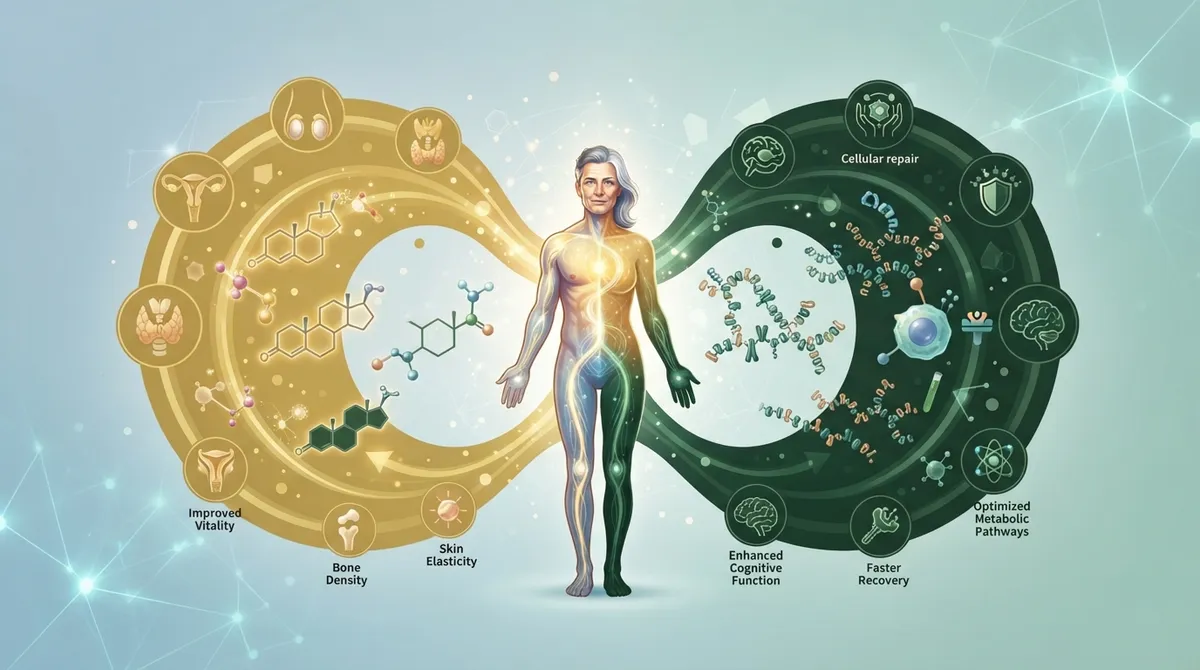
A dual approach means a provider uses two types of therapy within one personalized plan. One is hormone therapy, often called BHRT. The other is peptide therapy. The goal is to address different needs at the same time, such as hormone-related symptoms and recovery or metabolic goals.
Think of it like a toolbox. A hormone is one tool. A peptide is another. A good clinician does not use every tool on every person. They pick the tool that fits the job. For a closer look at how clinics frame this, see what a dual approach hormone and peptide therapy looks like.
One key point: the word “dual” is a marketing-friendly label. It is not a medical standard. Two treatments can be used together by the same provider, but that alone does not prove they work as a team.
BHRT: A Broad Term With Two Very Different Meanings
BHRT stands for bioidentical hormone replacement therapy. Here is where it gets tricky. The term covers two different things, and they are not equal in evidence or oversight.
- FDA-approved bioidentical products: These hormones are chemically identical to the ones your body makes. They went through safety and quality review.
- Custom-compounded preparations: A pharmacy mixes these for an individual patient. They are not FDA-approved, and compounding does not prove a product is safe or effective.
The Endocrine Society notes that no comprehensive trial has examined the safety or efficacy of compounded bioidentical hormone therapy for symptom relief. It also points to possible differences in dose, purity, and quality control. When an approved product fits your needs, the society recommends choosing it.
So when someone says “BHRT,” a great follow-up question is: “Which exact product, and is it FDA-approved?” You can learn more in these facts about bioidentical hormone therapy.
Peptide Therapy: Many Different Substances Under One Label
Peptides are short chains of amino acids. They act as signals in the body. You can read a plain-language overview in this WebMD guide on what peptides are.
“Peptide therapy” is also a broad label. Some peptide-based medicines are FDA-approved for specific conditions. Many peptides sold for wellness, recovery, or anti-aging are not approved for those uses, and human safety and efficacy data can be limited.
| Category | What It Means | Evidence and Oversight |
|---|---|---|
| FDA-approved peptide medicines | Approved for specific conditions | Reviewed for safety and effectiveness for that use |
| Compounded peptides | Prepared by a pharmacy for a patient | Not FDA-approved; quality and evidence vary |
| “Research use only” peptides | Sold online, not for human use | No clinical oversight; patients should avoid them |
This is why checking each product matters. For help sorting the groups, read approved peptides vs. wellness peptides.
Is There Evidence for Combining BHRT and Peptides?
This is the big question, so let us be direct. The research reviewed for this article found no established combination trials and no validated protocol for BHRT plus peptides. No reliable statistic measures the benefit or risk of the combined approach.
That means claims of “synergy” are unproven. A provider might reasonably use both treatments for two separate, defined needs. But you should not expect guaranteed extra results just because you stacked therapies.
There are also practical concerns. When you start two things at once, it gets harder to tell which one caused a side effect or a benefit. That is why a careful clinician usually changes one thing at a time and tracks how you respond. Our post on peptide combinations goes deeper on why caution matters here.
When Hormone Therapy Makes Sense
Hormone therapy works best when it is chosen for a clear reason. A common one is bothersome menopause symptoms such as hot flashes and night sweats. Another is confirmed low testosterone with matching symptoms in men.
It should not be sold as a general anti-aging or disease-prevention treatment. The Endocrine Society says risks are generally small for many healthy women who start treatment before age 60 or within 10 years of menopause. It also stresses that individual risk assessment is still needed.
A careful review usually covers:
- Your symptoms and how much they affect daily life
- Your personal and family medical history
- Your current medications and supplements
- Lab results, when they are appropriate for your situation
- Your preferences, including route and form of treatment
If you want to know whether this applies to you, start with how to know if you need hormone therapy.
Where Peptides May Fit In
Peptides come up when people want help with goals beyond hormones. Examples include metabolism, muscle recovery, sleep, skin, and sexual wellness. Some options have solid backing for specific conditions. Others have thinner evidence.
For example, GLP-1 medications are used in weight management, and eligibility depends on medical criteria. Learn more in how you qualify for GLP-1 medication. For a research-based review, you can also browse the National Library of Medicine for peer-reviewed studies on peptide-based therapies.
Wellness peptides such as BPC-157 are a different story. They are not FDA-approved for wellness uses, and human data is limited. If you are curious, read about what the research really shows on BPC-157 before you decide anything.
BHRT vs. Peptides: A Side-by-Side Look
Seeing the two therapies next to each other can clear up a lot of confusion.
| Feature | BHRT | Peptide Therapy |
|---|---|---|
| What it is | Replaces or supplements hormones | Uses amino-acid chains that signal the body |
| Typical goals | Menopause symptoms, low testosterone | Metabolism, recovery, sleep, skin, wellness goals |
| Regulatory range | FDA-approved to custom-compounded | FDA-approved to unapproved |
| Key question to ask | Is this product FDA-approved? | Is this peptide approved for this use? |
| Evidence for combining | No established combination trials | No established combination trials |
Need help choosing a direction? This guide on choosing between peptide therapy and hormone therapy walks through the decision.
Risks to Understand Before You Combine Therapies
Using more than one treatment adds layers. That is not automatically bad, but it does call for extra care.
- Harder side-effect tracking: If something feels off, it is tougher to know the cause.
- Possible interactions: Your other medications and conditions may matter.
- Product quality: Compounded and unapproved items can vary in dose and purity.
- Unverified sources: Online or “research use only” injectables carry real risk. Avoid them.
For a balanced view, read how to weigh the risks of peptide therapy safely and peptide therapy side effects you should know.
What a Safe, Personalized Plan Looks Like
A responsible plan is built around you, not around a trend. It starts with your goals, your history, and your lab work. Then a licensed provider chooses only what fits.
- Share your goals and history. Be honest about symptoms, medications, and past conditions.
- Get baseline blood work. Labs help guide choices and give a starting point.
- Review exact products. Confirm the regulatory status of every hormone and peptide.
- Start thoughtfully. Introduce changes in a way that lets you track results.
- Monitor and adjust. Follow-ups catch side effects early and refine the plan.
Want to see how labs fit in? Check how to build a bloodwork-based BHRT peptide plan and what to test and why.
Questions to Ask Any Provider
Before you say yes to any plan, bring a short list of questions. A trustworthy provider will welcome them.
- Which exact hormones and peptides do you recommend, and why?
- Is each product FDA-approved, or is it compounded?
- What is the evidence for my specific goal?
- How will you monitor my labs and side effects?
- What happens if I want to stop or change the plan?
You can also use these 15 peptide consultation questions to get more out of your first visit, and steer clear of common consultation mistakes.
Who Might Explore This Approach
Different readers come to this topic with different needs. Here is how it may apply.
- Health optimizers and wellness seekers: You want a plan grounded in labs and medical oversight, not guesswork.
- Aging adults: You want to protect vitality, and you need honest talk about benefits and limits.
- Biohackers: You love data. Track labs and symptoms, and change one variable at a time.
- Busy professionals: You value convenience. Telehealth and home delivery can fit a packed schedule.
If midlife is your focus, how to navigate perimenopause with BHRT and peptides offers more context.
How Allura Longevity Approaches Personalized Care
At Allura Longevity, care starts with a $50 virtual consultation. You complete blood work through LabCorp, and a licensed provider designs a customized six-month plan based on your results and goals. Treatments are delivered to your home, and your team monitors and adjusts your plan along the way. Care is led by Ashley, a board-certified Family Nurse Practitioner.
Telehealth is available nationwide, and Allura Longevity is licensed in Florida, Georgia, Texas, Connecticut, Indiana, Maryland, New York, and California. The focus is personalization and medical supervision, not one-size-fits-all stacks. Learn what to expect in what really happens during a peptide telehealth visit.
The Bottom Line on a Dual Approach
A dual approach with BHRT and peptides can be a reasonable way to organize care when you have more than one defined need. It is not a proven shortcut, and it is not a guarantee of synergy or anti-aging results. The smartest path is simple: know what each product is, check its regulatory status, and work with a licensed provider who monitors you closely.
If you want a plan built around your own labs and goals, we would love to help. Limited spots are open for new clients each month. Request a consultation with Allura Longevity or call (813) 510-6277 to take the first step toward a safe, personalized plan.
FAQs
Q: What does a dual approach with BHRT and peptides mean?
A: It means a provider uses hormone therapy and peptide therapy within one personalized plan, usually for separate goals. It is a care model, not a proven medical protocol. The two treatments are different, so each one should be reviewed on its own.
Q: Is there scientific evidence for combining BHRT and peptide therapy?
A: Not yet. No established combination trials or validated protocols show that using both is more effective or safer than one indicated treatment alone. Any claim of synergy should be treated as unproven.
Q: Are compounded bioidentical hormones safer than FDA-approved hormone therapy?
A: No. The Endocrine Society says compounded bioidentical hormones lack comprehensive safety and efficacy trials and can vary in dose and purity. It recommends FDA-approved products when they are appropriate and available.
Q: Are wellness peptides like BPC-157 FDA-approved?
A: No. BPC-157 is not FDA-approved for wellness or recovery uses, and human safety and efficacy data are limited. Always talk with a licensed provider and avoid unverified online or research-use-only products.
Q: What should I ask a provider before starting BHRT or peptide therapy?
A: Ask which exact products they recommend, whether each is FDA-approved or compounded, and what evidence supports your goal. Also ask how they will monitor labs and side effects over time.





