
Key Takeaways
-
Start with one or two specific health goals, such as energy, sleep, recovery, or weight, rather than a vague wish to 'feel younger.'
-
Consult a licensed clinician before any dose, since they can review your history, medications, supplements, and allergies to catch interactions.
-
Avoid 'research use only' peptides and unregulated online sellers, as one analysis found counterfeit samples holding as little as 5% of the labeled compound.
-
Get baseline blood work first so your plan is built on real data and you have a benchmark to measure progress against later.
-
Ask whether an FDA-approved option exists, and understand that compounded peptides are not FDA-reviewed the same way approved medicines are.
-
Agree on a written plan covering expected outcomes, how progress is measured, follow-up dates, side effects, and when to stop or seek urgent care.
So you’re curious about peptide therapy. Maybe a friend mentioned it. Maybe you saw a podcast, or a post promising more energy, better sleep, and faster recovery. Wanting to feel your best is a great goal, and you’re in good company. But here’s the honest truth: how you begin matters just as much as what you take.
The best way to begin peptide therapy is simple. Start with a clear health goal, talk to a licensed clinician, get the right lab work, and agree on a written plan before your first dose. Skip any of those steps, and things can go sideways fast.
“Peptide therapy” is a broad term, not one single treatment. Different peptides have different uses, different levels of evidence, and different safety profiles. That’s why a thoughtful start is so important. Let’s walk through the 11 most common mistakes people make, so you can avoid them and begin with confidence.

Why Your First Steps Matter So Much
Think of starting peptide therapy like planning a road trip. You wouldn’t jump in the car without knowing where you’re headed. You’d check the map, the fuel, and the route first.
The same goes here. According to the research, there is no single reliable statistic on how safe or effective “peptide therapy” is overall, because the term covers many different substances. Each peptide and each use must be judged on its own. If you want a primer, this guide on what are peptides is a good place to begin.
Here is a quick look at what a smart start includes compared with a risky one.
| Smart Start | Risky Start |
|---|---|
| Begin with a specific health goal | Chase a vague “anti-aging” idea |
| Consult a licensed clinician | Self-prescribe from online posts |
| Get blood work first | Guess at what your body needs |
| Use a pharmacy with quality controls | Buy “research use only” products |
| Follow a written plan with follow-ups | Wing it with no monitoring |
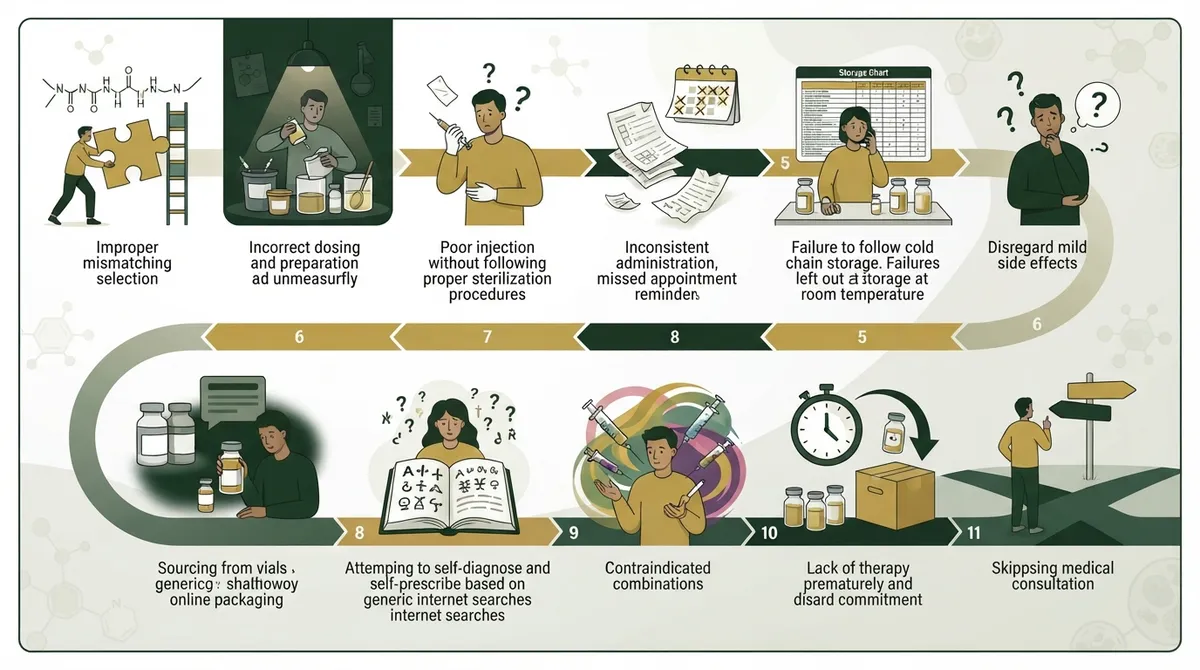
The 11 Mistakes to Avoid
1. Starting Without a Clear Goal
“I want to feel younger” is a nice wish, but it’s not a plan. Peptides are not one-size-fits-all. Some are studied for weight management, some for recovery, and some for other uses. The right starting point is a specific concern, like low energy, poor sleep, slow recovery, or stubborn weight.
Write down your top one or two goals before your first visit. It makes the conversation with your provider so much more useful. If you’re still sorting out the basics, this list of peptide therapy basics every beginner should know can help.
2. Skipping the Licensed Clinician
This one is the biggest. A licensed healthcare professional can review your symptoms, medical history, current medicines, supplements, and allergies. They can also spot interactions you might miss on your own.
Telehealth makes this easy. You can talk to a provider from your couch, which is great for busy schedules. Just be sure the person guiding you is properly licensed in your state.
3. Self-Prescribing From the Internet
It’s tempting. A few clicks, and a vial shows up at your door. But product identity, strength, purity, sterility, and storage can all be uncertain when you buy from random online sellers.
One analysis of 10 frequently seized counterfeit peptide products from illegal online suppliers found some samples held as little as 5% of the labeled compound. Some also contained arsenic and lead. That was a small sample and shouldn’t be applied to every product. Still, it’s a strong reminder to be careful.
4. Confusing “Research Use Only” With Medical Grade
Products labeled “research use only” are not made for people. They aren’t reviewed the way medicines are. If you see that label, walk away.
Real peptide care comes from a licensed provider and a legitimate pharmacy. If you want to learn how to spot the difference, read about how to find legal peptide therapy you can trust.
5. Not Knowing the Difference Between Approved and Compounded
This is where many people get tripped up. FDA-approved peptide medicines are reviewed for safety, effectiveness, and manufacturing quality for specific uses. Compounded drugs are not FDA-approved, and the FDA doesn’t review them the same way before they’re sold.
That doesn’t make every compounded medicine unsafe. But it does mean you should ask good questions. The FDA has also identified possible risks for some compounded peptide ingredients, including impurities and immune reactions. These concerns depend on the specific substance and how it’s given.
| Type | FDA Review | What to Ask |
|---|---|---|
| FDA-approved medicine | Reviewed for specific uses | Is it right for my condition? |
| Compounded medicine | Not FDA-approved | Why not an approved option? Which pharmacy? |
| “Research use only” product | Not for human use | Avoid entirely |
For a deeper look, compare approved peptides vs. wellness peptides.
6. Skipping Blood Work
Guessing is not a strategy. Lab work gives your provider a real snapshot of what’s happening inside your body. It helps shape your plan and gives you a baseline to measure against later.
At Allura Longevity, clients complete blood work through LabCorp before a plan is built. If you’re a data-driven person, you’ll love this step. Learn more about lab work for peptide therapy and what to test.
7. Not Asking What Evidence Backs the Treatment
For many peptides promoted for anti-aging, recovery, or body composition, human evidence is limited. Dosing and long-term safety may not be well established. And a lack of reported harm is not proof of safety.
So ask your provider directly. What diagnosis does this treatment address? What evidence supports it? What established alternatives exist? A good clinician will welcome these questions. The National Library of Medicine is a helpful place to read research for yourself.
8. Starting Without a Written Plan
Before you start, agree on a plan in writing. It should cover your intended outcome, how benefit will be measured, and when you’ll follow up. It should also list possible side effects and interactions, plus when to stop or seek urgent care.
Here’s a simple checklist to bring to your consultation:
- What result am I aiming for, and by when?
- How will we measure whether it’s working?
- What side effects should I watch for?
- When are my follow-up visits?
- When should I stop or call right away?
9. Hiding Other Products You Use
Your provider needs the full picture. Tell them about every medicine, supplement, vitamin, and peptide you’re using, even the “harmless” ones. Interactions are real, and honesty keeps you safe.
Also speak up fast if you notice new symptoms. Early reports mean early fixes.
10. Expecting Overnight Results
Good things take time. Peptide therapy isn’t a magic switch. Results, if they come, usually build gradually, and they vary from person to person.
Setting a realistic timeline protects you from frustration and from chasing higher doses. Check out what a realistic peptide therapy timeline looks like in 2026 so you know what to expect.
11. Going It Alone Without Ongoing Monitoring
Starting is only half the story. Peptide therapy works best with check-ins, lab follow-ups, and adjustments over time. A one-and-done approach leaves too much to chance.
Choose a program built around ongoing support, not just a shipment of vials. Our guide on how to know when your peptide therapy starts working explains what to track.
A Simple 5-Step Way to Begin
Now that you know what to avoid, here is the best way to begin peptide therapy in five easy steps.
- Define your goal. Pick one or two specific health concerns, like energy, sleep, recovery, or weight.
- Book a consultation. Talk with a licensed provider who can review your history, medications, and allergies.
- Complete lab work. Let real numbers guide your plan instead of guesswork.
- Review your options. Ask about evidence, regulatory status, risks, and alternatives for any peptide suggested.
- Agree on a written plan. Lock in outcomes, follow-up timing, and warning signs before you begin.
That’s it. No pressure, no hype, just a smart, steady start. For a bigger-picture view, see our walkthrough on how to start peptide therapy safely and see real results.
What to Ask Before You Say Yes
A great first visit goes both ways. You’re not just being evaluated. You’re interviewing your provider, too.
If a compounded medicine is on the table, ask these questions:
- Why can’t an FDA-approved option meet my need?
- Which pharmacy prepares it, and what quality controls apply?
- How will treatment and side effects be monitored?
- What current FDA and state rules apply?
Rules around compounding can change, so verify current requirements rather than trusting marketing claims. Preparing good questions ahead of time is a smart move. Here are 15 peptide consultation questions to ask in 2026 to get you started, and it helps to know the peptide consultation mistakes that waste your first visit.
How Telehealth Makes Starting Easier
If you’re a busy professional, a biohacker, or someone who simply values your time, telehealth is a real gift. You can meet with a provider online, get lab work done locally, and have your treatment delivered right to your door.
This is the model Allura Longevity uses. Clients begin with a $50 virtual consultation, complete blood work through LabCorp, and receive a customized six-month treatment plan delivered to their home. Licensed providers, led by Ashley, a board-certified Family Nurse Practitioner, monitor progress and make adjustments along the way.
Allura Longevity is licensed in Florida, Georgia, Texas, Connecticut, Indiana, Maryland, New York, and California. If you’re curious how it all works, read about how telehealth prescription works for peptides.
Who Is a Good Fit?
Peptide therapy isn’t for everyone, and that’s okay. Many people explore it, including health optimizers, adults in midlife and beyond, and wellness seekers who already invest in preventive care. But fit depends on your health history, your goals, and your lab results.
A responsible provider will tell you when something isn’t right for you. That honesty is a green flag, not a red one. Not sure where you land? See who is a candidate for peptide therapy in 2026.
Ready to Begin the Smart Way?
The best way to begin peptide therapy is to slow down just enough to do it right. Pick a clear goal, partner with a licensed clinician, let lab work guide you, ask hard questions, and agree on a written plan. Avoid the 11 mistakes above, and you’ll start from a place of confidence instead of confusion.
You deserve care that is personal, safe, and built around your body, not a one-size-fits-all pitch. Spots for new clients are limited each month, so if you’re ready to take the first step, request a consultation with Allura Longevity or call (813) 510-6277. We’d love to help you get started the right way.
FAQs
Q: What is peptide therapy, and what is it used for?
A: Peptide therapy is a broad term for treatments that use peptides, which are short chains of amino acids. Different peptides are used for different goals, and the evidence varies a lot from one to the next. That’s why it helps to start with a specific health concern and a licensed clinician.
Q: How do I know if a peptide treatment is FDA-approved?
A: Ask your provider directly, and don’t be shy about it! FDA-approved peptide medicines are reviewed for specific uses, while compounded medicines are not FDA-approved. You can also check current FDA information to confirm the status of any treatment you’re offered.
Q: What should I ask a doctor before starting peptide therapy?
A: Great questions include what diagnosis the treatment addresses, what evidence supports it, and what established alternatives exist. Also ask about side effects, how progress will be measured, and when follow-ups happen. A good provider will be happy to answer every one.
Q: What are the risks of buying peptides online?
A: Products from online research-chemical sellers can have uncertain identity, strength, purity, and sterility. Some seized counterfeit products have even contained heavy metals. Working with a licensed provider and a quality pharmacy is the safer path.
Q: Do I need blood work before starting peptide therapy?
A: Blood work is a smart first step because it gives your provider real data to build your plan around. It also creates a baseline so you can see how your body responds over time. At Allura Longevity, lab work through LabCorp is part of getting started.