

Key Takeaways
-
No, peptides cannot replace caffeine for quick alertness: caffeine blocks adenosine for a fast jolt, while no peptide is proven to act like coffee or serve as a general energy booster.
-
"Peptides" is a broad category, not one treatment; FDA-approved prescriptions, compounded products, and unregulated research peptides differ greatly in evidence and risk.
-
Poor or short sleep is the leading cause of daytime tiredness, and neither coffee nor peptides can fully make up for it, so protecting sleep comes first.
-
Persistent fatigue can signal anemia, low iron, thyroid problems, vitamin D deficiency, or hormone changes, so get blood work and a licensed provider's evaluation instead of masking tiredness.
-
Time caffeine to the morning and keep intake within a sensible daily amount; the FDA's 400 mg per day is a general guide, and caffeine's half-life of 4 to 6 hours can disrupt night sleep.
-
Avoid buying research or compounded peptides online to replace coffee, since they are not FDA-approved for human use and self-dosing without supervision can hide real health problems.
Let’s be honest: that first cup of coffee in the morning feels like a warm hug. But if you rely on three cups just to get through a workday, you may be wondering if there is a better way. Maybe you have heard that peptide therapy can boost your energy. So you ask the big question: can peptides replace caffeine for energy?
Here is the short, honest answer. Not in the way you might hope. Caffeine is a stimulant that gives you a quick jolt. Peptides are a huge family of compounds, and no single peptide treatment is proven to act like coffee. But that does not mean peptide therapy has nothing to offer. For some people, a personalized plan may help address the root causes of low energy.
In this friendly guide, you will learn how caffeine works, what peptides can and cannot do, and how to decide what is right for you. Whether you are a busy professional, a biohacker, or simply tired of being tired, you will leave with clear, practical steps.

Why So Many People Ask: Can Peptides Replace Caffeine for Energy?
Energy is a hot topic. Many adults feel worn down by poor sleep, stress, and packed schedules. Coffee, tea, and energy drinks fill the gap. Then peptide therapy enters the conversation online, often with big promises.
The idea is appealing. A therapy that gives steady energy without jitters sounds great. But it helps to separate marketing from evidence. The question of whether peptides can replace caffeine for energy depends on what you mean by “energy.”
- Alertness: That quick “I’m awake” feeling after coffee.
- Stamina: Having enough fuel to get through your day and your workout.
- Recovery: Bouncing back after hard days, tough workouts, or poor sleep.
Caffeine targets alertness. Peptide therapy, when used under medical guidance, is usually aimed at deeper goals like recovery, sleep support, and overall vitality. These are very different things.
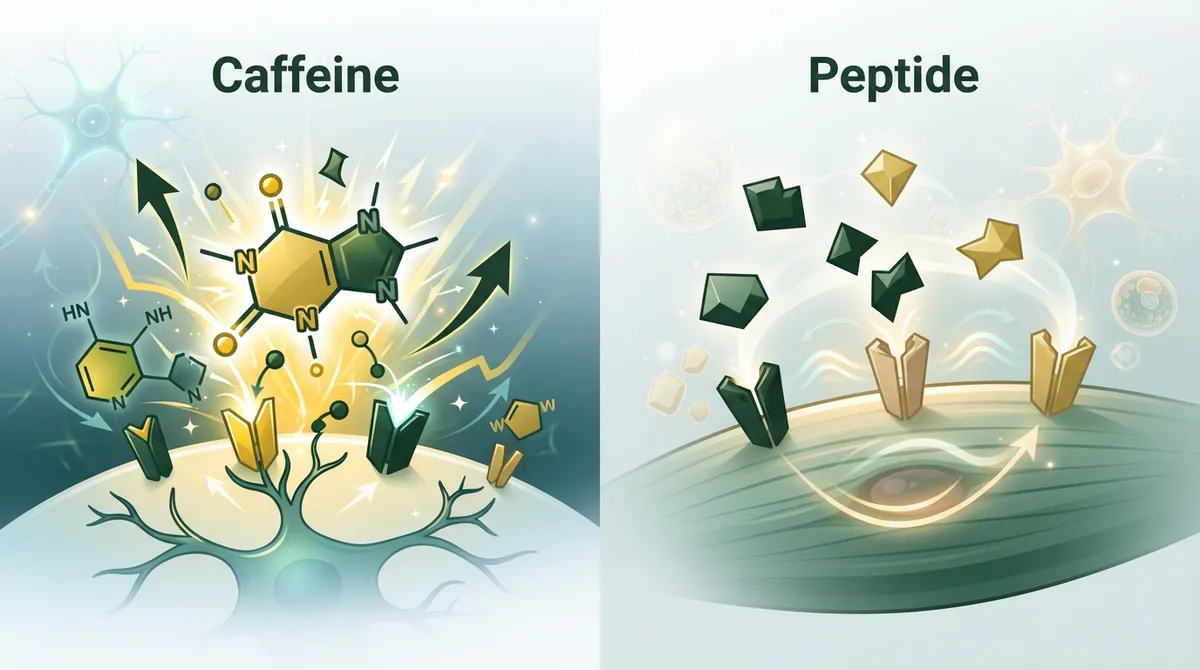
How Caffeine Actually Works
To compare caffeine and peptides fairly, you need to know what caffeine does. Caffeine is a central nervous system stimulant. Its main trick is blocking adenosine receptors in your brain. Adenosine is a chemical that builds up during the day and makes you feel sleepy. When caffeine blocks it, you feel more awake.
That is why caffeine works fast. But it does not give you real fuel. It hides tiredness instead of fixing it. The caffeine overview from the National Library of Medicine explains this mechanism in more detail.
Caffeine Facts Worth Knowing
| Caffeine Fact | What It Means for You |
|---|---|
| Up to 400 mg per day is the amount the FDA says is not generally linked to negative effects for most healthy adults | That is roughly a few cups of coffee, but sensitivity varies a lot |
| Half of the caffeine takes about 4 to 6 hours to leave your body | An afternoon coffee can still affect your sleep that night |
| Around 1,200 mg consumed rapidly can cause toxic effects, including seizures, per the FDA | More is not better, and energy drinks can add up fast |
| Dropping caffeine suddenly after regular use can cause withdrawal | Headaches, tiredness, and low mood are common if you quit cold turkey |
Caffeine can also cause trouble for some people. Common side effects include trouble sleeping, anxiety, restlessness, stomach upset, and a fast or irregular heartbeat. It is not a villain, but it is not a cure for tiredness either.
What Peptides Are (and What They Are Not)
The word “peptide” simply means a short chain of amino acids, the building blocks of protein. If you want a plain-language primer, what are peptides from WebMD is a good starting point.
Here is the key point: “peptides” is a broad category, not one treatment. Some are FDA-approved prescription medicines for specific conditions. Others are compounded products. Still others are sold as “research peptides” that are not meant for human use. These are not interchangeable.
Because of that, it is not accurate to say “peptides give you energy.” Each peptide has its own purpose, evidence, and risks. For a deeper look at the differences, check out Approved Peptides vs. Wellness Peptides: What Works?
The Honest Truth About Energy Claims
There is no FDA-approved peptide therapy that is established as a general-purpose energy booster or caffeine substitute. Claims you see online often rely on testimonials or on theories about how a peptide might work. A strong claim needs human clinical evidence for the specific peptide, dose, and goal.
That is why a smart approach matters. If you want to dig into this topic more, our article Can Peptides Help With Fatigue? What the Evidence Says breaks it down clearly.
Caffeine vs. Peptide Therapy: A Side-by-Side Look
Let’s compare these two options on the things that matter most to you.
| Feature | Caffeine | Peptide Therapy |
|---|---|---|
| Speed of effect | Fast, often within 30 to 60 minutes | Usually gradual, if effects occur at all |
| Main purpose | Short-term alertness | Varies by peptide, such as recovery, sleep, or metabolism |
| Evidence level | Well studied for alertness | Varies widely; no proven general energy substitute |
| Medical supervision | Not needed for most adults | Recommended and required for prescription products |
| Replaces sleep? | No | No |
Notice the last row. Neither option replaces good sleep. That is the foundation of real, lasting energy.
How to Decide if Peptides Could Help Your Energy
Instead of asking which one wins, ask a better question: why am I tired? Follow these steps to find your answer.
- Track your habits for two weeks. Write down your sleep hours, caffeine intake, meals, stress, and activity. Patterns often jump out.
- Check your sleep first. Poor or short sleep is the number one cause of daytime tiredness. No peptide or coffee can fully make up for it.
- Look at your caffeine timing. Drinking coffee after noon may be hurting your night’s rest, which then makes you more tired tomorrow.
- Get blood work done. Low iron, thyroid issues, low vitamin D, and hormone changes can all drain your energy.
- Talk to a licensed provider. A qualified clinician can review your results and tell you if peptide therapy, hormone support, or something else makes sense.
This process is the opposite of guessing. It is also how data-driven people get the best results. For more on this, see Lab Work for Peptide Therapy: What to Test and Why.
Common Causes of Low Energy That Need Attention
Ongoing fatigue is not something to simply cover up. It can point to something that deserves a closer look. Here are some common causes.
- Not enough sleep or poor sleep quality
- Side effects from medications
- Anemia or low iron
- Thyroid problems
- Mood changes such as depression or anxiety
- Hormone shifts, including low testosterone or perimenopause
- Other medical conditions
This is why masking tiredness with any product, whether caffeine or a peptide, is not a great plan. If you feel tired all the time, a proper evaluation matters. If you are over 40, you may also like How to Increase Energy After 40 the Smart Way.
Where Personalized Peptide Therapy Can Fit In
So where does peptide therapy actually help? When guided by a licensed provider, a personalized plan may support goals that indirectly improve how you feel day to day. Think of it as supporting your body’s systems rather than flipping a switch.
Depending on your labs and goals, a provider might discuss options that support:
- Better recovery after workouts
- Sleep quality
- Metabolism and body composition
- Overall vitality as you age
It is important to be realistic. Results vary, and not everyone responds the same way. A good provider will set honest expectations and adjust your plan over time. You can read more about timing in What Is a Realistic Peptide Therapy Timeline in 2026?
At Allura Longevity, the process starts with a virtual consultation and blood work. A licensed provider, led by a board-certified Family Nurse Practitioner, then designs a customized treatment plan. Everything is delivered to your door, which is a big plus for busy professionals.
The Risks of DIY, Compounded, and Research Peptides
Here is where we want to wave a friendly caution flag. If you are tempted to buy a peptide online to replace your coffee, please pause.
- Research peptides are not for human use. They are sold for lab purposes, and quality can be unknown.
- Compounded drugs are not FDA-approved. The FDA does not verify their safety, effectiveness, or quality before they are marketed.
- Self-dosing can backfire. Without lab work and supervision, you might miss a real health problem.
Safety comes first. If you want to understand risk better, our guide How to Weigh the Risks of Peptide Therapy Safely in 2026 is a helpful read. You can also review 7 Peptide Therapy Side Effects You Should Know.
Smart Ways to Boost Energy Without Relying on Caffeine
Want more steady energy right now? These habits often make a bigger difference than any single product.
- Protect your sleep. Aim for a regular bedtime and a cool, dark room.
- Move your body daily. A brisk walk can lift alertness within minutes.
- Eat balanced meals. Pair protein with fiber to avoid energy crashes.
- Stay hydrated. Even mild dehydration can make you feel foggy.
- Time your caffeine. Keep it to the morning if you can, and stay within a sensible daily amount.
- Manage stress. Short breaks, deep breathing, and time outdoors all help.
Curious how these simple fixes compare with other options? Take a look at Peptides vs. Lifestyle Fixes: Which Boosts Daytime Stamina?
Can You Cut Back on Caffeine Safely?
If you decide to reduce your coffee, go slowly. Cutting back by a small amount every few days can help you avoid headaches and fatigue. Swapping one cup for half-caff or tea is an easy first step. Remember, caffeine is not bad for everyone. The goal is to find a level that works for your body.
A Quick Decision Guide
| Your Situation | Best Next Step |
|---|---|
| You just want a morning pick-me-up | Keep moderate caffeine and protect your sleep |
| You feel tired most days despite sleeping well | Get blood work and see a licensed provider |
| You want to explore peptide therapy for vitality | Book a consultation for a personalized, lab-guided plan |
| You are pregnant, on medication, or have a heart condition | Ask your doctor before changing caffeine or starting any therapy |
Remember that the FDA’s 400 mg figure is a general guide, not a personal prescription. Pregnancy, medications, age, and health conditions can all change what is right for you.
The Bottom Line
So, can peptides replace caffeine for energy? Based on what we know today, no. Peptides are not a proven stand-in for coffee, and there is no established peptide that gives the same quick alertness. Anyone who promises that is going beyond the evidence.
But there is good news. Understanding why you feel tired is the real key. With the right labs, healthy habits, and expert guidance, many people find steadier energy over time. Peptide therapy may be one part of that bigger picture for some, but it works best as a medically supervised, personalized plan rather than a coffee swap.
Ready to take the guesswork out of your energy? Request a consultation with the licensed team at Allura Longevity. We offer telehealth care in Florida, Georgia, Texas, Connecticut, Indiana, Maryland, New York, and California, with plans delivered right to your door. New client spots are limited each month, so reach out soon, or call (813) 510-6277 to get started.
Your energy journey deserves real answers, not hype. You have got this, and we are here to help.
FAQs
Q: Can peptides give you energy or make you feel more alert?
A: Not in the quick, stimulant-like way caffeine does. Peptides are a broad group of compounds with different purposes, and no peptide is proven as a general energy or alertness booster. Some people explore peptide therapy for recovery, sleep, or vitality under medical guidance, but results vary.
Q: Can peptide therapy replace coffee or caffeine?
A: Based on current evidence, no. Caffeine blocks adenosine to boost alertness, while peptides work through many different pathways. If you feel tired often, the best move is to find the cause with blood work and a licensed provider rather than swapping one product for another.
Q: Are energy-boosting peptides FDA-approved?
A: No FDA-approved peptide therapy is established as a general-purpose energy booster. Some peptides are approved for specific medical conditions, but that does not prove they help everyday fatigue. Compounded and research peptides are not FDA-approved, so supervision matters.
Q: How much caffeine is considered safe for most adults?
A: The FDA says up to 400 mg per day is not generally associated with negative effects for most healthy adults. That is a general guide, not a personal limit. Pregnancy, medications, age, and health conditions can change what is right for you, so check with your clinician.
Q: What should I do if I feel tired all the time?
A: Start by checking your sleep, stress, and habits, then get a medical evaluation. Ongoing fatigue can come from things like anemia, thyroid issues, hormone changes, or mood concerns. A licensed provider can order labs and help you build a plan that fits your needs.





