

Key Takeaways
-
Medical skin peptide therapy is an umbrella term covering three different routes (topical, oral collagen, and injectable), each with very different evidence and safety profiles.
-
Oral collagen peptides have the strongest human evidence, with a 2026 review of 35 trials showing improvements in skin hydration, elasticity, and transepidermal water loss.
-
Topical peptides show modest, mixed results; a 2026 meta-analysis found only a small pooled wrinkle benefit (MD = 0.27) and inconsistent elasticity findings.
-
Injectable peptides marketed for skin glow lack adequate clinical trials and long-term human safety data, and unapproved injections carry risks like dosing errors, contamination, and infection.
-
A cosmetic or compounded peptide product is not the same as an FDA-approved drug; be wary of any provider or seller who describes such products as FDA-approved.
-
Look for human clinical trials, licensed clinician oversight, and realistic timelines of weeks to months, since no peptide product delivers overnight skin transformation.
If you have ever searched for ways to support your skin, you have probably seen the word “peptides” on everything from serums to supplements to injectable programs. Add the word “medical” and it gets even more confusing. Is it a procedure? A prescription? A fancy marketing term? The honest answer is that medical skin peptide therapy is not one single, standardized treatment. It is an umbrella phrase people use for several very different approaches.
That is good news and bad news. The good news is that you have options, and some have real research behind them. The bad news is that not every product with a big promise has the proof to match. In this guide, we will walk through seven truths that help you sort science from sales pitch, so you can feel confident asking smart questions. Whether you are a busy professional, a data-loving biohacker, or simply someone who wants to age well, you deserve clear answers. Let’s dive in.

Truth 1: Medical Skin Peptide Therapy Is an Umbrella Term
Here is the first thing to know. “Medical skin peptide therapy” is not a single FDA-approved treatment. It is a phrase that can point to three very different routes:
- Topical peptides: creams and serums applied to the skin.
- Oral collagen peptides: powders, capsules, or drinks you swallow.
- Injectable peptides: products given by injection and promoted for skin rejuvenation.
Each route has its own evidence, safety profile, and level of regulation. Lumping them together is like saying “exercise” when you could mean a gentle walk or a marathon. If you want a refresher on the basics, our guide to 8 facts that explain what are peptides in 2026 is a friendly place to start. You can also read a general overview of what are peptides from a trusted health resource.
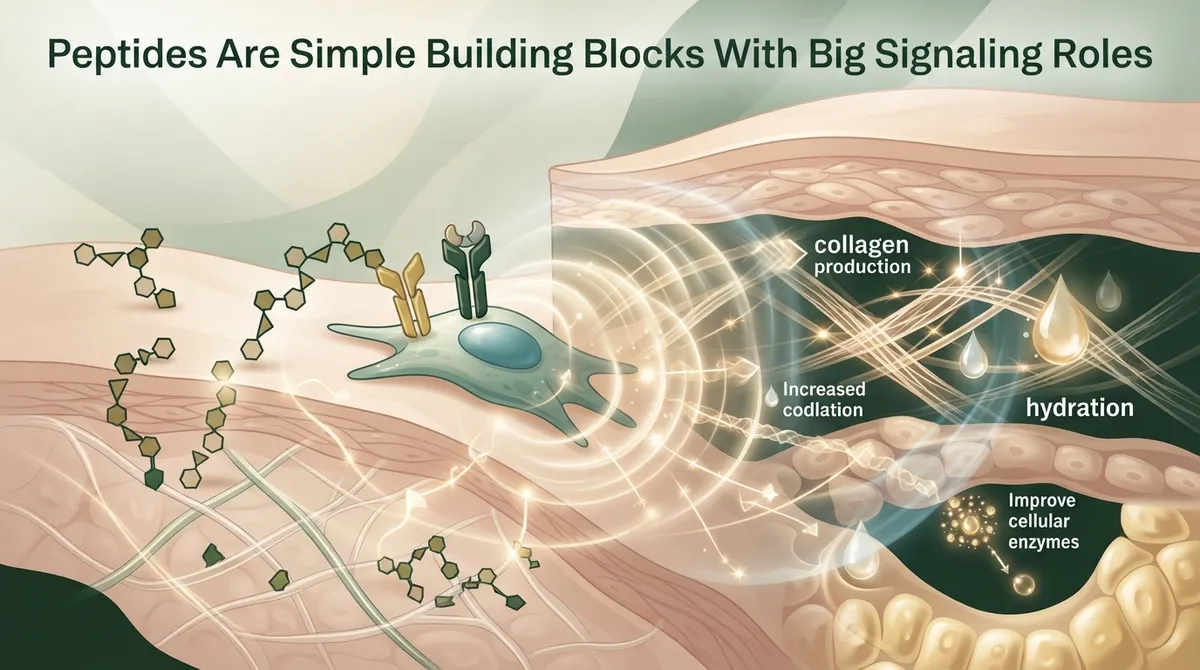
Truth 2: Peptides Are Simple Building Blocks With Big Signaling Roles
Peptides are short chains of amino acids. Think of amino acids as beads and peptides as short strands of those beads. Your body makes thousands of peptides, and many act as messengers that tell cells what to do.
In skin care, some peptides are designed to send signals that support the look of collagen and the structure around skin cells. That sounds exciting, and it is a reasonable idea. But here is an important reminder: a proposed mechanism does not automatically equal a proven result. A peptide can look great on paper and still deliver a small effect in real life. Good science asks, “Does it work in people?” not just “Does it make sense in theory?”
Truth 3: The Three Routes Are Not Equal
This is where most confusion happens, so let’s put it side by side.
| Route | What It Is | Strength of Human Evidence | Main Considerations |
|---|---|---|---|
| Oral collagen peptides | Supplements taken by mouth | Most developed of the three | Possible hydration and elasticity gains; wrinkle evidence is less certain |
| Topical peptides | Creams and serums on the skin | Limited and mixed | Possible irritation or allergy; few robust trials |
| Injectable peptides | Injections marketed for skin glow | Inadequate for skin use | Dosing, contamination, and unknown long-term effects |
Notice that the route with the most research is the simplest one: oral collagen peptides. The route that sounds the most “medical” has the thinnest evidence for skin. That surprises a lot of people.
Truth 4: Oral Collagen Peptides Have the Strongest Evidence
If we are being fair, oral collagen peptides lead the pack. A 2026 systematic review looked at 35 randomized controlled trials with 2,534 participants. It found statistically significant improvements in instrumental measures of skin hydration, elasticity, and transepidermal water loss (a measure of how well skin holds onto moisture).
Here is a quick look at what that review reported:
| Skin Measure | Pooled Result |
|---|---|
| Hydration | SMD = 0.44 (95% CI 0.15 to 0.73) |
| Elasticity | SMD = 0.62 (95% CI 0.15 to 1.10) |
| Transepidermal water loss | SMD = -0.39 (95% CI -0.62 to -0.16) |
That is encouraging. But the same review noted that evidence for wrinkle reduction and deeper skin thickening was still not strong enough for firm conclusions. Results also vary from study to study, depending on the formula used. So oral collagen is a reasonable, well-studied option, not a miracle.
Want to go deeper on this topic? Our post on how to trigger collagen stimulation with peptides breaks down the ideas in plain language.
Truth 5: Topical Peptides Show Modest, Mixed Results
Topical peptides are the most common way people try peptides for skin, and they are easy to find. But the research is smaller and less consistent. A 2024 review of topical peptide and exosome therapies described a small, varied evidence base. Some studies reported improvements in fine lines, texture, or elasticity. At least one did not find an elasticity benefit. The authors called for stronger clinical trials.
A 2026 meta-analysis of oral and topical peptides for skin aging pulled together 19 randomized controlled trials with 1,341 participants. It reported a modest pooled wrinkle effect (MD = 0.27, p = 0.04), with inconsistent findings for elasticity and skin density. In everyday language: there may be a small benefit for wrinkles, but do not expect dramatic, face-lift-style changes from a jar.
One more key point. There are no FDA-approved topical peptide products specifically for skin rejuvenation. Cosmetic products are regulated differently than prescription drugs, which brings us to our next truth.
Truth 6: “Injectable Glow” Peptides Are Not Established Skin Treatments
This is the part where we want to be extra clear, because it matters for your safety. Injectable peptides marketed for skin rejuvenation, including combinations sometimes nicknamed “glow stacks,” should not be presented as proven dermatologic treatments. Current research shows a lack of adequate clinical trials and long-term human safety data for these skin uses.
It also helps to understand how FDA approval works. In the United States, approval is specific to a drug, its formulation, its route, and its intended use. A cosmetic peptide product is not the same thing as an FDA-approved drug. And a compounded or online injectable is not “FDA-approved” just because it contains a peptide. If you want to learn how to tell the difference, read our guide on FDA-approved vs. compounded peptides.
Unapproved injections can add concerns such as uncertain dosing, contamination, infection, and unknown whole-body effects. Never skip the conversation with a licensed clinician. If you are curious about the bigger picture of safety, see is peptide therapy safe? what you really need to know.
Truth 7: A Medically Guided Approach Beats Guesswork
So where does the word “medical” earn its place? Not in the label on a product, but in how care is delivered. A truly medical approach means a licensed provider reviews your health history, looks at your blood work, discusses your goals, and monitors you over time. It also means being honest when something lacks strong evidence.
Here is a simple checklist you can use when evaluating any peptide skin program:
- Ask which route it uses. Topical, oral, or injectable? Each has different evidence.
- Ask about the research. Look for human trials, not just lab studies or testimonials.
- Check the regulatory language. Be wary of anyone who calls a cosmetic or compounded product “FDA-approved.”
- Confirm a licensed clinician is involved. You want real oversight, not a checkout cart.
- Review your health factors. Pregnancy, breastfeeding, medications, and medical conditions all matter.
- Plan for follow-up. Good care includes check-ins and adjustments.
For a deeper look at choosing wisely, see how to choose peptides for youthful skin that work and what peptides do for skin: a real-world guide for 2026.
Who Tends to Benefit From a Personalized Approach?
Different people come to skin and longevity care for different reasons. Here are a few common profiles:
- Health optimizers who track sleep, energy, and recovery and want skin support to fit into that bigger picture.
- Aging adults hoping to maintain vitality and reduce visible signs of aging in a realistic, safe way.
- Biohackers who love labs and data and want to understand what the evidence actually says.
- Busy professionals who need convenient telehealth rather than another trip across town.
- Wellness seekers already investing in supplements and prevention who want a thoughtful next step.
If that sounds like you, the best move is to look at the whole picture, not just one product. Skin is influenced by sleep, nutrition, hormones, sun exposure, and stress. A good plan considers all of it.
Understanding Safety and Side Effects
Safety depends on the specific peptide and the route. Here is a quick overview:
- Topical products: may cause irritation, redness, or allergic reactions in some people.
- Oral supplements: may cause stomach upset or allergies depending on the ingredients and source.
- Unapproved injections: add risks like inconsistent dosing, contamination, and infection.
The 2024 review noted that the human studies it assessed did not observe negative side effects. That is reassuring, but small studies and short follow-up cannot prove that every peptide product is safe for everyone. Please talk with a qualified clinician first, especially if you are pregnant, breastfeeding, taking medications, or managing a health condition. And if you are curious about everything from dosing to supervision, our article on how to start peptide therapy safely and see real results is a helpful read.
How Telehealth Fits In
One of the nicest things about modern care is that you do not have to rearrange your whole week to get it. At Allura Longevity, licensed providers design personalized peptide plans based on your blood work and health goals, then deliver them to your door. The process starts with a virtual consultation, lab work through LabCorp, and a customized treatment plan with ongoing monitoring and adjustments. Care is led by Ashley, a board-certified Family Nurse Practitioner, and telehealth is available in Florida, Georgia, Texas, Connecticut, Indiana, Maryland, New York, and California.
Telehealth works especially well for people who want expert guidance without the waiting room. It also makes follow-ups easier, which matters because good results usually come from steady, thoughtful adjustments rather than one-time fixes. If you are comparing options, you may enjoy our take on local clinic vs. telehealth peptide therapy. We also share a broader look at how peptides can fit into a longevity plan in anti-aging peptide treatment: what really works in 2026, and you can explore the research that backs many of these ideas through the National Library of Medicine.
What to Expect Realistically
Let’s end the main section with an honest expectation check. Skin changes take time. Most studies of oral collagen run for weeks to months before measuring results. Any plan that promises overnight transformation is selling hope, not science. For a sense of timing, our guide to when do peptide therapy before and after results show offers a realistic look at timelines.
A smart mindset is to aim for steady, measurable improvements in hydration, texture, and firmness, while protecting your skin with sunscreen, good sleep, and balanced nutrition. Peptides can be one helpful tool in the toolbox, not the entire toolbox.
Final Thoughts: Be Curious, Be Careful, Be Kind to Your Skin
Medical skin peptide therapy is a real and growing area of interest, but it is also one filled with big claims. The most reliable path is to know your route (topical, oral, or injectable), understand what the research truly says, and work with licensed professionals who put your safety first. Oral collagen peptides currently have the most encouraging evidence, topical peptides show modest and mixed results, and injectable skin peptides still lack the data to be called established treatments.
You do not have to figure this out alone. If you would like personalized guidance based on your own labs, goals, and health history, request a consultation with Allura Longevity today. Spots for new clients are limited each month, and you can also call (813) 510-6277 to get started. Your skin story is worth a thoughtful plan.
FAQs
Q: What is medical skin peptide therapy?
A: It is an umbrella phrase, not a single approved treatment. It can mean topical peptide products, oral collagen peptides, or injectable peptides promoted for skin rejuvenation, and each has different evidence and safety profiles. A licensed clinician can help you figure out which, if any, fits your goals.
Q: Do peptide treatments really improve wrinkles and elasticity?
A: Oral collagen peptides have shown possible improvements in hydration and elasticity in many trials, while wrinkle benefits are less certain. Topical peptides show modest, mixed results, so it is smart to keep your expectations realistic and patient.
Q: Are skin peptides FDA-approved?
A: In the United States, FDA approval is specific to a drug, formulation, route, and use. Cosmetic peptide products are not the same as FDA-approved drugs, and compounded or online injectables should not be called FDA-approved just because they contain a peptide.
Q: Are injectable peptide “glow” treatments safe and effective?
A: They should not be considered established skin treatments right now, since adequate clinical trials and long-term human safety data are lacking. Risks can include uncertain dosing, contamination, and infection, so please talk with a qualified provider before trying anything injectable.
Q: How can I tell if a peptide skin treatment is medically supported?
A: Look for human clinical trials, clear language about regulatory status, and involvement of a licensed clinician who reviews your health history and labs. If a program makes dramatic promises or skips medical oversight, that is a good moment to pause and ask more questions.





