

Key Takeaways
-
Body composition is what your body is made of (fat, lean mass, bone, water), so the scale alone can miss important changes, especially for women during perimenopause and menopause.
-
The best-established options are prescription incretin medicines like semaglutide and tirzepatide, which are FDA-approved for chronic weight management in specific products, not for reshaping the body or spot-reducing fat.
-
In major trials, most weight lost was fat, but some lean mass was lost too; in the SURMOUNT-1 DXA substudy about one quarter of weight lost was lean mass, so strength training and protein matter.
-
Women-specific research on these medicines is still limited, so no peptide has been shown to target the belly, hips, or arms, and results depend on age, menopause status, nutrition, and activity.
-
Growth-hormone-releasing peptides marketed online for body recomposition are not established as FDA-approved or well-supported for women's body composition, and compounded products should not be treated as equal to approved medicines.
-
Weight-loss peptides are not for use during pregnancy, trying to conceive, or breastfeeding, so women should speak with a prescriber before starting any treatment.
If you’ve typed “women’s body composition peptides” into a search bar lately, you’re in good company. Plenty of women want to lose stubborn fat, keep their strength, and feel good in their own skin. And with so many peptide ads online, it’s tough to know what’s real and what’s just hype.
Here’s the friendly truth: “peptides” is a big umbrella term. Some are FDA-approved medicines with solid trial data. Others are marketed online with big promises and thin evidence. Knowing the difference can save you time, money, and worry.
In this guide, we’ll walk through what body composition really means, which peptide-based medicines have the best research, what the studies say about fat versus muscle, and how to stay safe. We’ll keep it simple and honest. If you want a deeper primer first, check out 8 Facts That Explain What Are Peptides in 2026.
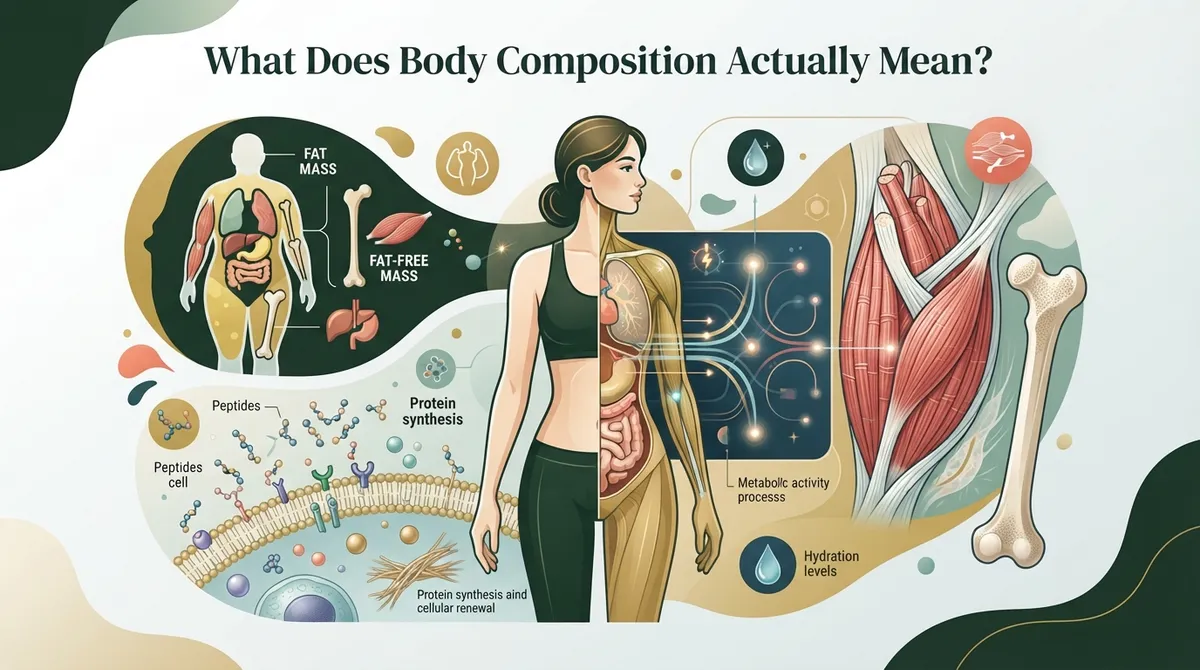
What Does Body Composition Actually Mean?
Body composition is simply what your body is made of. It’s the mix of fat mass, lean mass, bone, and water. Two women can weigh the same and look and feel very different because their mix is different.
That’s why the scale alone doesn’t tell the whole story. A woman who loses 10 pounds of mostly fat is in a different place than one who loses 10 pounds that includes a lot of muscle.
Fat Mass vs. Lean Mass
Fat mass is stored body fat, including visceral fat around your organs. Lean mass is everything that isn’t fat or bone. That includes skeletal muscle, but also organs, connective tissue, and water. So lean mass is not the same thing as muscle.
This small detail matters. When a study says someone lost “lean mass,” it doesn’t always mean they lost muscle strength or function. Researchers use scans like DXA to measure these pieces, and it’s helpful to ask which measure a claim is using.
Why Women’s Bodies Get Extra Attention
Women often notice body composition shifts during perimenopause and menopause. Hormone changes can nudge fat toward the midsection and make muscle harder to hold onto. Sleep, stress, nutrition, and activity all play a part too.
One honest note: research specific to women’s body composition on peptide-based medicines is still limited compared to general obesity trials. So we can learn a lot from big studies, but we shouldn’t promise a uniquely “female” effect.

So, What Are Women’s Body Composition Peptides?
In peptide therapy, the phrase usually points to prescription incretin medicines. Think semaglutide and tirzepatide. These are peptide-based drugs that act on gut hormone receptors to help regulate appetite and blood sugar.
Here’s the key point. These medicines are approved for specific weight-management uses. They’re not approved to “reshape” a woman’s body or burn fat from one particular spot. Spot reduction is a myth, even with modern medicine.
| Peptide-Based Medicine | How It Works | Regulatory Status for Weight |
|---|---|---|
| Semaglutide | GLP-1 receptor agonist | FDA-approved for chronic weight management (specific products) |
| Tirzepatide | GIP/GLP-1 receptor agonist | FDA-approved for chronic weight management (specific products) |
| Growth-hormone-releasing peptides | Signal the body to release growth hormone | Not established as approved or well-supported for women’s body composition |
For a closer look at how these medicines work, see How to Understand GLP-1 Peptide Therapy in 2026 and GLP-1 vs. Dual-Agonist Peptides: Which Wins for Metabolic Health?.
Who Is the Label For?
In the United States, labeling for chronic weight management generally covers adults with obesity (BMI of 30 or higher) or overweight (BMI of 27 or higher) plus at least one weight-related condition. These medicines are used alongside a reduced-calorie diet and more physical activity.
Eligibility can vary by product and may change over time. A licensed clinician should check the current label and review your health history.
What the Research Says About Fat and Muscle
This is the part everyone asks about: “Will I lose fat or muscle?” The honest answer is both, but mostly fat. Let’s look at the numbers from major trials.
| Trial | Medicine | Average Weight Loss | Body Composition Finding (DXA Substudy) |
|---|---|---|---|
| STEP 1 | Semaglutide 2.4 mg | 14.9% at 68 weeks (vs. 2.4% placebo) | About 19.3% lower total fat mass and 27.4% lower visceral fat; about 9.7% lower lean body mass |
| SURMOUNT-1 | Tirzepatide (5, 10, 15 mg) | 15.0%, 19.5%, 20.9% at 72 weeks (vs. 3.1% placebo) | About 33.9% lower fat mass and 10.9% lower lean mass; roughly 75% of weight lost was fat |
These are group averages, not promises. Your results can look different based on age, menopause status, starting body composition, nutrition, activity, and how your body responds.
Reading the Lean Mass Numbers Wisely
In the STEP 1 DXA substudy, fat mass dropped more than lean mass, so lean mass made up a larger share of total body weight afterward. That sounds great, but it doesn’t mean absolute lean mass went up. It simply means the ratio improved.
For tirzepatide, about one quarter of weight lost was lean mass in the SURMOUNT-1 substudy. FDA review material reported placebo-adjusted changes of around -26% in fat mass and -8% in lean mass in a DXA subset. Remember, lean mass includes more than muscle.
Are Peptides Different for Women or After Menopause?
It’s a smart question. Right now, the evidence doesn’t show that incretin medicines work in a uniquely different way for all women. It also doesn’t show they target one body area, like the belly, hips, or arms.
What we do know is that many things can shape results:
- Age and menopause status
- Starting body composition and health conditions
- Protein intake and overall nutrition
- Strength training and daily movement
- Sleep, stress, and medication response
Because women-specific data is thinner, your plan should be individualized. If you’re curious about hormone-related shifts, you might enjoy How to Build a Women’s Wellness Peptide Plan and 8 Best Hormone Therapy Peptides for Women in 2026.
What About Growth-Hormone-Releasing Peptides?
You’ll see online clinics marketing growth-hormone-releasing peptides or other compounds for “body recomposition.” These get a lot of buzz. But the current evidence doesn’t establish them as FDA-approved or well-supported for women’s body composition.
That doesn’t mean you should panic. It means you should ask good questions. Compounded or unapproved products shouldn’t be treated as equal to FDA-approved medicines. Learn more in FDA-Approved vs. Compounded Peptides: What Wins? and Growth Hormone Peptides: What They Are & How They Work.
For a reliable overview of what peptides are in general, the what are peptides guide is a helpful starting point.
Safety First: What Women Should Know
Good care means looking at risks as clearly as benefits. Peptide-based weight medicines are real medications with real side effects, so they need a clinician’s eye.
Common Considerations
- Stomach-related side effects such as nausea, constipation, or diarrhea
- The need for dose adjustments and follow-up
- Possible lean mass loss, which makes strength and protein habits important
- Product-specific warnings that your prescriber should review with you
Side effects are often manageable with the right plan. See What Causes GLP-1 Side Effects and How to Manage Them? for friendly, practical tips.
Pregnancy and Trying to Conceive
This one is important. Weight-loss medicines are not for use during pregnancy. FDA labeling warns that weight loss offers no benefit in pregnancy and may cause fetal harm. If you’re pregnant, planning to conceive, or breastfeeding, talk with your prescriber before starting anything.
How to Support Strength While You Lose Fat
Medication is just one piece. The daily habits you build can help protect lean mass and improve how you feel. Here’s a simple, doable approach.
- Get baseline data. Blood work, weight, waist measurements, and, when possible, a body composition scan give you a starting point.
- Prioritize protein. Ask your clinician how much is right for you, since needs vary.
- Lift something. Strength training two to three times a week helps signal your body to hold onto muscle.
- Walk more. Daily movement supports energy, mood, and metabolic health.
- Protect your sleep. Poor sleep can work against appetite and recovery.
- Track and adjust. Check in regularly so your plan changes as your body does.
If muscle is a big goal for you, explore 14 Peptides for Muscle Gain Worth Knowing (2026) and 12 Body Composition Facts Peptide Users Need in 2026.
Is Telehealth a Good Fit for Body Composition Care?
For busy women, telehealth can be a game changer. You skip the waiting rooms, complete labs at a nearby draw site, and get guidance from home. The key is choosing a provider who does real medical screening and ongoing monitoring.
That’s where Allura Longevity comes in. Allura Longevity offers personalized, medically supervised peptide therapy through telehealth. Licensed providers design plans based on your blood work and goals, and care includes follow-up and adjustments. Allura Longevity is licensed in Florida, Georgia, Texas, Connecticut, Indiana, Maryland, New York, and California.
To see how the process works, read How to Start Peptide Therapy Safely and See Real Results and How to Lose Weight With Peptide Therapy in 2026. You can also dig into the research yourself through the National Library of Medicine.
Questions to Ask Any Provider
Before you start, bring a short list of questions. A trustworthy clinic will welcome them.
- Is this medicine FDA-approved for my situation, or is it compounded?
- What labs will you review before prescribing?
- How will we monitor side effects and body composition?
- What is the plan for protecting muscle and strength?
- What should I do if I’m pregnant or plan to be?
For more on vetting a provider, try How to Get Prescription Peptides Safely in 2026.
The Bottom Line on Women’s Body Composition Peptides
Here’s the simple takeaway. The best-established women’s body composition peptides, in a medical sense, are prescription incretin medicines like semaglutide and tirzepatide. In trials, most weight lost is fat, but some lean mass is lost too. No peptide can target one body area, and women-specific evidence is still growing.
Unapproved products and flashy online claims deserve extra caution. The smartest path is clinician-led care, solid lab work, strength-friendly habits, and regular check-ins. That’s a plan you can feel good about, one step at a time.
Ready to see if a personalized plan fits you? Request a consultation with Allura Longevity, or call (813) 510-6277. New client spots are limited each month, so reach out when you’re ready. You can also explore peptides for women to learn more about what’s available.
FAQs
Q: Which peptides are FDA-approved for weight management?
A: Certain semaglutide and tirzepatide products are FDA-approved for chronic weight management in eligible adults, alongside diet and activity changes. Approvals are product-specific and can change, so your clinician should check the current label. Other peptides sold online for fat loss are not established as approved for this use.
Q: Do semaglutide or tirzepatide cause muscle loss?
A: Most weight lost on these medicines is fat, but some lean mass is lost too. In one tirzepatide trial substudy, about three-quarters of weight lost was fat and about one-quarter was lean mass. Lean mass isn’t the same as muscle, and strength training plus enough protein can help support your muscles.
Q: Are growth-hormone-releasing peptides proven for women’s body composition?
A: Not yet. Current evidence doesn’t establish them as FDA-approved or well-supported for women’s body composition goals. It’s wise to ask any clinic for the research behind a product and to avoid treating compounded or unapproved options as equal to approved medicines.
Q: Can women use weight-loss peptides while pregnant or trying to conceive?
A: No, weight-loss medicines aren’t for use during pregnancy. FDA labeling notes that weight loss offers no benefit in pregnancy and may cause fetal harm. If you’re pregnant, planning pregnancy, or breastfeeding, talk with your prescriber before starting or continuing any treatment.
Q: How can I track my body composition during treatment?
A: Look beyond the scale. Waist measurements, strength progress, blood work, and a body composition scan like DXA can give a fuller picture. Regular check-ins with a licensed provider help you adjust your plan as your body changes.





