

Key Takeaways
-
Bremelanotide (Vyleesi) is the only FDA-approved peptide for low desire, and only for acquired HSDD in premenopausal women, not for men, postmenopausal women, or general aging.
-
Vyleesi is injected at 1.75 mg at least 45 minutes before sexual activity, no more than once in 24 hours or eight times a month, and should be stopped after eight weeks without improvement.
-
Vyleesi is contraindicated in people with uncontrolled high blood pressure or cardiovascular disease, and can cause nausea (about 40% in trials), flushing, and temporary blood pressure changes.
-
Popular peptides like BPC-157, Epitalon, and Melanotan II lack FDA approval and adequate human evidence for libido or longevity claims, and a 2026 review found 35 of 36 BPC-157 studies were animal studies.
-
Low libido has many causes, including hormone shifts, medications, chronic conditions, stress, depression, and poor sleep, so a clinician should check these before considering any peptide.
-
Compounded peptides aren't FDA-approved like drugs, so choose a licensed clinician and regulated source, and be wary of guaranteed results, no screening, or 'research chemical' sales.
Let’s be honest: nobody puts “my sex drive quietly took a vacation” on their midlife bucket list. Yet it happens to many of us. One day you notice desire isn’t what it used to be, and you start wondering if there’s a fix. Then you see ads for peptides promising everything from glowing skin to a revived love life.
So what’s true? In 2026, aging and libido peptide therapy is a hot topic, but also a confusing one. The word “peptide” covers a huge range of products. Some are FDA-approved medicines. Others are marketed with big claims and very little human research.
This guide walks you through it in a friendly, no-hype way. You’ll learn what the evidence says, which peptide has an FDA-approved use for low desire, what to watch out for, and what a good clinician should check first. Whether you’re a health optimizer, a busy professional, or just curious, you deserve straight answers.

What Does Peptide Therapy Actually Mean for Libido?
Peptides are short chains of amino acids. Your body makes thousands of them, and they act like tiny messengers. If you want a plain-English primer, see what are peptides or our guide, 8 Facts That Explain What Are Peptides in 2026.
Here’s the key point. “Peptide therapy” is a broad marketing term. It is not one single, proven treatment for age-related libido changes. The evidence and the regulatory status depend on the specific peptide and the specific reason it’s used.
That’s why a careful approach matters. A good plan starts with your health picture, not with a trendy vial.
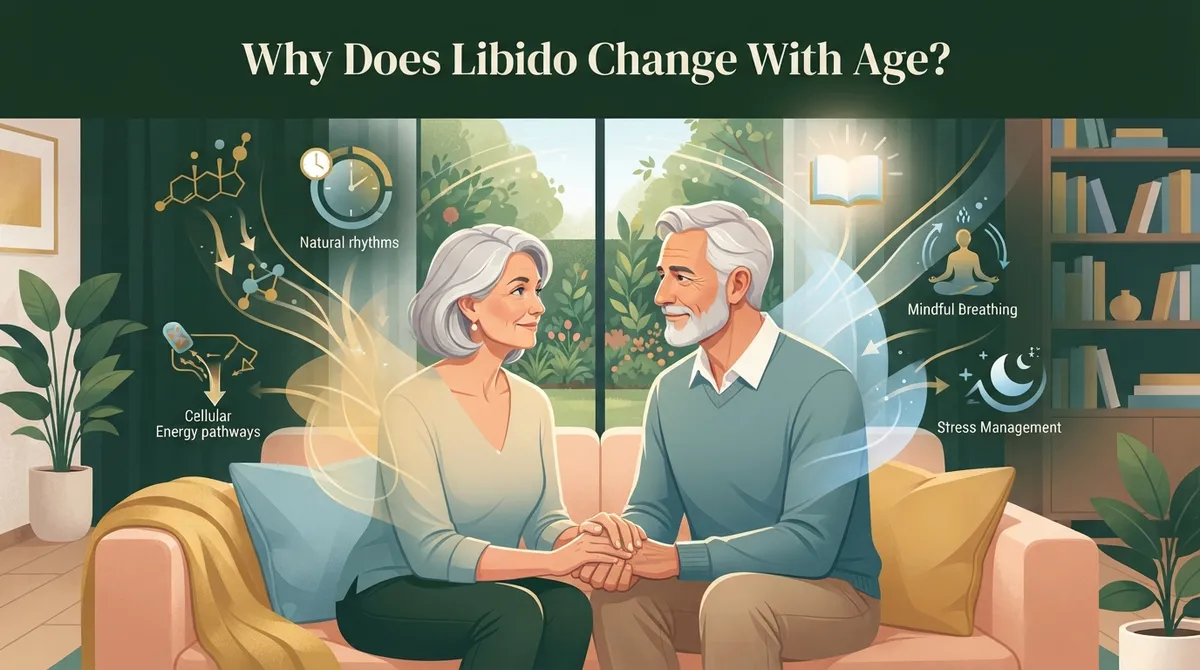
Why Does Libido Change With Age?
Desire is complicated. It isn’t just about one hormone or one missing peptide. Many things can turn the dial down over time.
Common contributors include:
- Hormone shifts: Menopause-related changes in women and declining testosterone in some men.
- Health conditions: Diabetes, heart disease, thyroid problems, and chronic pain.
- Medication effects: Some antidepressants, blood pressure drugs, and others can lower desire.
- Mood and stress: Anxiety, depression, and burnout are big libido killers.
- Sleep problems: Poor sleep drains energy and interest.
- Relationship factors: Communication, connection, and life changes all matter.
Because the causes are so varied, a clinician should look for the “why” instead of assuming age or a peptide shortage is to blame. Our article on 6 Real Treatments for Low Libido in Women (2026) goes deeper on this.
The One FDA-Approved Peptide for Low Desire: Bremelanotide (Vyleesi)
When it comes to peptides and sexual desire, there is one clear regulatory standout. Bremelanotide, sold as Vyleesi, is an FDA-approved peptide medicine. The FDA approved it on June 21, 2019.
But the approval is narrow. It is for acquired, generalized hypoactive sexual desire disorder (HSDD) in premenopausal women. The low desire must cause real distress. It also can’t be mainly explained by another medical or psychiatric condition, relationship problems, or a medication.
It is not approved for postmenopausal women, for men, or for general sexual performance enhancement. And it isn’t approved as a broad “aging” treatment.
If you’re curious about how this medicine fits into the bigger picture, take a look at 14 Bremelanotide Facts About Erectile Dysfunction (2026) and 9 Intimate Wellness Facts About PT-141 in 2026.
How Vyleesi Is Used
Vyleesi is given as a subcutaneous injection, used as needed. The FDA label includes clear dosing limits.
| Label Detail | What the FDA Label Says |
|---|---|
| Dose | 1.75 mg by subcutaneous injection |
| Timing | At least 45 minutes before anticipated sexual activity |
| Daily limit | No more than one dose in 24 hours |
| Monthly limit | No more than eight doses per month |
| Stop rule | Discontinue after eight weeks if there’s no improvement in desire and related distress |
Risks and Side Effects to Know
Vyleesi is a real medicine with real risks. It is contraindicated in people with uncontrolled high blood pressure or known cardiovascular disease.
Common side effects include nausea, flushing, headache, and injection-site reactions. In the FDA review, nausea was reported by roughly 40% of treated participants. The medicine can also cause a temporary rise in blood pressure and a drop in heart rate, usually peaking within 2 to 4 hours after dosing. Some people notice focal skin darkening, called hyperpigmentation.
This is exactly why medical screening matters before anyone starts.
What About Other Peptides Marketed for Libido and Anti-Aging?
Here’s where honesty really counts. Many peptides promoted online for libido or longevity lack FDA approval for those uses. They also lack solid human clinical evidence for those claims.
| Peptide | Commonly Marketed For | What to Know |
|---|---|---|
| Melanotan II | Tanning, libido | Not FDA-approved for human use; evidence for libido claims is lacking |
| Epitalon | Anti-aging, longevity | Not FDA-approved; no adequate evidence it treats aging or libido |
| BPC-157 | Healing, recovery | Not an established libido or longevity treatment |
| TB-500 | Recovery | Not an established libido or longevity treatment |
A 2026 warning summarized from ECRI/ISMP reported that 35 of 36 published BPC-157 studies it reviewed were animal studies. It found no published Phase 1 human safety data and no controlled human efficacy trials. That is a secondary-source finding, and it doesn’t say BPC-157 treats libido or aging at all.
Want to dig into specific ones? Try 6 Facts About Melanotan Peptide You Should Know, Is BPC-157 Safe? What the Research Really Shows, and 13 Facts About TB-500 Peptide You Need in 2026.
Are Compounded Peptides the Same as Approved Drugs?
Not quite. Compounded products are not FDA-approved in the same way as approved drugs. Compounding alone doesn’t prove a peptide is safe or effective.
Product quality, dosing, and risks can be less certain. That’s why it’s smart to work with a licensed clinician and a regulated source. Learn more in FDA-Approved vs. Compounded Peptides: What Wins? and 4 Compounded Peptides Facts You Need in 2026.
For a broader safety view, the National Library of Medicine is a helpful place to explore peer-reviewed research on peptide-based medicines.
What a Good Clinician Should Evaluate First
A thoughtful evaluation is the heart of safe care. Whether you’re a man or a woman, you want someone who looks at the whole picture. Here’s a simple step-by-step of what that often looks like.
- Listen to your story. When did the change start? What’s your stress, sleep, and relationship life like?
- Review your medications. Some prescriptions are hidden culprits for low desire.
- Check your health history. Heart health, blood pressure, and mood all matter.
- Order blood work. Labs can reveal hormone, thyroid, and metabolic issues.
- Discuss options honestly. This includes approved medicines, lifestyle changes, and what peptides can and can’t do.
- Plan follow-up. Good care includes monitoring and adjustments over time.
Curious about what blood work looks like? See 5 Blood Work Analysis Steps Before Peptides in 2026.
How Personalized Care Fits In
At Allura Longevity, we believe your plan should be built around you. Our licensed providers, led by board-certified Family Nurse Practitioner Ashley, design medically supervised treatment plans based on your blood work and health goals. It all happens through telehealth, so you can fit care into a busy schedule.
Clients start with a $50 virtual consultation, complete labs through LabCorp, and receive a customized six-month plan delivered to their door. Care includes ongoing monitoring and adjustments. We serve clients in Florida, Georgia, Texas, Connecticut, Indiana, Maryland, New York, and California.
Because “libido” can tie into hormones, energy, mood, and sleep, we look at those pieces together. You may find these helpful: 8 Peptide Facts That Redefine Sexual Wellness in 2026, How to Use Peptide Therapy for Libido Safely in 2026, and peptides for men or peptides for women.
Libido Support Beyond Peptides
Peptides are only one tool, and sometimes not the right one. Many people find real improvement from simpler steps. Consider these everyday supports:
- Protect your sleep. Aim for a steady schedule and a cool, dark room.
- Move your body. Regular strength and cardio work can lift mood and energy.
- Manage stress. Breathing exercises, walks, and downtime all help.
- Talk openly with your partner. Connection often fuels desire.
- Review your medications. Ask your provider whether any could be affecting you.
Sometimes hormones play a role too. If you’re wondering how they connect, explore How to Know If You Need Hormone Therapy in 2026 or Why Won’t TRT Fix Low Libido on Its Own?.
Red Flags to Watch For
The peptide world moves fast, and not every seller plays by the rules. Be cautious if you see any of these.
- Promises of guaranteed libido or anti-aging results
- No medical screening or blood work before you start
- Products sold as “research chemicals” with no clinician involved
- Pressure to buy large bundles or act now
- No clear information about sourcing, dosing, or risks
To learn how to protect yourself, read How to Get Prescription Peptides Safely in 2026 and Is Peptide Therapy Safe? What You Really Need to Know.
The Bottom Line on Aging and Libido Peptide Therapy
Here’s the honest takeaway. Aging and libido peptide therapy is not a one-size-fits-all cure. The clearest FDA-approved peptide option for desire, bremelanotide (Vyleesi), has a narrow use in certain premenopausal women with HSDD. Many other popular peptides simply lack the human evidence to back up libido or longevity claims.
That doesn’t mean you’re out of options. It means the best path starts with a real evaluation, honest conversations about risks, and a plan built around your body and goals. You deserve care that is both hopeful and truthful.
Ready to talk it through with a licensed provider? Request a consultation with Allura Longevity, or call (813) 510-6277. Spots for new clients are limited each month, so reach out while there’s room. We’d love to help you feel like yourself again.
FAQs
Q: Can peptide therapy improve libido as you age?
A: It depends on the peptide and the cause of your low desire. Peptide therapy isn’t a proven, general fix for age-related libido changes. A clinician should first check hormones, medications, mood, sleep, and other health factors before suggesting any plan.
Q: Which peptide is FDA-approved for low sexual desire?
A: Bremelanotide, sold as Vyleesi, is the FDA-approved peptide medicine for acquired, generalized HSDD in premenopausal women. It is not approved for men, postmenopausal women, or general sexual performance, and it has specific dosing limits and safety warnings.
Q: Are BPC-157, epitalon, or Melanotan II proven to boost libido?
A: No, not at this time. These peptides lack FDA approval for human use in this way, and there isn’t adequate clinical evidence supporting libido or longevity claims. It’s best to talk with a licensed provider before considering them.
Q: What are the side effects of Vyleesi?
A: Common side effects include nausea, flushing, headache, and injection-site reactions. It can also temporarily raise blood pressure, lower heart rate, and cause skin darkening in some people, so it isn’t suitable for those with uncontrolled high blood pressure or cardiovascular disease.
Q: Are compounded peptide injections FDA-approved?
A: Compounded products are not FDA-approved the way approved drugs are, and compounding doesn’t prove safety or effectiveness. That’s why working with a licensed clinician and a regulated source is so important.





