

Key Takeaways
-
Weight loss medicines work best as one part of a whole-person plan that includes protein-focused meals, strength training, sleep, stress support, and regular clinician check-ins.
-
Only FDA-approved products like Wegovy (semaglutide) and Zepbound (tirzepatide) are reviewed for safety and effectiveness; compounded or 'research' peptides are not FDA-reviewed before marketing.
-
In trials, semaglutide 2.4 mg averaged about 15% weight loss and tirzepatide 15 mg about 21%, with lifestyle support included, so results vary and should not be treated as guarantees.
-
Common eligibility criteria include a BMI of at least 30, or at least 27 with a weight-related condition, but screening for contraindications like personal or family history of medullary thyroid carcinoma or MEN 2 is essential.
-
Digestive side effects such as nausea and constipation are most common, and starting at a low dose with slow increases, plus smaller meals and hydration, can help manage them.
-
Plan for maintenance from the start, since stopping medication often leads to returning appetite and weight regain, so discuss long-term habits and exit strategies with your provider.
If you have ever felt like you are doing everything right and the scale still will not budge, you are in good company. Weight is not just about willpower. Hormones, sleep, stress, muscle mass, and appetite signals all play a part. That is why more people in 2026 are asking about holistic weight peptide therapy.
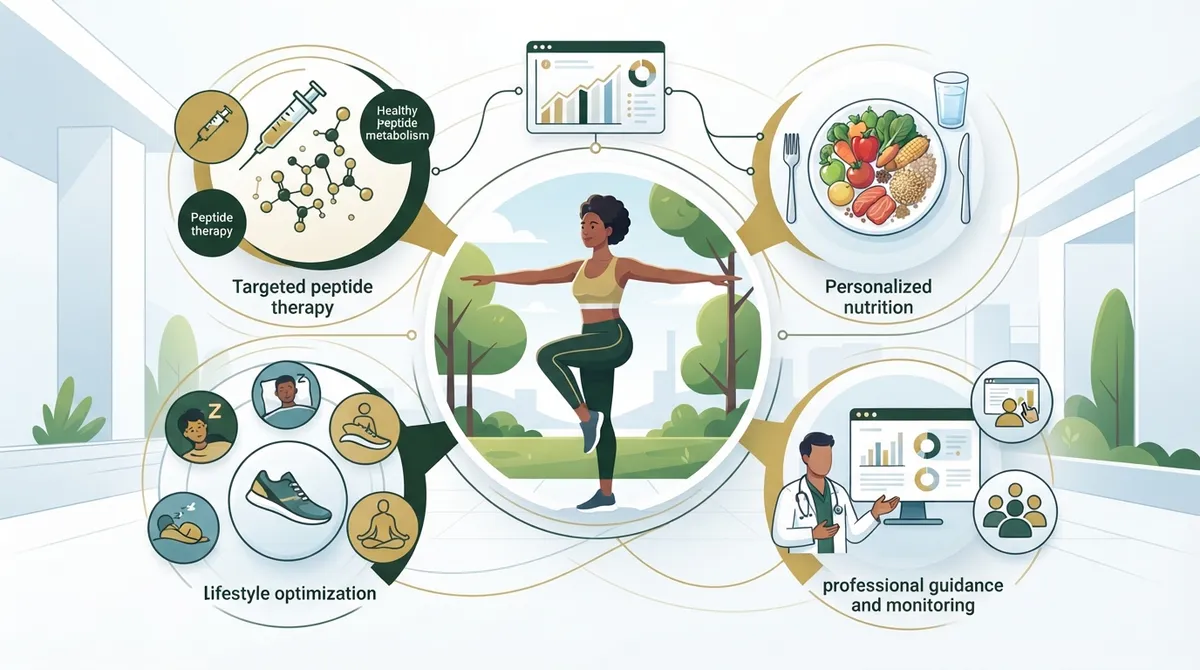
Here is the honest truth up front. “Holistic weight peptide therapy” is not one standardized treatment. It is a whole-person approach. It usually pairs a clinician-supervised, peptide-based medicine with food, movement, sleep, behavior support, and regular check-ins. In this guide, we will walk you through how to build that kind of plan step by step, what the research says, and how to avoid common traps. Whether you are a busy professional, a data-loving biohacker, or someone who just wants a calmer path to better health, you will find a clear roadmap here.
What Holistic Weight Peptide Therapy Actually Means
Let us clear up the term first. Peptides are short chains of amino acids that act as signals in your body. If you want a quick primer, this overview of what are peptides is a helpful start, and you can also read 8 Facts That Explain What Are Peptides in 2026.
In weight care, the peptide-based medicines most often discussed are semaglutide and tirzepatide. Both are FDA-approved prescription medicines for chronic weight management in eligible adults. They work on appetite and food-intake pathways. Tirzepatide targets both GIP and GLP-1 receptors, while semaglutide targets GLP-1.
The “holistic” part is the plan around the medicine. A well-built program usually includes:
- A medical history and lab review
- Nutrition and protein planning
- Strength and daily movement goals
- Sleep and stress support
- Side-effect monitoring and dose adjustments
- A long-term maintenance plan
Medication is a tool, not a replacement for care. The National Institute of Diabetes and Digestive and Kidney Diseases (NIDDK) reports that adults using prescription weight-management medication as part of a lifestyle program lose, on average, 3% to 12% more of their starting weight after one year than people in a lifestyle program without medication.

Step 1: Get Clear on Your Why and Your Starting Point
Before any product or protocol, start with you. Grab a notebook or your favorite tracking app and jot down a few things.
- Your main goal. Is it fat loss, more energy, better blood sugar, or fitting into clothes comfortably?
- Your history. Note past diets, medicines, health conditions, and anything that worked or did not.
- Your daily rhythm. Write down your sleep, work hours, meals, and stress points.
- Your timeline and comfort. Think about how you feel about injections, check-ins, and long-term care.
This simple exercise gives your provider real context. It also helps you notice patterns you may have missed. Think of it as drawing the map before you start the road trip.
Step 2: Check Whether You May Qualify
Eligibility depends on the specific product label and a clinician’s assessment, so there is no one-size-fits-all rule. Common criteria for anti-obesity medication include a BMI of at least 30, or at least 27 with a weight-related health condition such as high blood pressure or type 2 diabetes. Always confirm current labeling with your provider.
Some people should not use these medicines at all. The labels for semaglutide and tirzepatide weight-management products list important contraindications and warnings. One key example is a personal or family history of medullary thyroid carcinoma or Multiple Endocrine Neoplasia syndrome type 2 (MEN 2). This is exactly why screening matters.
Curious about the process? Our guide on how do you qualify for GLP-1 medication in 2026 breaks it down in plain language.
Step 3: Know Your Options (And the Differences)
Names get confusing fast. Wegovy, Ozempic, Zepbound, and Mounjaro all show up in conversations. Here is a simple comparison so you can follow along.
| Medicine | Active ingredient | Main FDA-approved use | Targets |
|---|---|---|---|
| Wegovy | Semaglutide | Chronic weight management | GLP-1 |
| Ozempic | Semaglutide | Type 2 diabetes | GLP-1 |
| Zepbound | Tirzepatide | Chronic weight management | GIP and GLP-1 |
| Mounjaro | Tirzepatide | Type 2 diabetes | GIP and GLP-1 |
Diabetes products and weight-management products are not interchangeable. Brand names, doses, and indications differ. Your provider will help you choose what fits your health picture. For a deeper side-by-side, see 6 Key Facts: GLP-1 vs Ozempic vs Wegovy (2026).
Step 4: Set Realistic Expectations With Real Data
Let us talk numbers, because honest expectations keep you motivated. These are trial averages, not promises for any one person.
| Trial | Medicine | Average weight change | Length |
|---|---|---|---|
| STEP 1 | Semaglutide 2.4 mg | About 15% loss (placebo about 2% to 3%) | 68 weeks |
| SURMOUNT-1 | Tirzepatide 5, 10, 15 mg | About 15.0%, 19.5%, 20.9% | 72 weeks |
| Head-to-head trial | Tirzepatide vs semaglutide | 20.2% vs 13.7% | 72 weeks |
Remember that trial participants also received lifestyle support. Results vary by dose, adherence, genetics, and health status. Some people lose more, and some lose less. Your plan should aim for steady, healthy progress rather than a fixed number.
If you want a month-by-month picture, read how long to see results on GLP-1 peptide therapy.
Step 5: Build the Lifestyle Layer That Makes It Last
This is where “holistic” truly earns its name. The medicine can quiet appetite, but your habits shape what you do with that quieter appetite.
Eat for Muscle and Satisfaction
When you eat less, protein becomes extra important. Aim to build meals around lean protein, fiber-rich vegetables, and smart carbs. Many providers also suggest smaller, slower meals, since some people feel full quickly on these medicines. Ask your provider for a protein target that fits your body and kidney health.
Move in Ways You Enjoy
Strength training helps protect muscle while weight comes off. Add daily walking, and you have a simple, sustainable base. You do not need a fancy gym. Resistance bands and bodyweight moves work well at home. For tips on keeping lean tissue, see 12 Body Composition Facts Peptide Users Need in 2026.
Protect Your Sleep and Stress
Poor sleep can raise hunger hormones, and chronic stress can nudge you toward comfort eating. Try a steady bedtime, a screen-free wind-down, and a short daily stress reset like a walk or deep breathing.
Add Behavioral Support
Habits are easier with a guide. Food journaling, mindful eating, and regular check-ins all help. Think of it as building a friendly support team around you.
Step 6: Understand the Risks and Side Effects
A good plan talks about the bumpy parts too. Common side effects of GLP-1-based medicines are digestive. These include nausea, vomiting, diarrhea, constipation, and abdominal discomfort. They often show up when starting or raising a dose.
Providers usually start low and increase slowly to help your body adjust. Small habits can help, like eating smaller portions, staying hydrated, and limiting very greasy meals. Always report severe or lasting symptoms to your care team. Our article on what causes GLP-1 side effects and how to manage them offers practical tips, and why GLP-1 therapy causes constipation tackles a very common complaint.
Step 7: Choose Approved Medicines Over Unapproved Products
This step protects your safety. The market is crowded with products labeled “research peptides” or lookalike compounded versions. Not all are equal.
| Factor | FDA-approved medicine | Compounded or “research” product |
|---|---|---|
| FDA review of safety and effectiveness | Yes, before marketing | No, not reviewed by FDA before marketing |
| Dosing consistency | Standardized | Can vary |
| Oversight | Labeled indications and warnings | Varies widely by source |
The FDA has raised concerns about dosing errors and adverse-event reports tied to compounded semaglutide and tirzepatide. As of May 31, 2026, the FDA information reported 990 adverse-event reports associated with compounded semaglutide and more than 730 associated with compounded tirzepatide. These are reports, not proof of cause, and they do not show how often problems occur. Check the FDA page for the latest numbers.
The takeaway is simple. Ask your provider exactly what product you are receiving, where it comes from, and whether it is FDA-approved. Our guide on FDA-approved vs. compounded peptides goes deeper, and how to get prescription peptides safely in 2026 shows what a safe path looks like.
Step 8: Pick a Provider Who Treats the Whole You
The right team makes all the difference. Look for licensed clinicians who review your labs, ask about your health history, and set up follow-ups. Be wary of anyone who promises guaranteed results or suggests supplements can replace medical care.
Here are green flags worth looking for:
- A licensed provider reviews your history and blood work
- Clear information about the exact medicine and dose
- Regular monitoring and dose adjustments
- Honest talk about side effects and risks
- A plan for maintenance, not just quick loss
This is where telehealth shines for busy people. At Allura Longevity, licensed medical providers build personalized plans from your blood work and goals, and treatment is delivered to your home. Care is led by Ashley, a board-certified Family Nurse Practitioner. You can explore options for peptides for women or peptides for men. Allura is licensed in Florida, Georgia, Texas, Connecticut, Indiana, Maryland, New York, and California.
Want to compare care styles first? Read Local Clinic vs. Telehealth: Best Peptide Therapy Near You?
Step 9: Track Your Progress Beyond the Scale
The scale is only one data point. Biohackers and health optimizers will love this part. Consider tracking:
- Waist measurement and how clothes fit
- Energy, mood, and sleep quality
- Strength and workout performance
- Lab markers like blood sugar and cholesterol, as guided by your provider
- Side effects and appetite changes
Sharing this data at check-ins helps your provider fine-tune your plan. It also shows you wins the scale might miss. For a look at what labs can reveal, see 5 Blood Work Analysis Steps Before Peptides in 2026.
Step 10: Plan for Maintenance From Day One
Here is something many people do not hear early enough. Weight management is long-term. Obesity is considered a chronic condition, and stopping a medication can lead to appetite returning and weight regain for many people. That is why maintenance matters.
Work with your provider on questions like:
- How long do we expect to continue treatment?
- What happens if I pause or stop?
- Which habits will carry me through maintenance?
- How will we monitor my weight and health after the goal is reached?
A thoughtful exit or maintenance strategy protects your hard work. Our piece on 8 GLP-1 weight loss maintenance tips that last can help you plan ahead.
A Quick Sample Week to Picture It
Wondering what this looks like in real life? Here is a simple example, not medical advice, just a picture.
- Daily: A protein-forward breakfast, a 20 to 30 minute walk, water through the day, and a set bedtime.
- Two to three days: Short strength sessions at home or the gym.
- Weekly: Take your medicine as directed, log your weight and symptoms, and prep a few simple meals.
- Monthly: Check in with your provider about dose, side effects, and progress.
Small, repeatable steps beat big, dramatic overhauls. Be kind to yourself on the off days. Progress is rarely a straight line.
Wrapping Up: Your Next Step
Holistic weight peptide therapy is not a magic shortcut. It is a smart, supervised approach that blends an appropriate medicine with nutrition, movement, sleep, behavior support, and steady monitoring. Choose FDA-approved options when indicated, keep your expectations grounded in real data, and lean on a licensed team that sees the whole you. You have got this, and you do not have to figure it out alone.
If you are ready to explore a personalized plan, request a consultation with Allura Longevity or call (813) 510-6277. New clients start with a $50 virtual consultation, LabCorp blood work, and a customized six-month plan delivered to your door. Spots for new clients are limited each month, so reach out while there is room.
FAQs
Q: What does holistic weight peptide therapy mean?
A: It is not one standardized treatment. It usually means pairing a clinician-supervised, peptide-based medicine, such as an FDA-approved GLP-1 or GIP/GLP-1 medicine, with nutrition, movement, sleep, behavioral support, and ongoing medical follow-up. Think of the medicine as one piece of a bigger, friendlier plan.
Q: Are peptide weight-loss treatments FDA approved?
A: Some are. Semaglutide (Wegovy) and tirzepatide (Zepbound) are FDA-approved prescription medicines for chronic weight management in eligible adults. Compounded versions and products sold as research peptides are not FDA-approved, so it is smart to ask your provider exactly what you are receiving.
Q: What are the common side effects of peptide-based weight-loss medicines?
A: The most common ones are digestive, including nausea, vomiting, diarrhea, constipation, and belly discomfort. Starting low and increasing the dose slowly often helps. Let your care team know about severe or lasting symptoms right away.
Q: What happens if I stop taking a weight-management medication?
A: Many people notice appetite returns and some weight comes back after stopping, since weight management is long-term care. That is why a maintenance plan with habits like strength training, protein-focused meals, and regular check-ins is so helpful. Talk with your provider before changing or stopping any medicine.
Q: Who may qualify for prescription medication for weight management?
A: Common criteria include a BMI of at least 30, or at least 27 with a weight-related health condition. Eligibility depends on the specific product label and a clinician’s review of your health history, so a medical consultation is the best way to find out.





