
Key Takeaways
-
Peptides are not one thing: oral collagen, topical serums, and injectables differ in evidence, safety, and cost, so evaluate each category separately.
-
Oral collagen peptides have the strongest human research, with trials of 5-10 g daily showing modest gains in hydration and elasticity over 8-12 weeks.
-
Give any collagen supplement at least 8-12 weeks of consistent daily use before judging results, since most trials measured outcomes at that point.
-
Topical peptide benefits depend heavily on the specific formula, concentration, and delivery, so look for testing on that exact product rather than trusting label claims.
-
No established clinical evidence or FDA approval supports injectable GHK-Cu for skin rejuvenation, so use injectables only under a licensed provider's supervision.
-
Daily broad-spectrum sunscreen, quality sleep, and protein-rich meals often matter as much as any peptide product for maintaining skin health.
If you have ever stood in front of the mirror and wondered whether that tiny jar of peptide cream, that scoop of collagen powder, or that injectable your friend raves about is really worth it, you are in good company. The word “peptides” is everywhere in skin care right now, and it can feel like every product promises to turn back the clock.
Here is the friendly truth: skin rejuvenation peptides for women are not one single thing. Some are swallowed, some are rubbed on, and some are given by injection under medical care. Each type has its own evidence, its own limits, and its own safety questions.
In this guide, we will walk through what the science actually says in 2026, what is still unproven, and how to make smart choices without wasting money. Whether you are a busy professional, a data-loving biohacker, or simply someone who wants healthy, comfortable skin as you age, you will leave with clear, honest answers. Let’s dive in.

What Are Peptides, and Why Do They Matter for Skin?
Peptides are short chains of amino acids, the same building blocks that make up proteins. Your skin is full of protein, including collagen and elastin, which help it stay firm and bouncy. If you want a plain-language primer, what are peptides is a handy starting point, and our own guide, 8 Facts That Explain What Are Peptides in 2026, goes deeper.
As we age, collagen production slows down. Sun exposure, stress, poor sleep, and hormonal shifts (like those in perimenopause and menopause) can speed up that change. That is why so many women are curious about peptides for skin.
But “peptide” is a broad label. A collagen supplement, a face serum, and a prescription injection are very different tools. Mixing them up is the number one source of confusion and hype.
The Three Main Types of Skin Peptides
Before you spend a dollar, it helps to know which category you are looking at. Here is a simple side-by-side look.
| Type | How You Use It | What the Evidence Shows | Main Caution |
|---|---|---|---|
| Oral collagen peptides | Powder, capsule, or drink taken daily | Small to moderate studies suggest modest gains in hydration and elasticity | Results vary by product, dose, and study quality |
| Topical cosmetic peptides | Serums and creams applied to skin | Evidence is formulation-specific; benefit cannot be assumed from marketing | Skin absorption and real-world results differ widely |
| Injectable or prescription peptides | Given by injection under medical supervision | No established evidence that injectable GHK-Cu or similar wellness peptides rejuvenate skin | Quality, dosing, and side effects need a licensed provider |
Keeping these three buckets separate will save you from a lot of misleading claims.
Do Oral Collagen Peptides Actually Work for Women?
Oral collagen is where the human research is strongest, so let’s start there. When you swallow collagen peptides, your body breaks them into amino acids and very small peptides. Researchers think some of these may signal skin cells to behave in a more youthful way, though the exact mechanism is still being studied.
Here is what recent trials have reported:
- A 2024 randomized, double-blind, placebo-controlled study of 112 adult women tested 10 g of hydrolyzed collagen daily for eight weeks and reported improvements in selected skin-health measures.
- A separate 2024 trial of 85 women aged 43 to 65 compared 5 g of collagen peptides with placebo daily for 84 days. The authors reported improvements in some measured skin outcomes, including changes in dermis density and skin moisture.
That sounds encouraging, and it is. But we want to be honest with you: these were product-specific studies with limited follow-up. One product working in one trial does not prove every collagen supplement will work the same way.
Broader reviews also point to a pattern. Hydration and elasticity tend to show the most consistent gains, while evidence for deeper structural changes, like wrinkle reversal, is less consistent. For the latest published reviews, check the National Library of Medicine database directly, since new analyses appear often.
The takeaway? Oral collagen peptides may be a helpful adjunct for some women. They are not a miracle, and they are not a medical treatment.
How Long Do Collagen Peptides Take to Show Results?
Patience is the name of the game. In the studies above, changes were measured at roughly 4 weeks, 8 weeks, and 12 weeks. Some measures moved early, while others, such as skin density and moisture, showed up closer to the 84-day mark.
A realistic way to think about it:
- Weeks 1 to 4: You may notice little to nothing. Some studies report early changes in select measures, but they are subtle.
- Weeks 4 to 8: Skin may feel a bit more hydrated or comfortable, especially if you also protect it from sun.
- Weeks 8 to 12: This is when many trials report their clearest findings. Take photos in the same light so you can compare fairly.
- After 12 weeks: Talk with your clinician about whether continuing makes sense for you.
Individual results vary. Your age, diet, sleep, sun habits, and hormones all play a role.
Topical Peptides: Helpful Skin Care or Pretty Packaging?
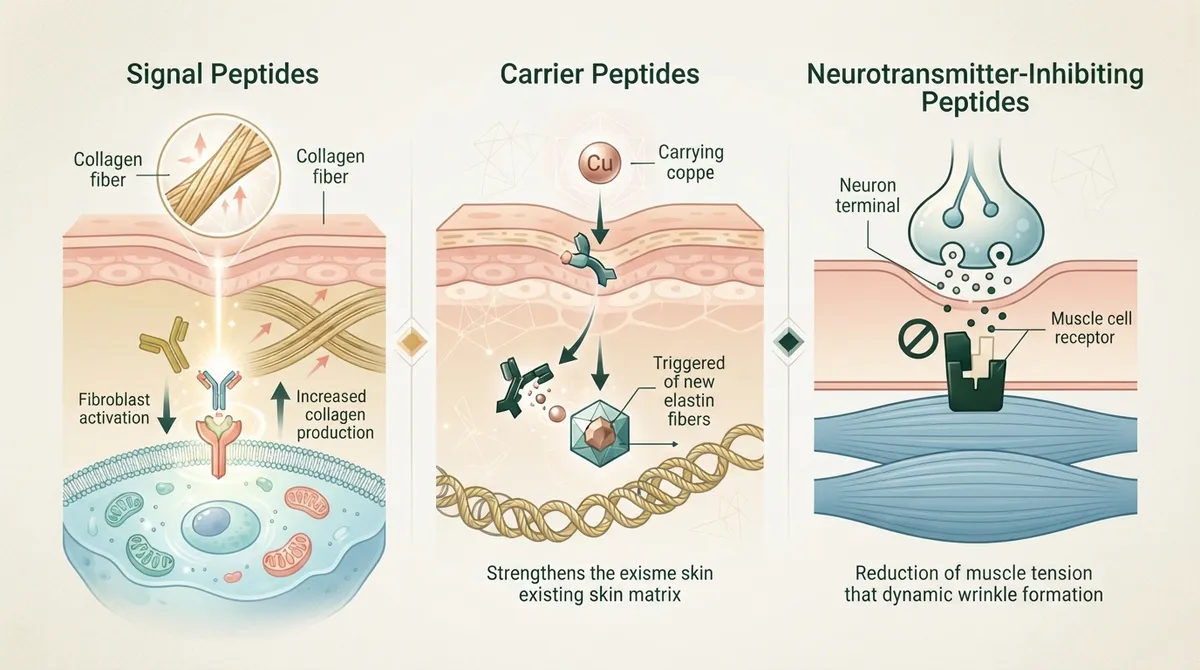
Topical peptides show up in serums and creams under names like signal peptides and carrier peptides. They are popular because they are easy to add to a routine and generally gentle.
The catch is that skin is a strong barrier. A peptide that looks exciting in a lab dish may not reach deeper skin layers in a bottle. Benefits depend heavily on the exact formula, concentration, and how well it is delivered. So, rather than trusting big claims on a label, look for products with real testing behind that specific formula.
Many women use peptide products alongside other staples like vitamin C, retinoids, and daily sunscreen. If your skin is sensitive, introduce one new product at a time, patch test first, and ask a dermatology professional if you are unsure how to layer them.
What About Injectable Peptides Like GHK-Cu?
This is the part where we get extra careful, because it matters for your safety.
Injectable copper peptide (GHK-Cu) is often talked about in wellness circles for skin. But based on the sources we reviewed, there is no established clinical evidence that injectable GHK-Cu or other unapproved wellness peptides safely rejuvenate skin in women. Robust, controlled human trials for systemic GHK-Cu are lacking.
There are also practical concerns with injectables in general: product quality, accurate dosing, and possible side effects. And it helps to understand the regulatory picture. FDA approval is different from compounding or cosmetic marketing. Peptide regulation has been shifting, and certain peptide bulk substances have been under review, so always verify current FDA information before starting anything. If you want to explore the difference, read FDA-Approved vs. Compounded Peptides: What Wins?
This is exactly why medical supervision matters. A licensed provider can review your health history, order labs, and talk through what is evidence-based and what is still experimental.
Where Peptide Therapy Fits Into a Skin Rejuvenation Plan
So where does professional peptide therapy fit in? Think of it as part of a bigger picture rather than a stand-alone skin fix.
Skin changes in midlife are often tied to whole-body factors: sleep quality, stress, nutrition, recovery, and hormones. A personalized plan looks at all of these. Our article on what peptides do for skin and our look at how to trigger collagen stimulation with peptides explore this broader view.
At Allura Longevity, care is telehealth-based and medically supervised. Clients begin with a $50 virtual consultation, complete blood work through LabCorp, and receive a customized six-month plan delivered to their door, with ongoing monitoring by licensed providers led by Ashley, a board-certified Family Nurse Practitioner. The goal is to support your overall vitality, including skin, energy, sleep, and recovery, while staying honest about what the research does and does not show. We are licensed in Florida, Georgia, Texas, Connecticut, Indiana, Maryland, New York, and California.
If you are weighing options, you might also enjoy Skin Rejuvenation Treatment for Women: Peptide Guide 2026 and peptides for women for a broader overview.
Safety First: Side Effects, Allergies, and Who Should Pause
Even gentle-sounding products deserve a safety check. Here are the main things to keep in mind:
- Allergies: Many collagen supplements come from marine, bovine, or other sources. If you have fish, shellfish, egg, or beef allergies, read labels closely.
- Pregnancy and breastfeeding: Talk with your clinician before using any new supplement or peptide.
- Medical conditions or medications: Always loop in your provider if you manage a health condition.
- Digestive upset: Some people notice mild stomach discomfort, bloating, or an unpleasant aftertaste with supplements.
- Injectables: Only consider these with a licensed provider, and ask about sourcing, dosing, and monitoring. Our guide Is Peptide Therapy Safe? What You Really Need to Know covers the key questions.
When in doubt, ask. A good provider will welcome your questions.
How to Choose a Collagen Peptide Supplement
If you decide to try oral collagen, a little label detective work goes a long way. Here is a simple checklist:
- Look for hydrolyzed collagen or collagen peptides, the form used in most studies.
- Check the dose. Trials used roughly 5 g to 10 g per day, so be wary of tiny amounts.
- Choose products with clinical research on that specific formula when possible.
- Scan for allergens and unnecessary additives or sweeteners.
- Prefer brands that share third-party testing for purity and contaminants.
- Be consistent. Daily use for at least 8 to 12 weeks is how most studies were designed.
And please steer clear of any product that promises to erase wrinkles or reverse your age. Honest brands do not make those claims.
Habits That Boost Any Peptide Plan
Peptides work best when the basics are covered. These everyday habits often make a bigger difference than any single product:
- Daily broad-spectrum sunscreen. Sun is a leading driver of visible skin aging.
- Protein-rich meals to give your body the building blocks it needs.
- Quality sleep, since skin repairs itself overnight. See which peptides actually help you sleep better for more on this.
- Stress management and movement, both of which affect hormones and skin.
- Hydration and gentle skin care that protects your skin barrier.
For more on supporting your skin from the inside out, try How Can You Boost Collagen Naturally After 30?
Setting Realistic Expectations
Here is our honest, encouraging bottom line. Skin rejuvenation peptides for women can be a supportive part of a healthy-aging routine, especially oral collagen peptides, which have the most human research behind them. Expect modest, gradual improvements in things like hydration and elasticity, not dramatic overnight transformations.
Treat collagen as a possible helper, not a proven medical treatment. Be skeptical of injectables marketed for skin without strong human evidence. And lean on a qualified clinician for guidance, especially if you have health conditions or are pregnant or nursing.
Feeling good in your skin is a journey, and you deserve straight talk along the way. If you would like a personalized, lab-guided plan, request a consultation with Allura Longevity. Spots for new clients are limited each month, and you can also call (813) 510-6277 to get started.
FAQs
Q: Do collagen peptides actually improve skin for women?
A: Some well-designed trials suggest modest improvements in skin hydration and elasticity with daily oral collagen peptides. Results vary by product, dose, and study quality, so think of collagen as a possible helper rather than a proven cure. It is always a good idea to check in with your clinician first.
Q: What is the difference between oral collagen peptides, topical peptides, and injectable peptide therapy?
A: Oral collagen peptides are swallowed and digested into small amino acid pieces, topical peptides are applied to the skin surface in creams or serums, and injectable peptides are given under medical supervision. Each has different evidence and safety considerations, so they should never be treated as interchangeable.
Q: Are injectable GHK-Cu peptides FDA-approved for skin rejuvenation?
A: No. Based on the sources we reviewed, there is no established clinical evidence or FDA approval for injectable GHK-Cu as a skin rejuvenation treatment. Regulatory status can change, so always confirm current FDA information with a licensed provider before starting.
Q: Can women use peptide skincare products with retinoids or vitamin C?
A: Many women do layer peptide products with retinoids and vitamin C, but sensitive skin may need a slower approach. Introduce one new product at a time, patch test, and ask a qualified professional how to build a routine that works for your skin.
Q: What side effects or allergies can collagen peptide supplements cause?
A: Most people tolerate collagen well, but some notice mild digestive upset like bloating or an aftertaste. Since collagen can come from fish, beef, or egg sources, check labels if you have allergies, and talk with your clinician if you are pregnant, breastfeeding, or managing a medical condition.





