
Key Takeaways
-
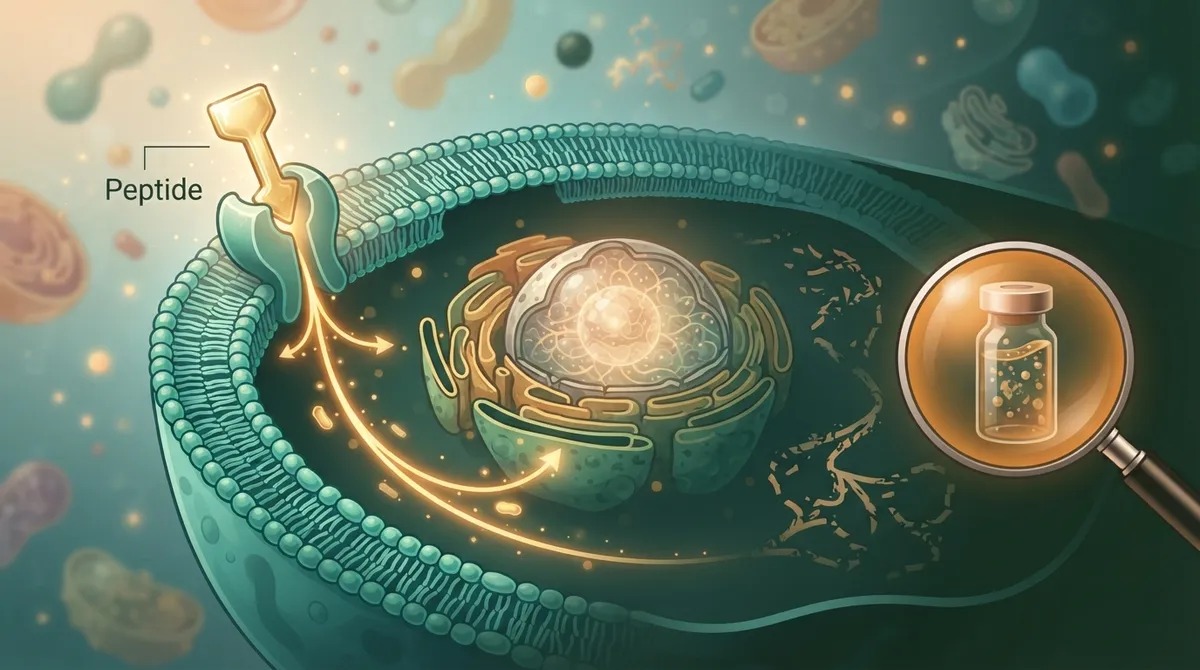
Peptides act as signaling molecules that bind specific receptors like a key in a lock, triggering chain reactions that can change gene activity, enzyme activity, or hormone release.
-
"Cellular restoration" is not a single established outcome; peptides can help specific systems, like blood sugar regulation or bone building, but broad claims of repairing all cells need proof for that exact peptide.
-
Approved peptide medicines such as insulin, semaglutide, and teriparatide have strong evidence for defined conditions, but that evidence does not transfer to other peptides.
-
BPC-157 and TB-500 are mostly supported by animal and lab studies; a 2025 review found only one small, uncontrolled human study among 36 included publications.
-
Before trying any peptide, name the exact peptide, ask for controlled human trials, check FDA status, and get baseline blood work with planned follow-up monitoring.
-
Unapproved or poorly sourced peptides carry risks including contamination, wrong dosing, immune reactions, injection-site infection, and unknown long-term effects.
You have probably seen the claim: peptides “restore your cells.” It sounds amazing. It also sounds a little too good to be true. So what is actually going on inside your body when a peptide does its job?
Here is the friendly, honest answer. Peptides are tiny messengers. They tell cells what to do. Some peptide medicines have strong proof behind them for specific conditions. Others are talked about far more than they are tested. Knowing the difference is the smartest first step you can take.
In this guide, we will walk through how peptides communicate with cells, what “restoring function” really means, which peptides have solid evidence, and how to check any claim before you try a therapy. Whether you are a busy professional, a data-driven biohacker, or simply curious about healthy aging, you will leave with a clear, practical framework.
What Peptides Are and Why Cells Listen to Them
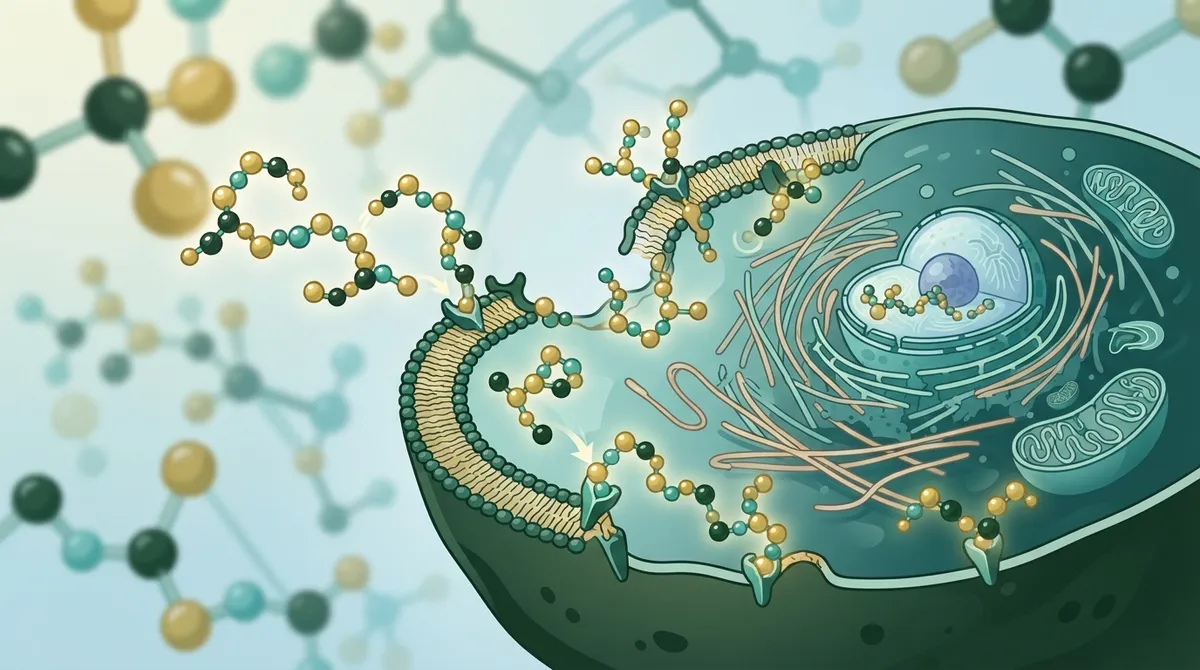
Peptides are short chains of amino acids. Think of amino acids as letters and peptides as short words. Proteins are the long sentences. If you want a quick primer, what are peptides is a solid starting point, and our guide, 8 Facts That Explain What Are Peptides in 2026, goes deeper.
Your body makes many peptides on its own. Many act as signaling molecules. They carry short messages from one part of the body to another. Cells have receptors, which work like tiny docking stations. When the right peptide fits the right receptor, a message gets delivered.
The Lock-and-Key Idea
A simple way to picture it is a lock and key. The receptor is the lock. The peptide is the key. Only the right key turns the lock. Once it turns, the cell may change what it is doing.
How Do Peptides Restore Cellular Function? The Core Mechanism
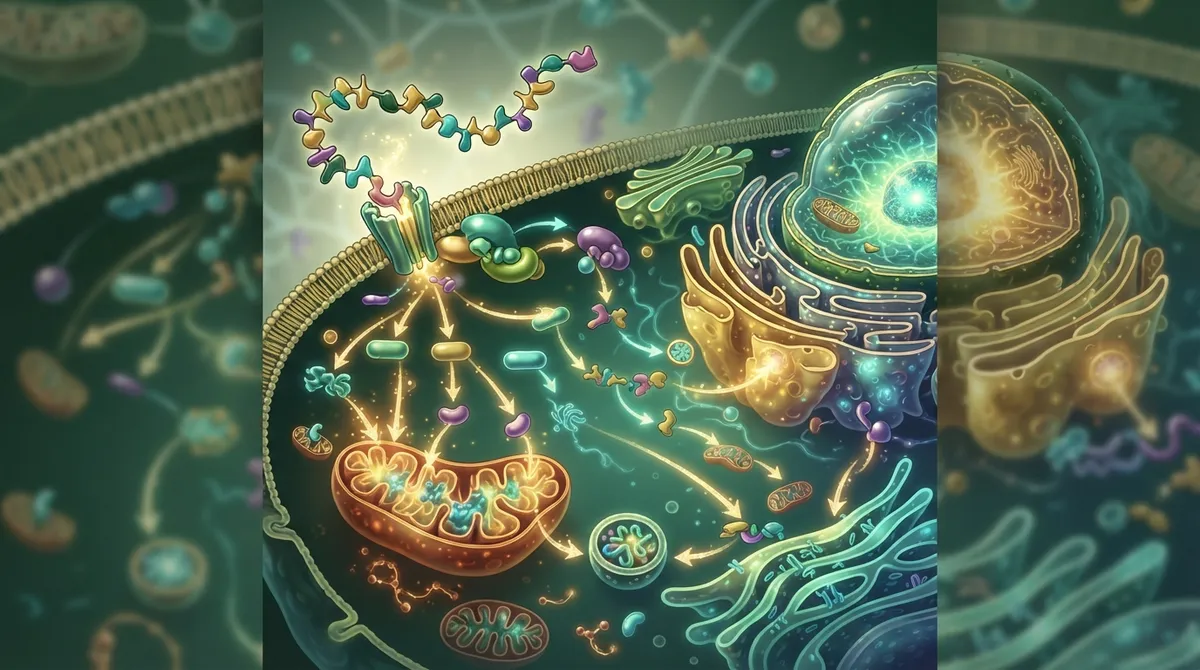
Here is the honest framing: peptides do not “restore” every cell through one universal trick. How peptides restore cellular function depends on which peptide you use, which receptor it hits, which tissue it reaches, and the dose and timing.
In general, the process looks like this:
- The peptide travels to its target. It moves through the blood or tissue to cells with matching receptors.
- It binds a receptor. This can happen on the cell surface or, for some signals, inside the cell.
- A signal cascade starts. The receptor triggers a chain of chemical steps inside the cell.
- The cell changes its behavior. It may switch genes on or off, speed up or slow down enzymes, move ions, or release other messengers.
- The message fades. Enzymes break the peptide down, and the signal ends.
That last step matters. Peptides are usually short-lived signals, not permanent fixes. Their effects depend on repeated dosing and on how the body responds.
What Cells Can Change in Response
A peptide signal can influence many processes. Which one depends on the peptide and the tissue.
- Blood sugar regulation and insulin release
- Hormone release, such as growth hormone signaling
- Appetite and fullness signals
- Bone building and bone breakdown
- Immune cell activity
- Tissue maintenance and repair signaling
What “Cellular Restoration” Really Means
This is where many wellness claims get fuzzy. “Cellular restoration” is popular marketing language. It is not a single, established medical outcome.
A more honest way to think about it is this. A peptide may help a specific system work closer to how it should. For example, it may help the body regulate blood sugar, support bone density, or nudge a hormone pathway. That is real and measurable. But claims that a peptide “repairs all your cells” or “reverses aging” need proof for that exact peptide, condition, dose, and delivery route.
If you want a plain-language look at this idea, our article What Does Cellular Regeneration Really Mean for You? covers it in more detail.
Peptides With Proven, Specific Benefits
Some peptide-based medicines have been through rigorous review. They are approved for defined uses. Their evidence does not automatically transfer to other peptides, but they show that the peptide signaling idea is real.
| Peptide Medicine | What It Does in Cells | Established Use |
|---|---|---|
| Insulin | Helps cells take in glucose | Diabetes |
| Semaglutide (GLP-1 receptor agonist) | Activates GLP-1 receptors that affect insulin release and appetite | Approved diabetes and weight-management uses |
| Teriparatide | Stimulates bone-building signaling | Osteoporosis |
Notice the pattern. Each one targets a specific receptor for a specific condition. If you are curious about the metabolic side, see How to Understand GLP-1 Peptide Therapy in 2026 and How Does GLP-1 Work for Weight Loss, Really?
Where the Evidence Gets Thinner
Now for the part many people skip. Plenty of peptides promoted for recovery or longevity do not have strong human data. Two common examples are BPC-157 and TB-500. They are not FDA-approved for those uses, and most of the evidence is preclinical, meaning lab or animal studies.
A 2025 systematic review of BPC-157 in orthopedic and sports-medicine settings screened 544 publications and included 36 studies. Of those, 35 were preclinical and only one was a human clinical study. That human report involved 12 patients with chronic knee pain and was retrospective and uncontrolled. A study that small cannot show the peptide caused the improvements. FDA briefing material has also stated there is insufficient clinical safety information to characterize the safety profile of BPC-157 free base and BPC-157 acetate.
That does not mean these peptides are useless or dangerous. It means the honest answer is “we do not know enough yet.” You can read more in Is BPC-157 Safe? What the Research Really Shows and 13 Facts About TB-500 Peptide You Need in 2026.
Why Animal Results Do Not Equal Human Results
Animals are not tiny humans. A peptide may speed healing in a rat and do nothing in a person. Doses, metabolism, and delivery all differ. Preclinical data is a useful starting clue, not a finish line.
How to Judge Any Peptide Claim Step by Step
Here is a simple checklist you can use anytime you hear that a peptide “restores” something. It works whether you are a seasoned biohacker or brand new.
- Name the exact peptide. “Peptide therapy” is a category, not a product. Ask which peptide, specifically.
- Name the exact goal. Is it blood sugar, bone density, recovery, sleep? Vague goals lead to vague claims.
- Ask about human evidence. Look for controlled human trials, not only animal studies or testimonials.
- Check the regulatory status. Is it FDA-approved for this use, compounded, or neither? Rules can change, so verify current FDA guidance.
- Look at your own data. Blood work gives a baseline, so you and your provider can see what is actually changing.
- Plan to monitor. A good plan includes follow-up, not just a first prescription.
For more on regulatory differences, see FDA-Approved vs. Compounded Peptides: What Wins? and How to Verify FDA Approval Before Peptide Therapy.
Understanding the Risks and Quality Questions
Peptides are not risk-free just because they are small. Risks depend on the specific product and how it is given.
| Potential Concern | What It Means |
|---|---|
| Drug-specific side effects | Expected effects tied to the peptide, such as stomach upset with some GLP-1 medicines |
| Allergic or immune reactions | The body may react to a peptide, including by building antibodies |
| Product quality issues | Unapproved or poorly sourced products may be contaminated or have the wrong strength |
| Injection-site problems | Infection or irritation if technique or sterility is poor |
| Unknown long-term effects | Many wellness peptides lack long-term human safety data |
The FDA has raised concerns about certain bulk peptides, including limited human safety information, possible immune reactions, and product-quality problems. Medical supervision lowers some risks, but it does not replace evidence that a peptide works. To go deeper, read Is Peptide Therapy Safe? What You Really Need to Know.
How Personalized Peptide Care Fits In
Because every body is different, a one-size-fits-all approach rarely makes sense. This is where personalization matters. Your labs, symptoms, history, and goals all shape what is appropriate, and what is not.
At Allura Longevity, care starts with a $50 virtual consultation. You complete blood work through LabCorp, and a licensed provider designs a customized six-month plan based on your results and goals. The team is led by Ashley, a board-certified Family Nurse Practitioner, and your plan is monitored and adjusted over time. Treatment is delivered to your home through telehealth in Florida, Georgia, Texas, Connecticut, Indiana, Maryland, New York, and California. Spots for new clients are limited each month, so it helps to plan ahead.
If you are weighing your options, these guides can help: How to Start Peptide Therapy Safely and See Real Results and How to Use Biomarker Testing to Guide Peptide Therapy.
What to Realistically Expect Over Time
Peptides are signals, so results usually build gradually and vary from person to person. Some people notice changes in weeks. Others need months. Some may not notice much at all. Lifestyle habits like sleep, nutrition, strength training, and stress management still do a lot of the heavy lifting.
A smart mindset is to treat peptide therapy as one tool in a bigger plan. Track how you feel, repeat labs as advised, and talk openly with your provider about what is and is not working. For timing guidance, see How Long for Peptide Therapy Results? A Real Timeline.
Quick Tips to Support Your Cells Right Now
- Prioritize consistent, quality sleep
- Eat enough protein and a variety of colorful foods
- Add resistance training and daily movement
- Get baseline labs so you are guessing less
- Be skeptical of any product that promises to fix everything
Final Thoughts and Your Next Step
So, how do peptides restore cellular function? In the most accurate sense, they send targeted signals that can change how specific cells behave. That is real science, and some peptide medicines have strong proof for defined conditions. But “restoration” is not one universal effect, and many popular wellness peptides still lack solid human evidence. The best approach is curious, careful, and personalized.
If you would like a licensed provider to walk through your labs and goals with you, you can request a consultation with Allura Longevity. You can also call (813) 510-6277. Remember, new client spots are limited each month.
FAQs
Q: How do peptides communicate with cells?
A: Peptides bind to specific receptors on or inside cells, like a key fitting a lock. That triggers a chain of signals that can change gene activity, enzyme activity, or hormone release. The exact effect depends on the peptide and the tissue.
Q: Can peptide therapy repair or regenerate cells?
A: Some peptides can influence specific processes, like bone building or blood sugar control, and that is well supported for certain approved medicines. Broad claims about repairing all cells or reversing aging need proof for the exact peptide and use. It is always smart to ask for the human evidence.
Q: Is BPC-157 proven to heal injuries in humans?
A: Not yet. Most BPC-157 research is in animals, and the human data is very limited, including one small, uncontrolled report. It is also not FDA-approved for recovery or healing uses, so it is worth discussing carefully with a licensed provider.
Q: What are the risks of compounded or online peptides?
A: Risks can include allergic or immune reactions, wrong strength or contamination in poorly sourced products, injection-site infection, and unknown long-term effects. Working with a licensed provider and a reputable pharmacy helps lower these risks, though it does not replace strong evidence.
Q: What evidence should I look for before starting peptide therapy?
A: Look for controlled human studies for your specific peptide and goal, clear information about FDA status, and a plan that includes baseline blood work and follow-up. If a claim sounds like a cure-all, take a pause and ask more questions.





