
Key Takeaways
-
Dull skin is a description, not a diagnosis, and its causes (dryness, weak barrier, sun damage, pigment, irritation, slow cell turnover) need to be identified before choosing a fix.
-
Oral collagen peptides have the most research behind them, with trials linking hydrolyzed collagen to improved skin hydration and elasticity, though brightness results are indirect.
-
Topical peptides show promise for surface smoothness and hydration, but large collagen molecules generally do not penetrate intact skin, so creams mostly act as moisturizers.
-
Skin-brightening benefits from injectable prescription peptide therapy are not established, and the FDA has flagged risks with some compounded peptides.
-
Most collagen studies run about 8 to 12 weeks, so give any product a couple of months and track progress with photos in the same light every two weeks.
-
Daily broad-spectrum sunscreen is the single best step for a lasting glow, and peptides work best alongside basics like a gentle cleanser and good moisturizer.
Let’s be honest. We have all had those mornings. You look in the mirror, and your skin just looks tired. Flat. A little gray. Maybe you slept fine, drank your water, and still, no glow. If that sounds familiar, you are in good company, and you have probably wondered, do peptides help dull skin?
The short answer is: maybe, a little, and it depends. Peptides are everywhere in skincare and wellness right now. But “peptides” is a big umbrella. It covers face serums, collagen powders, and prescription therapies. They are not the same thing, and they do not work the same way.
In this friendly guide, we will compare the main peptide routes, look at what the research really says in 2026, and help you decide what makes sense. No hype. No promises we cannot back up. Just clear, honest info so you can feel confident about your next step.
First, What Does “Dull Skin” Really Mean?
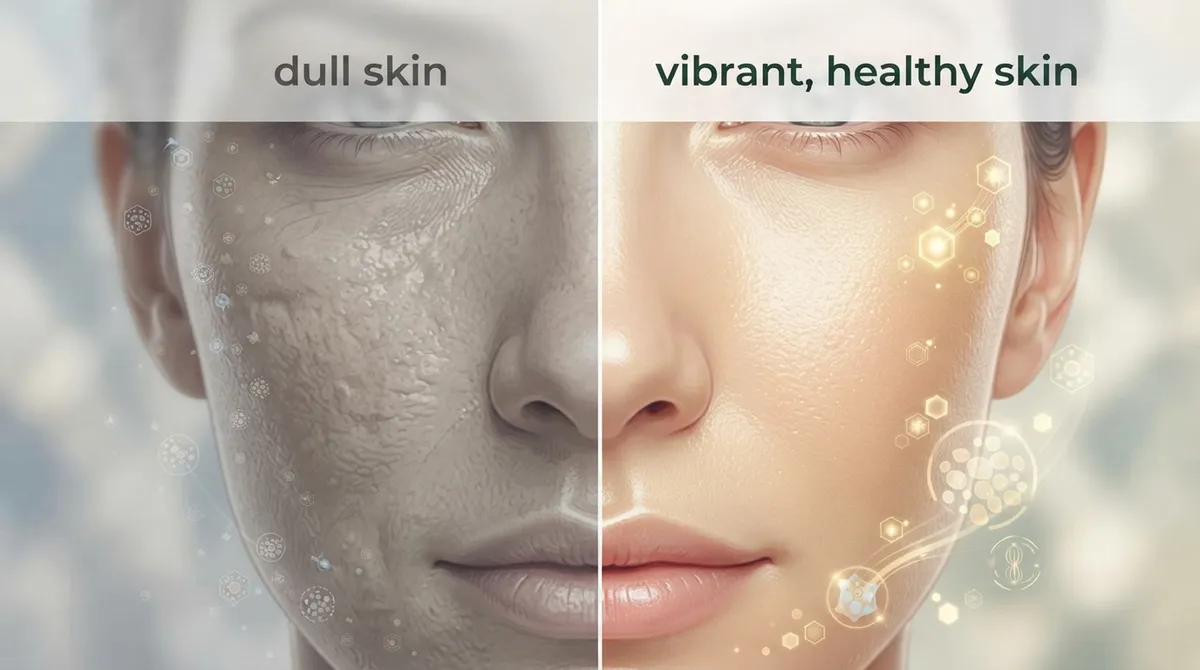
Here is something that surprises many people: dull skin is not a medical diagnosis. It is a description. It is how your skin looks, not one single problem.
Many things can make skin look less bright. The right fix depends on the cause. Here are the most common culprits:
- Dryness: Dry skin reflects light unevenly, so it looks flat.
- A weak skin barrier: A stressed barrier loses moisture and can look rough.
- Sun exposure: UV damage can leave skin looking sallow or uneven.
- Uneven pigmentation: Dark spots can pull down overall brightness.
- Irritation or inflammation: Redness and sensitivity can cloud your glow.
- Slower cell turnover: As we age, dead cells can build up on the surface.
This matters because peptides do not treat all of these causes equally. A peptide that helps with hydration will not fix sun spots. Knowing your cause is step one.
What Are Peptides, in Plain English?
Peptides are short chains of amino acids. Amino acids are the building blocks of proteins, like collagen. Your body makes peptides naturally and uses them as tiny messengers. If you want a deeper basics refresher, check out 8 Facts That Explain What Are Peptides in 2026 or this overview of what are peptides.
Now here is the key point. The word “peptide” shows up in three very different places:
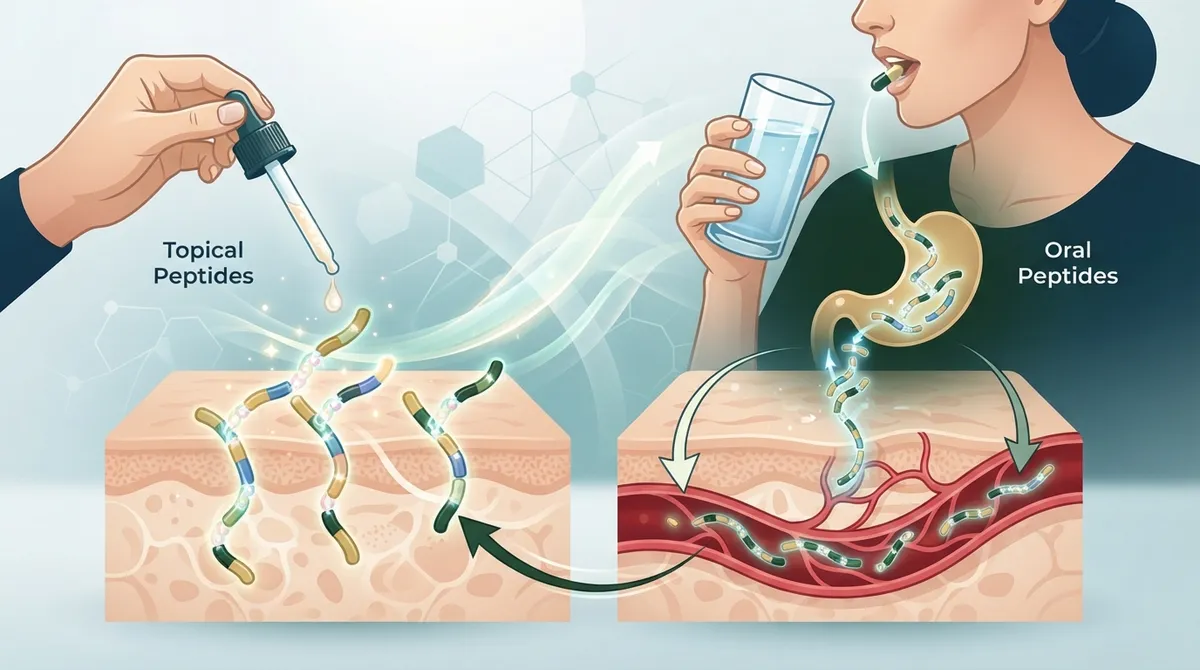
- Cosmetic peptides in creams and serums you put on your face.
- Oral collagen peptides in powders, drinks, and capsules you swallow.
- Prescription or compounded peptide therapy, usually given by injection under medical supervision.
Mixing these up is the biggest source of confusion. Let’s compare them one by one.
Topical Peptides: The Serum Route
Topical peptides are the ones in your skincare aisle. Some are called signal peptides. They are designed to nudge the skin’s support structure, the matrix that keeps skin firm and smooth.
What the evidence suggests
The honest picture is mixed. Some topical peptides show promise for texture and firmness. But proof that they visibly fix dullness is limited. Results depend on the exact peptide, the formula, and what was measured.
There is also a size problem. Conventional collagen molecules are large and generally do not pass easily through intact skin. So a collagen-based cream may mostly act as a moisturizer on the surface. That is not bad. Hydration can make skin look smoother and brighter. But it is not the same as rebuilding collagen deep down.
One more tip: a peptide on an ingredient list does not prove a product works. Concentration, stability, and delivery all matter.
Who it may suit
- People who want a low-effort, daily routine step
- Those who prefer to start gently and avoid supplements
- Anyone whose dullness comes mainly from surface dryness
Oral Collagen Peptides: The Drink-or-Capsule Route
Oral collagen peptides are broken-down collagen you swallow. They are the most studied peptide option for skin, so let’s look at the numbers.
What the research shows
A 2023 meta-analysis pooled 26 randomized controlled trials with 1,721 participants. It found that hydrolyzed collagen was linked to statistically significant improvements in skin hydration and elasticity compared with placebo.
More recently, a 2026 systematic review looked at 19 trials with 1,341 participants. It reported improvements in hydration and brightness, but elasticity results were inconsistent. The review also noted very high heterogeneity, meaning the studies differed a lot. It included only two topical studies, so conclusions about creams are weak.
Another 2026 review described 35 randomized trials with 2,534 participants. Most interventions lasted about 12 weeks, within a 4 to 16 week range. These studies focused on oral collagen and skin rejuvenation, not on a formal diagnosis of dull skin.
The fine print
Here is the part we want you to hear clearly. Most studies measured hydration, elasticity, and wrinkles. They did not treat “dull skin” as a condition. Any boost in radiance may be indirect, for example because well-hydrated skin simply looks fresher. Products, doses, and measuring methods also varied a lot. So we should read these findings with care, not as a guarantee.
Who it may suit
- People who like adding a simple daily supplement
- Those whose dullness links to dryness or reduced elasticity
- Wellness seekers comfortable waiting about 8 to 12 weeks to judge results
Prescription Peptide Therapy: A Different Category
This is where we want to slow down and be extra clear. Prescription or compounded peptide therapy is not the same as a face serum or collagen powder. These are medical treatments, often injectable, prescribed by licensed providers based on your health goals and lab work.
Here is the honest truth: skin-brightening benefits from injectable peptide therapy are not established. Some peptides are used for goals like recovery, metabolism, sleep, or energy. Skin may or may not change as a side effect of broader wellness improvements, but nobody should promise a glow from an injection.
The FDA has also flagged that some compounded peptides carry risks, including impurities, immune reactions, and limited safety or effectiveness data. That is why working with a licensed provider matters so much. For more on this, see FDA-Approved vs. Compounded Peptides: What Wins? and Is Peptide Therapy Safe? What You Really Need to Know.
Side-by-Side Comparison
Here is a quick look at how the three routes stack up for dull-looking skin.
| Feature | Topical Peptides | Oral Collagen Peptides | Prescription Peptide Therapy |
|---|---|---|---|
| How it is used | Applied to skin | Swallowed daily | Usually injected, provider-guided |
| Best evidence for | Surface smoothness, hydration support | Hydration and elasticity | Varies by peptide; not established for dullness |
| Proof for brightening | Limited | Some signals, mostly indirect | Not established |
| Typical time to judge | Several weeks | About 8 to 12 weeks | Depends on the goal and plan |
| Medical oversight | Not needed | Optional | Required |
Topical vs. Oral: Which Should You Pick?
So who wins? Honestly, neither one “wins” for everyone. The better pick depends on your skin and your lifestyle.
| If this sounds like you… | Consider… |
|---|---|
| Skin feels tight, dry, or rough | A hydrating routine, possibly with a peptide serum |
| You notice less bounce and firmness | Oral collagen peptides, given the hydration and elasticity data |
| You have dark spots or uneven tone | A dermatologist visit, since peptides are not proven for pigmentation |
| You want a total wellness plan | A provider-guided approach that looks at the whole picture |
Many people use both a gentle topical routine and an oral option. That combo is common, though research comparing them head to head is thin. If you want to explore options, our guide on what peptides do for skin is a great next read, and so is How to Trigger Collagen Stimulation With Peptides.
A Simple Game Plan for Brighter-Looking Skin
Peptides can be one piece of the puzzle. They work best alongside the basics. Here is a friendly step-by-step plan:
- Figure out your cause. Is it dryness, sun damage, pigment, or irritation? A dermatologist can help.
- Protect your skin daily. A broad-spectrum sunscreen is the single best step for a lasting glow.
- Support your barrier. Use a gentle cleanser and a good moisturizer.
- Add one thing at a time. Try a peptide serum or oral collagen, then give it several weeks.
- Track your results. Take photos in the same light every two weeks.
- Check in with a pro. If nothing helps, or something seems off, ask a licensed provider.
When to See a Dermatologist
Peptides are not a catch-all. Please book a visit if you notice any of these:
- Sudden or sharp changes in skin color or texture
- Moles or spots that change shape or color
- Persistent redness, itching, or irritation
- Dullness that comes with fatigue, hair changes, or other symptoms
Sometimes dull skin is a clue about sleep, nutrition, hormones, or stress. A good provider looks at the whole you, not just the surface.
Are Peptide Serums Safe for Sensitive Skin?
Many people tolerate peptide serums well, but sensitive skin can still react to other ingredients in the formula, like fragrance or preservatives. Patch test first. Start slowly. If you get redness or stinging, stop and talk to your provider.
Where Personalized Peptide Care Fits In
If your goals go beyond your face, like better energy, recovery, sleep, and overall vitality, a personalized approach may be worth exploring. Healthy skin often reflects what is going on inside. Many people on our journey start with the basics and build from there.
At Allura Longevity, licensed providers design customized plans based on your blood work and goals, then deliver everything to your door through telehealth. We are always upfront that we do not promise a specific skin outcome, and we only recommend what fits your health picture. You can learn more about peptides for women or peptides for men, or read How to Start Peptide Therapy Safely and See Real Results. You can also dig into the science through the National Library of Medicine.
The Bottom Line
So, do peptides help dull skin? They may help some people, mostly by supporting hydration and skin quality, especially with oral collagen. But there is no proof that any peptide reliably cures dullness, and injectable peptide therapy is not an established skin-brightening treatment.
The smartest path is simple. Find your cause, protect your skin, choose evidence-informed options, and be patient. Glow is built over weeks, not overnight.
Ready to talk through your goals with a licensed provider? Request a consultation with Allura Longevity today. Spots for new clients are limited each month, and we would love to help you feel your best. You can also call us at (813) 510-6277.
FAQs
Q: Do peptides brighten dull skin?
A: Peptides may help some people, mostly by supporting hydration, which can make skin look fresher. But there is no solid proof that any peptide reliably fixes dullness, so think of them as a helpful extra, not a cure.
Q: Are topical peptides or oral collagen peptides better for skin appearance?
A: Oral collagen has more research behind it, mainly for hydration and elasticity. Topical peptides can still be a nice routine step, especially for surface smoothness. Many people use both, though head-to-head studies are limited.
Q: How long do collagen peptides take to affect skin?
A: Most studies ran about 12 weeks, within a range of 4 to 16 weeks. So it is wise to give a product a couple of months before deciding if it is working for you.
Q: Can injectable peptide therapy improve skin brightness?
A: Skin-brightening benefits from injectable peptide therapy are not established. These are medical treatments chosen for other health goals, and any skin change should be seen as a possible bonus, never a promise.
Q: What causes dull-looking skin, and when should I see a dermatologist?
A: Common causes include dryness, a weak barrier, sun exposure, uneven pigment, irritation, and slower cell turnover. See a dermatologist if you notice sudden changes, changing moles, or lasting irritation, or if dullness comes with other symptoms.





