

Key Takeaways
-
Most marketed 'sleep peptides' like epitalon and DSIP lack clinical trial evidence for treating insomnia; FDA found no insomnia studies for epitalon via injection and DSIP claims are not backed by strong human trials.
-
Approved prescription orexin receptor antagonists (suvorexant, lemborexant, daridorexant) have real clinical trial support for insomnia, but they are fundamentally different from unapproved peptide injections sold by wellness companies.
-
Injectable peptide products carry undocumented safety risks including unknown purity, sterility concerns, and potential immune reactions from peptide aggregation that are not well-established in humans.
-
Cognitive behavioral therapy for insomnia (CBT-I) remains the best-supported first-line treatment; clinicians should screen for sleep apnea, medication effects, mood issues, and circadian rhythm problems before prescribing any peptide.
-
Evaluate peptide clinics by checking if they name specific compounds, admit unproven claims, order personalized labs first, and explain sourcing and safety—red flags include vague 'sleep stack' language and guaranteed cure promises.
-
A single lab number change (like melatonin levels) does not prove better sleep; real insomnia treatment requires measuring actual outcomes like sleep onset time, wake frequency, total sleep time, and daytime function.
You have tried the blackout curtains. You have cut the late coffee. You have even bought the fancy magnesium. Yet you still lie awake at 2 a.m. scrolling for answers. Sooner or later, you land on a bold claim: a tiny peptide injection can fix your sleep.
So, do sleep peptides really work? The honest answer is more nuanced than most wellness ads admit. “Sleep peptides” is a marketing label, not one proven treatment. Some compounds have decades of buzz but thin human evidence. Others are real prescription medicines that work on a peptide-related system in your brain.
In this friendly guide, we break down nine truths so you can separate hype from help. We use the latest 2026 information, including a recent FDA review. Whether you are a biohacker tracking your deep sleep or a busy professional running on fumes, you deserve straight talk. Let’s dive in.
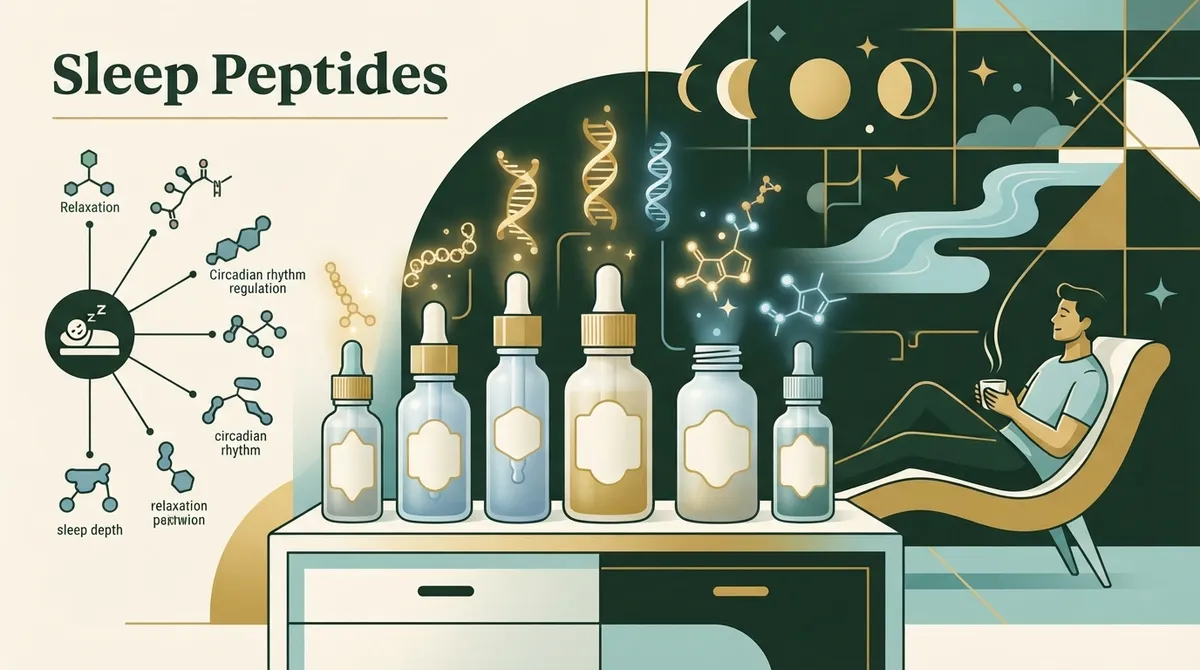
Truth 1: “Sleep Peptides” Is a Marketing Term, Not a Single Treatment
When someone says “sleep peptides,” they could mean many different things. Peptides are short chains of amino acids. Your body makes thousands of them. If you want a refresher, our guide on 8 Facts That Explain What Are Peptides in 2026 covers the basics, and what are peptides is a handy overview from WebMD.
The problem is that “sleep peptide” does not point to one drug. Each compound has its own dose, route, and evidence. So the smart question is never “do sleep peptides work?” in general. It is “does this specific compound work, at this dose, for this sleep problem?”
That one shift protects you from a lot of sales pitches.
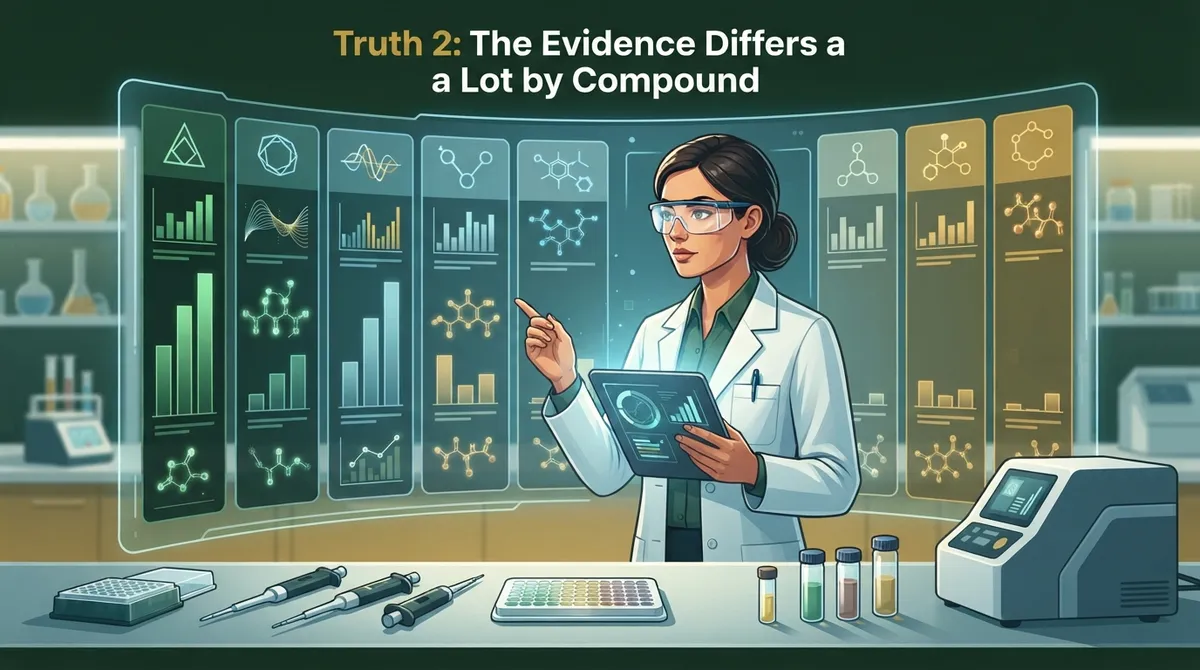
Truth 2: The Evidence Differs a Lot by Compound
Think of the “sleep peptide” label like the word “supplement.” It covers everything from well-studied to barely studied. Here is a quick snapshot of how the evidence stacks up.
| Compound | What It Is | Evidence for Insomnia in People |
|---|---|---|
| Epitalon (epithalon) | Short synthetic peptide | FDA review found no relevant insomnia trials by the proposed injection route |
| DSIP | Delta sleep-inducing peptide | No reliable, high-quality trials showing it treats insomnia |
| Orexin receptor antagonists | Prescription medicines (suvorexant, lemborexant, daridorexant) | Studied in randomized trials; approved for insomnia |
Notice the gap. The compounds that sound most “peptide-like” in wellness marketing have the weakest human data. The ones with solid trials are regulated drugs.
Truth 3: Epitalon Has Not Been Shown to Treat Insomnia
Epitalon is one of the most talked-about names online. Fans link it to melatonin and healthy aging. But a 2026 FDA briefing document paints a cautious picture.
According to that review, FDA found no clinical studies testing epitalon in people with insomnia using the proposed subcutaneous (under-the-skin) route. FDA also concluded that the available evidence does not support effectiveness for insomnia. On top of that, it reported no clinical data establishing human safety for that use.
That does not mean epitalon is dangerous or useless in every way. It means the proof simply is not there yet.
Why Melatonin Changes Do Not Equal Better Sleep
You may have heard that epitalon can change melatonin levels. That sounds promising, right? Here is the catch. FDA noted that changes in melatonin or its byproducts do not prove better sleep.
To show that a treatment helps insomnia, researchers need to measure real outcomes. Think of:
- How quickly you fall asleep
- How often you wake up at night
- How long you sleep in total
- How rested you feel the next day
A lab number moving is not the same as you waking up refreshed.
Truth 4: DSIP Claims Should Not Be Treated as Proven
DSIP stands for delta sleep-inducing peptide. The name sounds like a magic key. Yet when you look for solid human trials showing DSIP treats insomnia, the research we reviewed does not establish reliable, high-quality evidence.
Many early DSIP ideas come from small or older studies. Good evidence needs controlled human trials for the specific compound. Without that, benefits are possibilities, not promises.
If you are curious about this one, we cover it in more detail in 9 DSIP Sleep Peptide Facts Worth Knowing in 2026. And if you want to see how it stacks up against the gold-standard approach, check out DSIP vs. CBT-I: Which Sleep Fix Actually Works?
Truth 5: Some Peptide-Related Sleep Medicines Do Have Real Evidence
Here is where the story gets interesting. There is one group of sleep medicines that work on a peptide signaling system, and they do have clinical-trial support.
Your brain uses peptides called orexins to keep you awake and alert. Orexin receptor antagonists gently turn down that wake-promoting signal. Reviews identify three approved dual orexin receptor antagonists: suvorexant, lemborexant, and daridorexant.
A review of suvorexant evidence reported better subjective sleep-onset time, total sleep time, and perceived sleep quality at one and three months. Common side effects included sleepiness, fatigue, and unusual dreams.
Here is the key point, though. These are prescription medicines with regulatory approval. They are not the same as unapproved peptide injections sold by some wellness sellers. Mixing the two up is how people get misled.
Truth 6: Approved Medicines and Wellness Peptides Are Very Different
Let’s put the two side by side so the difference is crystal clear.
| Feature | Orexin Receptor Antagonists | Marketed “Sleep Peptide” Injections |
|---|---|---|
| Regulatory status | FDA-approved prescription drugs | Varies; FDA proposed against adding epitalon to the 503A bulks list |
| Human trial data for insomnia | Yes, randomized trials | Limited or missing |
| Form | Oral tablets | Often injectable |
| Known side effects | Documented (sleepiness, fatigue, abnormal dreams) | Not well established in people |
A quick note on regulation. FDA stated that epitalon free base and epitalon acetate are not components of an FDA-approved drug and proposed not adding them to the 503A bulks list. That is a regulatory assessment. It is not proof that every compounded product is illegal, since status depends on the law and the situation. Still, it is a loud signal to ask more questions.
For a deeper look at this topic, see FDA-Approved vs. Compounded Peptides: What Wins?
Truth 7: Injectable Products Carry Extra Safety Questions
Anything you inject deserves extra care. FDA specifically pointed to several concerns with subcutaneous peptide products, including:
- Product identity: Is it really what the label says?
- Purity and potency: Is the dose accurate and clean?
- Sterility: Was it made in a safe, germ-free way?
- Immune reactions: FDA highlighted immunogenicity risks from clumping (aggregation) and peptide-related impurities.
Your immune system can sometimes react to unfamiliar peptide fragments. That is one reason sourcing and medical oversight matter so much. If you plan to explore any peptide, read Is Peptide Therapy Safe? What You Really Need to Know and How to Get Prescription Peptides Safely in 2026 first.
Truth 8: Proven Insomnia Care Looks Less Flashy, but It Works
Here is the friendly truth that wellness ads rarely say out loud. For chronic insomnia, the best-supported first step is not a shot. It is cognitive behavioral therapy for insomnia, often called CBT-I.
CBT-I helps you rewire the habits and thoughts that keep you awake. It is structured, drug-free, and backed by strong research. A good clinician will also look for hidden causes before treating anything.
What a Smart Sleep Check-Up Should Cover
- Screen for sleep apnea. Loud snoring, gasping, and daytime sleepiness are clues.
- Review your medications. Some prescriptions and stimulants disrupt sleep.
- Check mood and stress. Anxiety and depression often travel with poor sleep.
- Look at your body clock. Circadian rhythm issues can mimic insomnia.
- Consider labs. Hormone and nutrient levels can play a role.
If you want to prep before trying anything new, our post 9 Sleep Optimization Steps Before Trying Peptides is a great place to start. You can also explore 13 Sleep Disorder Treatment Facts You Need in 2026 for the bigger picture.
Truth 9: You Can Spot an Evidence-Based Clinic by Its Claims
Not every clinic talks about sleep the same way. Use this quick checklist to judge whether a provider is being straight with you.
- They name the exact compound. Vague “sleep stack” language is a red flag.
- They admit what is unproven. Honest providers say “limited data” when it is true.
- They order labs first. Personalized care starts with your numbers, not a script.
- They screen for other causes. Apnea, mood, and medications come up early.
- They mention CBT-I. Good clinicians know the proven basics.
- They explain sourcing and safety. You should hear about purity, sterility, and monitoring.
A clinic that promises a guaranteed sleep fix from a single injection is overselling. Real care is personal, measured, and honest about uncertainty. For more on spotting quality, read How Do You Know Online Peptide Therapy Is Safe?
So, Where Does Peptide Therapy Fit Into Better Sleep?
Let’s keep this balanced. Sleep does not live in a vacuum. Hormones, stress, recovery, and metabolism all shape how well you rest. That is why a whole-body approach can make sense, even when no peptide is a direct “sleep drug.”
At Allura Longevity, licensed providers design personalized plans around your blood work and goals. We do not claim that unproven peptides cure insomnia. Instead, we look at the bigger picture, such as energy, recovery, and hormone health, and we keep you informed with straight talk. If you are curious how this works, our guide on How to Start Peptide Therapy Safely and See Real Results walks through it.
It also helps to understand the science through trusted sources. The National Library of Medicine is a great place to read peer-reviewed research yourself.
The Bottom Line
So, do sleep peptides really work? For most marketed compounds, the honest answer today is “not proven.” Epitalon lacks insomnia trials by the proposed route, and DSIP claims are not backed by strong human evidence. The medicines with real data are prescription orexin blockers, which are very different products. For lasting results, CBT-I and a check for underlying causes still lead the way.
That is not bad news. It is empowering. When you know the facts, you can invest your time and money wisely and avoid empty promises.
Ready for a plan built around your own labs and goals, with clear and honest guidance? Request a consultation with Allura Longevity for a $50 virtual visit, or call (813) 510-6277. Spots for new clients are limited each month, so reach out while there is room.
FAQs
Q: Do sleep peptides like DSIP or epitalon actually improve insomnia?
A: Right now, the evidence does not show that they do. FDA’s 2026 review found no insomnia trials for epitalon by the proposed injection route, and DSIP claims lack strong human trial support. It is wise to treat these as unproven rather than guaranteed fixes.
Q: Is epitalon FDA-approved for sleep or insomnia?
A: No. FDA states that epitalon is not part of any FDA-approved drug and proposed not adding epitalon free base or epitalon acetate to the 503A bulks list. That is a regulatory view, and legal status can depend on the situation, so always ask a licensed provider.
Q: How are peptide sleep treatments different from prescription orexin medicines?
A: Orexin receptor antagonists like suvorexant, lemborexant, and daridorexant are FDA-approved and backed by randomized trials for insomnia. Marketed sleep peptide injections generally lack that level of evidence and oversight. They may sound similar, but they are very different products.
Q: What treatments are proven to help chronic insomnia?
A: Cognitive behavioral therapy for insomnia (CBT-I) is the best-supported first-line approach. A clinician should also check for sleep apnea, medication effects, mood concerns, and body-clock issues. Some people may also benefit from approved prescription medicines when appropriate.
Q: How can I tell if a clinic’s sleep claims are evidence-based?
A: Look for providers who name the exact compound, order labs first, and openly admit what is unproven. Be wary of any promise of a guaranteed sleep cure from a single injection. Honest clinics also screen for other causes and talk about safety and sourcing.





