
Key Takeaways
-
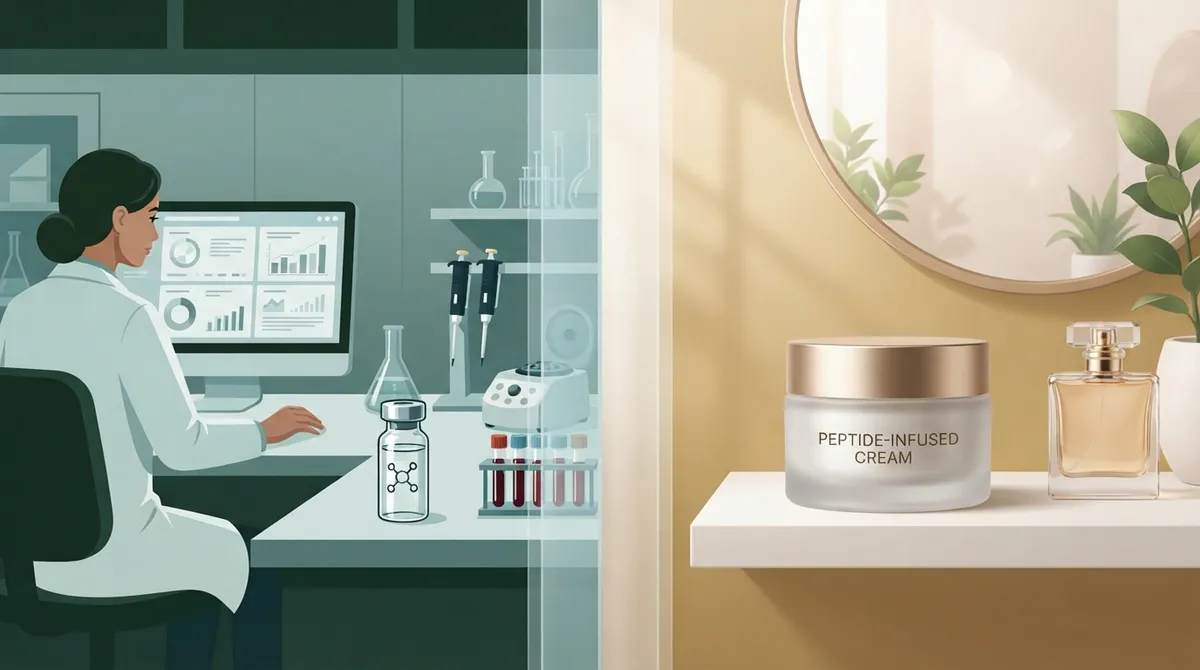
Peptide therapy is medical treatment with a specific peptide at a prescribed dose under provider supervision, while peptide skin cream is a cosmetic product applied topically—sharing the word 'peptide' does not make them equivalent.
-
Most cosmetic peptides have minimal skin penetration; research shows only 0.22% of applied peptide reached the stratum corneum and 0.01% reached living epidermis, with none detected deeper in the skin.
-
Peptide therapy requires blood work and personalized dosing based on your biomarkers and health goals, while creams offer generic 'apply twice daily' instructions with no lab testing or provider oversight.
-
Cosmetic peptide creams cannot claim to treat disease and are regulated as beauty products, whereas FDA-approved peptide medicines are product-specific and approved for defined medical uses.
-
Compounded or 'research' peptides found online should not be assumed equal to FDA-approved medications due to potential impurities and limited safety data—always verify sourcing with a licensed clinician.
-
A peptide cream can support skin appearance alongside a therapy plan, but never use a cream to replace prescribed peptide medication, as they target different goals and delivery methods.
You have probably seen the word “peptide” on a jar of face cream and on a clinic website in the same week. It is easy to wonder if they are the same thing. After all, if a cream has peptides in it, are you getting peptide therapy for your skin? The short answer is no, and understanding why can save you money, time, and some confusion.
So, how do peptides differ from skin creams? In simple terms, a peptide is a small chain of amino acids. That is a building block, not a treatment on its own. A skin cream is a topical product that may contain a peptide as one ingredient. Peptide therapy, on the other hand, uses a specific peptide, at a specific dose, for a specific health goal, under the care of a licensed provider.
In this friendly guide, we will walk through what each one really is, how they are made, how they get into (or stay out of) your body, what the research says, and what to ask before you buy or start anything. Whether you are a busy professional, a data-loving biohacker, or simply curious about aging well in 2026, you will leave with clear answers.
What Is a Peptide, Really?
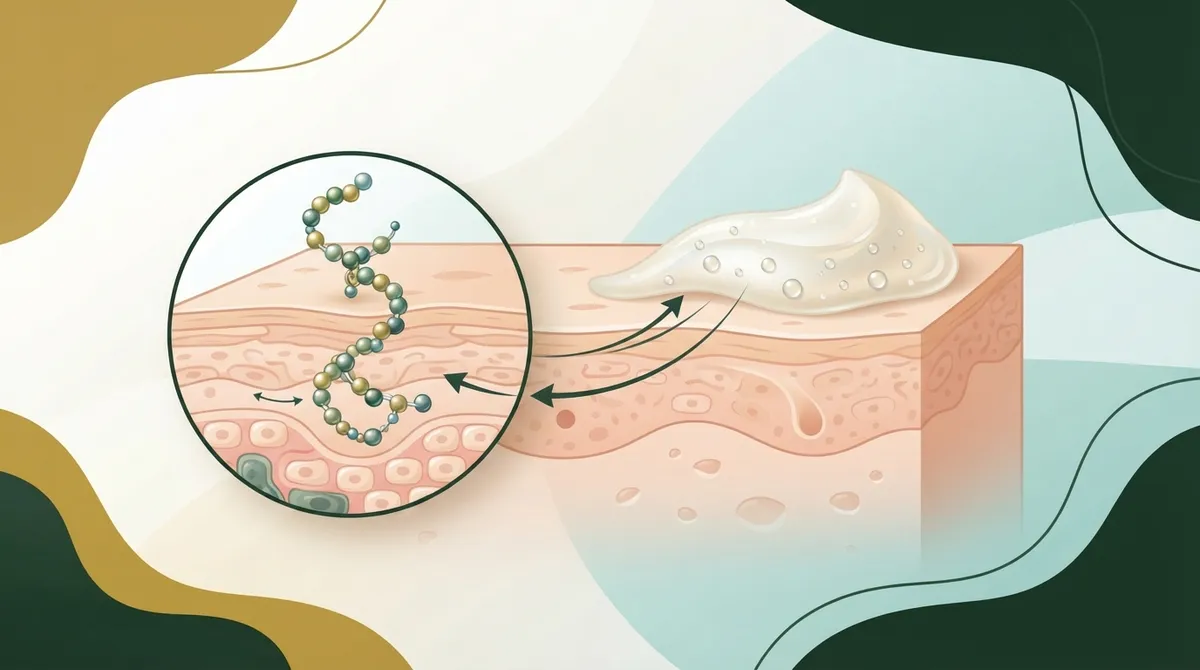
A peptide is a short chain of amino acids. Amino acids are the same tiny units that make up proteins. When just a few are linked together, we call the chain a peptide. When hundreds are linked, we call it a protein.
Here is the key point: the word “peptide” describes a type of molecule. It does not tell you what the product is, how it is used, how strong it is, or whether it works. Some prescription medicines are peptides. Some cosmetic ingredients are peptides too. They share a name, but they are used in very different ways.
If you want a deeper starting point, our guide on 8 Facts That Explain What Are Peptides in 2026 covers the basics, and this overview of what are peptides is a helpful outside read.
Peptide Therapy vs. Skin Cream: The Core Differences
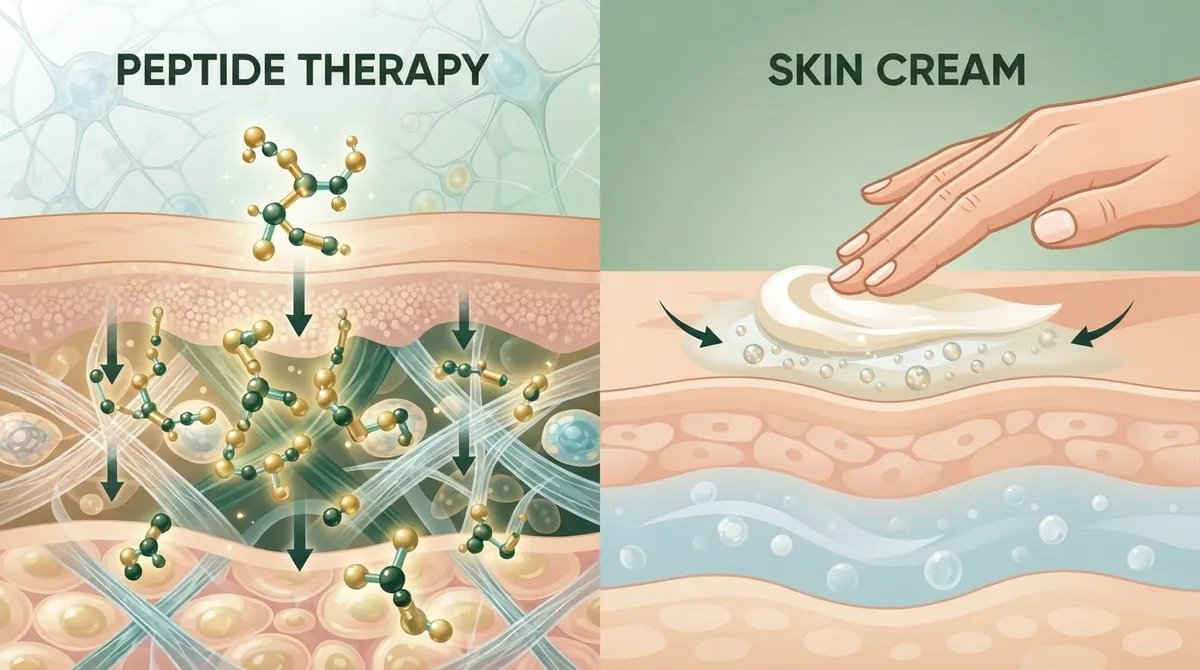
Think of it like this. A skin cream is a product you buy off a shelf and rub on your face. Peptide therapy is a medical plan built around you. The table below shows the big picture.
| Feature | Peptide Therapy | Peptide Skin Cream |
|---|---|---|
| Main purpose | Defined health goal (recovery, metabolism, vitality, and more) | Cosmetic appearance of skin |
| How it is used | Often injection, or another route set by the provider | Applied to the surface of the skin |
| Who guides it | Licensed medical provider | You, based on the label |
| Dosing | Specific dose set for your needs | General “apply twice daily” directions |
| Testing | Often guided by blood work | No lab testing involved |
| Regulation | Product-specific; prescription medicines | Cosmetic rules; not approved to treat disease |
Notice that the word “peptide” shows up on both sides. That is exactly why the two get mixed up.
How a Skin Cream Uses Peptides
Peptide creams are designed for cosmetic goals. Brands often market them to improve the look of fine lines or to support skin condition. They sit on the surface and work in the upper layers of the skin, at best.
A cream containing a peptide is still a cosmetic product. It does not become a medical treatment because of one ingredient. It is also not a stand-in for a prescribed therapy.
The Skin Barrier Problem
Your outer skin layer, called the stratum corneum, is built to keep things out. That is great for protecting you, but it makes delivery hard. Many peptides are too large or too water-loving to slip through easily.
Several things affect how much of a topical peptide goes where:
- The size and water affinity of the peptide
- The formula of the cream
- The condition of your skin
- How and how often you apply it
What the Research Shows About Topical Peptides
A 2025 review of acetyl hexapeptide-8, a popular cosmetic peptide, describes limited and inconsistent evidence on penetration. In one cited skin study, only 0.22% of the applied peptide reached the stratum corneum and 0.01% reached the living epidermis. None was detected in the dermis or the receptor fluid. That is one study and one ingredient, so it is not a rule for every cream. Still, it shows how little may travel deep.
The same review mentions one in-vivo study where a cream with 10% acetyl hexapeptide-8 was linked to a 30% reduction in wrinkle depth after 30 days. Again, that is a single reported result and not a promise for all peptide creams.
A 2026 review of cosmetic peptide safety, which summarizes Cosmetic Ingredient Review data, found minimal if any skin penetration for the assessed cosmetic peptides, along with good tolerability in studies lasting 30 days to 7 months. The takeaway is balanced: these ingredients look gentle, but the evidence applies to the ingredients studied, not every product on the market.
How Peptide Therapy Works Differently
Peptide therapy is built around a specific peptide chosen for a specific purpose. Depending on the drug, it may be given by injection, by mouth, or another route. The dose, schedule, and goal are set ahead of time, and a provider watches how you respond.
This is a big shift from a cream. With therapy, the peptide is meant to reach the body in a planned, measured way. With a cream, the goal is to improve how the skin looks on the surface.
At Allura Longevity, for example, care begins with a $50 virtual consultation. You complete blood work through LabCorp. Then a licensed provider builds a customized six-month plan, and your medication is delivered to your home. Ongoing monitoring means your plan can be adjusted as you go. You can read more about the process in How to Start Peptide Therapy Safely and See Real Results.
Why Blood Work Matters
A cream does not know anything about your body. Personalized therapy does. Lab results can show hormone levels, metabolic markers, and other clues that help a provider decide what is right for you. If you are a biohacker or a health optimizer, this is where the data-driven approach really shines. Our piece on How to Use Biomarker Testing to Guide Peptide Therapy goes deeper.
Can Peptides in a Face Cream Enter Your Bloodstream?
This is one of the most common questions, and the honest answer is: it depends on the ingredient and product, but for most cosmetic peptides, very little is expected to get past the upper skin layers. The research above points to limited penetration. A cosmetic cream is not designed to act as a whole-body treatment.
That is why a cream cannot replace a prescribed peptide medicine. The goals, delivery, and dosing are simply not the same. For a closer look at skin-focused options, see What Peptides Do for Skin: A Real-World Guide for 2026 and How to Trigger Collagen Stimulation With Peptides.
Regulation and Safety: Not All Peptides Are Equal
Here is another place where the two paths split. FDA approval applies to a specific drug product, for a specific use, in a specific form and route. It does not apply to peptides as a broad group. Cosmetic products are regulated differently, and they are generally not approved to treat or prevent disease.
| Question | FDA-Approved Peptide Medicine | Cosmetic Peptide Cream |
|---|---|---|
| Reviewed for a specific use? | Yes, product by product | Not for treating disease |
| Can it claim to treat a condition? | Only for its approved use | No |
| Main risks | Drug-specific side effects and interactions | Skin irritation or allergy |
A Word About Compounded and “Research” Peptides
Not every peptide you find online is equal to an approved medicine. Compounded or “research” peptides should not be assumed to match FDA-approved drugs. The FDA has raised safety concerns about certain bulk substances used in compounding, including impurities, unclear characterization, and limited human safety data. Rules can change, so always check current FDA information and talk with a licensed clinician.
If you want to learn how to tell the difference, these guides can help:
- FDA-Approved vs. Compounded Peptides: What Wins?
- How to Get Prescription Peptides Safely in 2026
- How to Verify FDA Approval Before Peptide Therapy
Which One Fits Your Goals?
Both have a place. They just do different jobs. Here is a quick way to think about it for each type of reader.
- Health optimizers and wellness seekers: If your goal is better energy, sleep, recovery, or metabolism, a cream will not get you there. A personalized, provider-guided plan might.
- Aging adults: If you want smoother-looking skin, a well-formulated cream can be a nice part of your routine. If you want broader support for vitality, talk with a provider about therapy options.
- Biohackers: If you love labs and tracking, therapy that starts with blood work fits your style better than a shelf product.
- Busy professionals: Telehealth removes the commute. Your plan and medication arrive at home, which fits a packed calendar.
You can also use both. A cream can support how your skin looks, while therapy addresses a separate health goal. Just do not expect one to do the other’s job.
Can You Use a Cream While on Peptide Therapy?
Often people do, but it is a question for your provider. A topical product can still cause irritation or allergy, and prescription peptide medicines can have their own side effects, contraindications, and interactions. Never swap a cream in place of a prescribed therapy. And never start an unapproved injectable peptide because of claims made about a cosmetic ingredient.
Bring your full product list to your consultation, including skincare. A good provider will want to know. If you want a checklist of smart questions, try 15 Peptide Consultation Questions to Ask in 2026, and review Is Peptide Therapy Safe? What You Really Need to Know.
Red Flags to Watch For
Whether you are shopping for a cream or exploring therapy, a few warning signs are worth knowing:
- Big promises that sound like a cure-all
- No licensed provider involved when injectables are offered
- No lab work or health history review
- Unclear ingredient lists or sourcing
- Claims that a cosmetic cream works like a prescription medicine
When in doubt, pause and ask. You can also see how a local clinic compares to telehealth before you decide.
Ready to Learn What Peptide Therapy Could Do for You?
A peptide cream can be a pleasant addition to a skincare routine, but it is not the same as medically supervised therapy. If you are curious about a plan built around your labs, your goals, and your schedule, Allura Longevity is here to help. Our licensed providers, led by board-certified Family Nurse Practitioner Ashley, offer personalized care delivered to your door in Florida, Georgia, Texas, Connecticut, Indiana, Maryland, New York, and California.
Spots for new clients are limited each month. Request a consultation to get started, or call (813) 510-6277. You can also explore options like peptides for women and peptides for men. For extra background, the National Library of Medicine offers helpful peer-reviewed research on peptides.
FAQs
Q: What is the difference between peptide therapy and peptide skin cream?
A: Peptide therapy uses a specific peptide, at a set dose, for a defined health goal under a licensed provider’s care. A peptide skin cream is a cosmetic product applied to the skin surface, mainly to improve how skin looks. Sharing the word “peptide” does not make them the same.
Q: Can peptides in a face cream enter the bloodstream?
A: For most cosmetic peptides, very little is expected to get past the upper skin layers. One 2025 review described limited penetration for a common cosmetic peptide, though results vary by ingredient and product. Creams are not designed to work like whole-body medicines.
Q: Are compounded peptides safe to use?
A: Compounded or online “research” peptides should not be assumed to be equal to FDA-approved medicines. The FDA has raised concerns about impurities and limited human safety data for some bulk substances. Always check current FDA information and work with a licensed clinician.
Q: Can I use a peptide cream while taking a peptide medication?
A: Many people do, but it is best to tell your provider about every product you use, including skincare. A cream can still cause irritation or allergy, and prescription peptides can have their own interactions. Never use a cream in place of a prescribed therapy.
Q: Do topical peptide creams work for wrinkles?
A: Some studies suggest modest cosmetic benefits for certain ingredients, such as one reported 30% reduction in wrinkle depth after 30 days with a 10% acetyl hexapeptide-8 cream. That is a single study, not a guarantee for every product. Results vary, so keep your expectations realistic.





