

Key Takeaways
-
FDA-approved peptide medicines like semaglutide (Wegovy) and tirzepatide (Zepbound) work alongside diet and exercise changes by mimicking gut hormones that signal fullness to your brain and slow stomach emptying.
-
Average weight loss over 72 weeks is about 33 pounds with semaglutide and 50 pounds with tirzepatide, but individual results vary significantly based on your health, habits, and dose.
-
Stop semaglutide at least two months before planned pregnancy and discuss birth control, breastfeeding, and family planning openly with your provider before starting treatment.
-
Avoid unapproved compounded peptides and 'research only' products online; only use FDA-approved prescription medicines prescribed by a licensed provider for verified safety and quality.
If you are a woman who has tried every diet, tracked every calorie, and still feels stuck, you are not alone. Weight can be tricky, especially with busy schedules, shifting hormones, and stress. That is why so many women are now asking about peptide therapy for weight loss women, and whether it is the real deal or just hype.
Here is the honest answer. “Peptide therapy” is a broad term. It covers many different products, and they are not all equal. The options with the strongest evidence are prescription medicines like semaglutide and tirzepatide. These are peptide-based, and they work best alongside food and movement changes.
In this friendly guide, we will walk through seven facts every woman should know. You will learn what works, what to watch out for, and how to start safely. Whether you are a busy professional, a health optimizer, or a wellness seeker, you will find clear, no-fluff answers here. Let’s dive in!
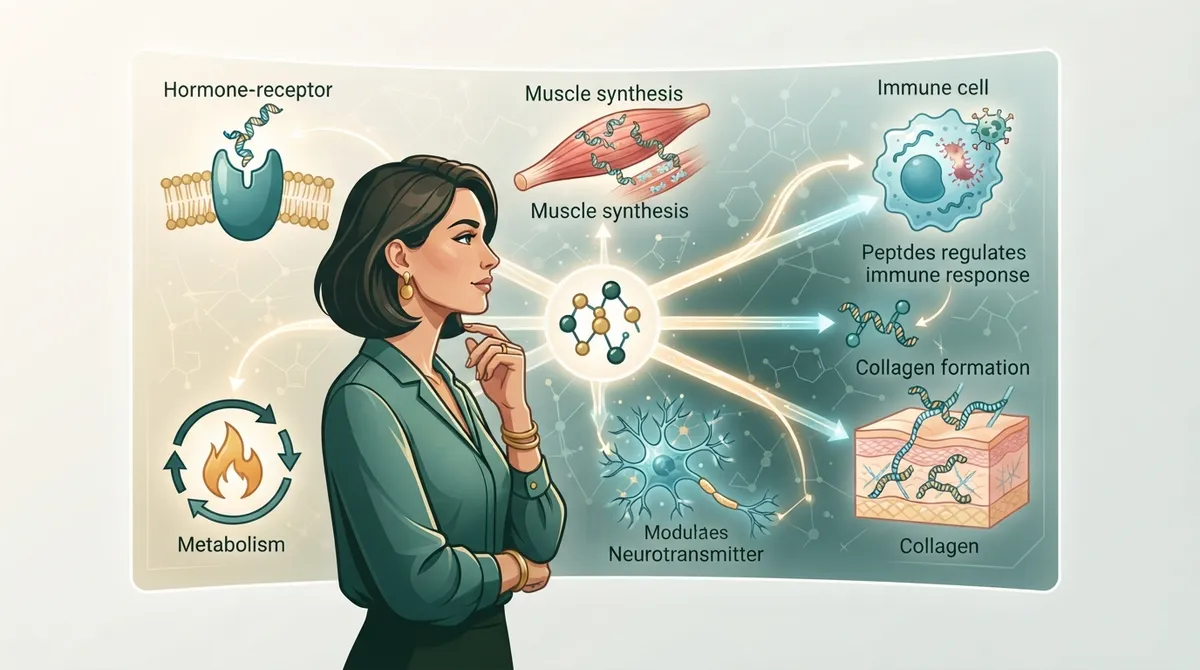
Fact 1: “Peptide Therapy” Is a Broad Term, Not One Treatment
Peptides are short chains of amino acids. Your body makes many of them naturally, and they act like tiny messengers. If you want a simple primer, what are peptides is a helpful place to start. You can also read our guide, 8 Facts That Explain What Are Peptides in 2026.
Here is the catch. “Peptide therapy” is a marketing phrase, not one standard treatment. Some peptides are FDA-approved medicines. Others are sold online with little proof behind them. So the first step is knowing which is which.
For weight loss, the most credible peptide-based options are:
- Semaglutide: a GLP-1 receptor agonist
- Tirzepatide: a dual GIP/GLP-1 receptor agonist
Both are prescription medicines. Both are used with a reduced-calorie diet and more physical activity. For a deeper look, see How to Understand GLP-1 Peptide Therapy in 2026.

Fact 2: How These Peptide Medicines Actually Work
These medicines copy natural gut hormones that talk to your brain and stomach. Think of them as helpful text messages that say, “You are full now.”
Here is what they do in your body:
- They slow how fast food leaves your stomach, so you feel full longer.
- They act on appetite centers in the brain, which can quiet food noise.
- They help your body manage blood sugar and insulin more smoothly.
Tirzepatide also targets a second hormone pathway (GIP), which is why it is called a dual agonist. Curious about the science? Our article How Does GLP-1 Work for Weight Loss, Really? breaks it down in plain language.
The takeaway: these are tools, not magic. They make healthy habits easier to keep, but habits still matter.
Fact 3: What Is FDA-Approved for Women (and Everyone Else)
In the United States, Wegovy (semaglutide) and Zepbound (tirzepatide) are approved for chronic weight management in eligible adults. Eligibility generally includes obesity, or overweight with at least one weight-related condition. A clinician confirms if you qualify.
Here is something many women do not realize. These medicines are not women-specific. Trial results are reported for whole study groups, and the evidence does not promise a special or guaranteed effect for women. Your own results will depend on your health, habits, and dose.
| Medicine | Type | Approved Brand for Weight | Women-Specific? |
|---|---|---|---|
| Semaglutide | GLP-1 agonist | Wegovy | No |
| Tirzepatide | Dual GIP/GLP-1 agonist | Zepbound | No |
Want the full picture? Read Which Weight Loss Peptides Actually Work in 2026? for more detail.
Fact 4: What Results Can You Realistically Expect?
Let’s talk numbers, because they help set fair expectations. In the 72-week SURMOUNT-5 head-to-head trial in adults with obesity but without diabetes, average weight change was about 20.2% with tirzepatide and 13.7% with semaglutide. That works out to roughly 50 pounds versus 33 pounds on average.
Please remember, these are group averages. They are not a promise for any one person. Some people lose more, and some lose less.
| Medicine | Average Weight Change (72 weeks) | Approx. Average Loss |
|---|---|---|
| Tirzepatide | About 20.2% | About 50 lb |
| Semaglutide | About 13.7% | About 33 lb |
A 2025 real-world study also found that 89% of participants lost at least 5% of their weight, and 33% lost at least 10%. That study looked back at past records, so it cannot be compared directly to randomized trials. You can explore the research through the National Library of Medicine.
For timing, see How Long to See Results on GLP-1 Peptide Therapy?
Fact 5: Pregnancy and Family Planning Need Extra Care
This one matters a lot for women. Weight-loss medicines are not intended for use during pregnancy. The Wegovy prescribing information says to stop semaglutide at least two months before a planned pregnancy when it is used for weight reduction, because the medicine stays in the body for a long time.
So before you start, have an open talk with your provider about:
- Whether you plan to become pregnant soon
- Your birth control plan
- Breastfeeding or nursing
- Any medicines or supplements you already take
Your provider can build a plan that fits your life stage. If hormones are part of your story, our guide How to Build a Women’s Wellness Peptide Plan may help.
Fact 6: Side Effects Are Real, But Often Manageable
Like any medicine, these come with possible downsides. The most common ones are digestive. Many women notice:
- Nausea
- Vomiting or diarrhea
- Constipation
- Belly discomfort
These often ease as your body adjusts, especially when the dose rises slowly. Eating smaller meals, drinking water, and getting enough fiber can help. Prescribing information also lists important warnings, so a clinician should review your medical history, other medicines, and symptoms before and during treatment.
Want practical tips? Check out What Causes GLP-1 Side Effects and How to Manage Them? and Why Does GLP-1 Therapy Cause Constipation, and How Do You Fix It?
Also, ask what happens if you stop. Weight can come back when a medicine ends, so a maintenance plan is smart. Our tips in 8 GLP-1 Weight Loss Maintenance Tips That Last (2026) can help you plan ahead.
Fact 7: Approved, Compounded, and “Research” Peptides Are Not the Same
This is the most important safety fact. Not every peptide product is created equal.
| Product Type | FDA Review? | What to Know |
|---|---|---|
| FDA-approved medicine (Wegovy, Zepbound) | Yes | Reviewed for safety, effectiveness, and quality |
| Compounded versions | No | Not FDA-approved; generally for cases where an approved drug cannot meet a patient’s medical need |
| “Research use only” peptides | No | Identity, quality, and dosing may be uncertain; avoid |
The FDA says unapproved versions have not been through its review for safety, effectiveness, and quality. Retatrutide and cagrilintide are not FDA-approved weight-loss drugs, and the FDA says they cannot be used in compounding under federal law. If a product says “for research purposes” or “not for human consumption,” skip it.
To learn more, read FDA-Approved vs. Compounded Peptides: What Wins? and How to Get Prescription Peptides Safely in 2026.
How to Start Peptide Therapy for Weight Loss Safely
Ready to take the next step? Here is a simple path many women follow.
- Book a virtual consultation. A licensed provider reviews your history and goals.
- Get blood work. Labs show your metabolic and hormone picture, so nothing is guesswork.
- Receive a personalized plan. Your provider picks the right medicine and dose for you.
- Start at home. Medications are delivered to your door, and you follow clear guidance.
- Check in and adjust. Ongoing monitoring keeps you safe and on track.
This is where a telehealth clinic shines, especially for busy professionals. How to Start Peptide Therapy Safely and See Real Results walks through each step. And if you like data, you will love How to Use Biomarker Testing to Guide Peptide Therapy.
Why Personalization Matters for Women
Women’s bodies change across life stages. Perimenopause, menopause, stress, sleep, and thyroid health can all shape weight. A one-size-fits-all approach often misses that.
That is why a personalized plan matters. Your provider looks at your labs, your goals, and your daily routine. Then they choose a path that fits you, not a template. Pairing weight care with sleep, strength training, and protein-rich eating often gives the best long-term results.
At Allura Longevity, licensed providers design custom plans based on your blood work and goals. Care is delivered by telehealth and shipped to your home. It is a convenient way to get expert support without rearranging your week. Curious how it compares to other options? See Local Clinic vs. Telehealth: Best Peptide Therapy Near You?
Final Thoughts: Your Next Step
Peptide therapy for weight loss women can be a helpful tool when it is done the right way. The best-supported options are FDA-approved prescription medicines, used with healthy habits and real medical guidance. Skip the unregulated online products, and lean on a licensed provider you trust.
Remember, you deserve a plan that feels supportive, not stressful. Small steps add up, and you do not have to figure it out alone.
Ready to see if this path fits you? Request a consultation with Allura Longevity to start with a $50 virtual visit, blood work, and a personalized plan. Spots for new clients are limited each month, or call (813) 510-6277 to learn more.
FAQs
Q: What peptide therapy is FDA-approved for weight loss in women?
A: The FDA-approved peptide-based options are Wegovy (semaglutide) and Zepbound (tirzepatide). They are approved for chronic weight management in eligible adults, and they are not women-specific. A provider will check if you qualify and if it is a safe fit for you.
Q: Can I take semaglutide or tirzepatide if I am pregnant or planning pregnancy?
A: Weight-loss medicines are not intended for use during pregnancy. The Wegovy label advises stopping semaglutide at least two months before a planned pregnancy, so talk with your provider early about your plans, birth control, and breastfeeding.
Q: Are compounded semaglutide or tirzepatide injections safe?
A: Compounded drugs are not FDA-approved, and the FDA has not reviewed them for safety, effectiveness, or quality. They should generally be used only when an approved drug cannot meet your medical need, and only under a licensed provider’s care.
Q: What are the most common side effects?
A: Most women notice stomach-related effects like nausea, vomiting, diarrhea, constipation, or belly discomfort. These often ease over time, and your provider can adjust your dose and share tips to help you feel better.
Q: What happens if I stop taking a GLP-1 weight loss medicine?
A: Weight can return after stopping, since the medicine no longer helps control appetite. That is why a maintenance plan with steady nutrition, strength training, and provider check-ins is a smart part of your journey.





