

Key Takeaways
-
Hormone therapy timing is critical: the benefit-risk ratio is most favorable for healthy women under 60 or within 10 years of menopause, while starting after age 60 increases risks of heart disease, stroke, blood clots, and dementia.
-
No peptides are FDA-approved for menopause symptoms; peptides like BPC-157 and CJC-1295 lack sufficient human research evidence for treating hot flashes, night sweats, or vaginal dryness despite online marketing claims.
-
Systemic hormone therapy (estrogen ± progestogen) remains the gold standard for treating hot flashes, night sweats, and genitourinary syndrome of menopause with proven effectiveness.
-
Low-dose vaginal estrogen offers a gentler local treatment alternative for vaginal dryness and GSM with much lower systemic hormone exposure than pills or patches.
-
Comprehensive blood work and personalized medical evaluation are essential before starting any hormone or peptide protocol to identify contraindications and establish baseline hormone levels.
-
Hormone therapy is not a cure-all for aging or disease prevention; it should be used specifically for symptom relief and bone loss prevention, with ongoing provider monitoring rather than a fixed stop date.
If you’re over 50 and dealing with hot flashes, sleepless nights, or that stubborn brain fog, you’re definitely not alone. Millions of women hit this exact stage every year, and the good news is that real help exists. But with so much information (and misinformation) floating around online, it’s easy to feel overwhelmed. Some sources push peptides as a magic fix for menopause. Others make hormone therapy sound scary. Let’s cut through the noise together, friend to friend, and talk about what actually works.
This guide breaks down the honest facts about hormone therapy for women over 50, where peptide therapy fits into the bigger picture, and how to make a safe, informed choice for your body. We’ll keep things simple, warm, and grounded in real medical evidence. No scare tactics, no empty promises. Just the truth, so you can feel confident about your next step.

1. Hormone Therapy Is Still the Gold Standard for Menopause Symptoms
Let’s start with the basics. Menopausal hormone therapy, or MHT, uses estrogen alone (for women without a uterus) or estrogen plus a progestogen (for women with a uterus). It remains the most effective treatment for hot flashes, night sweats, and genitourinary syndrome of menopause, also known as GSM.
The average age of menopause is around 52, according to the North American Menopause Society. That means many women reading this are either approaching menopause or already in the thick of it. If hot flashes are disrupting your sleep or your workday, you deserve real relief, not guesswork.
Why Timing Matters So Much
Here’s something many women don’t realize: when you start hormone therapy matters just as much as whether you start it. NAMS reports that the benefit-risk ratio is generally most favorable for healthy women younger than 60, or within 10 years of their last period, who have bothersome symptoms and no contraindications.
If you begin systemic hormone therapy after age 60, or more than 10 years past menopause, things get more complicated. Absolute risks of coronary heart disease, stroke, blood clots, and dementia increase with age and time since menopause. This doesn’t mean therapy is off the table. It just means your provider needs to look closely at your personal health history first.
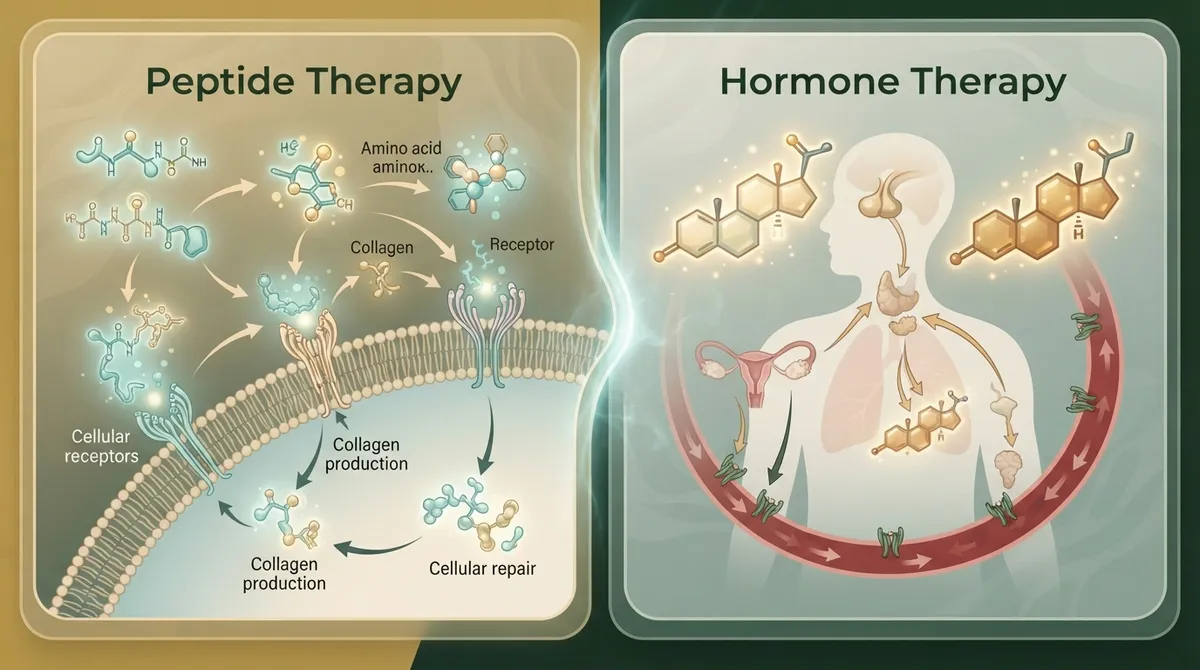
2. Peptide Therapy and Hormone Therapy Are Not the Same Thing
This is where a lot of confusion happens, especially online. You may have seen ads for peptides like BPC-157, CJC-1295, ipamorelin, or tesamorelin marketed as menopause solutions. Here’s the honest truth: no peptide is currently FDA-approved to treat hot flashes, night sweats, GSM, or menopause itself.
Peptides are short chains of amino acids that can support specific body functions like tissue repair, metabolism, or growth hormone release. You can learn more about how these molecules work in this breakdown of what peptides actually are. But supporting general wellness is very different from treating menopause symptoms with proven results.
Just because a peptide is approved for one purpose, like tesamorelin for a specific medical condition, doesn’t mean it works for menopause. Evidence reviews have found no relevant randomized controlled trials showing that non-GLP-1 peptides improve menopause symptoms in perimenopausal or postmenopausal women. Even BPC-157, one of the most talked-about peptides, has extremely limited human research. One safety study involved just two healthy adults. That’s not nearly enough evidence to support menopause claims.
Where Peptide Therapy Can Genuinely Help
This doesn’t mean peptide therapy has no place in your wellness routine. Many women over 50 use targeted peptide protocols alongside traditional care to support things like:
- Energy and daily stamina
- Sleep quality and recovery
- Muscle tone and metabolism
- Skin firmness and collagen support
- Immune resilience
The key is honesty about what peptides can and can’t do. If you’re curious about safe, realistic use cases, this guide on how to start peptide therapy safely is a great next read.
3. Vaginal Estrogen Offers a Gentler, Local Option
Not every woman needs or wants systemic hormone therapy. If your main struggle is vaginal dryness, discomfort, or GSM, low-dose vaginal estrogen might be a better fit. This local treatment produces much lower systemic hormone exposure than pills or patches.
Vaginal estrogen can be used at nearly any age when appropriate. That said, medical evaluation still matters, especially for women with a history of hormone-sensitive cancer. Always loop in your provider before starting any hormone-based treatment, even a local one.
4. Know the Real Risks Before You Start
Nobody likes talking about risk, but it’s important to go in with clear eyes. Systemic hormone therapy is generally not recommended, or requires specialist input, in these situations:
- Unexplained vaginal bleeding that hasn’t been evaluated
- Active or past estrogen-sensitive cancer, like certain breast cancers
- History of stroke or blood clots
- Significant liver disease
- Certain cardiovascular conditions
One statistic worth knowing: starting hormone therapy after age 65 has been linked to 23 additional dementia cases per 10,000 person-years in the evidence NAMS cites. That number needs context. It doesn’t apply the same way to every formulation or every woman, but it’s a good reminder that age and timing genuinely matter.
For deeper detail on how professional societies weigh these risks, the NAMS 2022 position statement is a trustworthy resource to bookmark.
5. Hormone Therapy Isn’t a Cure-All (And That’s Okay)
Hormone therapy prevents menopausal bone loss and cuts fracture risk. That’s a real, proven benefit. But it is not recommended solely to prevent heart disease, dementia, or general aging. Think of it as targeted symptom relief and bone protection, not a fountain of youth.
The same honesty applies to peptides. If you’re exploring options for menopause-related weight gain or visceral fat, it helps to understand what’s actually backed by research versus what’s just good marketing. This resource on which weight loss peptides actually work can help you separate fact from hype.
A Quick Comparison Table
| Treatment Type | Best For | FDA-Approved for Menopause? |
|---|---|---|
| Systemic MHT (estrogen ± progestogen) | Hot flashes, night sweats, GSM, bone loss | Yes |
| Low-dose vaginal estrogen | Vaginal dryness, GSM | Yes |
| GLP-1 peptide therapy | Weight management, metabolic health | Yes, for GLP-1 specifically (not for menopause) |
| BPC-157, CJC-1295, ipamorelin | Wellness support, recovery (limited evidence) | No, not for menopause symptoms |
6. The Right Tests Make All the Difference
Before starting any hormone or peptide protocol, real lab work is non-negotiable. This isn’t a “one-size-fits-all” situation. Your provider should review your personal and family health history, check for contraindications, and order blood work to understand your current hormone levels and overall health picture.
At Allura Longevity, clients start with an affordable $50 virtual consultation, followed by comprehensive blood work through LabCorp. From there, licensed providers, led by board-certified Family Nurse Practitioner Ashley, build a custom six-month plan based on your actual numbers and goals. Peptides are shipped directly to your door, so you can manage your care from home, on your own schedule.
This kind of personalized approach matters more than most people realize. If you want to understand the full process, this article on building a personalized wellness plan walks through it step by step.
7. How Long You Can Stay on Hormone Therapy Depends on You
There’s no universal expiration date for hormone therapy. Duration depends on your symptoms, your risk factors, and how your body responds over time. Many women benefit from ongoing monitoring and periodic reassessment with their provider rather than a fixed stop date.
This is another area where peptide therapy and hormone therapy overlap in philosophy, even if the treatments themselves are different. Both require regular check-ins, lab monitoring, and honest conversations about what’s working. If you’re weighing hormone therapy against other options like bioidentical hormones or peptides, this comparison on choosing between bioidentical hormones and peptides is worth a read.
According to research published through the National Library of Medicine, individualized care and ongoing monitoring remain central to safe, effective menopause management. That’s the same philosophy behind responsible peptide therapy: no shortcuts, no guesswork, just real science applied to your unique body.
Making Sense of It All
Here’s the bottom line, friend. Hormone therapy for women over 50 is a well-studied, effective option for many, especially when started at the right time and monitored properly. Peptide therapy, on the other hand, isn’t a replacement for MHT, but it can be a smart complementary tool for energy, recovery, metabolism, and overall vitality when used responsibly.
If you’re curious how peptides fit into your specific wellness picture, understanding what peptides are and how they work in the body is a great place to start. From there, a licensed provider can help you figure out what combination of care, whether that’s hormone therapy, peptide support, or both, makes sense for your goals.
You deserve care that’s tailored to you, not a one-size-fits-all approach pulled from the internet. Every woman’s body tells a different story through her blood work, symptoms, and goals.
Your Next Step Toward Feeling Like Yourself Again
You don’t have to navigate this stage of life alone or guess your way through confusing treatment options. Allura Longevity offers personalized, medically supervised peptide therapy delivered through convenient telehealth visits, with licensed providers guiding every step of your plan. Spots for new clients are limited each month, so if you’re ready for real answers backed by real science, now’s a great time to reach out.
Ready to build a plan that actually fits your body and your goals? Request a consultation today and take the first step toward feeling energized, balanced, and genuinely like yourself again. You can also call (813) 510-6277 to speak with our team directly.
FAQs
Q: Is hormone therapy safe for women over 50?
A: For most healthy women under 60 or within 10 years of menopause, hormone therapy is generally considered safe and effective for bothersome symptoms. Your risk profile is unique, though, so a licensed provider needs to review your health history and run proper blood work before you start.
Q: What is the difference between menopause hormone therapy and peptide therapy?
A: Hormone therapy replaces estrogen (and sometimes progestogen) to directly treat menopause symptoms like hot flashes and vaginal dryness. Peptide therapy uses amino acid chains to support things like energy, recovery, and metabolism, but it isn’t FDA-approved to treat menopause itself.
Q: Are BPC-157, CJC-1295, or ipamorelin proven to help with menopause?
A: Not yet, and that’s an honest answer we think you deserve. These peptides have limited human research overall, and none of it specifically proves benefits for hot flashes, night sweats, or other menopause symptoms.
Q: Is vaginal estrogen safer than systemic hormone therapy?
A: Low-dose vaginal estrogen typically produces much lower systemic hormone exposure than pills or patches, making it a gentler option for many women. It still requires medical evaluation, especially if you have a history of hormone-sensitive cancer.
Q: How long can a woman over 50 stay on hormone therapy?
A: There’s no fixed timeline. It really depends on your symptoms, risk factors, and how you respond over time, which is why ongoing monitoring with your provider matters so much.





