

Key Takeaways
-
Peptide therapy targets root causes of fatigue like hormone imbalances and poor sleep quality by working at the cellular level, rather than temporarily masking tiredness like caffeine does.
-
Blood work through LabCorp is essential before starting peptide therapy to identify the specific cause of fatigue—whether hormonal, nutritional, or metabolic—enabling truly personalized treatment plans.
-
Growth hormone secretagogues like Sermorelin and CJC-1295 stimulate natural GH release to improve deep sleep quality and sustained energy, addressing a key missing piece for people fatigued despite adequate sleep hours.
-
Relying on caffeine and sugar creates long-term dependency, overworks the adrenal system, and actually worsens sleep quality, making peptide therapy a more sustainable alternative for lasting energy.
-
Most clients notice gradual improvements in sleep and energy within the first few weeks, with more significant results building over two to three months when combined with good sleep habits and balanced nutrition.
-
Peptide therapy is delivered entirely through telehealth with licensed medical oversight, making it convenient for busy professionals who can receive consultations, blood work analysis, and home delivery without clinic visits.
You know that feeling when you’ve had eight hours of sleep, two cups of coffee, and you’re still dragging by 2 p.m.? You’re not alone. So many of our clients at Allura Longevity walk into their first consultation saying the exact same thing: \”I just don’t feel like myself anymore.\” If that’s you, let’s talk honestly about why quick fixes like caffeine and power naps only go so far, and how peptide therapy for fatigue offers a completely different approach that works with your body instead of just masking the tiredness.
This isn’t about judging your morning latte habit (we love coffee too!). It’s about understanding what’s actually happening inside your body when energy crashes hit, and exploring a science-backed option that many busy professionals, aging adults, and health optimizers are turning to for real, lasting results.
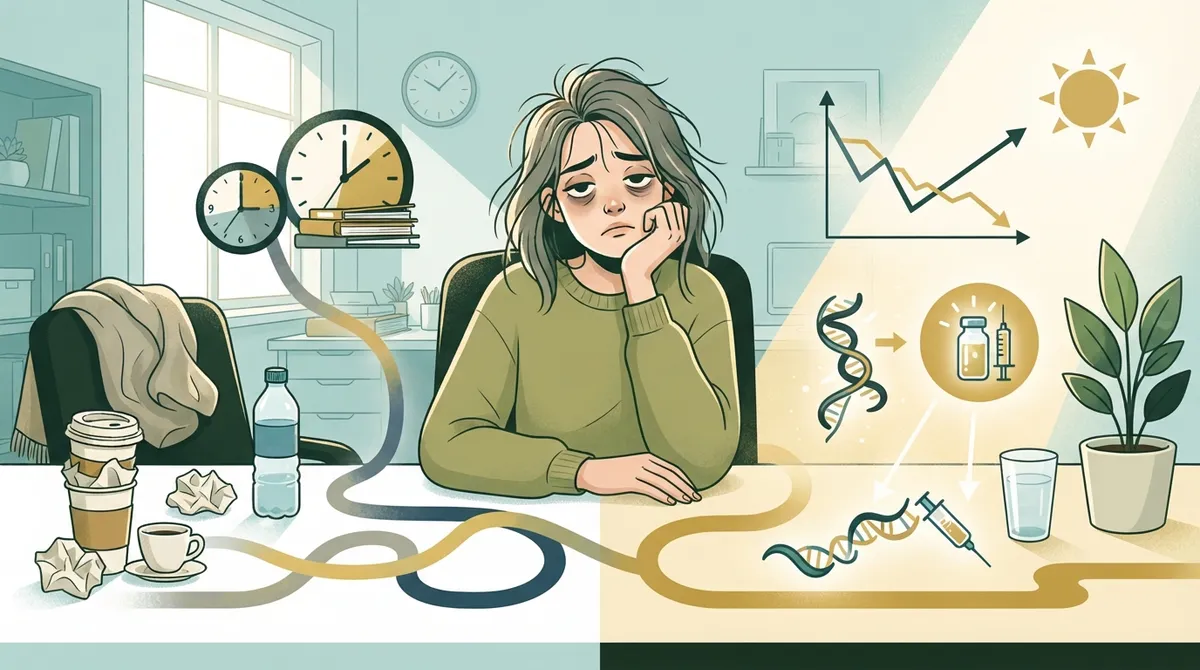
Why Am I So Tired All the Time?
Fatigue isn’t just \”being busy.\” It’s often your body waving a little flag, telling you something deeper is off balance. Hormone shifts, poor sleep quality, chronic stress, and cellular aging can all quietly drain your energy reserves over time.
According to what are peptides, these small chains of amino acids act as messengers in your body, telling cells what to do. When production of key peptides slows down with age, your energy, recovery, and sleep quality can all take a hit.
Here are some of the most common culprits behind persistent tiredness:
- Declining growth hormone production, which naturally drops after your 30s
- Poor sleep quality, even if you’re technically getting enough hours
- Hormonal imbalances affecting testosterone or thyroid function
- Chronic inflammation from stress, poor diet, or lack of recovery
- Nutrient deficiencies that go unnoticed without proper blood testing
If any of this sounds familiar, you’re probably ready to stop guessing and start understanding what’s really going on with your body.

Coffee and Naps: The Band-Aid Approach
Let’s be real for a second. Coffee and naps aren’t bad. They’re just temporary patches over a bigger issue. Think of it like putting a piece of tape over a leaky pipe. It helps for a moment, but the leak is still there.
Caffeine blocks adenosine, the chemical that makes you feel sleepy. It doesn’t actually give you more energy; it just delays the crash. And naps, while helpful for short-term alertness, don’t address why you’re exhausted in the first place.
The Hidden Costs of Relying on Stimulants
Over time, leaning on caffeine and sugar to get through the day can backfire. Your adrenal system works overtime, your sleep quality often suffers, and you may find yourself needing more and more just to feel \”normal.\”
This is exactly why so many wellness seekers and biohackers are looking beyond quick fixes and asking about peptides for energy that actually work at a cellular level, rather than just tricking the brain temporarily.
How Peptide Therapy for Fatigue Actually Works
Peptide therapy takes a completely different approach. Instead of masking tiredness, certain peptides help restore your body’s natural energy-producing systems. They can support better sleep, improve cellular repair, and even help balance hormones that affect how energized you feel each day.
Growth hormone secretagogues, for example, encourage your pituitary gland to release more natural growth hormone. This can improve deep sleep quality, which is often the missing piece for people who feel tired no matter how many hours they log in bed.
Research published by the National Library of Medicine highlights how peptide-based therapies can influence metabolic and hormonal pathways tied to energy regulation. This isn’t a fringe idea. It’s backed by real clinical interest and ongoing study.
Common Peptides Used for Fatigue Support
Here’s a quick breakdown of some peptides commonly used to help address low energy and fatigue:
| Peptide | Primary Benefit | Best For |
|---|---|---|
| Sermorelin | Boosts natural growth hormone, improves sleep quality | Aging adults, sleep-related fatigue |
| CJC-1295 | Supports sustained energy and recovery | Biohackers, busy professionals |
| Ipamorelin | Gentle GH stimulation, supports metabolism | Health optimizers seeking balance |
| PT-141 | Supports vitality and overall wellness | Adults wanting whole-body energy support |
Curious about how these work together? Our guide on how to use CJC-1295 safely for real results breaks it down further, and you can also learn how GHRP peptides really work in your body if you want to nerd out on the science a bit.
Peptide Therapy vs. Coffee and Naps: A Side-by-Side Look
Let’s put these two approaches head-to-head, because sometimes seeing it in black and white makes the choice crystal clear.
| Factor | Coffee & Naps | Peptide Therapy |
|---|---|---|
| Addresses root cause | No, just delays tiredness | Yes, supports hormone and cellular function |
| Long-term sustainability | Can lead to dependency | Designed for lasting improvement |
| Personalization | One-size-fits-all | Based on your unique blood work |
| Medical supervision | None | Licensed provider oversight |
| Sleep quality impact | Often disrupts sleep (especially late caffeine) | Can improve deep sleep cycles |
Now, we’re not saying you have to quit coffee cold turkey. But if you’re relying on it just to function, that’s a signal worth paying attention to.
What to Expect When Starting Peptide Therapy
One of the things clients love most about working with Allura Longevity is how simple and streamlined the process feels. No guessing games, no confusing paperwork. Just clear steps toward feeling like yourself again.
- Book a virtual consultation. For just $50, you’ll talk with a licensed provider about your symptoms and goals.
- Complete blood work through LabCorp. This gives your provider real data, not guesses, about what’s happening in your body.
- Receive your custom six-month plan. Your treatment is built around your specific hormone levels and lifestyle needs.
- Get peptides delivered to your door. No clinic visits required, just convenient at-home administration.
- Stay on track with ongoing monitoring. Your provider adjusts your plan as your body responds.
This process is explained in more detail in our article on how to start peptide therapy safely and see real results, which walks through exactly what happens at each stage.
Why Blood Work Matters So Much
Here’s the thing about fatigue: it can stem from so many different causes. Low testosterone, thyroid issues, poor growth hormone output, or even nutrient gaps can all mimic the same tired, foggy feeling.
That’s why guessing at treatment rarely works. Your provider needs to see your actual numbers before recommending anything. This personalized approach is a big reason Allura Longevity has become a trusted name for people serious about peptides for women and peptides for men alike, no matter their age or activity level.
Who Benefits Most From Peptide Therapy for Fatigue?
Fatigue doesn’t discriminate. It shows up in high-performing executives, dedicated parents, weekend athletes, and everyone in between. But certain groups tend to see especially meaningful improvements.
- Busy professionals juggling demanding schedules who need sustained energy without the jitters of extra caffeine
- Aging adults noticing a gradual decline in vitality, stamina, and mental sharpness
- Biohackers already tracking their metrics who want to optimize energy with data-driven precision
- Health optimizers looking for science-backed solutions instead of one-size-fits-all supplements
- Wellness seekers who’ve tried everything else and want a more personalized path forward
If you see yourself in any of these descriptions, you’re exactly who this kind of therapy was designed for.
Is Peptide Therapy Safe for Fatigue Management?
Safety is always the first question, and it should be. Peptide therapy, when supervised by licensed medical providers, has a strong safety profile for most healthy adults. That said, it’s not something you should try to DIY with products purchased online without oversight.
At Allura Longevity, every treatment plan is guided by Ashley, a board-certified Family Nurse Practitioner, along with a licensed medical team. Your plan is built around your actual lab results, not generic dosing charts. If you want a deeper dive into safety considerations, check out our article on whether peptide therapy is safe and what you really need to know.
Combining Peptides With Lifestyle Changes
Peptide therapy works best as part of a bigger picture. Good sleep habits, balanced nutrition, and regular movement all support the effects of your treatment plan. Think of peptides as giving your body the tools it needs, while your daily habits provide the foundation.
For a broader look at building sustainable energy habits, our guide on the best peptides for energy in 2026 pairs well with practical lifestyle tips too.
Making the Switch: What It Really Takes
Switching from a caffeine-dependent routine to a peptide-supported one doesn’t happen overnight, and that’s okay. Most clients notice gradual improvements in sleep and energy over the first few weeks, with more noticeable changes building over the following months.
Since care is delivered entirely through telehealth, you can fit consultations and follow-ups into your schedule without taking time off work or driving across town. This convenience is a huge reason so many busy professionals choose this path, as outlined in our comparison of local clinic versus telehealth peptide therapy options.
Ready to Feel Like Yourself Again?
Fatigue doesn’t have to be your new normal. Whether you’re relying on a third cup of coffee just to make it through meetings, or you’ve noticed your workouts just don’t hit the same way they used to, there’s a better path forward. Peptide therapy for fatigue offers a personalized, medically supervised way to address the root causes of low energy, not just cover them up.
Spots for new clients are limited each month, so if you’re ready to stop guessing and start feeling genuinely energized again, now’s a great time to take the first step. Request a consultation with our licensed team today, and let’s build a plan that actually works for your body and your life.
FAQs
Q: Can peptide therapy really help with chronic fatigue?
A: Yes, many clients find real relief because peptide therapy targets root causes like hormone imbalances and poor sleep quality, rather than just masking tiredness like caffeine does. Everyone’s body is different, so results vary, but personalized plans based on your blood work give you the best shot at lasting energy improvements.
Q: How long does it take to feel less tired after starting peptide therapy?
A: Most folks notice small improvements in sleep and energy within the first few weeks, with more significant changes building over two to three months. Since your plan is customized to your body, your timeline might look a little different, and that’s completely normal.
Q: Is peptide therapy safer than relying on energy drinks or supplements?
A: When supervised by licensed providers, peptide therapy tends to be a much more targeted and medically guided approach compared to unregulated energy drinks or supplements. Your treatment is based on actual lab work, so you’re not just guessing what your body needs.
Q: Do I need blood work before starting peptide therapy for fatigue?
A: Absolutely, and honestly, this step is one of the most important parts of the process. Blood work through LabCorp helps your provider understand exactly what’s driving your fatigue, whether it’s hormonal, nutritional, or something else entirely.
Q: Can I do peptide therapy for fatigue completely from home?
A: Yes! That’s actually one of the best parts. After your virtual consultation and blood work, your peptides are shipped right to your door, and you administer them at home following your provider’s guidance. It’s designed to fit into busy, real-life schedules.





