

Key Takeaways
-
Peptide therapy costs range from $150-$1,500+ monthly depending on peptide type, provider model, and whether it's compounded or brand-name; always request a complete breakdown including consultations, labs, and follow-ups, not just medication price.
-
Most peptide therapy isn't covered by insurance since many peptides are compounded or off-label, so budget $2,000-$2,800 for a typical first-year program including medication, consultations, and labs.
-
Legitimate providers require initial consultations with licensed medical professionals, order bloodwork before prescribing, use verified compounding pharmacies, and provide ongoing monitoring—extremely low prices without these safeguards are red flags.
-
Telehealth peptide therapy often costs less than local clinics while maintaining medical oversight, with the added benefits of home delivery and flexible scheduling for busy professionals.
Let’s be honest: figuring out peptide therapy cost can feel like solving a puzzle with missing pieces. One website says $150 a month. Another quotes $1,500. So which one is true? Here’s the friendly truth: they both can be, depending on the peptide, the provider, and what’s actually included in your plan.
Whether you’re chasing more energy, better sleep, faster recovery, or healthy weight loss, understanding the real numbers behind peptide therapy cost helps you make a smart, confident decision. In this guide, we’ll walk through exactly what drives pricing, break down real 2026 cost ranges, and show you the common mistakes that make people overpay (or underpay for something unsafe). By the end, you’ll know exactly what questions to ask before you commit a single dollar.

Why Peptide Therapy Cost Varies So Much
Peptide therapy isn’t one-size-fits-all, and neither is the price tag. A few key factors shape what you’ll actually pay each month.
According to published 2026 pricing data from sources like PeptidesExplorer and GetHealthspan, medically supervised peptide therapy typically runs between $150 and $1,500 or more per month. That’s a huge range, so let’s break down why.
- Type of peptide: FDA-approved GLP-1 medications cost far more than wellness peptides like BPC-157 or sermorelin.
- Compounded vs. brand-name: Compounded versions are generally cheaper, but availability can shift based on FDA shortage rulings.
- Single peptide vs. stacked protocol: Combining two or more peptides raises your monthly total.
- Provider model: Telehealth clinics often bundle consultations, labs, and medication into one price.
- Lab monitoring: Blood work adds cost upfront but keeps your treatment safe and personalized.
If you’re new to this world, our guide on what peptides actually are is a great starting point before diving into pricing.
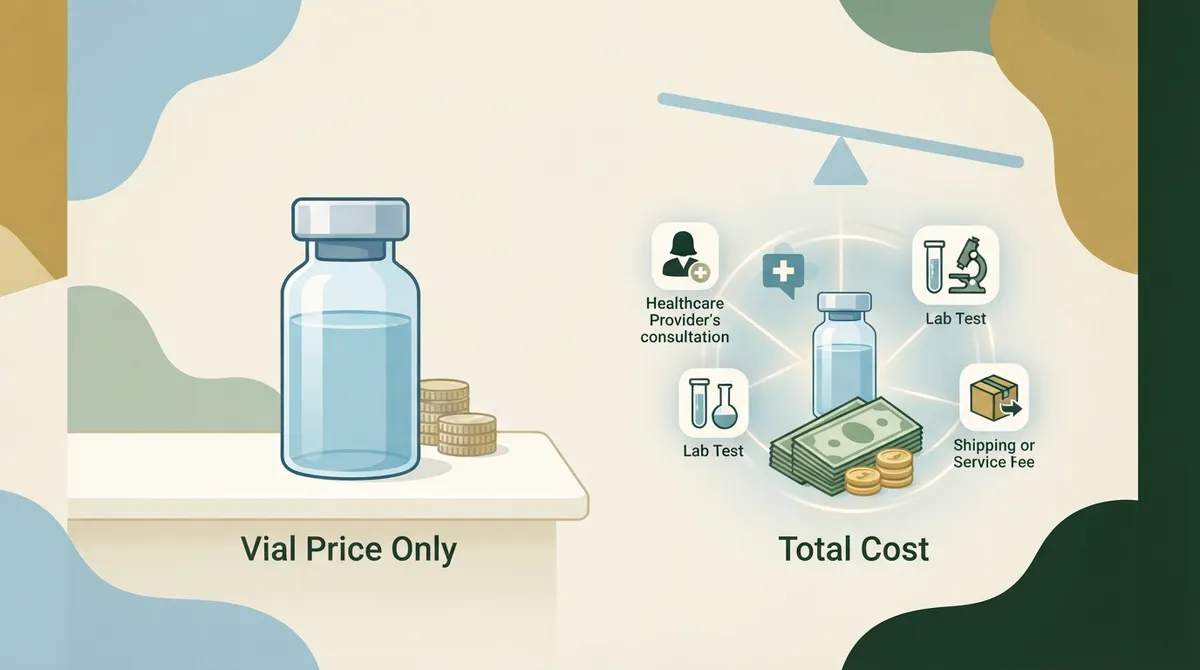
Mistake 1: Comparing Vial Price Only, Not Total Cost
This is the biggest mistake people make. A $60 vial sounds like a steal until you realize it doesn’t include your consultation, lab work, or ongoing support.
Real peptide therapy cost includes several pieces working together. Here’s what a complete program typically covers:
| Cost Component | Typical Price Range |
|---|---|
| Initial medical consultation | $50–$300 |
| Monthly follow-up or membership | $50–$200 |
| Laboratory testing (initial or periodic) | $100–$500 |
| Medication (single peptide) | $80–$500 per month |
| Medication (multi-peptide stack) | $400–$700+ per month |
Some clinics roll everything into one flat monthly fee. Others charge piece by piece, which can sneak up on your budget fast. Always ask for the full breakdown before you sign up.
Mistake 2: Confusing GLP-1 Costs With Wellness Peptide Costs
GLP-1 medications like semaglutide and tirzepatide are in a different price category entirely compared to peptides used for recovery, energy, or anti-aging support.
| Peptide Category | Estimated Monthly Cost |
|---|---|
| Brand-name GLP-1 (semaglutide/tirzepatide) | $1,000–$1,350 |
| Compounded semaglutide | $150–$350 |
| Compounded tirzepatide | $250–$550 |
| BPC-157 (single peptide) | $80–$400 |
| BPC-157 + TB-500 stack | $400–$700 |
| Sermorelin | $40–$150 |
| CJC-1295 + Ipamorelin | $80–$250 |
If weight loss is your goal, it helps to understand how these medications work before comparing prices. Our article on understanding GLP-1 peptide therapy breaks it down simply. And if recovery from injury is more your focus, check out our facts on TB-500 peptide and BPC-157 basics.
Mistake 3: Assuming Insurance Will Cover It
Here’s a tough pill to swallow: most peptide therapy is not covered by insurance. Many peptides used for wellness, recovery, and anti-aging are considered off-label or compounded, which insurance companies typically won’t touch.
According to the National Library of Medicine, many peptide-based treatments remain investigational for the wellness indications they’re commonly used for. That doesn’t mean they’re unsafe, it just means you’ll likely be paying out of pocket.
Before you budget, it’s worth learning how insurance coverage works for hormone and peptide therapy so you’re not caught off guard.
Mistake 4: Choosing the Cheapest Option Without Checking Legitimacy
We get it, a bargain price is tempting. But extremely low prices can be a red flag. If a provider skips blood work, skips consultations, or ships peptides without any medical oversight, you could be putting your health at risk.
Here’s how to spot a legitimate provider:
- They require an initial consultation with a licensed medical provider.
- They order lab work (often through a trusted lab like LabCorp) before prescribing anything.
- They use a licensed, verified compounding pharmacy.
- They offer ongoing monitoring and dose adjustments, not just a one-time sale.
- They’re transparent about total costs, not just the medication price.
For more on this, see our guide to finding legal peptide therapy you can trust and getting prescription peptides safely.
Mistake 5: Ignoring the Full Treatment Timeline
Peptide therapy isn’t usually a one-and-done purchase. Most protocols run for several months to show real results, and that changes your total budget picture.
Published estimates from PeptideMark suggest a typical first-year budget can reach $2,000–$2,800 for a straightforward protocol, including medication, consultations, and labs. More complex or branded programs can exceed that.
Think of it like a gym membership rather than a single workout class. You’re investing in a process, not a quick fix. If you’re curious how soon you might notice changes, our article on when peptide therapy results typically show up sets realistic expectations.
Mistake 6: Not Comparing Telehealth vs. Local Clinic Pricing
Many people assume in-person clinics are automatically better. But telehealth peptide therapy often costs less because it cuts overhead like office space and in-person staffing, while still including licensed medical oversight.
Telehealth also means:
- No waiting rooms or driving across town for appointments
- Medication shipped directly to your door
- Flexible scheduling that fits a busy work life
- Access to specialized providers even if none are near you
This is especially helpful for busy professionals and anyone juggling a packed calendar. Our comparison of local clinic vs. telehealth peptide therapy walks through the pros and cons in detail.
What a Typical Peptide Therapy Program Really Costs
To bring this all together, here’s a simple monthly snapshot based on 2026 published pricing data.
| Program Type | Monthly Cost Estimate |
|---|---|
| Single peptide with oversight | $300–$800 |
| Multi-peptide program | $600–$1,500+ |
| GLP-1 weight loss (compounded) | $150–$550 |
| GLP-1 weight loss (brand-name) | $1,000–$1,350 |
Allura Longevity keeps this simple with a $50 virtual consultation, LabCorp blood work, and a personalized six-month treatment plan shipped right to your home. There’s no guessing games or hidden fees, just a clear plan built around your goals and your labs. If you want to see how a fat-loss-focused protocol is priced and structured, take a look at 13 peptides for fat loss that really work.
Questions to Ask Before You Pay for Peptide Therapy
Before handing over your card, run through this quick checklist:
- Does the price include consultations, labs, and follow-ups, or just medication?
- Is the peptide compounded or FDA-approved, and how does that affect legality and cost?
- How long is the expected treatment plan, and what’s the total cost over that time?
- Who is monitoring my progress, and how often will we check in?
- Is the pharmacy licensed and verified?
Learning more about how to start peptide therapy safely can help you avoid costly missteps right from day one. And if you’re weighing single peptides against combination protocols, our breakdown of single peptides vs. peptide stacks is worth a read too.
The Bottom Line on Peptide Therapy Cost
Peptide therapy cost isn’t just about the number on the invoice. It’s about what that number actually gets you: real medical oversight, quality-checked medication, and a plan built around your body’s needs. Understanding what peptides are and how they work in your body makes it much easier to spot a fair price versus a risky shortcut.
At Allura Longevity, care is personalized from the very first blood draw. Led by Ashley, a board-certified Family Nurse Practitioner, the team designs six-month treatment plans based on your unique labs and goals, then ships everything straight to your door. Telehealth is available nationwide, with licensed care in Florida, Georgia, Texas, Connecticut, Indiana, Maryland, New York, and California.
Spots fill up quickly each month, so if you’re ready to get real answers about your peptide therapy cost and a plan built just for you, request a consultation today or call (813) 510-6277 to get started.
FAQs
Q: How much does peptide therapy cost per month?
A: It really depends on what you’re using it for! Most medically supervised programs run about $150 to $1,500 a month, with single peptides on the lower end and multi-peptide or GLP-1 protocols on the higher end. The best way to know your exact number is through a personalized consultation.
Q: Does insurance cover peptide therapy?
A: Unfortunately, most insurance plans don’t cover peptide therapy since many peptides are compounded or used off-label. Don’t worry though, that’s why clinics like Allura Longevity keep pricing transparent with bundled consultations, labs, and medication so you know exactly what you’re paying for.
Q: What’s the cost difference between compounded and brand-name peptide medications?
A: Compounded versions are usually much friendlier on your wallet, think $150 to $550 a month, compared to $1,000 to $1,350 for brand-name GLP-1 drugs. Just make sure any compounded peptide comes from a licensed, verified pharmacy for safety.
Q: How can I tell if a peptide therapy provider is legitimate?
A: Look for a provider that requires blood work, offers a real consultation with a licensed medical professional, and uses a verified pharmacy. If a deal seems too cheap and skips all of that, it’s probably too good to be true.
Q: How long do I need to stay on peptide therapy to see results?
A: Most people follow a plan for several months, often around six months, to see meaningful changes in energy, recovery, or weight. Your total cost over that time typically lands between $2,000 and $2,800 for a straightforward protocol.





