

Key Takeaways
-
Kisspeptin shows the most promise among fertility peptides with 73 reported healthy births in human IVF trials, but it remains investigational and not FDA-approved for routine fertility care.
-
Most fertility peptides lack human pregnancy safety data; reproductive specialists recommend stopping or modifying peptide use before conception to protect future pregnancies.
-
Complete baseline hormone testing (AMH, FSH, LH, thyroid panels) and reproductive assessment must precede any peptide therapy to avoid guessing at treatment.
-
Standard fertility treatments like IVF and ovulation induction have stronger evidence than peptides; peptides should only support, not replace, proven reproductive care.
-
Growth hormone peptides and regenerative peptides (BPC-157, TB-500) lack direct human fertility data despite popularity; evidence comes mainly from animal studies, not pregnancy outcomes.
-
Red flags include guaranteed pregnancy claims, skipped fertility testing, pressure to self-administer without physician oversight, and vague manufacturing standards.
If you’ve been searching for fertility optimization options, you’ve probably noticed peptide therapy popping up everywhere online. Maybe a friend mentioned it, or you stumbled on a clinic promising better egg quality or stronger sperm counts with a simple injection. We get the appeal. Trying to grow your family is emotional, and anything that offers hope feels worth exploring.
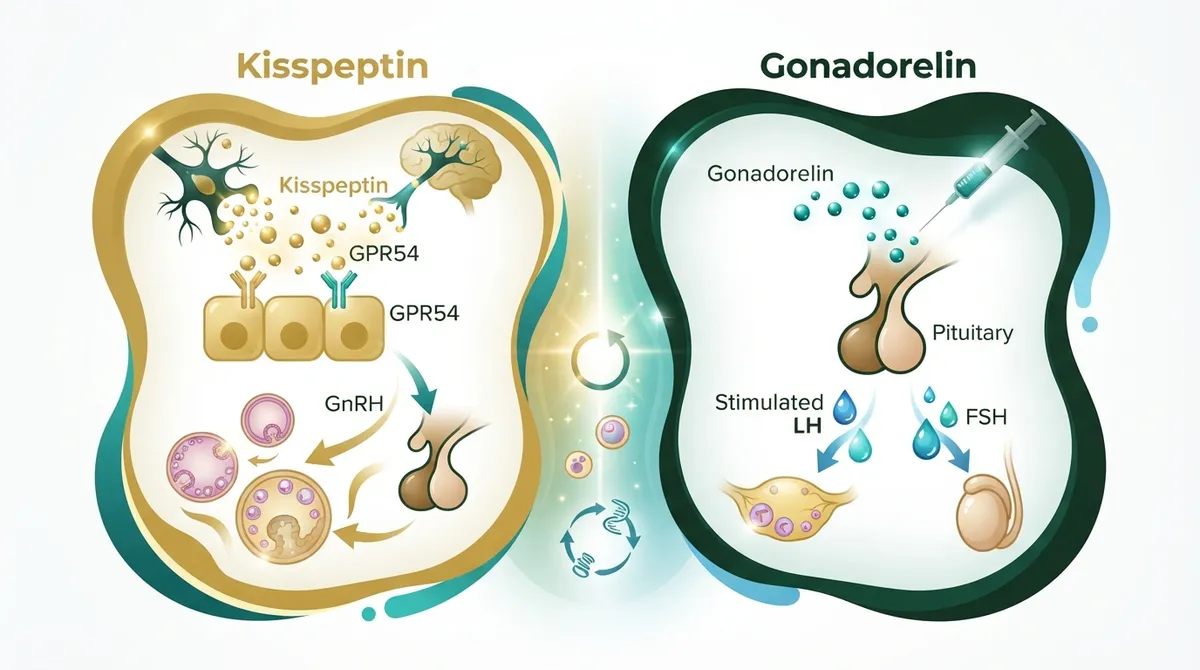
Here’s the thing, though: not all fertility peptides are created equal. Some, like kisspeptin, have real human data behind them. Others are still stuck in the lab or animal-study phase, no matter what a flashy website claims. In this article, we’ll walk through the two most talked-about approaches, kisspeptin and gonadorelin, and put them side by side. We’ll also cover which other peptides are worth watching, which ones need more caution, and what a smart, safe fertility optimization plan actually looks like in 2026.
What Does Fertility Optimization Mean in Peptide Therapy?
Fertility optimization, in this context, means using peptides to support your body’s natural reproductive signals. It is not a replacement for proven fertility treatments like IVF or ovulation induction. Think of it as an adjunctive strategy, something that may support your hormone pathways while you work with a reproductive specialist.
Peptides are short chains of amino acids that act like messengers in your body. If you’re new to this concept, this guide on what peptides actually are is a great place to start. Some peptides mimic hormones your body already makes, which is why researchers are curious about their fertility potential.
But curiosity isn’t the same as proof. Let’s look at the two peptides with the most legitimate research behind them.
Kisspeptin vs. Gonadorelin: A Head-to-Head Look
These two peptides both work on the same general pathway, the one that controls ovulation and hormone release. But they work differently, and they’re used in very different situations.
| Feature | Kisspeptin | Gonadorelin |
|---|---|---|
| How it works | Activates KISS1R pathway, stimulates natural GnRH release | Synthetic GnRH, directly stimulates pituitary LH/FSH |
| Best-known use | Triggering oocyte maturation in IVF cycles | Selected cases of hypothalamic hypogonadism |
| Human evidence | 73 healthy births reported after kisspeptin-triggered oocyte maturation; phase 2 study in 60 high-risk OHSS patients | Established physiological role, but limited by need for pulsatile dosing |
| FDA approval status | Investigational, not FDA-approved for fertility | Used in specialized clinical settings under specialist supervision |
| OHSS risk | May reduce risk in selected IVF patients | Not typically used for OHSS management |
| Administration | Single or scheduled dosing in clinical trials | Requires pulsatile pump administration |
A 2025 review published in the Journal of Clinical Medicine concluded that kisspeptin shows real promise for infertility treatment, but stressed that more clinical studies are needed before it becomes standard care. That’s an important distinction. Promising is not the same as proven.
So Which One Wins?
Honestly, it depends on your specific situation, and that decision should always sit with a reproductive endocrinologist, not a peptide vendor. Kisspeptin has more recent, encouraging IVF data. Gonadorelin has a longer history of physiological use, but its pulsatile dosing requirement makes it impractical outside specialized fertility clinics.
Neither peptide is something you should try to source or self-administer without medical supervision. This is precisely the kind of decision that benefits from working with a provider who understands your full hormone picture, not just one data point.
Other Peptides You’ve Probably Heard About
If you’ve spent time in wellness forums or social media, you’ve likely seen bold claims about other peptides too. Let’s separate fact from marketing hype.
Growth Hormone Peptides (Sermorelin, Ipamorelin, CJC-1295)
These peptides are popular for energy, recovery, and metabolic support. You can read more about how CJC-1295 works for general wellness goals. But when it comes to fertility specifically, direct human trials showing improved live-birth rates or egg quality are not currently available. The existing evidence is mostly mechanistic or borrowed from studies about other health outcomes entirely.
BPC-157, TB-500, MOTS-c, and Humanin
These regenerative and mitochondrial peptides get a lot of attention for tissue repair and cellular health. If you’re curious about the general research, this BPC-157 fact sheet covers what’s known so far. But for fertility purposes, most of the supporting evidence comes from animal studies or lab research, not human pregnancy outcomes. There’s currently no solid human data proving these peptides improve conception rates.
Male Fertility Peptides
Men researching fertility support often ask about peptides for sperm count, motility, or morphology. Some early studies hint at possible benefits for oxidative stress or hormonal signaling. But there isn’t enough clinical evidence yet to recommend unapproved peptides as a standard treatment for male infertility, including cases related to prior testosterone use.
Steps to a Responsible Fertility Optimization Plan
Before adding any peptide to your routine, a thoughtful, evidence-based approach matters most. Here’s a sensible sequence to follow:
- Complete baseline hormone testing, including AMH, FSH, LH, and thyroid panels.
- Get a semen analysis if male fertility factors are part of the picture.
- Review all current medications and supplements with your provider.
- Evaluate lifestyle factors like age, weight, and metabolic health.
- Rule out structural issues such as tubal blockage or varicocele.
- Discuss any prior testosterone replacement therapy and its effects on fertility.
- Work with a reproductive endocrinologist to build a coordinated plan.
This kind of thorough workup is standard in good blood work analysis before starting peptides. Skipping these steps means you’re guessing, and guessing isn’t a great strategy when it comes to something this important.
Should You Stop Peptides Before Trying to Conceive?
This is one of the most common questions we hear, and it deserves a clear answer. Many investigational peptides simply don’t have reproductive-toxicity or pregnancy-safety data. That means we don’t know how they might affect a developing pregnancy.
Because of this gap in research, most reproductive specialists recommend stopping or modifying peptide use before conception, based on their specific guidance. This isn’t about scaring you. It’s about protecting you and a future pregnancy with real caution, not assumptions.
Questions to Ask Your Provider
- Is there human pregnancy safety data for this specific peptide?
- How long before conception should I stop this treatment?
- Does this peptide interact with fertility medications like gonadotropins?
- What monitoring will happen during and after treatment?
- Are there non-peptide alternatives with stronger evidence?
How Peptide Therapy Compares to Standard Fertility Treatments
It helps to understand where peptide therapy fits next to established options like IVF and ovulation induction.
| Approach | Evidence Level | Typical Use |
|---|---|---|
| IVF with standard triggers | Well-established, FDA-approved protocols | Primary treatment for many fertility challenges |
| Ovulation induction (clomiphene, letrozole) | Well-established, decades of data | First-line for ovulatory dysfunction |
| Kisspeptin trigger | Promising but investigational | Selected IVF patients, especially high OHSS risk |
| Gonadorelin pulsatile therapy | Established mechanism, limited practical use | Hypothalamic hypogonadism, specialist settings only |
| Growth hormone or regenerative peptides | Early-stage, mostly preclinical | Not currently recommended as fertility treatment |
The takeaway here is simple. Standard fertility treatments still have the strongest track record. Peptides may play a supporting role someday, but they aren’t a shortcut around proven care.
Why Personalized Care Matters So Much Here
Fertility is deeply personal, and your hormone levels, health history, and goals are unlike anyone else’s. That’s exactly why cookie-cutter peptide protocols sold online without medical oversight can be risky. A responsible provider looks at your full picture before recommending anything.
At Allura Longevity, every treatment plan starts with real lab work and a conversation with a licensed provider, not a generic checklist. While fertility-specific peptide protocols require coordination with a reproductive specialist, our team can support your broader hormone health, energy, and wellness goals through personalized peptide therapy for women and customized options for men. Everything is built around your actual blood work, not assumptions.
What a Thoughtful Provider Should Offer
- A real consultation, not a rushed intake form
- Lab testing through a trusted provider like LabCorp
- Clear explanations of what’s proven versus experimental
- Ongoing monitoring and dose adjustments over time
- Honest guidance about when to involve a fertility specialist
If you’re also managing energy, sleep, or metabolic goals alongside fertility planning, it’s worth learning how to start peptide therapy safely so you understand the full process before committing.
Red Flags to Watch For
Unfortunately, the fertility peptide space has its share of overblown marketing. Here are warning signs worth remembering:
- Claims of guaranteed pregnancy or specific percentage improvements without cited studies.
- No mention of reproductive-toxicity or pregnancy safety data.
- Pressure to skip standard fertility testing entirely.
- Peptides sold without any physician consultation or blood work.
- Vague sourcing with no clear manufacturing standards.
According to the National Library of Medicine, reviews from 2025 and 2026 consistently describe peptide-based fertility research as early-stage, with small study groups and a lack of large randomized trials. That’s not a reason to dismiss the science entirely, but it is a reason to stay grounded in what’s actually been proven.
Frequently Overlooked Factors in Fertility Planning
Peptides tend to get the spotlight, but foundational health factors matter just as much, sometimes more. Consider these areas alongside any peptide discussion:
- Consistent sleep quality and stress management
- Balanced nutrition and healthy body composition
- Avoiding smoking and limiting alcohol intake
- Managing thyroid function and blood sugar levels
- Timing intercourse around ovulation windows accurately
Understanding what peptides are and how they interact with your existing hormone health gives you a clearer, more realistic picture of what treatment can and cannot do.
Ready to Take the Next Step?
Fertility optimization deserves careful thought, real lab data, and a provider who takes time to understand your unique story. Peptide therapy may play a role in your broader hormone and wellness plan, but it should always work alongside, not instead of, proven reproductive care.
If you’re ready to build a personalized wellness plan grounded in your own blood work and health goals, our team at Allura Longevity is here to help. You can request a consultation today and start with a simple $50 virtual visit, real lab testing, and ongoing support from licensed providers who genuinely care about your results. Spots are limited each month, so reach out soon to secure your place. You can also call us directly at (813) 510-6277 to ask questions before you begin.
FAQs
Q: Can peptide therapy improve fertility or increase my chance of pregnancy?
A: Some peptides, especially kisspeptin, show real promise in early human studies for triggering ovulation during IVF. But most other fertility peptides are still experimental, so it’s best to think of peptide therapy as a possible supporting tool, not a proven standalone solution.
Q: Is kisspeptin approved for fertility treatment?
A: Not yet. Kisspeptin remains investigational, even though a human IVF study reported 73 healthy births after kisspeptin-triggered oocyte maturation. It’s promising research, but it hasn’t received FDA approval for routine fertility care.
Q: Are BPC-157 or TB-500 safe to use while trying to conceive?
A: We’d encourage real caution here. There simply isn’t solid human data on how these peptides affect pregnancy, so most specialists recommend avoiding them, or discussing timing carefully, before conception.
Q: Should I stop peptide therapy before starting IVF or trying to conceive?
A: In many cases, yes, though it really depends on the specific peptide and your health picture. This is exactly the kind of decision to make together with a reproductive endocrinologist who knows your full history.
Q: What tests should I do before considering peptides for fertility optimization?
A: A good starting point includes hormone panels, ovarian reserve testing, semen analysis if relevant, and a full medication review. This groundwork helps your provider build a plan that’s actually tailored to you, not a generic template.





