

Key Takeaways
-
Blood work analysis is essential before starting peptide therapy because it establishes your baseline health status, identifies contraindications, and helps providers select the right peptides for your specific body and goals.
-
Timing of blood draws significantly affects results accuracy due to factors like fasting status, time of day, hydration, and menstrual cycle, so working with an experienced provider who understands these nuances is crucial rather than self-testing.
-
Different peptide goals require different testing focuses: weight management needs glucose and kidney function monitoring, growth hormone support requires IGF-1 and thyroid testing, and hormone balance requires testosterone and related hormone panels.
-
Ongoing blood work monitoring throughout treatment allows providers to catch changes early, adjust doses appropriately, and ensure peptides aren't negatively affecting insulin sensitivity, kidney function, or other critical markers.
-
Routine blood tests cannot confirm the purity, authenticity, or safety of unapproved or compounded peptides, making sourcing from trusted, licensed providers and licensed pharmacies essential protections beyond what lab results alone can offer.
-
Lab results must be interpreted with clinical context including your symptoms, medical history, and physical exam findings rather than using isolated numbers, as guidelines like the Endocrine Society recommend personalized assessment over chasing single values.
So you’re curious about peptide therapy, but you keep hearing the phrase “blood work analysis” and wondering what it actually means for you. Good news: you’re asking exactly the right question. Blood work is the foundation of safe, smart peptide therapy, and understanding it can help you feel confident and in control before you ever start a treatment plan. Whether you’re a busy professional hoping to sleep better, an aging adult wanting more energy, or a biohacker who loves data, blood work analysis gives you the map you need.
Think of it like this: you wouldn’t drive somewhere new without checking a GPS first. Blood work is your GPS for peptide therapy. It shows your starting point, flags anything that needs attention, and helps your provider choose the right peptides for your body and goals. In this guide, we’ll walk through five key steps of blood work analysis, explain what the numbers mean, and answer the questions we hear most often. Let’s make this simple and even a little fun.

Why Blood Work Analysis Matters in Peptide Therapy
Peptides are powerful tools, but they aren’t one-size-fits-all. Your hormone levels, blood sugar, and organ function all play a role in how your body responds to treatment. That’s why blood work analysis is used to set a baseline, catch red flags early, and monitor how you’re doing over time. It’s not just a formality. It’s the difference between guessing and knowing.
According to what are peptides, these short chains of amino acids act like messengers in your body, telling cells what to do. Because they interact with hormones, metabolism, and growth pathways, your provider needs real data before recommending a specific peptide. This is exactly why Allura Longevity requires blood work through LabCorp before building any treatment plan.
What Good Blood Work Analysis Actually Looks At
- Blood sugar control, including fasting glucose or HbA1c
- Kidney and liver function markers
- Complete blood count for overall health screening
- Cholesterol and lipid levels
- Thyroid function tests
- Sex hormones like testosterone, estradiol, and related markers when relevant
- IGF-1 for growth-hormone-related peptide therapies
Not every person needs every test. Your specific panel should depend on the peptide you’re considering, your health history, and your goals. This is one reason working with a licensed provider matters so much, rather than trying to self-treat with unapproved products.
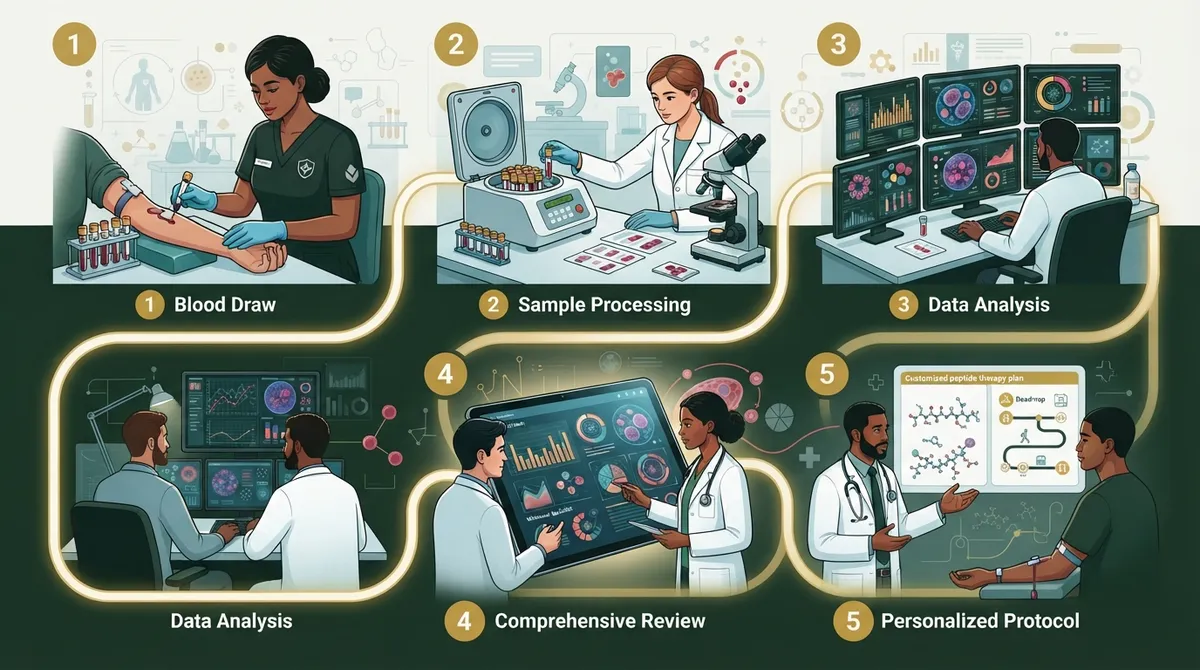
5 Steps of Blood Work Analysis for Peptide Therapy
Let’s break this down into a simple, step-by-step process. This is generally how thoughtful, medically supervised peptide therapy works from start to finish.
1. Baseline Testing Before Any Peptide Starts
This is where everything begins. Baseline blood work analysis gives your provider a clear picture of your current health. It helps identify contraindications, meaning reasons a certain peptide might not be safe for you right now. It also helps guide which peptides might actually help you reach your goals.
For example, someone interested in fat-loss peptides may need fasting glucose and lipid panels checked first. If you’re curious about the options available, this guide on 13 Peptides for Fat Loss That Really Work in 2026 explains how baseline labs connect to treatment choices.
2. Matching Your Labs to Your Peptide Goals
Once your baseline is in hand, your provider matches your results to your specific goals. Someone focused on muscle recovery needs a different lens than someone focused on weight loss or hormone balance.
- Weight management goals often focus on glucose control and metabolic markers
- Muscle and recovery goals may include IGF-1 and inflammation markers
- Hormone balance goals may include testosterone, estradiol, LH, FSH, and related tests
- Sleep and energy goals often look at thyroid function and overall metabolic health
- General longevity goals may combine several categories together
If you’re exploring hormone-focused options, this article on 8 Best Hormone Therapy Peptides for Women in 2026 shows how lab results shape personalized protocols.
3. Timing Your Blood Draw Correctly
Here’s something many people don’t realize: when you get your blood drawn matters a lot. Results can look different depending on fasting status, time of day, hydration, and even where you are in your menstrual cycle.
For growth-hormone-related peptides, timing relative to your last dose is important too. A result taken at the wrong moment can be misleading, even if your body is doing just fine. This is why working with an experienced provider who understands timing nuances is so valuable, rather than guessing on your own.
4. Interpreting the Numbers With Context
Numbers alone don’t tell the whole story. A licensed provider looks at your labs alongside your symptoms, medical history, and physical exam findings. For example, the Endocrine Society recommends monitoring IGF-1 alongside clinical assessment, adjusting doses to keep levels in a healthy, age-appropriate range rather than chasing one single number.
Here’s a simple reference table showing common thresholds used in general lab interpretation. These are general guidelines, and your provider will always personalize based on your unique situation.
| Test | General Reference Range | What It Helps Assess |
|---|---|---|
| HbA1c | Below 5.7% is typically normal | Average blood sugar over 2 to 3 months |
| eGFR | 60 or above is generally reassuring | Kidney function and filtering ability |
| IGF-1 | Age and sex specific range | Growth hormone pathway activity |
| Lipid Panel | Varies by individual risk factors | Cardiovascular health markers |
These numbers come from established clinical guidelines, including the American Diabetes Association Standards of Care and KDIGO chronic kidney disease guidelines. Your provider will always compare your results to your own history, not just a chart.
5. Ongoing Monitoring During Treatment
Blood work analysis isn’t a one-and-done event. Once you start peptide therapy, your provider will likely recheck certain markers to see how your body is responding. This helps catch any changes early and allows for dose adjustments if needed.
Growth-hormone-related peptides, for instance, can affect insulin sensitivity and fluid balance. Weight-loss peptides may require monitoring of glucose control and hydration status, especially if you experience gastrointestinal symptoms. If you’re curious about the ongoing process, this article on How to Understand GLP-1 Peptide Therapy in 2026 walks through what monitoring looks like for these popular treatments.
Common Blood Panels by Peptide Category
Different peptides call for different testing priorities. Here’s a simple breakdown to help you understand what your provider might recommend based on your goals.
| Peptide Category | Common Testing Focus | Example Peptides |
|---|---|---|
| Growth Hormone Support | IGF-1, glucose, thyroid | Sermorelin, CJC-1295, Ipamorelin |
| Weight Management | Glucose, kidney function, weight trends | GLP-1 based medications |
| Recovery and Healing | Inflammation markers, general metabolic panel | BPC-157 |
| Hormone Balance | Testosterone, estradiol, LH, FSH | Hormone-support peptides |
To learn more about recovery-focused options, check out 9 BPC-157 Peptide Facts to Know Before You Start. And if you’re weighing hormone therapy against peptide-based approaches, this comparison on Testosterone vs. Peptides for Women: Which Wins? is a great next read.
What Blood Work Analysis Cannot Tell You
It’s important to be honest here, because trust matters. Blood work analysis is incredibly useful, but it has limits. A normal lab result does not prove that an unapproved or compounded peptide is pure, effective, or safe. Routine blood tests generally cannot identify every peptide in your system or confirm product authenticity.
This is one reason sourcing matters so much. Working with a licensed provider who uses trusted pharmacies protects you in ways a blood test alone cannot. According to the National Library of Medicine, unapproved research peptides often lack standardized dosing and validated safety monitoring, which makes professional oversight essential.
Questions to Ask Before Starting Peptide Therapy
- What specific blood tests will I need before starting?
- How often will my labs be rechecked during treatment?
- What symptoms should prompt me to call my provider right away?
- How does my medical history affect which peptides are safe for me?
- Where does my peptide come from, and is it properly sourced?
If you want a broader roadmap for getting started safely, this guide on How to Start Peptide Therapy Safely and See Real Results covers the full process from consultation to results.
Special Considerations Worth Knowing
Athletes and Anti-Doping Rules
If you compete in regulated sports, please check current anti-doping rules before starting any peptide. The 2026 World Anti-Doping Agency Prohibited List, effective January 1, 2026, includes peptide hormones, growth factors, and related substances. Rules can change, so always verify directly with your sport’s anti-doping authority before beginning treatment.
Existing Health Conditions
People with diabetes, thyroid disease, kidney disease, or liver disease need extra care during blood work analysis. These conditions can affect how your body processes peptides and how your labs should be interpreted. A licensed provider will factor this into your entire treatment plan, not just your starting labs.
Why Personalized Care Makes All the Difference
Here’s the heart of it: blood work analysis works best when it’s paired with a real conversation, a thorough medical history review, and ongoing support. Numbers on a page mean much more when someone who knows what they’re looking at explains them to you clearly.
At Allura Longevity, every client starts with a simple virtual consultation, followed by comprehensive blood work through LabCorp. From there, licensed providers, led by board-certified Family Nurse Practitioner Ashley, build a personalized six-month plan just for you. Peptides are shipped right to your home, and your labs are monitored along the way so adjustments can happen when needed.
Curious how this compares to visiting a local clinic in person? This comparison on Local Clinic vs. Telehealth: Best Peptide Therapy Near You? breaks down the pros and cons of each option.
A Quick Recap of the Five Steps
- Get baseline testing before starting any peptide
- Match your lab results to your specific health goals
- Time your blood draw correctly for accurate results
- Interpret your numbers alongside symptoms and history
- Continue monitoring throughout your treatment journey
Following these five steps helps you avoid guesswork and gives you real confidence in your treatment plan. It also helps your provider catch small issues before they become bigger problems.
Ready to Understand Your Own Blood Work?
You don’t have to figure this out alone, and honestly, you shouldn’t try to. Blood work analysis is powerful, but it works best alongside a caring, knowledgeable provider who takes time to explain what your numbers mean for your body and your goals. That’s exactly the kind of care Allura Longevity was built to offer, with licensed providers, personalized plans, and support that meets you where you are.
If you’re ready to take the next step toward feeling more energized, balanced, and like yourself again, why not start with a conversation? Request a consultation today and see what a personalized, blood-work-guided peptide plan could look like for you. Spots are limited each month, so don’t wait too long to reach out.
FAQs
Q: What blood tests are needed before starting peptide therapy?
A: It really depends on your goals and health history, but common baseline tests include a complete blood count, metabolic panel, fasting glucose, lipid panel, and thyroid function. Your provider may add hormone testing or IGF-1 depending on which peptide you’re considering. The great news is you don’t need to figure this out alone, your provider will guide you through exactly what’s needed.
Q: How often should blood work be done while taking peptides?
A: Most people recheck labs periodically throughout treatment, often every few months, though it can vary based on the peptide and your response. Ongoing monitoring helps your provider fine-tune your plan and catch any changes early. Think of it as a friendly check-in with your body, not a one-time test.
Q: Can blood tests detect whether a compounded or research peptide is genuine?
A: Unfortunately, no, routine blood work generally cannot confirm that an unapproved peptide is pure or authentic. That’s exactly why sourcing from a trusted, licensed provider matters so much. Blood work shows how your body is responding, but it doesn’t replace careful product sourcing.
Q: Does peptide therapy affect blood sugar, cholesterol, or liver function?
A: It can, depending on the specific peptide and your individual health profile. This is exactly why baseline and follow-up blood work analysis is so important throughout treatment. Your provider will watch these markers closely and adjust your plan if anything needs attention.
Q: Should I fast before peptide-therapy blood work?
A: In many cases, yes, especially if glucose or lipid testing is included in your panel. However, timing can also depend on your specific peptide and dosing schedule. Your provider will give you clear, simple instructions so you know exactly what to do before your appointment.





