
Key Takeaways
-
Stem cells are undifferentiated cells that can transform into specialized tissues and self-renew, making them valuable for regenerative medicine and tissue repair.
-
Peptides and stem cells are fundamentally different: peptides are short amino acid chains that send cellular signals, while stem cells are living cells that multiply and differentiate into tissue types.
-
Stem cells work primarily through paracrine signaling by releasing growth factors, cytokines, and peptides that tell nearby cells to repair, grow, or reduce inflammation rather than by physically becoming new tissue.
-
Stem cell-derived peptides offer a cell-free approach that may provide similar healing benefits to live stem cells while avoiding risks like poor cell survival and abnormal growth.
-
Most stem cell treatments for anti-aging and pain relief remain investigational and are not FDA-approved, requiring treatment with licensed medical providers who monitor bloodwork and ensure personalized care.
-
Mesenchymal stem cells (MSCs) are the most studied type in adult regenerative medicine because they can calm inflammation and release helpful compounds with a strong safety profile in research.
If you have spent any time reading about peptide therapy, you have probably run into the term “stem cells.” Maybe you saw it on a wellness blog, heard it from a friend, or noticed it while researching how to feel younger and stronger. It is a confusing topic, even for people who love digging into health science. So let’s clear things up together, in plain language, with no white coat required.
This guide breaks down what stem cells actually are, how they connect to peptides, and why this matters if you are exploring regenerative wellness options. Whether you are a busy professional squeezing in research between meetings, a biohacker who loves data, or someone simply trying to age well, this article is for you. By the end, you will understand the real science, not just the buzzwords, and how it fits into a smart, personalized approach to health like the ones offered through peptides for women and peptides for men programs.
1. Stem Cells Are the Body’s Master Building Blocks
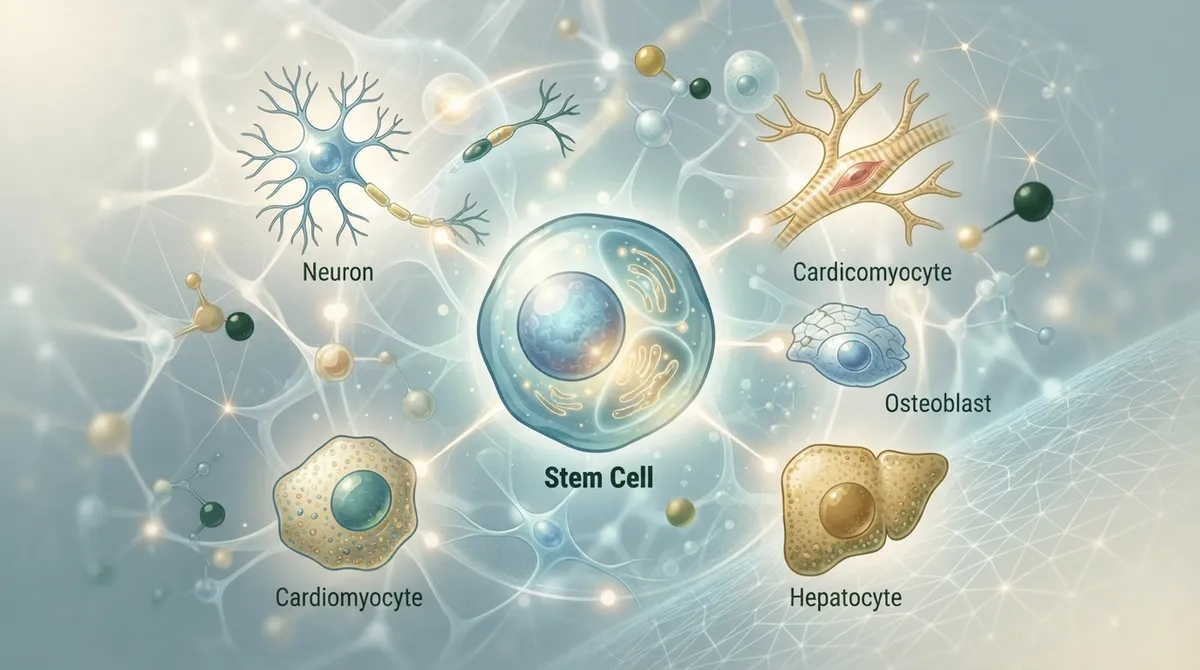
Stem cells are undifferentiated cells. That means they have not decided what they want to be yet. They can turn into muscle, skin, bone, or other specialized cells depending on what the body needs.
This ability makes them incredibly important in regenerative medicine. Think of them as blank puzzle pieces that can shape themselves to fill whatever gap your body is missing.
2. Self-Renewal Is Their Superpower
Stem cells can also copy themselves. This is called self-renewal. It means one stem cell can create more stem cells, keeping a steady supply ready for repair work.
This is a big reason researchers get excited about them. A renewable resource for healing sounds like something out of science fiction, but it is very real biology.
3. Mesenchymal Stem Cells (MSCs) Are the Stars of the Show
When people talk about stem cells in adult regenerative medicine, they usually mean mesenchymal stem cells, or MSCs. These cells are popular because they can calm inflammation and release many helpful compounds.
MSCs are found in bone marrow, fat tissue, and other areas of the body. They are widely studied because of their flexibility and their strong safety profile in early research settings.
4. Stem Cells Talk to Your Body Through Signals
Here is something many people do not realize. Stem cells do not always work by physically becoming new tissue. Often, they work by sending signals.
This process is called paracrine signaling. Stem cells release growth factors, cytokines, tiny packages called extracellular vesicles, and peptides. These signals tell nearby cells to repair, grow, or calm down inflammation.
5. Peptides Are the Messengers, Not the Cells
This is the part that trips people up the most. Peptides and stem cells are not the same thing. Peptides are short chains of amino acids. They act like tiny messages sent between cells.
Stem cells, on the other hand, are living cells that can multiply and turn into other cell types. If you want a full breakdown of what these amino acid messengers actually do, check out this helpful guide on 14 Facts That Explain the Peptide Therapy Definition. You can also learn more from this general overview of what are peptides from a trusted medical source.
Quick Comparison: Stem Cells vs. Peptides
| Feature | Stem Cells | Peptides |
|---|---|---|
| What they are | Living, self-renewing cells | Short chains of amino acids |
| Main function | Differentiate into tissue types | Signal cells to perform specific actions |
| Delivery method | Often injected directly into tissue | Injectable, often at-home, small doses |
| Regulatory status | Many uses remain investigational | Some FDA-approved, others investigational |
| Typical goal | Tissue regeneration, repair | Targeted signaling for repair, metabolism, or hormone support |
6. Stem Cell-Derived Peptides Are a Growing Research Area
Scientists have discovered that stem cells release their own peptides as part of their healing signals. These are sometimes called stem cell-derived peptides.
Researchers are interested in these because they might offer some of the same benefits as live stem cells, without needing to inject actual cells into the body. This is described as a cell-free approach, and it may sidestep some challenges tied to live-cell therapy.
7. Why a Cell-Free Approach Matters
Live stem cell therapy comes with real challenges. Cells might not survive long after injection. There is also a small but real concern about abnormal cell growth in certain settings.
A peptide-based, cell-free approach may reduce some of these risks while still tapping into similar healing signals. This is one reason peptide therapy has become such a popular starting point for people exploring regenerative wellness.
8. Peptides May Help Stem Cells Work Better
Some early research suggests certain peptides can support stem cell survival, movement, growth, and specialization. In simple terms, peptides may help stem cells do their job more effectively.
This is still an evolving area of science. Much of the current evidence comes from lab studies and animal research rather than large human trials, so it is important to stay realistic about what is proven versus promising.
9. Real Research: What Studies Actually Show
Let’s ground this in real findings, not hype. Here are a few key research highlights worth knowing:
- A study using self-assembling peptides combined with stem cells found improved blood vessel formation in animal models with restricted blood flow, along with reduced tissue scarring.
- Reviews on tissue engineering describe how short peptides can influence whether a stem cell becomes bone, cartilage, or another tissue type.
- Research into bioactive peptides shows they can support stem cell growth conditions in lab settings, which may help scale up future therapies.
- Scientific commentary has raised concerns about low survival rates of injected stem cells, though solid human trial data on this specific claim remains limited.
For readers who want a deeper scientific dive, the National Library of Medicine offers peer-reviewed research on regenerative mechanisms involving cellular signaling.
10. Types of Stem Cells You Might Hear About
Not all stem cells are the same. Here is a simple breakdown:
- Mesenchymal stem cells (MSCs): Found in bone marrow and fat tissue, widely studied for inflammation and repair support.
- Hematopoietic stem cells: Found in bone marrow, responsible for creating blood cells.
- Induced pluripotent stem cells (iPSCs): Adult cells reprogrammed in a lab to act like early-stage stem cells.
- Embryonic stem cells: Highly flexible cells, though their use is limited due to ethical and regulatory concerns.
11. Is Stem Cell Therapy FDA-Approved?
This is one of the most common questions people ask, and it deserves an honest answer. Most stem cell treatments for anti-aging or pain relief are not FDA-approved. Many protocols remain investigational.
This does not mean the science is fake. It means the research is still developing, and treatments should be approached carefully, ideally with guidance from a licensed medical provider who understands the current evidence.
12. Where Peptide Therapy Fits Into the Picture
So how does all this stem cell science connect to peptide therapy programs like the ones offered through Allura Longevity? Peptide therapy focuses on using specific, well-studied peptides to support the body’s own repair and signaling systems.
Instead of injecting live cells, peptide therapy uses targeted amino acid chains to encourage the body to do what it already knows how to do: heal, regenerate, and function optimally. This approach pairs nicely with looking at bloodwork and building a truly personalized plan, something you can learn more about in How to Start Peptide Therapy Safely and See Real Results.
Popular Peptide Goals Connected to Regenerative Science
| Goal | Related Peptide Category | Learn More |
|---|---|---|
| Injury and tissue repair | BPC-157 | 9 BPC-157 Peptide Facts to Know Before You Start |
| Muscle recovery | Growth hormone peptides | 14 Peptides for Muscle Gain Worth Knowing (2026) |
| Weight management | GLP-1 peptides | How to Understand GLP-1 Peptide Therapy in 2026 |
| Skin and collagen support | Collagen-stimulating peptides | How to Trigger Collagen Stimulation With Peptides |
13. How to Approach Regenerative Wellness Safely
If you are considering any type of regenerative therapy, whether stem cell-based or peptide-based, safety should come first. Here is a simple checklist to follow:
- Get comprehensive blood work done before starting any treatment.
- Work with a licensed medical provider, not an unregulated clinic.
- Ask for evidence behind any specific peptide or protocol suggested.
- Understand what is FDA-approved versus investigational.
- Choose a provider who offers ongoing monitoring and adjustments.
This is exactly the model used at Allura Longevity, where clients start with a simple virtual consultation, complete labs through LabCorp, and receive a personalized six-month plan built around their actual results, not guesswork.
14. Why Personalized, Licensed Care Matters Most
At the end of the day, the science of stem cells and peptides is exciting, but it only helps you if it is applied correctly. A cookie-cutter plan will not account for your hormone levels, your goals, or your health history.
This is why working with a licensed provider matters so much. Ashley, a board-certified Family Nurse Practitioner, leads the care team at Allura Longevity, ensuring every plan is built around real bloodwork and real goals, not trends. If you want to explore how personalized peptide therapy could support your energy, recovery, or longevity goals, you can request a consultation to get started.
Bringing It All Together
Stem cells are fascinating because they represent the body’s natural ability to repair and renew itself. Peptides tap into that same signaling system in a more targeted, accessible way. Together, they represent some of the most exciting areas in modern regenerative wellness.
Understanding the difference between the two, and how they may work together, helps you make smarter decisions about your health. If you are ready to explore a personalized, medically supervised approach to feeling stronger, sharper, and more energized, Allura Longevity offers telehealth peptide therapy with real bloodwork, real monitoring, and real support. Spots are limited each month, so if you are curious, now is a great time to schedule your consultation and start your personalized plan.
FAQs
Q: What are stem cells in regenerative medicine?
A: Stem cells are undifferentiated cells that can turn into many different tissue types and copy themselves through self-renewal. In regenerative medicine, they are valued for their ability to support repair and reduce inflammation throughout the body.
Q: How do stem cells and peptides work together?
A: Stem cells release signaling molecules, including peptides, that tell nearby tissue to repair and regenerate. Some research also suggests peptides can help stem cells survive, grow, and function more effectively, though more human studies are needed.
Q: What is the difference between stem cell therapy and peptide therapy?
A: Stem cell therapy uses living cells that can multiply and become new tissue types, while peptide therapy uses short amino acid chains that send specific signals to your body. Peptide therapy is often easier to access and can be delivered safely through telehealth programs.
Q: Are stem cell-derived peptides the same as peptide therapy?
A: Not exactly. Stem cell-derived peptides come from the natural signals stem cells release, while peptide therapy typically uses lab-created peptides chosen for specific goals like recovery, metabolism, or energy support.
Q: Is stem cell therapy FDA-approved for anti-aging or pain treatment?
A: Most stem cell treatments for anti-aging or pain relief are still considered investigational and are not FDA-approved. That is why working with a licensed provider who understands current research is so important before starting any regenerative treatment.





