
Key Takeaways
-
Current evidence does not show that peptide therapy reverses skin aging; peptides may modestly improve appearance like hydration, fine lines, and elasticity, depending on the product and route.
-
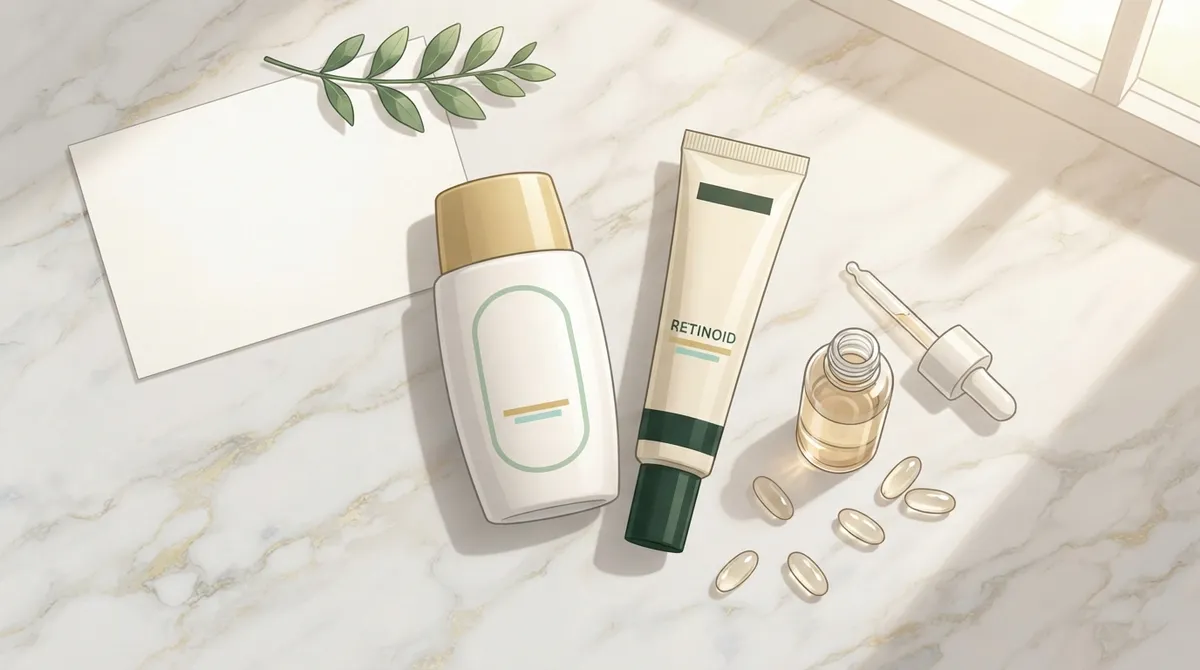
Sunscreen, prescription retinoids, and in-office dermatology procedures have stronger evidence for skin aging than peptides and should form the foundation of any plan.
-
Oral collagen peptides showed moderate improvements in skin hydration and elasticity in a 2026 meta-analysis of 35 trials, but did not reliably change wrinkles or deeper skin structure.
-
Topical peptide research is still small, with only nine eligible studies in a 2024 systematic review, and the authors described the evidence as limited.
-
Skin changes from peptide products generally take at least 12 weeks, so be skeptical of any product promising dramatic results in days.
-
Compounded and research-use-only peptides are not FDA-approved, so injectable peptides should only be considered under the guidance of a licensed clinician.
You look in the mirror, spot a few new fine lines, and wonder if there is a quick fix. Peptides keep popping up in your feeds. Serums, supplements, injections. Every label promises glowing, younger skin. So, can peptides reverse skin aging? Let’s talk about it honestly, like friends over coffee.
Here is the short answer. Peptides may help some signs of aging look better in certain forms. But current evidence does not show that peptide therapy reverses skin aging. That is an important difference, and we think you deserve the full picture before you spend a dime.
In this guide, we walk through 15 facts. We cover topical products, oral collagen, and injectable options. We also explain what the research says, what it does not say, and how to make smart choices. Whether you are a health optimizer, a busy professional, or just curious, you will leave with clear, honest answers.
Fact 1: Peptides Are Simply Short Chains of Amino Acids
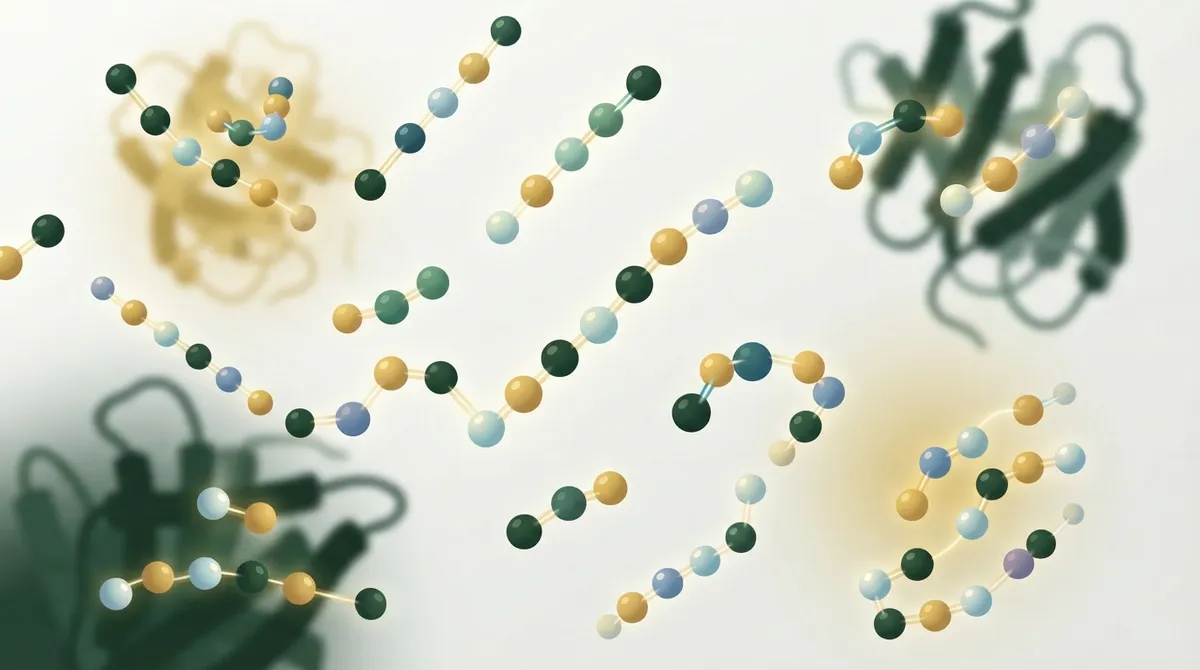
Let’s start with the basics. Peptides are short chains of amino acids, the building blocks of proteins. Your body makes thousands of them. They act like tiny messengers, telling cells what to do. You can learn more in this simple guide on what are peptides.
The word “peptide” is very broad. A skin serum peptide, a collagen powder, and an injectable therapy are all called peptides. But they are very different products. Results from one cannot be assumed for another.

Fact 2: Reversing Skin Aging Is Not What the Evidence Shows
Some studies report better hydration, softer fine lines, or improved texture. Those are nice wins. But they are not the same as reversing the aging process or restoring youthful skin for good.
Think of it like this. A good moisturizer can make your skin look better today. That does not mean it turned back the clock. Peptides may help appearance. The science does not support a promise of true reversal.
Fact 3: Three Routes, Three Different Stories
Not all peptide products work the same way, and the research is not interchangeable. Here is a simple comparison to keep things clear.
| Route | What It Is | What Research Suggests |
|---|---|---|
| Topical peptides | Serums and creams applied to skin | Limited studies; some show modest improvement in fine lines or texture |
| Oral collagen peptides | Powders, capsules, drinks | Better hydration and elasticity in trials; structural changes less convincing |
| Injectable or systemic peptides | Prescribed peptide therapy | Not enough reliable human evidence for cosmetic skin reversal |
Notice the pattern. The stronger data sits with topical and oral products, and even that data is modest. For injectable peptides, the human cosmetic evidence is still thin.
Fact 4: Topical Peptide Research Is Still Small
A 2024 systematic review of topical peptide and exosome studies found only nine eligible peptide studies. Some reported better fine lines, texture, or elasticity. But the authors described the evidence as limited and noted a lack of robust research.
Of the studies assessed, three found improvement in the look of fine lines or wrinkles. Results for elasticity were mixed. So topical peptides are not useless. They just do not have the deep research backing that bold marketing might suggest.
Fact 5: Oral Collagen Peptides Show Some Promise
Oral collagen has been studied more widely. A 2026 meta-analysis of 35 randomized controlled trials with 2,534 participants found improvements in skin hydration and elasticity. The effect sizes were moderate.
- Hydration: SMD 0.44 (95% CI 0.15 to 0.73)
- Elasticity: SMD 0.62 (95% CI 0.15 to 1.10)
- Wrinkles and dermal density: not robust after sensitivity analyses
In plain words, collagen supplements may help skin feel more hydrated and bouncy. They did not reliably change deeper structure. And these findings should not be applied to other peptides. If you want to dig deeper, see our take on collagen peptide wrinkle mistakes to avoid in 2026.
Fact 6: Patience Matters (Think 12 Weeks or More)
Good skin changes take time. In that same 2026 oral collagen analysis, improvements in elasticity and skin barrier measures generally needed at least 12 weeks of use. Skin cells turn over slowly, so a week or two will not tell you much.
This is a helpful reality check. If a product promises dramatic change in days, be skeptical. For a realistic view of timing, check out how long until peptides improve skin.
Fact 7: Wrinkle Effects Have Been Modest at Best
A separate 2026 systematic review and meta-analysis looked at 19 randomized trials with 1,341 participants. It reported a small pooled wrinkle effect (MD 0.27, p=0.04). Findings for elasticity and density were inconsistent.
The authors called for larger trials and standardized outcomes. That tells us the science is still growing. It is not a closed case in either direction.
Fact 8: Lab and Animal Studies Do Not Equal Real-World Skin Results
You may see peptides praised for wound healing or tissue repair. Those findings often come from lab dishes or animal studies. They are interesting, but they do not prove a cosmetic benefit for human skin.
It is a bit like testing a recipe in a test kitchen. It might work, but you still have to see how it tastes at the dinner table. Human trials with skin-aging outcomes are what matter most here.
Fact 9: Injectable Peptides for Skin Lack Strong Human Proof
This is where we want to be extra clear. There is not enough reliable human evidence to say that injectable or systemic peptides marketed for skin rejuvenation are safe and effective for reversing skin aging.
That does not mean peptide therapy has no place in a wellness plan. Many people use it for energy, recovery, sleep, and metabolism under medical guidance. But skin reversal claims should be treated with caution. To explore this further, read do peptides for skin regeneration really work in 2026.
Fact 10: Compounded and Research-Use-Only Products Are Not FDA-Approved
Here is a safety point worth knowing. In the United States, compounded drugs are not FDA-approved. The FDA does not review them for safety, effectiveness, or quality before they are marketed.
Compounding can be appropriate for specific patient needs. But it is not the same as FDA approval. And research-use-only products are not meant for human use at all. Always ask where a product comes from and who is overseeing your care. Our guide on approved peptides vs. wellness peptides explains the difference well.
Fact 11: A Licensed Clinician Should Guide Any Injectable Plan
If you are curious about injectable or compounded peptides, talk with a licensed clinician first. They can review your history, order blood work, and explain risks. This is not the place for guesswork or online shortcuts.
Not sure who to trust? Our article on who can explain peptide therapy safely is a helpful starting point.
Fact 12: Some Treatments Have Stronger Evidence Than Peptides
Want to know what works best for skin aging? Several basics have far stronger support than peptides. Here are the heavy hitters worth putting first.
- Daily sunscreen. Sun damage is a major driver of visible aging.
- Prescription retinoids. These are well studied for fine lines and texture.
- Good sleep and nutrition. Your skin repairs itself while you rest.
- Not smoking. Smoking speeds up skin aging.
- Dermatology procedures. In-office options have clinical track records.
Peptides can sit alongside these habits as a possible extra. They should not replace the foundations.
Fact 13: Injectables May Carry Risks You Should Know About
Any injectable product can cause side effects. These may include redness, swelling, injection-site irritation, or allergic reactions. Because evidence for skin use is limited, the full risk picture is also less clear.
That is why medical supervision matters so much. You can learn more about spotting concerns in 7 peptide therapy side effects you should know.
Fact 14: Peptide Therapy Is Better Seen as Whole-Body Wellness
When used under medical care, peptide therapy is usually aimed at broader goals. Think energy, recovery, sleep, metabolism, and healthy aging. Skin may look better as part of overall wellness, but that is different from a direct reversal claim.
For a balanced view of the bigger picture, see can peptide therapy really help slow aging. It is also smart to read the National Library of Medicine research on peptides to see how scientists describe this field.
Fact 15: Personalization Beats One-Size-Fits-All Hype
Your skin, hormones, lifestyle, and goals are unique. A generic product from a social media ad cannot account for that. A personalized plan built on real lab data is a smarter path, especially if you are considering anything beyond a simple serum.
At Allura Longevity, licensed medical providers design customized plans based on your blood work and health goals. Care is delivered by telehealth, with peptides shipped to your door. Allura is licensed in Florida, Georgia, Texas, Connecticut, Indiana, Maryland, New York, and California. Curious how plans come together? Read 15 ways a peptide therapy plan gets personalized.
How to Make a Smart Skin-Aging Plan in 2026
Ready to put this into action? Here is a simple, honest roadmap you can follow.
- Protect first. Use broad-spectrum sunscreen every day.
- Build the basics. Add a gentle cleanser, moisturizer, and a dermatologist-approved active.
- Try one new thing at a time. If you test a peptide serum or collagen powder, give it at least 12 weeks.
- Skip the shortcuts. Avoid research-use-only products and unverified sellers.
- Get expert input. Talk with a licensed clinician before starting injectables.
Want to compare options before you commit? Our guide on topical vs. injectable skin peptides can help you decide.
Wrapping Up: Honest Hope Beats Big Promises
So, can peptides reverse skin aging? The honest answer is no, not based on what the evidence shows today. Peptides may modestly improve certain visible signs, like hydration, elasticity, and fine-line appearance, depending on the product and route. That is real, and it is worth knowing about.
But true reversal is a promise that science cannot back up yet. The best approach is steady, evidence-based skin care, plus a personalized wellness plan if peptide therapy fits your goals. You deserve clear information, not hype.
If you are ready to talk with a licensed provider about whether peptide therapy makes sense for you, request a consultation with Allura Longevity. Telehealth is available in our licensed states, and spots for new clients are limited each month. Call (813) 510-6277 to get started.
FAQs
Q: Can peptide therapy reverse skin aging or only improve its appearance?
A: Current evidence does not show that peptide therapy reverses skin aging. Some products may modestly improve things like hydration, fine lines, or elasticity, but that is different from turning back the clock. It’s best to think of peptides as a possible helper, not a miracle.
Q: What is the difference between topical peptides, oral collagen peptides, and injectable peptide therapy?
A: Topical peptides are creams or serums you apply to the skin, oral collagen peptides are supplements you swallow, and injectable therapy is prescribed and given by injection. Each works differently and has its own research. Results from one route should never be assumed for another.
Q: Are compounded or research-use-only peptides FDA-approved for skin aging?
A: No. Compounded drugs are not FDA-approved, and the FDA does not review them for safety, effectiveness, or quality before marketing. Research-use-only products are not intended for human use at all, so it’s wise to work with a licensed clinician.
Q: How long might it take to see changes from topical or oral peptide products?
A: Be patient with your skin. In oral collagen research, improvements in elasticity and skin barrier measures generally needed at least 12 weeks of use. Topical products also take time, since skin renews itself slowly.
Q: Which skin-aging treatments have stronger evidence than peptide therapy?
A: Daily sunscreen, prescription retinoids, and certain in-office dermatology procedures have stronger track records. Healthy habits like good sleep and not smoking matter too. Peptides can be an add-on, but they should not replace these proven basics.





