

Key Takeaways
-
Legitimate hormone and peptide therapy clinics must require blood work before starting treatment and use established labs like LabCorp; skipping this step is a major red flag.
-
Telehealth hormone therapy is now viable in many states without in-person visits, offering at-home lab kits and direct medication delivery that fits busy schedules better than traditional clinics.
-
Modern hormone clinics combine multiple therapies (TRT, BHRT, peptides like sermorelin and BPC-157) into personalized plans addressing specific goals like weight loss, energy, injury recovery, or menopause symptoms.
-
Average hormone and peptide therapy costs range from $300–$800 monthly with $500–$1,200 initial setup fees, but pricing varies widely; always confirm directly with providers and watch for suspiciously low prices.
-
Always verify provider credentials directly with the clinic, confirm state licensing for telehealth services, check for board certifications, and read real patient reviews before committing to any hormone therapy program.
-
Different goals require different treatment approaches: weight loss uses GLP-1 peptides, injury recovery uses BPC-157/TB-500, low energy uses sermorelin/CJC-1295, and menopause uses BHRT with supportive peptides.
Searching for “hormone therapy near me” usually means you’re ready for a change. Maybe you’re tired all the time. Maybe your workouts don’t help like they used to. Or maybe you just want to feel like yourself again. Good news: you have more options than ever in 2026, and many of the best ones don’t even require leaving your couch.
Today’s hormone optimization world blends traditional hormone therapy with peptide therapy, a newer approach that supports energy, recovery, metabolism, and healthy aging. Clinics across the country now offer both, often through telehealth. This guide breaks down exactly how to find the right care, what to look for, and why a local address isn’t always the most important factor anymore.

1. Understand What “Hormone Therapy Near Me” Really Means Today
A few years ago, this search would point you to a local endocrinologist’s office. Now it often leads to clinics offering a mix of hormone optimization and what are peptides therapies, including testosterone replacement therapy (TRT), bioidentical hormone therapy (BHRT), and targeted peptide protocols. These clinics treat the whole picture, not just one hormone number on a lab report.
This shift matters because peptides and hormones often work together. For example, sermorelin and CJC-1295 support your body’s natural growth hormone production, while TRT addresses testosterone directly. Many providers now combine these approaches into one personalized plan.
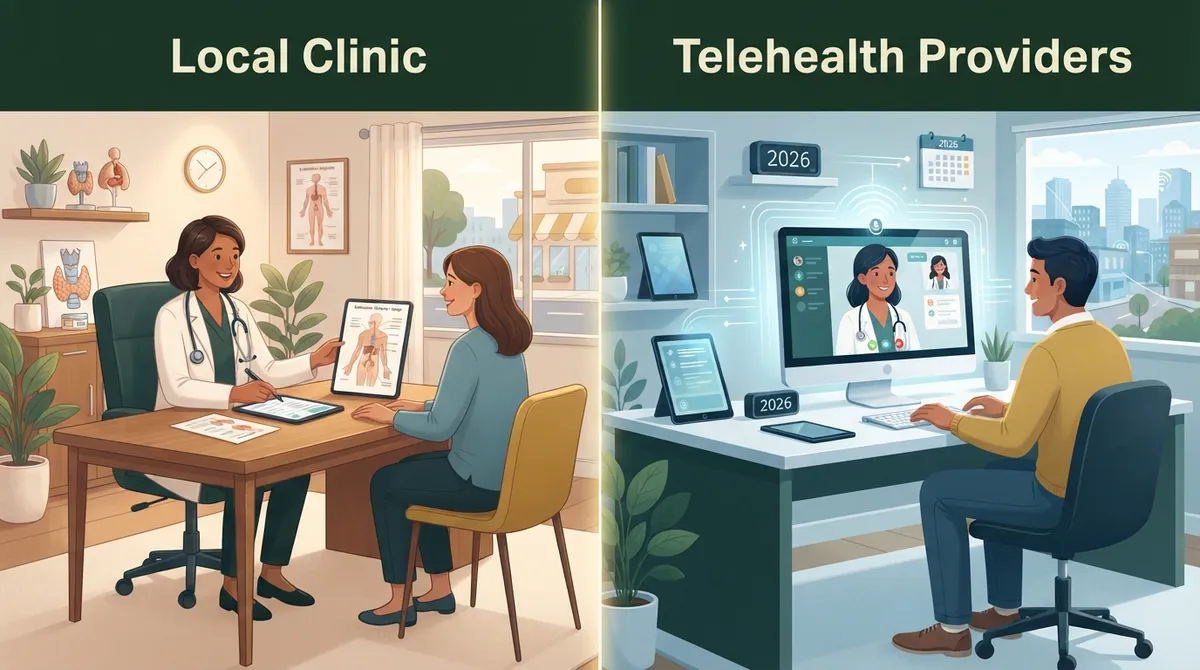
2. Know the Difference Between Local Clinics and Telehealth Providers
Here’s something that surprises a lot of first-time searchers: you don’t always need an in-person visit. Many reputable providers now offer virtual consultations, at-home lab kits, and medication delivered right to your door.
According to industry directories, clinic listings increasingly show both in-person and telehealth options side by side. This flexibility helps busy professionals, parents, and anyone who just doesn’t want to sit in a waiting room. If you’re weighing your options, this comparison of local clinic vs. telehealth peptide therapy breaks down the pros and cons of each approach.
Quick Comparison: In-Person vs. Telehealth Hormone Therapy
| Feature | In-Person Clinic | Telehealth Provider |
|---|---|---|
| Initial Visit | Office appointment required | Virtual consultation from home |
| Lab Work | Drawn on-site | Done at local LabCorp, results reviewed remotely |
| Medication Delivery | Pick up at clinic or pharmacy | Shipped directly to your home |
| Follow-Ups | In-person visits | Video or phone check-ins |
| Time Commitment | Higher (travel, waiting room) | Lower (fits into your schedule) |
3. Check How Many Providers Actually Serve Your Area
The peptide and hormone therapy market has grown fast. One major directory, MyPeptideMatch, lists more than 4,733 peptide therapy and TRT clinics across 46 states. Florida alone has 652 listed clinics across 88 cities, while Georgia has 104 clinics spread across 20 cities.
Smaller directories like the Peptide Association list around 160 vetted providers nationwide, and PeptideBase tracks 2,746 providers across the US, UK, Canada, Australia, and New Zealand. These numbers tell you one thing clearly: options are everywhere, but quality varies a lot.
4. Know Which Peptides and Hormones Are Commonly Offered
Not every clinic offers the same menu. Before booking, it helps to know what’s typically available so you can ask smart questions. Here’s a simple breakdown of common offerings.
- Semaglutide and tirzepatide: GLP-1 medications used for weight management and metabolic support
- BPC-157: Popular for injury recovery, gut health, and tissue repair
- TB-500: Often paired with BPC-157 for recovery and mobility
- Sermorelin and CJC-1295: Support natural growth hormone release for energy and recovery
- Testosterone replacement therapy (TRT): For men with low testosterone symptoms
- Bioidentical hormone therapy (BHRT): Often used for women navigating perimenopause and menopause
If you want a deeper dive into the science, this article on what peptides actually are and how they work is a great starting point.
5. Compare Pricing Before You Commit
Pricing in this space isn’t standardized, and that can feel confusing. One 2026 industry estimate suggests average monthly treatment costs range from $300 to $800, with initial setup costs between $500 and $1,200. Keep in mind, these are marketing estimates from directory sites, not regulated benchmarks, so always confirm pricing directly with a provider.
Typical Cost Ranges to Expect
| Service Type | Estimated Monthly Cost | Initial Setup Cost |
|---|---|---|
| Peptide Therapy (general) | $300–$800 | $500–$1,200 |
| GLP-1 Weight Loss Programs | Varies by dose and provider | Consultation + labs |
| TRT Programs | Varies by clinic | Lab work required |
Some providers, including telehealth-based clinics, keep costs more transparent by bundling consultations, labs, and medication into one plan. Allura Longevity, for example, starts new clients with a simple $50 virtual consultation before building a custom plan.
6. Ask About Lab Work Before You Start Anything
Any legitimate hormone or peptide program should start with blood work. This isn’t just a formality. Your hormone levels, metabolic markers, and overall health picture determine what treatment actually makes sense for you.
Reputable clinics typically use established labs like LabCorp to keep testing accurate and consistent. Skipping this step is a red flag. If a clinic offers peptides or hormones without ever reviewing your labs, that’s a sign to look elsewhere.
7. Verify Provider Credentials Every Time
This step matters more than almost anything else on this list. Directories consistently stress verifying credentials directly with the clinic before starting therapy. Here’s a simple checklist to run through.
- Confirm the provider is licensed in your state
- Check if a doctor, nurse practitioner, or physician assistant oversees your care
- Ask who reviews your lab results and adjusts your plan
- Look for board certifications relevant to hormone or peptide therapy
- Read reviews from real patients, not just clinic testimonials
According to the National Library of Medicine, proper medical oversight is essential when using peptide-based treatments, since dosing and individual response can vary significantly between patients.
8. Understand State Licensing and Telehealth Rules
Telehealth regulations differ by state, which affects what a provider can legally offer you. This is why licensed telehealth clinics list their approved states clearly.
For example, Allura Longevity is licensed in Florida, Georgia, Texas, Connecticut, Indiana, Maryland, New York, and California. If you live in one of these states, you can access personalized peptide therapy without ever visiting a physical office.
9. Match the Treatment to Your Specific Goal
“Hormone therapy near me” means something different to everyone. Someone recovering from a knee injury needs a different plan than someone managing menopause symptoms or trying to lose 30 pounds. Here’s how goals typically map to treatments.
- Weight loss: GLP-1 peptides like semaglutide and tirzepatide
- Injury recovery: BPC-157 and TB-500 combinations
- Low energy or poor sleep: Sermorelin or CJC-1295 protocols
- Low testosterone symptoms: TRT with ongoing lab monitoring
- Menopause-related changes: BHRT paired with supportive peptides
- Muscle recovery and performance: Growth hormone-supporting peptides
If weight loss is your main goal, this guide on peptides for fat loss that really work walks through the most effective options available right now. And if you’re curious about the broader GLP-1 category, this explainer on understanding GLP-1 peptide therapy is worth a read too.
10. Consider the Convenience Factor for Your Lifestyle
If you’re a busy professional or juggling family responsibilities, driving to appointments every few weeks isn’t realistic. This is where at-home peptide therapy really shines.
Telehealth clinics ship medications directly to your door, handle follow-ups by video, and adjust your plan remotely based on lab results. It’s healthcare that fits into your calendar instead of taking it over.
Steps to Start Telehealth Hormone and Peptide Therapy
- Book an initial virtual consultation
- Complete blood work at a local lab, such as LabCorp
- Review your results with a licensed provider
- Receive a personalized treatment plan, often for six months
- Get your peptides or hormone medications shipped to your home
- Check in regularly so your provider can adjust dosing as needed
For a full walkthrough, check out this step-by-step guide on how to start peptide therapy safely and see real results.
11. Watch for These Red Flags
Not every clinic advertising “hormone therapy near me” deserves your trust or your money. Keep an eye out for these warning signs.
- No blood work required before starting treatment
- Vague answers about provider licensing
- Pressure to buy large packages upfront
- No clear plan for follow-up monitoring
- Prices that seem too good to be true compared to industry averages
Trustworthy providers are transparent about credentials, pricing, and what’s actually included in your plan. If something feels rushed or unclear, that’s your cue to keep looking.
12. Think Beyond Weight Loss: Whole-Body Optimization
While GLP-1 medications get a lot of attention, hormone and peptide therapy can support much more. Many clients come in for weight loss and stay for the energy, sleep, and mental clarity improvements they didn’t expect.
Personalized plans often address multiple goals at once, like combining testosterone support with recovery peptides, or pairing BHRT with skin and metabolism support. This whole-body approach is part of why peptides for women and peptides for men programs are structured so differently depending on individual health goals.
13. Choose a Provider That Grows With You
Your needs at 35 look different than your needs at 55. The best hormone therapy providers build plans that adjust over time, based on real lab data and how your body responds.
This is exactly the model Allura Longevity uses. New clients start with a $50 virtual consultation, complete blood work through LabCorp, and receive a customized six-month treatment plan. Licensed providers, led by board-certified Family Nurse Practitioner Ashley, monitor progress and adjust dosing along the way. Everything ships straight to your home, and telehealth is available nationwide in licensed states.
If you’re ready to explore recovery-focused options, this resource on managing GLP-1 side effects and this guide on choosing peptides for energy can help you go into your consultation with better questions.
Finding the Right Fit Starts With One Conversation
Searching “hormone therapy near me” doesn’t have to mean settling for whatever clinic is closest to your zip code. In 2026, your best option might be a licensed telehealth provider that ships personalized peptide therapy straight to your door.
Allura Longevity makes this process simple, starting with a $50 consultation and blood work through LabCorp, followed by a custom six-month plan built around your goals. Spots are limited each month, so if you’re ready to feel more energized, recovered, and like yourself again, now’s a good time to act. You can request a consultation today or call (813) 510-6277 to speak with the team directly.
FAQs
Q: What does hormone therapy near me mean in peptide therapy?
A: It usually points you to clinics that blend traditional hormone treatments like TRT and BHRT with peptide therapy for energy, recovery, and weight management. Many of these clinics now offer telehealth, so ‘near me’ can actually mean anywhere in your licensed state, not just your zip code.
Q: How do I find a peptide therapy clinic near me?
A: Start by searching directories that let you filter by city or state, then check each clinic’s credentials and services carefully. Honestly, some of the best options today are telehealth-based, so don’t rule out providers just because they’re not local.
Q: Are peptide therapy clinics the same as TRT or BHRT clinics?
A: Not exactly, but there’s a lot of overlap these days. Many modern clinics combine peptide protocols with TRT or BHRT to create one well-rounded plan instead of treating each separately.
Q: Can I get peptide therapy online or only in person?
A: You can absolutely get peptide therapy online through telehealth, and it’s becoming the preferred option for busy people. You’ll typically do a virtual consult, complete lab work locally, then receive your medication shipped right to your door.
Q: How much does peptide therapy cost near me?
A: Costs vary quite a bit, but industry estimates suggest $300 to $800 per month, with initial setup costs between $500 and $1,200. Always confirm exact pricing with the provider since it depends on your specific treatment plan and goals.





