

Key Takeaways
-
GnRH agonists and antagonists are FDA-approved treatments with solid evidence for specific conditions like endometriosis, prescribed by reproductive endocrinologists under medical supervision—distinguish these from unproven wellness peptides.
-
Exogenous testosterone suppresses natural LH and FSH production, reducing sperm count; men wanting fertility preservation may need hCG, FSH, or hMG instead of testosterone alone.
-
Many heavily marketed peptides like BPC-157 and kisspeptin lack FDA approval for reproductive use and strong human evidence; kisspeptin research is early-stage with no large trials proving fertility restoration.
-
Start with comprehensive blood work and diagnosis from a licensed provider before any hormone treatment, as fatigue, low libido, and irregular cycles have multiple possible causes beyond hormone imbalances.
If you’ve searched “hormone therapy reproductive health” hoping for a simple answer, you’re not alone. This corner of wellness gets confusing fast, with wellness clinics promising fixes and forums full of mixed opinions. The truth is more nuanced, and honestly, more interesting than a one-size-fits-all peptide fix.
Whether you’re a busy professional trying to figure out why your energy has tanked, a biohacker who wants to understand the science before trying anything new, or simply someone hoping to feel like yourself again, this guide breaks things down in plain language. We’ll separate what’s proven from what’s still being studied, and show you where peptide therapy actually fits into the reproductive health picture. Let’s dig in together.
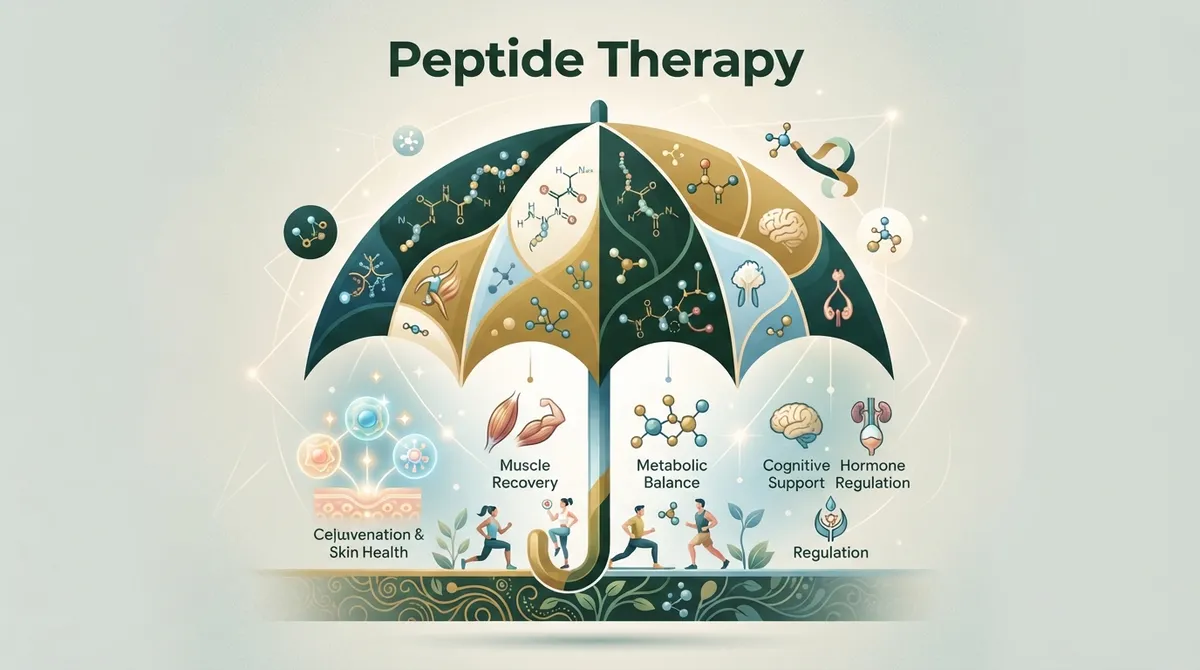
1. “Peptide Therapy” Is a Big Umbrella, Not One Treatment
Here’s the first thing to understand: “peptide therapy” isn’t a single medicine. It’s a broad category that includes dozens of different compounds, each working differently in your body. Some peptides have real, FDA-approved uses. Others are still in early research stages.
When it comes to reproductive hormone health specifically, this distinction matters a lot. A peptide that helps with muscle recovery has nothing to do with one used for fertility support. Learning to tell these apart protects your health and your wallet. If you want a foundational primer, our guide explaining what peptides actually are is a great place to start.
2. Some Peptides Have Real, Approved Roles in Reproductive Care
Not everything in this space is unproven. GnRH agonists and antagonists, for example, are established treatments used by specialists for conditions like endometriosis. A 2023 clinical review confirmed these injectable and oral medications have solid, condition-specific evidence behind them, according to the National Library of Medicine.
In specialist fertility care, pulsatile GnRH and gonadotropins may also help selected patients whose infertility stems from hypothalamic or pituitary issues. These aren’t general wellness treatments though. They’re prescribed for specific diagnoses, under close medical supervision, often by reproductive endocrinologists.
Why This Distinction Matters
Marketing language can blur the line between “approved medical treatment” and “trendy wellness peptide.” Knowing which category something falls into helps you ask better questions before starting anything.
3. GnRH Signaling Is the Master Switch for Reproductive Hormones
To understand why these peptides matter, it helps to know a little biology. Your body releases GnRH in small, rhythmic pulses. This pulsing tells your pituitary gland to release LH and FSH, two hormones that control egg and sperm production.
Here’s the interesting part: constant GnRH exposure (instead of pulsing) can actually suppress those same hormones after an initial surge. This is exactly how GnRH agonist medications work for endometriosis. The effect entirely depends on the drug, the dosing pattern, and the clinical goal.
- Pulsatile GnRH release supports normal fertility signaling
- Continuous GnRH agonist exposure can suppress the reproductive axis
- The same hormone pathway can be used for opposite goals depending on how it’s delivered
4. Kisspeptin Is Promising, But Still Early-Stage
You may have heard buzz about kisspeptin, a peptide that sits upstream of GnRH in the signaling chain. It’s genuinely exciting research, and scientists are studying its potential for reproductive and sexual health applications.
But here’s the honest truth: human research is still early. A 2026 narrative review found no large randomized trials proving kisspeptin restores fertility in men with testosterone-related suppression, based on findings from Frontiers in Reproductive Health. The evidence available is mostly early-stage or indirect, not a green light for routine fertility use.
5. Testosterone Therapy Can Affect Fertility in Men
This one surprises a lot of people. Exogenous testosterone, meaning testosterone given from outside your body, can suppress your natural LH and FSH production. Over time, this reduces sperm production.
For men who want to preserve or restore fertility while addressing low testosterone, specialists sometimes use approaches involving hCG, and in select cases, FSH or hMG. Evidence for newer peptide approaches, like kisspeptin or gonadorelin, specifically reversing testosterone-related infertility is still limited. If you’re navigating this balance, our article on why testosterone injection therapy gets paired with peptides digs deeper into these tradeoffs.
Questions Worth Asking Your Provider
- How might this treatment affect my fertility long-term?
- Are there fertility-preserving options if I want children later?
- What monitoring will track my hormone levels over time?
- Is this peptide FDA-approved for my specific goal?
6. Bremelanotide Is FDA-Approved, But for a Specific Purpose
Bremelanotide, sold as Vyleesi, is one of the few peptides in this space with clear FDA approval. It’s approved specifically for acquired, generalized hypoactive sexual desire disorder in premenopausal women. That approval happened back in 2019.
Here’s what it is not: a fertility drug, a menopause treatment, or a general hormone balancer. It has specific contraindications and possible side effects, so prescribing requires careful evaluation. If sexual wellness is part of your health goals, our piece on peptide facts redefining sexual wellness offers helpful context.
| Peptide or Hormone Treatment | Approved Use | Reproductive Health Role |
|---|---|---|
| GnRH Agonists/Antagonists | Endometriosis, specialist fertility care | Condition-specific, physician-directed |
| Bremelanotide (Vyleesi) | Hypoactive sexual desire disorder (premenopausal women) | Sexual desire, not fertility or hormone balancing |
| hCG (in men) | Fertility support after testosterone-related suppression | Restores LH-like signaling for sperm production |
| Kisspeptin | Investigational only | Early research, not an approved fertility treatment |
| BPC-157 | Not FDA-approved for reproductive use | Marketed off-label; lacks reproductive health evidence |
7. Many Wellness Peptides Lack FDA Approval for Reproductive Use
Peptides like BPC-157 and various kisspeptin products get promoted heavily by wellness clinics. But they aren’t FDA-approved for reproductive-health indications. That doesn’t necessarily mean they’re useless, it means the evidence hasn’t caught up to the marketing.
The FDA has also raised safety and quality concerns about certain bulk substances used in compounding. Compounded products don’t go through the same premarket review for safety, effectiveness, and quality as approved drugs, according to the FDA’s compounding safety guidance. Understanding this difference is essential before trying anything marketed as a hormone “fix.”
Red Flags to Watch For
- Claims that a peptide can “balance all your hormones”
- No mention of blood work or lab testing before treatment
- Promises of guaranteed fertility results
- Lack of clarity about FDA approval status
- No licensed medical provider involved in your care
8. Symptoms Can Have Many Causes, So Diagnosis Comes First
Fatigue, low libido, irregular cycles, and mood changes can all stem from very different root causes. Thyroid issues, stress, nutrient deficiencies, and true hormone imbalances can all look similar on the surface.
This is exactly why a good provider starts with comprehensive blood work, not a peptide prescription. Understanding your actual hormone levels, not just guessing, is what leads to real, lasting results. Our article on why hormone level testing matters for peptides explains this process in detail.
9. Personalized, Physician-Guided Plans Beat Generic Protocols
This is where things get hopeful. When peptide therapy is used appropriately, guided by lab work and matched to your specific goals, it can be part of a thoughtful wellness plan. The key word is “personalized.”
At Allura Longevity, treatment starts with a $50 virtual consultation and comprehensive blood work through LabCorp. From there, licensed providers, led by board-certified Family Nurse Practitioner Ashley, build a customized six-month plan based on your actual biology, not a generic template. Peptides ship straight to your door, and your plan gets adjusted as your labs and goals evolve. Learn more about personalized peptide options designed for women or explore peptide protocols built for men.
What a Responsible Process Looks Like
- Initial consultation with a licensed provider
- Comprehensive blood work to identify actual hormone levels
- A treatment plan matched to your diagnosis and goals
- Peptides shipped safely to your home
- Ongoing monitoring and plan adjustments over time
10. Working With a Clinician Protects Your Health and Your Fertility Goals
Whether you’re a health optimizer chasing better energy, an aging adult wanting to feel vibrant again, or a wellness seeker ready for something more personalized, the same rule applies. Reproductive hormone health deserves real medical evaluation, not guesswork.
Ask your provider which peptides are FDA-approved for your specific concern. Ask about compounded product safety. And most importantly, make sure your fertility goals, current or future, are part of the conversation from day one. For a broader look at getting started safely, check out how to start peptide therapy safely and see real results.
Understanding the science behind what peptides are and how they interact with your endocrine system puts you in the driver’s seat of your own care. That knowledge, paired with a provider you trust, is what actually moves the needle.
Your Next Step Toward Clarity and Confidence
Reproductive hormone health is personal, and it deserves more than a one-size-fits-all approach. Allura Longevity combines licensed medical oversight with real lab work and truly personalized peptide plans, delivered right to your door through convenient telehealth care. With limited spots available each month across Florida, Georgia, Texas, Connecticut, Indiana, Maryland, New York, and California, now is a great time to get answers tailored to you. Ready to talk to a licensed provider about your goals? Request a consultation today and take the first confident step toward feeling like yourself again.
FAQs
Q: Can peptide therapy improve fertility or help with reproductive hormone problems?
A: It depends entirely on the specific peptide and your diagnosis. Some, like GnRH analogues, have real evidence for specific conditions like endometriosis, while others promoted for general fertility support just don’t have strong research behind them yet. The best move is chatting with a licensed provider who can look at your actual labs and goals.
Q: Which peptides are FDA-approved for reproductive or sexual health?
A: Bremelanotide (Vyleesi) is FDA-approved for hypoactive sexual desire disorder in premenopausal women, and GnRH agonists/antagonists are approved for conditions like endometriosis. Many other peptides you’ll see marketed online simply aren’t approved for these uses yet, so it pays to ask questions.
Q: Can kisspeptin help restore fertility after testosterone therapy?
A: The research is promising but still early-stage. As of 2026, there aren’t large clinical trials proving kisspeptin reliably restores fertility after testosterone-related suppression, so it’s not considered a routine solution yet. A specialist can walk you through options that do have stronger evidence.
Q: Are compounded peptides safe for fertility or hormone treatment?
A: Compounded peptides don’t go through the same FDA premarket review as approved medications, so quality and safety can vary. That doesn’t mean they’re automatically unsafe, but it does mean you’ll want a provider who sources carefully and monitors your progress closely.
Q: What should I ask a reproductive endocrinologist before considering peptide therapy?
A: Great questions to ask include whether the peptide is FDA-approved for your specific concern, how it might affect your fertility long-term, and what monitoring will be involved. It’s also smart to ask how the treatment plan will be personalized based on your actual blood work.





