

Key Takeaways
-
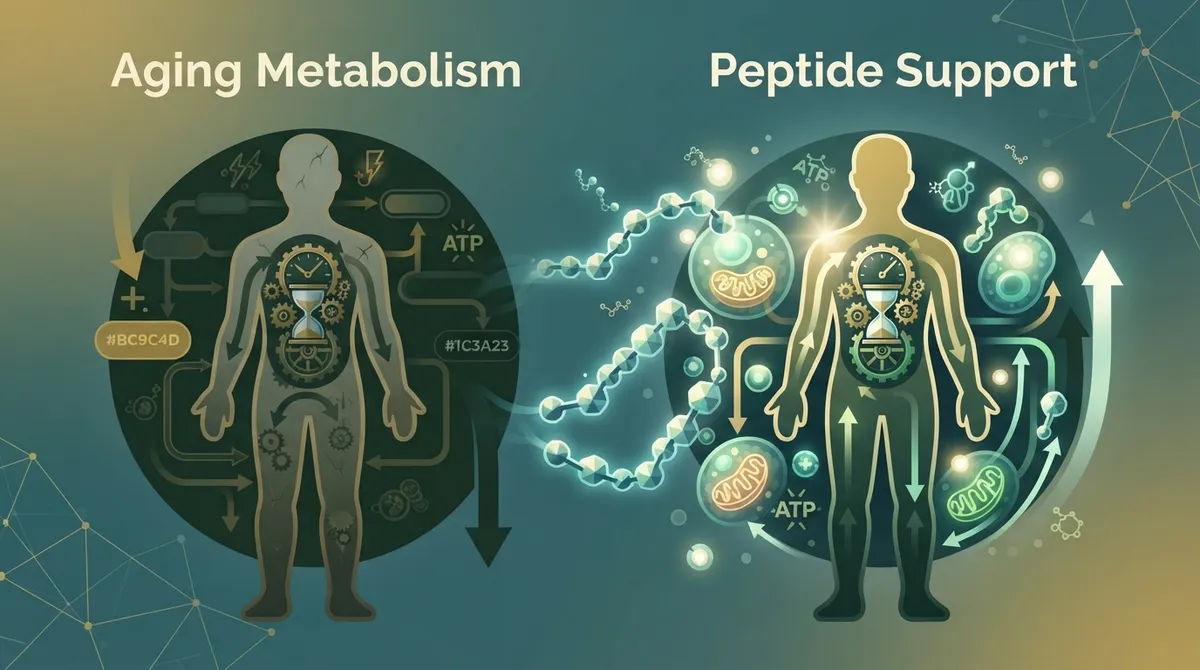
Aging metabolism peptide support is a marketing phrase, not a medical treatment; no peptide is approved to reverse normal aging or restore a youthful metabolism.
-
GLP-1 based medicines like semaglutide and tirzepatide have the strongest evidence, but only for chronic weight management and diabetes in eligible adults.
-
FDA approval applies to a specific product for a specific use, so ask what a medicine is approved for and what evidence supports your goal.
-
Evidence for growth hormone-releasing peptides like sermorelin and ipamorelin in healthy aging adults is much weaker and should be individualized by a clinician.
-
Strength training two to three times weekly, adequate protein, daily walking, and good sleep protect muscle, the body's key metabolic engine, and should come before any peptide.
-
Compounded peptides are not FDA-reviewed for safety, effectiveness, or quality, so ask where products are made, how they are tested, and who supervises your care.
If you have noticed that your body just does not respond the way it used to, you are not imagining things. Maybe the scale moves more slowly. Maybe your energy dips by mid-afternoon. Maybe you are doing everything right and still feel like your engine is running a little rough. Many adults start searching for aging metabolism peptide support right around this point, hoping for a smart, science-backed answer.
Here is the friendly truth up front. “Aging metabolism peptide support” is a popular search phrase, not a single medical treatment. Some peptide medicines have strong evidence for specific conditions, like weight management and type 2 diabetes. Others are marketed with big promises and far less proof. Knowing the difference is the best gift you can give yourself.
In this guide, we walk through 10 clear, honest facts. You will learn what changes with age, what peptides can and cannot do, and how to approach care safely. Whether you are a data-loving biohacker or a busy professional who just wants a plan, this is for you. Let’s dive in together.

1. Aging Metabolism Is Real, but It Is Not One Thing
When people say their metabolism is “slowing down,” they usually mean several things at once. Metabolism is how your body turns food into energy and manages blood sugar, fat, and muscle. It changes with age, but not in the same way for everyone.
Common shifts include:
- Gradual loss of muscle mass, which lowers daily energy burn
- Changes in body fat, especially around the middle
- Lower insulin sensitivity for some people
- Less daily movement and changes in sleep
- Shifts in hormones like thyroid, estrogen, and testosterone
The key point is that age alone does not prove you need a peptide. Your habits, hormones, and health history all play a role. That is why a personal look at your numbers matters so much.
2. “Aging Metabolism Peptide Support” Is a Marketing Phrase
No medical diagnosis is called “aging metabolism.” There is also no single peptide approved to reverse normal aging or restore a youthful metabolism. Current research does not support that claim.
What does exist is a group of peptide-based medicines that help with defined health conditions. Some of those conditions, like excess weight and insulin resistance, become more common as we age. So the support is for the condition, not for aging itself. That small shift in thinking helps you spot hype from help.
If you are new to the topic, our guide on 8 Facts That Explain What Are Peptides in 2026 is a friendly place to start. You can also read a plain-language overview of what are peptides from WebMD.
3. GLP-1 Peptide Medicines Have the Strongest Evidence
The best-studied peptide medicines for metabolic health are GLP-1 based. Semaglutide is a GLP-1 receptor agonist. Tirzepatide acts on both GIP and GLP-1 receptors. Both are FDA-approved for chronic weight management in eligible adults, and both have diabetes uses under their product labels.
These medicines work on appetite and blood sugar pathways, among other effects. Here is a simple snapshot of the trial data:
| Medicine | Trial | Average Weight Loss | Who Was Studied |
|---|---|---|---|
| Semaglutide 2.4 mg | STEP 1 (2021) | About 14.9% at 68 weeks vs. 2.4% with placebo | Adults with overweight or obesity, without diabetes |
| Tirzepatide | SURMOUNT-1 (2022) | About 15.0%–20.9% over 72 weeks, by dose | Adults with obesity or overweight |
Notice what these trials studied: weight and metabolic outcomes. They did not study anti-aging. For a deeper dive, see our post on How to Understand GLP-1 Peptide Therapy in 2026.
4. Approval Is Specific to Product and Purpose
FDA approval is not a blanket stamp. It applies to a specific product for a specific use. Wegovy (semaglutide) was approved for chronic weight management in 2021. Zepbound (tirzepatide) followed in 2023. Neither carries an anti-aging indication.
This matters because a peptide being studied, prescribed off-label, or sold by a clinic does not mean it is approved for metabolic rejuvenation. Always ask what a medicine is actually approved for and what the evidence says about your goal.
It also helps to understand the difference between approved and compounded products. Our comparison, FDA-Approved vs. Compounded Peptides: What Wins?, breaks it down clearly.
5. Growth Hormone Peptides Have Thinner Evidence
You may have heard of growth-hormone-releasing peptides and secretagogues, such as sermorelin, CJC-1295, or ipamorelin. They are popular in longevity circles. They are designed to nudge your body’s own growth hormone signaling.
Here is the honest part. For improving age-related metabolism in otherwise healthy adults, the evidence is much less established than for GLP-1 medicines. High-quality human trials are limited, and claims should not be treated as proven benefits.
That does not mean these peptides are off the table in every case. It means decisions should be individualized and led by a licensed clinician who is honest about what is known and unknown. You can learn more in our explainer on growth hormone peptides.
6. Muscle Is the Real Metabolic Engine
Here is a fact that surprises many people. Muscle is one of the most powerful tools for healthy metabolism as you age. It helps manage blood sugar, supports daily energy use, and protects mobility.
This matters a lot if you are considering weight loss medicine. Losing weight can also mean losing some lean mass, so a smart plan protects muscle on purpose. Aim for:
- Strength training two to three times each week
- Enough protein spread across your meals
- Regular daily walking
- Good sleep and recovery
These habits are not glamorous, but they are the foundation. Any peptide plan works best when it sits on top of them. If body composition is your focus, our post on 12 Body Composition Facts Peptide Users Need in 2026 is a helpful companion.
7. Side Effects Are Real, So Go in Informed
Peptide medicines are powerful, and that means side effects deserve respect. GLP-1 based medicines commonly cause stomach-related effects, especially while the dose is being increased. These can include:
- Nausea
- Vomiting
- Diarrhea
- Constipation
Rates vary by product, dose, and person. Prescribing also requires a careful review of your health history, other medicines, and possible contraindications. The product label has the most current warnings.
The good news is that many effects can be managed with slow dose changes and simple strategies. Read more in What Causes GLP-1 Side Effects and How to Manage Them?
8. Labs Turn Guesswork Into a Real Plan
If you love data, this one is for you. Because “slow metabolism” is vague, the smartest move is to measure. Blood work can show what is actually going on, so your plan fits your body instead of a trend.
Helpful markers a clinician may review include:
| Area | What a Clinician May Look At | Why It Helps |
|---|---|---|
| Blood sugar | Fasting glucose, A1C, insulin | Shows insulin resistance or diabetes risk |
| Lipids | Cholesterol and triglycerides | Flags cardiovascular risk |
| Thyroid | TSH and related markers | Rules out a treatable cause of low energy |
| Hormones | Testosterone, estrogen, and others as relevant | Identifies imbalances worth discussing |
Testing also gives you a baseline, so you can track real progress. Learn how this fits into care in How to Use Biomarker Testing to Guide Peptide Therapy.
9. Compounded Products Need Extra Caution
Some clinics offer compounded peptides. It is important to know that compounded products are not FDA-approved, and they do not go through FDA review for safety, effectiveness, and quality before they are marketed.
That does not make every compounded product unsafe. It does mean you should ask good questions. Who makes it? Where is it compounded? What testing is done? Who supervises your care? A trustworthy provider will welcome those questions and answer them plainly.
For safe starting steps, see How to Get Prescription Peptides Safely in 2026. For general research background, the National Library of Medicine is a useful reference point.
10. The Best Results Come From Clinician-Led, Personal Care
Here is the heart of it. There is no one-size-fits-all peptide for aging metabolism. The right plan depends on your labs, goals, medicines, and health history. A licensed provider can tell you whether a peptide makes sense, whether something simpler would work better, or whether a different treatment is the smarter first step.
This is where telehealth shines for busy people. You can complete a consultation from home, get lab work done locally, and have an ongoing relationship with a provider who monitors and adjusts your plan. At Allura Longevity, new clients start with a $50 virtual consultation, complete blood work through LabCorp, and receive a customized six-month plan delivered to their door. Care is guided by licensed providers, led by Ashley, a board-certified Family Nurse Practitioner. Telehealth is available in Florida, Georgia, Texas, Connecticut, Indiana, Maryland, New York, and California.
If you want to see how this works in practice, explore How to Start Peptide Therapy Safely and See Real Results, or browse options for peptides for women and peptides for men.
A Simple Game Plan You Can Start Today
You do not need to wait for a prescription to support your metabolism. Try this step-by-step approach:
- Get your baseline. Ask for labs so you know your real numbers.
- Build muscle. Add strength training and enough protein.
- Move daily. Walking counts, and it adds up.
- Protect your sleep. Poor sleep can work against appetite and blood sugar.
- Talk to a licensed clinician. Ask whether a peptide fits your situation and what the evidence says.
Those five steps are simple, but they are the same steps that make any medical treatment work better.
The Bottom Line
Aging does change how your body handles energy, muscle, and blood sugar. But “aging metabolism peptide support” should never mean chasing promises of reversing the clock. The strongest evidence points to GLP-1 based medicines for weight and metabolic conditions in eligible adults. Evidence for many popular anti-aging peptides is still limited. Approval is specific, side effects are real, and personal care matters most.
The encouraging part is that you have options and a clear path. Start with data, build the basics, and work with a provider who tells you the truth. That combination is far more powerful than any hype.
Ready to see what a personalized, lab-guided plan could look like for you? Request a consultation with Allura Longevity today, or call (813) 510-6277. Spots for new clients are limited each month, so reach out while there is room.
FAQs
Q: Can peptide therapy improve metabolism as you age?
A: Some peptide medicines, like semaglutide and tirzepatide, can improve weight and blood sugar in adults who qualify for them. But they treat specific conditions and are not proven to reverse normal aging or restore a youthful metabolism. A licensed provider can help you see what fits your labs and goals.
Q: Are GLP-1 peptides approved for anti-aging?
A: No. Semaglutide and tirzepatide are FDA-approved for chronic weight management in eligible adults, and they also have diabetes uses under their labels. None of those approvals include anti-aging, so it is best to view them as treatments for diagnosed conditions.
Q: Are growth hormone peptides proven to slow aging?
A: Not yet. Evidence for growth-hormone-releasing peptides improving age-related metabolism in healthy adults is much weaker than for GLP-1 medicines. If you are curious, a clinician can walk you through the research and the real risks.
Q: Are compounded peptides FDA-approved?
A: No. Compounded products are not FDA-approved and do not get FDA review for safety, effectiveness, and quality before they are marketed. Ask your provider where products come from and how they are tested.
Q: How can older adults lose weight while keeping muscle?
A: Pair any weight-loss plan with strength training, enough protein, daily walking, and good sleep. These habits help protect lean mass, and a clinician can monitor your progress and adjust your plan along the way.





