
Key Takeaways
-
FDA-approved GLP-1 medications (semaglutide, tirzepatide) are safer than compounded versions; the FDA issued warning letters to 30 telehealth companies in March 2026 and reported nearly 1,000 adverse events tied to compounded products.
-
A 2025 study of 4,500 telehealth patients showed average weight loss of 16.6% with semaglutide, with side effects (37% nausea, 16% constipation) consistent with known safety profiles.
-
Legitimate GLP-1 telehealth requires licensed clinician review, personalized bloodwork, medical history screening, and scheduled follow-ups—not just online questionnaires and medication shipment.
-
Tirzepatide works on two receptors (GIP and GLP-1) offering potentially greater metabolic benefits than single-receptor semaglutide products like Wegovy and Ozempic.
-
GLP-1 treatments are contraindicated for people with personal or family history of medullary thyroid carcinoma or multiple endocrine neoplasia syndrome type 2, making thorough screening essential.
-
Consistency is critical for results; missing doses or stopping suddenly affects outcomes, so set reminders, track symptoms, and maintain regular follow-up appointments with your provider.
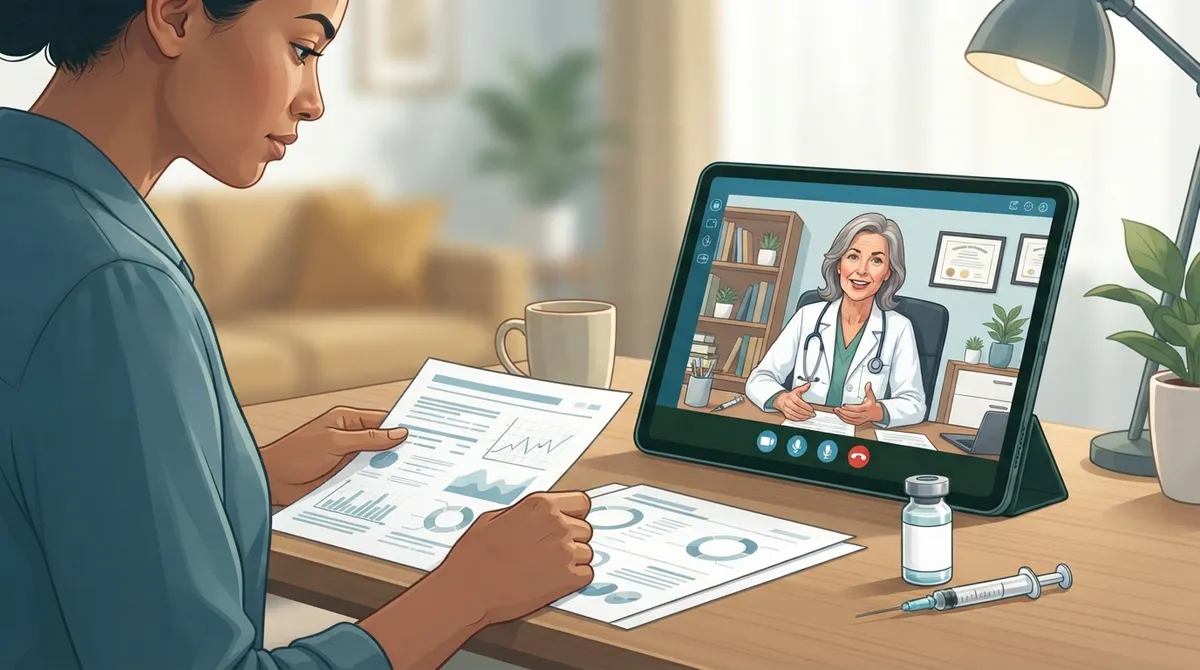
Picture this: it’s a busy Tuesday, and squeezing in a doctor’s visit feels almost impossible. Now imagine getting expert, personalized weight loss care without ever leaving your couch. That’s the magic of GLP-1 telehealth, and it’s changing how people approach weight loss and metabolic health in 2026. If you’ve been curious about semaglutide or tirzepatide but dread the idea of waiting rooms and rigid schedules, you’re exactly who this article is for.
GLP-1 telehealth blends real medical care with modern convenience. Licensed clinicians review your health history, order lab work, and prescribe treatment, all from your phone or laptop. But not all programs are created equal, and knowing the difference between safe, legitimate care and risky shortcuts matters more than ever. Let’s walk through everything you need to know, so you can make a confident, informed choice for your health journey.

What Does GLP-1 Telehealth Actually Mean?
GLP-1 telehealth refers to remote medical services where licensed providers evaluate you, prescribe GLP-1-based medications, and monitor your progress over time. These programs typically coordinate with a pharmacy to get your medication delivered right to your door. It’s a modern take on personalized peptide therapy that fits into real life.
Common GLP-1 medications include FDA-approved semaglutide products like Wegovy and Ozempic, along with tirzepatide products such as Zepbound and Mounjaro. Tirzepatide is unique because it works on two different receptors, GIP and GLP-1, which may support even greater metabolic benefits. If you want to understand how these peptides work in the body, this guide on understanding GLP-1 peptide therapy breaks it down simply.
How the Telehealth Process Works, Step by Step
Wondering what actually happens when you sign up? Here’s a simple breakdown of a legitimate GLP-1 telehealth journey:
- You complete an online intake form covering your medical history and weight loss goals.
- A licensed clinician reviews your information and schedules a virtual consultation.
- Bloodwork is ordered, often through a trusted lab like LabCorp, to check your metabolic health.
- Your provider builds a personalized treatment plan based on your labs and goals.
- Medication ships directly to your home with clear instructions for at-home use.
- You have regular follow-ups so your provider can adjust your dose and monitor side effects.
This isn’t a one-and-done questionnaire. A real program involves ongoing conversation between you and your care team. Programs like peptides for women and peptides for men at Allura Longevity follow this exact model, starting with a $50 virtual consultation and building a full six-month personalized plan.

FDA-Approved vs Compounded GLP-1 Medications: What’s the Difference?
This is one of the most important things to understand before starting any GLP-1 program. FDA-approved medications go through rigorous testing for safety, effectiveness, and manufacturing quality. Compounded versions do not go through that same review process.
| Feature | FDA-Approved GLP-1 | Compounded GLP-1 |
|---|---|---|
| Premarket FDA Review | Yes | No |
| Manufacturing Oversight | Strict federal standards | Pharmacy-dependent |
| Availability | Standard supply chains | Limited to specific clinical need |
| Regulatory Scrutiny (2026) | Stable | Increasing |
In March 2026, the FDA sent warning letters to 30 telehealth companies over misleading claims about compounded GLP-1 products, according to Reuters. The FDA has also proposed restricting large-scale compounding pathways for semaglutide and tirzepatide, with a public comment period that closed in June 2026. This means compounded products should generally only be considered when a documented medical need can’t be met by an approved option.
As of May 2026, the FDA reported nearly 1,000 adverse-event reports tied to compounded semaglutide and over 730 tied to compounded tirzepatide. That doesn’t mean every report proves harm, but it does highlight why working with a transparent, licensed provider matters so much. To learn more about this distinction, check out this comparison of FDA-approved versus compounded peptides.
Why Real-World Results Give Us So Much Hope
Here’s some genuinely encouraging news. A 2025 retrospective study looked at 4,500 patients who started semaglutide through telehealth for weight management. Among those with tracked outcomes, the average weight loss was 16.6%, with results ranging from about 16% to 17.1%. That’s a meaningful, real-world result, not just a lab number.
The same study found that side effects were mostly what you’d expect: nausea or vomiting in about 37% of patients and constipation in about 16%. Researchers noted no new safety concerns beyond what’s already documented. This kind of evidence reassures people considering weight loss peptides that actually work that telehealth care can deliver safe, dependable outcomes.
Who Benefits Most From GLP-1 Telehealth?
- Busy professionals who can’t fit frequent office visits into their week
- People in rural areas without easy access to specialty weight loss clinics
- Aging adults wanting convenient, consistent monitoring of their metabolic health
- Wellness seekers who already value personalized, data-driven care
- Anyone who prefers privacy over crowded waiting rooms
What a Trustworthy GLP-1 Telehealth Program Should Include
Not every telehealth site is built the same way. Some rush you through a form and ship medication without real medical oversight. That’s a red flag. A quality program should always include the following:
- A detailed medical history and current medication review
- Screening for contraindications and personal or family risk factors
- Clear informed consent explaining benefits and risks
- Lab work or clinical assessment before starting treatment
- Individualized dosing rather than a one-size-fits-all approach
- Scheduled follow-ups to track progress and adjust your plan
According to the National Library of Medicine, personalized dosing and monitoring are essential parts of safe peptide-based treatment. Skipping these steps isn’t just risky, it can also mean missing out on the results you’re hoping for. If you want a full walkthrough of what a safe start looks like, this article on starting peptide therapy safely is a great next read.
Safety Considerations You Shouldn’t Skip
Like any medication, GLP-1 treatments come with things to watch for. Common side effects include nausea, vomiting, diarrhea, and constipation. Less common but more serious concerns include gallbladder disease, pancreatitis, and low blood sugar when combined with insulin or certain diabetes medications.
GLP-1 medications are generally not recommended for people with a personal or family history of medullary thyroid carcinoma or multiple endocrine neoplasia syndrome type 2. This is exactly why a real consultation with a licensed provider matters so much, they can catch these risk factors before you ever start treatment. To understand how to manage common reactions, take a look at this guide on what causes GLP-1 side effects and how to manage them.
Comparing Telehealth to Local Clinic Visits
| Factor | GLP-1 Telehealth | Traditional In-Person Clinic |
|---|---|---|
| Convenience | High, from home | Requires travel and wait times |
| Personalization | Based on labs and goals | Varies by provider |
| Medication Delivery | Shipped to your door | Pickup required |
| Follow-Up Access | Virtual, flexible scheduling | Limited by office hours |
Curious how these two approaches stack up in more detail? This comparison of local clinic versus telehealth peptide therapy covers the pros and cons of each option.
How Much Does GLP-1 Telehealth Typically Cost?
Costs vary depending on your provider, medication type, and whether insurance covers part of your treatment. Many programs charge an initial consultation fee, followed by ongoing costs for medication and monitoring. It’s smart to ask upfront about pricing transparency, since some companies advertise low starting prices that don’t reflect the full cost of care.
For a full breakdown of typical pricing structures, this resource on GLP-1 costs without insurance is worth a look before you commit to any program.
Questions to Ask Before You Sign Up
- Is the medication FDA-approved, or is it compounded?
- Who is the compounding pharmacy, if applicable?
- Will a licensed clinician review my bloodwork personally?
- How often will I have follow-up appointments?
- What happens if I experience side effects between visits?
- Is the provider licensed in my state?
Asking these questions upfront protects you from surprises later. A transparent provider will answer every one of them clearly and confidently.
Why Allura Longevity Stands Out in GLP-1 Telehealth Care
At Allura Longevity, care starts with a simple $50 virtual consultation followed by comprehensive bloodwork through LabCorp. From there, licensed providers, led by board-certified Family Nurse Practitioner Ashley, build a personalized six-month treatment plan tailored to your labs and goals. Medications are shipped directly to your home, and your plan is adjusted along the way based on your progress and feedback.
Allura Longevity is currently licensed in Florida, Georgia, Texas, Connecticut, Indiana, Maryland, New York, and California, offering nationwide telehealth access within those states. If you’re ready to explore what personalized weight loss with peptide therapy could look like for you, spots are limited each month for new clients.
Understanding Peptides Beyond Weight Loss
GLP-1 medications are peptides, but they’re just one piece of a much bigger picture. Peptide therapy can also support energy, recovery, sleep, and even skin health. If you’re new to this world, what are peptides is a helpful starting point for understanding the science behind these treatments.
For a deeper dive into the many applications of peptide therapy, this article on 8 facts that explain what are peptides in 2026 covers everything from muscle recovery to immune support. Many people who start with GLP-1 treatment eventually explore other peptides too, like those used for fat loss or muscle preservation during weight loss.
Staying Consistent With Your Treatment Plan
Consistency is everything with GLP-1 therapy. Missing doses or stopping suddenly can affect your results and how your body responds. Here are a few tips to stay on track:
- Set phone reminders for your injection schedule
- Keep medication stored properly, usually refrigerated
- Track your symptoms and progress in a simple journal
- Communicate openly with your provider about any changes
- Don’t skip follow-up appointments, even if you’re feeling great
If your telehealth provider or pharmacy ever stops supplying your medication, don’t panic. A responsible provider will help you transition smoothly, whether that means switching to an FDA-approved alternative or connecting you with another trusted pharmacy.
The Bottom Line on GLP-1 Telehealth
GLP-1 telehealth has genuinely transformed how people access weight loss and metabolic health care. It combines real medical oversight with the convenience busy lives demand. But the key to success is choosing a program built on transparency, licensed clinicians, and personalized care rather than shortcuts.
Whether you’re a busy professional trying to fit health into a packed calendar, or someone simply ready to feel like yourself again, safe and effective GLP-1 telehealth is within reach. Ready to see what a personalized plan could look like for you? Request a consultation with Allura Longevity today and take the first step toward lasting results, backed by licensed providers who genuinely care about your journey.
FAQs
Q: How does GLP-1 telehealth work?
A: It starts with an online consultation where a licensed clinician reviews your health history and orders lab work. From there, they build a personalized treatment plan and ship your medication right to your door, with regular check-ins to keep you on track. It’s honestly one of the most convenient ways to get real medical care for weight loss.
Q: Can I get semaglutide or tirzepatide through telehealth?
A: Yes, many telehealth programs offer both FDA-approved semaglutide and tirzepatide products with a valid prescription. Just make sure your provider does a thorough evaluation first, since these medications aren’t right for everyone. A good clinician will check your labs and history before recommending either option.
Q: Are compounded GLP-1 medications safe and legal?
A: Compounded versions aren’t FDA-approved and face growing regulatory scrutiny, including recent FDA warning letters in 2026. They may still have a place for specific documented medical needs, but they shouldn’t be marketed as equivalent to approved medications. Always ask your provider for full transparency about what you’re being prescribed.
Q: How much does GLP-1 telehealth treatment cost?
A: Costs vary widely depending on the provider, medication, and whether insurance helps cover expenses. Many programs include a consultation fee plus ongoing medication costs, so it’s worth asking for a clear breakdown before you start. Transparency here is a great sign you’re working with a trustworthy provider.
Q: What side effects should I know about before starting treatment?
A: Nausea, vomiting, diarrhea, and constipation are the most common side effects, and they’re usually manageable with the right guidance. More serious risks include gallbladder issues and pancreatitis, which is why medical screening matters so much. Your provider should walk you through all of this before you ever start your first dose.





