
Key Takeaways
-
Fertility hormone therapy uses FDA-approved peptide hormones like FSH, LH, and hCG under specialist supervision—not wellness clinic peptides. These are diagnosis-driven treatments requiring regular bloodwork and ultrasounds, not one-size-fits-all trends.
-
Ovarian hyperstimulation syndrome (OHSS) is the main safety risk; GnRH-antagonist protocols with GnRH-agonist triggers significantly reduce moderate-to-severe OHSS risk with Grade A evidence support.
-
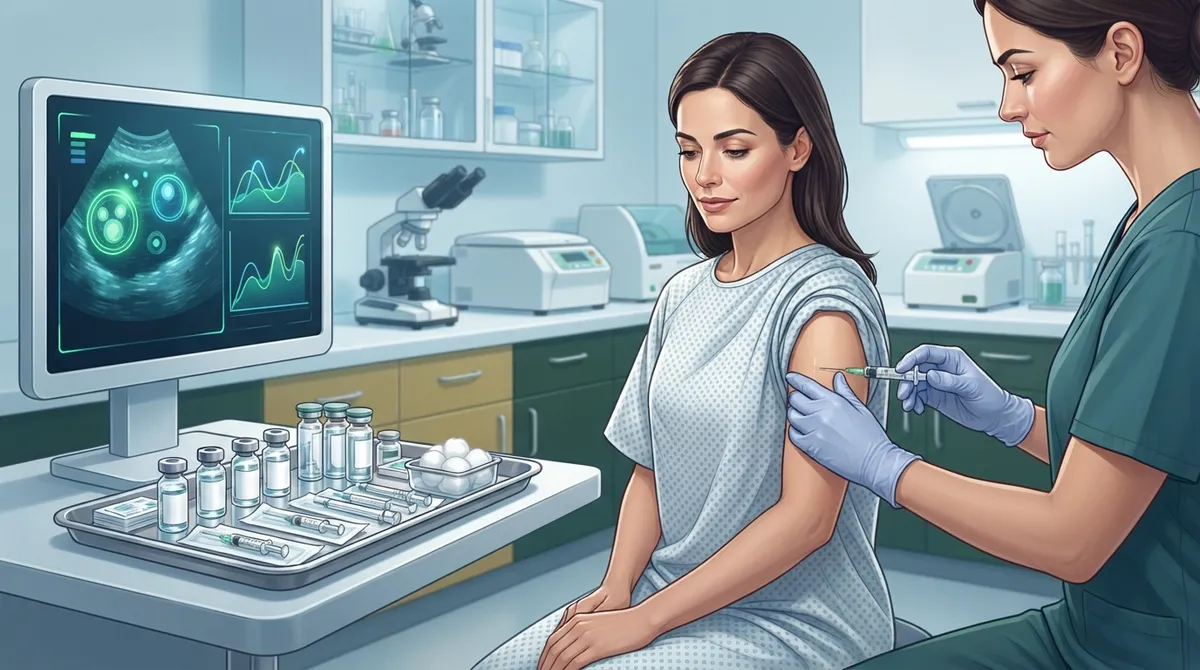
For women, typical IVF hormone therapy involves baseline testing, daily FSH injections (150-225 IU for normal responders), GnRH agonist/antagonist to prevent premature ovulation, and an hCG trigger shot 34-36 hours before egg retrieval.
-
For men with hypogonadotropic hypogonadism, hCG jumpstarts natural testosterone production in testes, then FSH may be added for sperm counts—opposite to standard testosterone therapy, which suppresses sperm production.
-
Seek immediate medical attention if experiencing rapid weight gain, severe abdominal pain, nausea, shortness of breath, or reduced urination during fertility treatment, as these signal dangerous OHSS complications.
-
Always confirm fertility hormones come from licensed pharmacies with proper specialist monitoring; experimental peptides from online wellness clinics lack FDA approval and rigorous safety testing required for fertility medicine.
If you have been trying to grow your family, you have probably heard the phrase “hormone therapy for fertility” more times than you can count. Maybe a friend mentioned her fertility injections. Maybe your doctor brought up FSH or hCG. Or maybe you stumbled across a wellness clinic online promising a “fertility peptide” that sounds too good to be true. We get it. This world is confusing, and you deserve clear, honest answers.
Here is the truth: hormone therapy for fertility is real medicine, and it works through carefully dosed peptide and protein hormones. This is not a one-size-fits-all wellness trend. It is a diagnosis-driven treatment guided by lab work, ultrasounds, and a specialist who watches your body closely every step of the way. In this article, we will walk through what these hormones actually do, who needs them, and how to tell the difference between proven fertility medicine and unproven peptides sold online. Let’s dig in together.
What Is Hormone Therapy for Fertility, Exactly
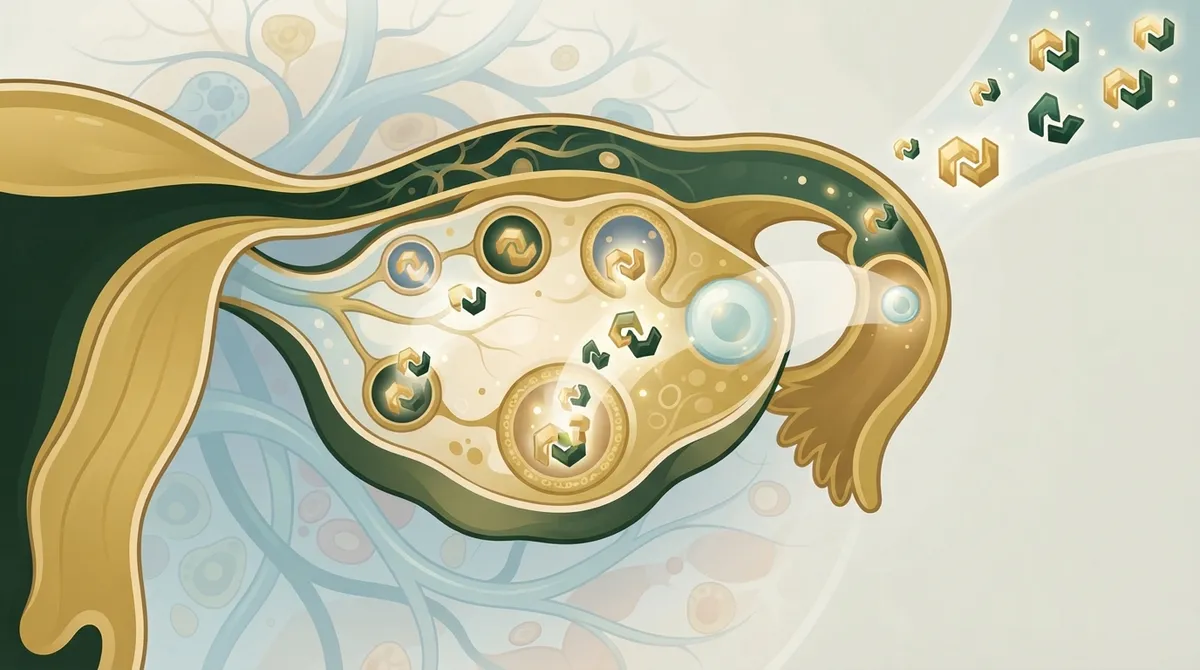
Hormone therapy for fertility means using medically supervised hormones to help the body ovulate, produce healthy eggs, or support sperm production. Many of these hormones are actually peptide or peptide-like molecules, similar in structure to some of the compounds discussed in our guide on what are peptides in 2026. The World Health Organization reported in 2023 that about 17.5% of adults worldwide experience infertility at some point in their life. That is roughly 1 in 6 people. So if you are dealing with this, please know you are far from alone.
The main hormones used in fertility treatment include:
- Follicle-stimulating hormone (FSH), which helps ovarian follicles grow
- Luteinizing hormone (LH), which supports ovulation timing
- Human chorionic gonadotropin (hCG), which triggers final egg maturation
- GnRH agonists and antagonists, which control the timing of ovulation during treatment cycles
These are not experimental. They are FDA-approved medications used every day in fertility clinics. According to National Library of Medicine research, these reproductive hormones function similarly to other peptide hormones in the body, which is why understanding basic peptide science can help you feel more confident in your treatment.
How Fertility Hormones Work for Women
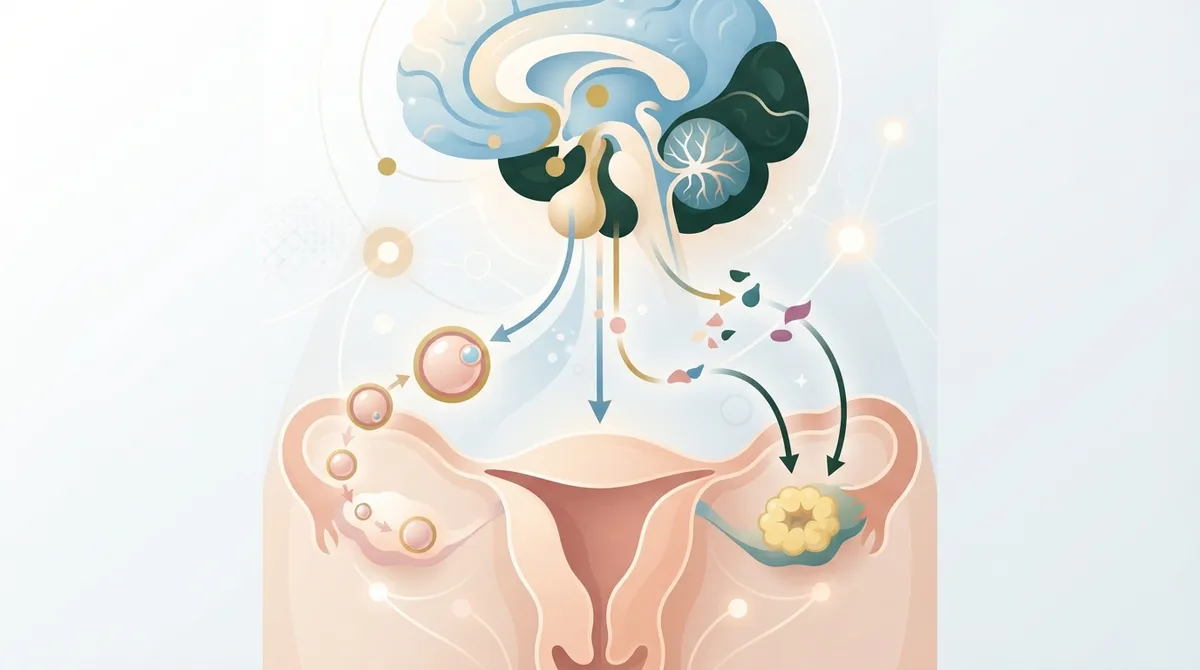
For women going through in vitro fertilization (IVF) or ovulation induction, hormone therapy usually happens in a few clear stages. Understanding this timeline can ease a lot of anxiety.
The Typical Steps of Ovarian Stimulation
- Baseline testing checks hormone levels and ovarian reserve using tools like AMH or antral follicle count
- Daily injections of FSH or human menopausal gonadotropin stimulate multiple follicles to grow
- A GnRH agonist or antagonist prevents the body from ovulating too early
- Regular ultrasounds and bloodwork track follicle growth
- A trigger shot of hCG or a GnRH agonist finishes egg maturation
- Egg retrieval or timed intercourse happens 34 to 36 hours after the trigger
The updated 2025 ESHRE ovarian-stimulation guideline includes 121 total recommendations, with 46 brand-new ones. This shows just how much research goes into getting these doses right. For predicted normal responders, doctors typically use 150 to 225 IU of gonadotropin. For predicted low responders, going above 300 IU is not recommended, since more medication does not always mean better results.
How Hormone Therapy Works for Male Fertility
Men experience fertility hormone therapy differently, and it is worth understanding if you or your partner are on this journey together. For men with a condition called hypogonadotropic hypogonadism, the testes are not getting the signal to produce testosterone or sperm.
In these cases, hCG can jump-start natural testosterone production inside the testes. Later, FSH or an FSH analogue may be added to support healthy sperm counts. This is very different from standard testosterone replacement therapy. In fact, exogenous testosterone usually shuts down sperm production, which is why it is not appropriate for men actively trying to conceive. If you are curious about how testosterone therapy compares to fertility-focused treatment, our article on TRT vs. peptides for men breaks down these differences in more detail.
Comparing Common Fertility Hormones
| Hormone | Main Use | Who It Helps |
|---|---|---|
| FSH | Stimulates follicle or sperm growth | Women in IVF; men with low sperm count |
| LH | Supports ovulation timing | Women with irregular cycles |
| hCG | Triggers egg maturation; boosts testosterone | Women in IVF; men with hormonal infertility |
| GnRH agonist/antagonist | Prevents premature ovulation | Women in controlled ovarian stimulation |
Why Monitoring Matters So Much
Fertility hormone therapy is powerful, and powerful treatments need careful oversight. The biggest safety concern is ovarian hyperstimulation syndrome, often called OHSS. This happens when the ovaries respond too strongly to stimulation, causing swelling, fluid shifts, and in rare cases, more serious complications.
The good news is that fertility specialists have strong tools to reduce this risk. According to ASRM guidance, GnRH-antagonist protocols combined with a GnRH-agonist trigger can significantly lower the chance of moderate-to-severe OHSS. This approach carries a Grade A evidence rating, which is about as strong as medical evidence gets.
Signs Your Treatment Needs Extra Attention
- Rapid weight gain or bloating during stimulation
- Severe abdominal pain or nausea
- Shortness of breath
- Reduced urination
If you notice any of these symptoms during fertility treatment, contact your care team right away. This is exactly why ongoing monitoring by a licensed provider is non-negotiable, whether you are pursuing traditional fertility care or exploring hormone-support options through telehealth.
Fertility Peptides vs. Approved Fertility Hormones
Here is where things get tricky. Wellness clinics sometimes market “fertility peptides” like kisspeptin analogues or growth-hormone-related compounds. Some of these are being studied for legitimate future uses. But they are not the same as FDA-approved fertility medications, and they should never replace care from a reproductive endocrinologist.
| Category | Regulatory Status | Where to Get It |
|---|---|---|
| FSH, LH, hCG, GnRH analogues | FDA-approved for fertility use | Licensed pharmacy, prescribed by a specialist |
| Experimental fertility peptides | Often unapproved or investigational | Should be avoided outside of clinical trials |
ASRM specifically states that GnRH analogues may be used off-label in some fertility-preservation situations, but they should not replace proven options like egg or embryo freezing. Always confirm that any product is sourced through a licensed pharmacy and comes with proper lab and ultrasound monitoring. This same principle of verifying legitimacy applies broadly across peptide therapy, which is why we always recommend reading up on how to get prescription peptides safely before starting any new protocol.
Fertility Preservation Before Cancer Treatment
Some people need hormone-related support before chemotherapy or other treatments that could affect future fertility. According to ASRM’s 2026 committee guidance, GnRH agonists have been studied for ovarian protection during chemo, but the strongest, most reliable options remain egg, sperm, or embryo freezing. If you are facing this situation, a reproductive specialist can help you weigh every option based on your timeline and diagnosis.
How This Connects to Whole-Body Hormone Health
Fertility does not exist in a bubble. It is deeply connected to overall hormone balance, metabolic health, sleep, and stress. Many people going through fertility treatment also want to support their body’s broader resilience. This is where personalized, medically supervised peptide therapy for general wellness can play a supportive role, separate from direct fertility drugs.
At Allura Longevity, we specialize in personalized peptide therapy delivered through telehealth, with a focus on energy, recovery, metabolic health, and healthy aging. While we do not prescribe fertility-specific hormones like FSH or hCG for conception, we understand how important it is to feel your best while your body works hard. Our approach starts with a $50 virtual consultation and complete blood work through LabCorp, so every plan is built on real data, not guesswork. If you want to learn more about building a personalized plan around your bloodwork, check out our guide on how to start peptide therapy safely.
Questions to Ask Before Starting Any Hormone Treatment
- What is the diagnosis behind my infertility or hormone imbalance?
- Is this medication FDA-approved for fertility use?
- Who will monitor my bloodwork and ultrasounds?
- What are the specific risks for my situation?
- How will my dose be adjusted if my body responds strongly or weakly?
Bringing this list to your first appointment can help you feel prepared and confident, no matter which provider you choose.
What to Expect From a Reproductive Endocrinology Workup
Before any hormone is prescribed, a thorough evaluation comes first. For women, this typically includes AMH testing, antral follicle counts, and ovulation tracking. For men, a semen analysis is standard. Age, prior treatment history, and any underlying endocrine or structural issues all factor into the final plan.
This individualized approach mirrors what we believe at Allura Longevity: no two bodies are the same, so no two treatment plans should be either. Our licensed providers, led by board-certified Family Nurse Practitioner Ashley, build every six-month plan around your specific labs and goals, then ship your medication straight to your door.
Bringing It All Together
Hormone therapy for fertility is a well-established, evidence-backed field of medicine. It relies on peptide and protein hormones like FSH, LH, hCG, and GnRH analogues, all used under close specialist supervision. These treatments are not something to DIY or order from an unverified online source. Your fertility journey deserves real expertise, real monitoring, and real answers.
If you are also curious about supporting your overall hormone health, energy, and vitality alongside your fertility journey, our team at Allura Longevity is here to help. We proudly serve clients across Florida, Georgia, Texas, Connecticut, Indiana, Maryland, New York, and California with fully personalized, telehealth-delivered peptide therapy. Spots for new clients are limited each month, so if you are ready to feel like the best version of yourself, request a consultation today or give us a call at (813) 510-6277. We would love to walk this path with you.
FAQs
Q: What is hormone therapy for fertility and who needs it?
A: Hormone therapy for fertility uses medically supervised hormones like FSH, LH, and hCG to help with ovulation, egg development, or sperm production. It is typically recommended for people diagnosed with ovulation disorders, low ovarian reserve, or hormonal causes of male infertility, always under a specialist’s care.
Q: Are FSH, LH, hCG, and GnRH considered peptide hormones?
A: Yes! These reproductive hormones are peptide or peptide-like molecules, meaning they are built from chains of amino acids just like many other hormones in the body. That is part of why understanding basic peptide science can make fertility treatment feel less intimidating.
Q: Can hCG or peptide therapy improve male fertility and sperm count?
A: For men with hypogonadotropic hypogonadism, hCG can stimulate natural testosterone production, and FSH may later be added to support sperm production. This is very different from standard testosterone therapy, which usually suppresses sperm count instead of helping it.
Q: What are the risks and side effects of gonadotropin injections?
A: The biggest concern is ovarian hyperstimulation syndrome, or OHSS, which can cause bloating, pain, and fluid shifts in the body. Multiple pregnancy is another risk, which is why fertility specialists carefully individualize dosing and closely monitor every cycle.
Q: Are fertility peptides from wellness clinics FDA approved?
A: Many experimental fertility peptides sold by wellness clinics are not FDA-approved and lack the same rigorous safety testing as established fertility medications. Always verify that any hormone treatment comes from a licensed pharmacy and is prescribed with proper monitoring.





