
Key Takeaways
-
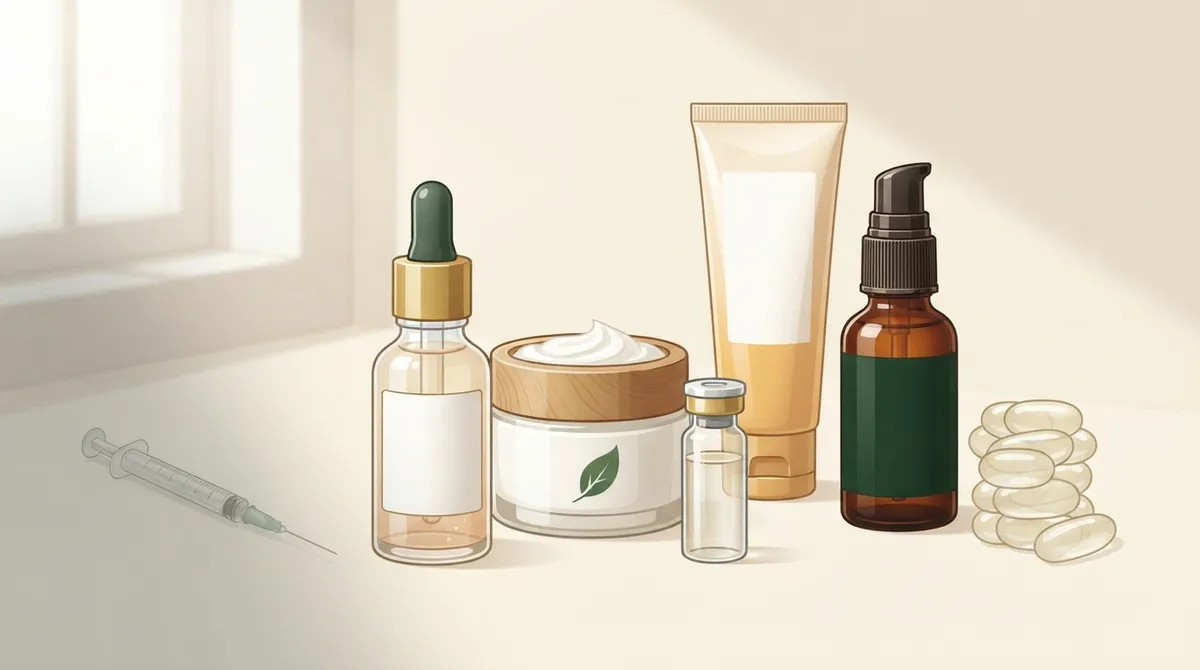
Anti-aging peptide 'therapy' covers three very different categories: topical creams, oral collagen peptides, and clinic-administered injectables, each with a different level of evidence and risk.
-
The best human data (a 2026 review of 19 randomized trials, 1,341 participants) shows only a modest wrinkle improvement, with mixed results for elasticity and density, over 4 to 12 weeks.
-
Injectable peptides have no established proof for skin rejuvenation, and compounded peptides are not FDA-reviewed for safety, effectiveness, or quality before marketing.
-
Avoid products labeled 'for research use only' and treat any claim of a proven, approved injectable skin treatment as a red flag.
-
Peptides are a possible add-on, not a foundation: daily sunscreen, retinoids, sleep, not smoking, and hydration have far stronger evidence for skin aging.
-
Before starting, ask whether a product is FDA-approved, compounded, or cosmetic, who the supervising clinician is, how it is made and tested, and what realistic results to expect.
You have probably seen the buzz. Peptides are everywhere, from serums and gummies to clinic menus promising younger-looking skin. It is exciting, and it is also confusing. Are these products the same thing? Do they all work? And where does real medical care fit in?
Here is the friendly truth. Anti aging peptide therapy for skin is a phrase that gets used for very different things. Some people mean a cream. Some mean a collagen powder. Others mean an injectable treatment from a clinic. Each one has a different level of evidence and a different level of risk.
In this guide, we will sort it all out in plain language. You will learn what the research shows in 2026, what is still unproven, and how to make smart choices for your skin and your overall wellness. Whether you are a busy professional, a data-driven biohacker, or simply someone who wants to age well, you deserve clear answers. Let’s dive in.
What Is Anti-Aging Peptide Therapy for Skin?
Peptides are short chains of amino acids. Amino acids are the building blocks of proteins, and your skin is full of proteins like collagen and elastin. If you want a simple refresher, this guide on what are peptides is a good start, and so is our own post, 8 Facts That Explain What Are Peptides in 2026.
The phrase “peptide therapy for skin” can mean three different things:
- Topical peptides: Creams and serums you apply to your face.
- Oral collagen peptides: Powders, capsules, or drinks you swallow.
- Injectable peptide therapy: Medical-style peptides given by injection under a clinician’s care.
These are not the same. A cosmetic serum is not medical therapy. A supplement is not a prescription medicine. Keeping these categories separate is the first step to thinking clearly about your options.

How Do Peptides Affect Skin Aging?
Skin ages for many reasons. Sun exposure, genes, sleep, stress, smoking, and time all play a part. Over the years, your skin makes less collagen. It can lose hydration and bounce, and fine lines can show up.
Researchers think peptides may help in a few ways:
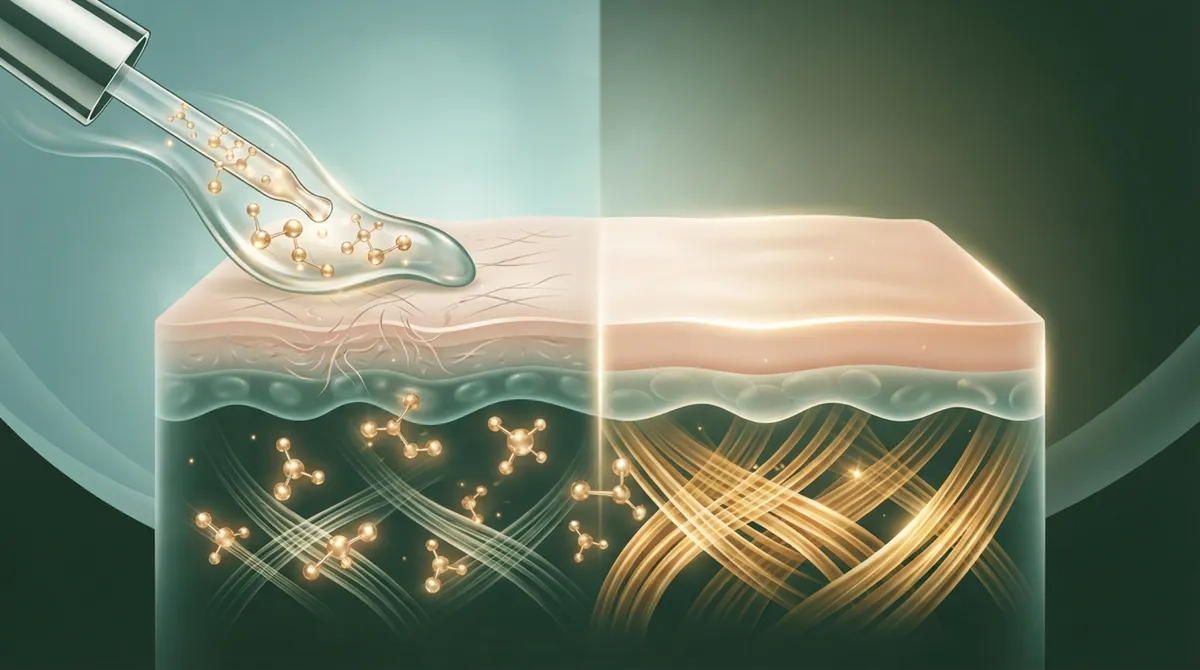
- Some may send signals that support collagen-related activity in the skin.
- Some may soften the look of expression lines by temporarily affecting small muscle movements.
- Some may help skin hold on to moisture.
Here is the important part. A plausible idea in the lab does not always become a big result in real life. Much of the rationale comes from lab and animal studies, so human trials matter most. Let’s look at those next.
What Does the Research Say in 2026?
The good news is that there are human studies. The honest news is that they are small, short, and product-specific. A 2026 systematic review, available through the National Library of Medicine database, looked at oral and topical peptides for skin aging. It found 19 randomized trials with 1,341 participants. Most (17 trials) studied oral products, and only two studied topical ones. The pooled result showed a modest wrinkle improvement, and findings for elasticity and skin density were inconsistent. Treatment periods ran from 4 to 12 weeks.
Here is a quick look at some of the human studies described in recent reviews:
| Peptide or Product Type | Study Size | Duration | What Was Reported |
|---|---|---|---|
| Palmitoyl pentapeptide-4 (topical), split-face, placebo-controlled | 93 people with mild photodamage | Not specified here | Improved wrinkle measures vs. control |
| 10% Argireline (topical) | 10 healthy participants | 30 days | Reduced wrinkle depth vs. vehicle; small sample limits confidence |
| Oral collagen peptides | 60 participants | Varies by study | Better hydration and elasticity; no significant wrinkle difference between groups |
| 2026 systematic review (mostly oral) | 1,341 participants across 19 trials | 4–12 weeks | Modest pooled wrinkle improvement; mixed elasticity and density results |
What does this tell us? Some topical and oral products may offer modest benefits for certain skin measures. But one ingredient study cannot speak for every peptide or every product on the shelf. And none of these studies prove that injectable peptides safely rejuvenate skin.
Topical, Oral, or Injectable: How Do They Compare?
This is where many people get tripped up, so let’s lay it out side by side.
| Type | How You Use It | Evidence for Skin | Key Notes |
|---|---|---|---|
| Topical peptides | Applied to skin daily | Limited, formulation-specific human studies | Cosmetic category; effects tend to be subtle |
| Oral collagen peptides | Powder, capsule, or drink | Some trials show better hydration and elasticity | Results depend on the exact supplement and study design |
| Injectable peptides | Clinician-guided injections | No established proof for skin rejuvenation | Many are unapproved or compounded; quality and safety need careful review |
Notice a pattern? The closer you get to “medical,” the more important it becomes to ask hard questions about proof, sourcing, and supervision.
Are Anti-Aging Peptides FDA-Approved for Skin?
This is one of the most common questions, and it deserves a clear answer. FDA-approved peptide medicines have been reviewed for their approved uses. Those uses are not skin rejuvenation.
Compounded drugs, on the other hand, are not FDA-approved. The FDA does not review them for safety, effectiveness, or quality before they are marketed. The FDA has also raised concerns about certain unapproved peptides, including limited human safety data and possible issues like impurities and immune reactions.
So if anyone tells you an injectable peptide is a proven, approved skin treatment, that is a red flag. We want you to feel informed and protected, not sold to. If you want to dig deeper into this topic, our article on FDA-Approved vs. Compounded Peptides: What Wins? breaks it down.
What Are the Risks of Injectable or Unapproved Peptides?
Injections are not the same as lotions. They come with extra considerations. Before you consider any injectable product, keep these risks in mind:
- Sterility: A product that is not made in a properly controlled setting can carry infection risk.
- Dosing errors: Too much or too little can matter, especially with unproven protocols.
- Impurities: Unregulated products may contain things that are not on the label.
- Immune reactions: Some peptides may trigger unwanted responses.
- Injection complications: Bruising, pain, or infection at the site can happen.
Please avoid any product labeled “for research use only.” Those are not meant for people. A licensed clinician, a real consultation, and proper lab work are the safe path. You can learn more in Is Peptide Therapy Safe? What You Really Need to Know.
How Long Does It Take to See Results?
Patience helps here. In the studies we looked at, treatment periods were about 4 to 12 weeks. Skin renews slowly, so changes are usually gradual and often subtle.
Here is a simple way to set expectations:
- Weeks 1–4: You may notice better hydration or a smoother feel with some products.
- Weeks 4–8: Fine changes in texture or the look of lines may start to show.
- Weeks 8–12: This is when studies typically measured outcomes, and results were modest.
- After 12 weeks: Long-term benefits are not well studied, so keep checking in with a clinician.
Photos taken in the same light every few weeks can help you track real progress instead of guessing.
Peptides vs. Sunscreen and Retinoids: What Comes First?
Here is a reality check we offer with a smile. Peptides are not the foundation of skin care. The basics have far stronger support.
- Daily sunscreen: Sun damage is a major driver of visible aging. Protecting your skin is step one.
- Retinoids: These are long-studied ingredients for lines and texture.
- Sleep, nutrition, and not smoking: These habits show up on your face over time.
- Hydration and gentle cleansing: Simple, steady, and effective.
Think of peptides as a possible bonus on top of a solid routine, not a replacement for it. If you want to build the right foundation, check out 12 Steps to a Personalized Wellness Plan in 2026.
Where Does Personalized Peptide Therapy Fit In?
Healthy skin is closely tied to whole-body health. Sleep, hormones, metabolism, recovery, and stress all play a part. That is why many people look at peptide therapy as part of a bigger longevity plan, not just a skin fix.
At Allura Longevity, we take a personalized, medically supervised approach. Our licensed providers, led by Ashley, a board-certified Family Nurse Practitioner, start with your goals and your blood work. From there, they design a plan around you. We are also honest about what the science supports and what it does not. We will never promise that a peptide is a proven skin rejuvenation treatment when the evidence is not there.
Here is how it works for our clients:
- $50 virtual consultation: You talk with a licensed provider about your goals.
- Blood work through LabCorp: Your labs help guide safe, personalized choices.
- Customized six-month plan: Delivered to your home with clear instructions.
- Ongoing monitoring: Your provider checks in and adjusts as needed.
Telehealth makes this simple for busy schedules. We are licensed in Florida, Georgia, Texas, Connecticut, Indiana, Maryland, New York, and California. To learn about our programs, explore our peptides for women and peptides for men options.
Smart Questions to Ask Before You Start
Whether you choose a serum, a supplement, or a clinic, a little homework goes a long way. Ask these questions:
- Is this product FDA-approved, compounded, or a cosmetic or supplement?
- Who is the licensed clinician overseeing my care?
- Will I get blood work and a personal plan, or a one-size-fits-all package?
- Where does the product come from, and how is it made and tested?
- What results are realistic, and how will we track them?
If you want a deeper checklist, How to Start Peptide Therapy Safely and See Real Results walks through each step. You can also read What Peptides Do for Skin: A Real-World Guide for 2026 for more skin-specific detail.
Final Thoughts: Aim for Honest, Healthy, Glowing
The takeaway is simple and, we hope, reassuring. Some topical and oral peptide products may modestly improve certain skin measures. The science is still growing, and larger, better trials are needed. Injectable peptides are not proven as skin rejuvenation treatments, and unapproved products carry real quality and safety questions.
You do not have to figure this out alone. A thoughtful plan, built on your labs and your goals, is the best way to support your skin and your long-term vitality. Ready to talk it through with a licensed provider? Request a consultation with Allura Longevity today, or call (813) 510-6277. New client spots are limited each month, so reach out while there is room. Your future self will thank you.
FAQs
Q: Do peptide injections reduce wrinkles or improve skin quality?
A: There is no established proof that peptide injections safely reduce wrinkles or rejuvenate skin. Most of the human evidence we have is for certain topical and oral products, and even that is modest. If you are curious about injectables, talk with a licensed clinician first.
Q: Are topical peptides effective for wrinkles?
A: Some topical peptides have shown modest improvements in small human studies, like one with palmitoyl pentapeptide-4 in 93 people. But results are specific to each formula and the studies are short, so think of them as a possible bonus, not a miracle.
Q: What is the difference between peptide skincare, collagen supplements, and injectable peptide therapy?
A: Peptide skincare is a cosmetic you put on your skin. Collagen supplements are oral products you swallow, and some trials show better hydration and elasticity. Injectable peptide therapy is a medical-style treatment, and for skin rejuvenation it is not proven or FDA-approved.
Q: How long does it take for peptide skincare to show results?
A: Most studies track results over about 4 to 12 weeks, and changes tend to be gradual and subtle. Taking photos in the same lighting every few weeks can help you see real progress.
Q: What are the risks of compounded or unapproved peptide injections?
A: Compounded drugs are not reviewed by the FDA for safety, effectiveness, or quality before marketing. Risks can include impurities, sterility problems, dosing errors, immune reactions, and injection-site complications, so always work with a licensed clinician and avoid products labeled for research use.





