

Key Takeaways
-
Only three published human pilot studies of BPC-157 exist, with the largest involving just 16 patients for knee pain; most evidence remains in animal models, not proven in humans yet.
-
NSAIDs and corticosteroids remain FDA-approved standards with decades of clinical evidence, while peptides like BPC-157 and TB-500 are investigational with unknown long-term safety profiles.
-
Peptide sourcing and manufacturing are unregulated, creating risks of contamination, mislabeling, and inconsistent dosing that only medical supervision can help mitigate.
-
Peptide therapy should complement diagnosed medical conditions under licensed provider oversight, never replace established treatments for rheumatoid arthritis, inflammatory bowel disease, or osteoarthritis.
-
Start with bloodwork and diagnosis to identify inflammation's actual cause before considering peptides, as inflammation from autoimmune conditions, infections, or injuries requires different treatment approaches.
-
BPC-157 and TB-500 are banned by the World Anti-Doping Agency, and peptides promoting blood vessel growth raise theoretical cancer concerns requiring discussion with providers.
If your joints ache after every workout or your gut feels angry more days than not, you’ve probably searched for something better than another bottle of ibuprofen. Peptide therapy for inflammation keeps popping up in wellness circles, biohacker forums, and telehealth ads. But how does it actually stack up against the anti-inflammatory tools you already know, like NSAIDs and corticosteroids? This article breaks down what peptide therapy for inflammation really is, what the science actually shows, and how it compares to traditional options. We’ll keep things honest: some of this is promising, but much of it is still experimental. Whether you’re a busy professional looking for recovery support or a wellness seeker who tracks every lab result, you deserve a clear, science-based answer before you make a decision.
What Is Peptide Therapy for Inflammation?
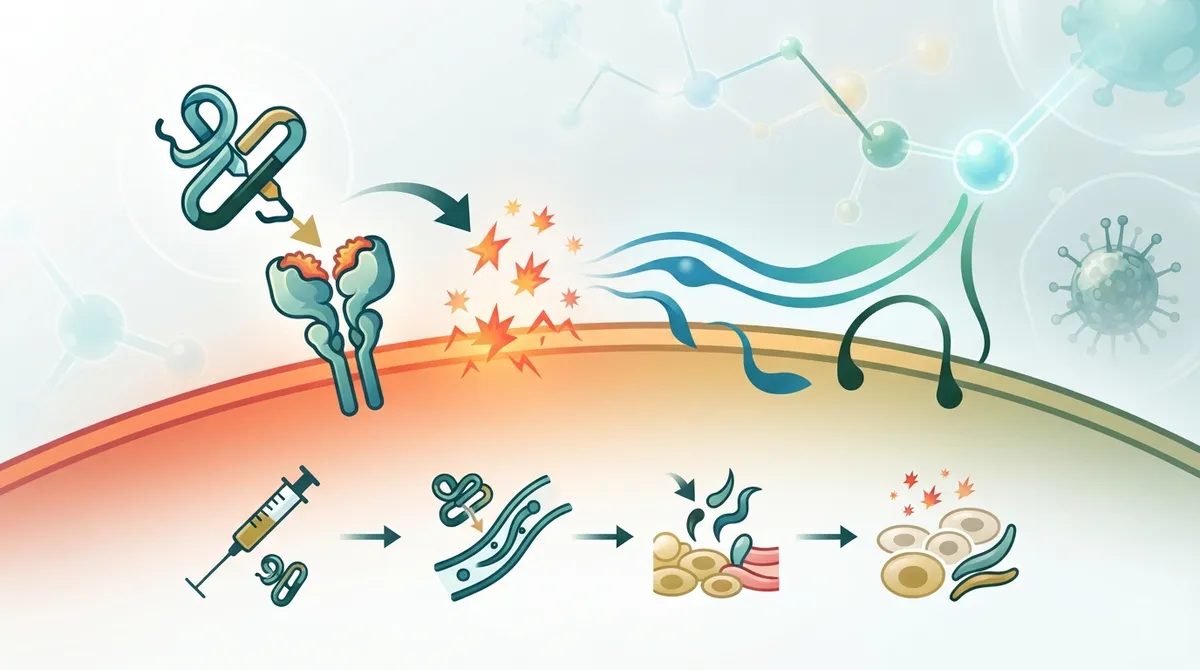
Peptide therapy for inflammation usually refers to a small group of investigational peptides, most notably BPC-157 and thymosin beta-4 (often marketed as its synthetic fragment, TB-500). These peptides are short chains of amino acids that may influence how your body repairs tissue and responds to injury. You can learn more about the basics in our guide on what are peptides in 2026.
Proponents suggest these peptides support blood vessel formation, cell migration, and modulation of inflammatory signals like TNF-alpha and IL-6. According to what are peptides, these molecules act as messengers that tell cells what to do. That’s the theory. The human evidence, though, is still catching up to the hype.
The Peptides Most Commonly Discussed
- BPC-157: A synthetic 15-amino-acid peptide studied mostly in animal models for gut healing, tendon repair, and inflammation control.
- Thymosin Beta-4: A naturally occurring protein involved in wound healing and cell movement.
- TB-500: A synthetic fragment sold in peptide clinics, modeled after thymosin beta-4 but not chemically identical to it.
It’s worth repeating: TB-500 and thymosin beta-4 are related but different molecules. Evidence about one should not be assumed to apply to the other. Our article on 13 facts about TB-500 peptide covers this distinction in more detail.
Peptide Therapy vs. NSAIDs and Corticosteroids: A Side-by-Side Look
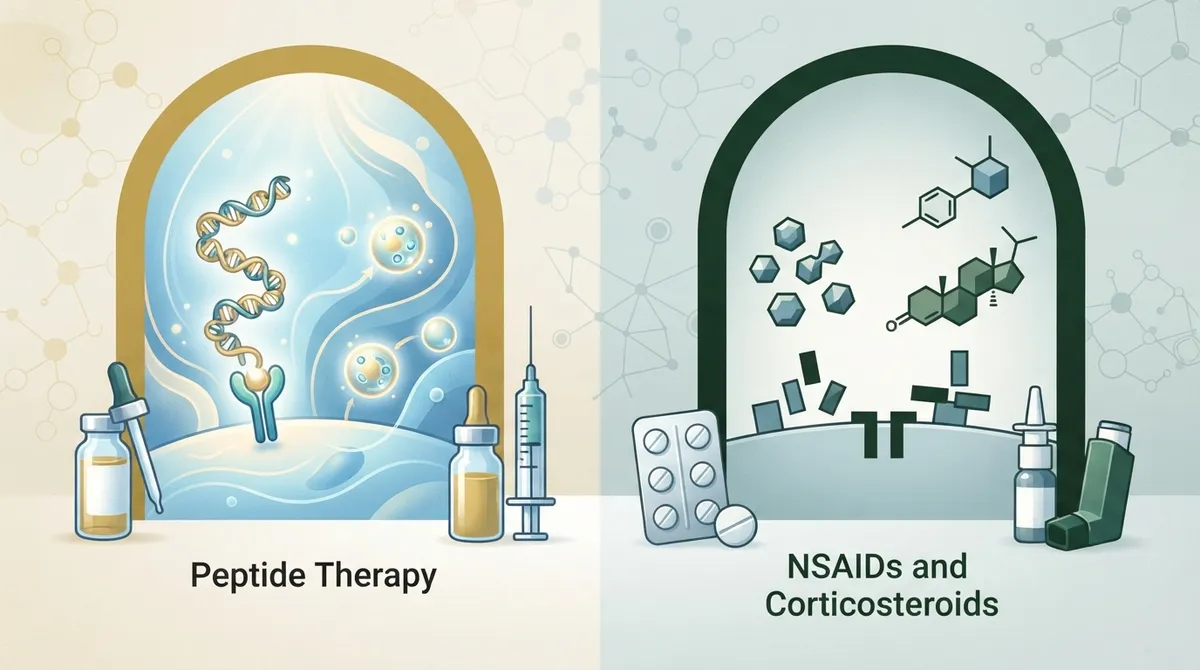
Let’s put peptide therapy for inflammation next to the anti-inflammatory treatments most people already use. This isn’t about picking a winner across the board — it’s about understanding where each option stands today.
| Factor | NSAIDs / Corticosteroids | Peptide Therapy (BPC-157, TB-500) |
|---|---|---|
| FDA Approval Status | Approved for specific inflammatory conditions | Not FDA-approved for inflammation; investigational |
| Human Clinical Evidence | Decades of large randomized trials | A handful of small pilot studies |
| Mechanism | Well-mapped (COX inhibition, immune suppression) | Proposed mechanisms from animal studies (VEGFR2, nitric oxide, ERK1/2) |
| Long-Term Safety Data | Extensively studied, known risks | Limited; long-term effects unknown |
| Regulatory Oversight | Standardized manufacturing | Variable, depends on compounding source |
| Best Used For | Diagnosed inflammatory conditions | Adjunct interest for recovery, under medical supervision |
Notice the gap. NSAIDs and corticosteroids have a long track record. Peptide therapy for inflammation is newer territory, with mechanisms that look interesting on paper but aren’t proven the same way in people yet.
What Does the Human Research Actually Show?
Here’s where we slow down and get honest. A 2025 narrative review found only three published human pilot studies of BPC-157. These covered knee pain, interstitial cystitis, and basic safety testing. That’s a small foundation for such a popular topic.
Key Study Findings So Far
- Knee pain study: In one small, uncontrolled retrospective report, 14 of 16 patients said their knee pain improved significantly after intra-articular BPC-157, alone or combined with thymosin beta-4.
- Safety pilot study: Two healthy adults received IV doses of BPC-157 up to 20 mg. No adverse events or meaningful changes in vital signs or lab markers were reported. Two people is far too small a group to call this “proven safe.”
- Interstitial cystitis pilot: A separate small study found complete symptom resolution in 10 of 12 participants. Encouraging, but this needs to be repeated in a larger, controlled trial before anyone calls it a cure.
- Chronic knee pain follow-up: Some reports found 58% of older adults had sustained pain relief past six months after a single injection. Again, small and uncontrolled.
A 2024 review looked at 544 published papers on BPC-157 and found only one that met strict criteria for orthopedic clinical evidence. That tells you something important: there’s a lot of buzz in the lab, but not much proof yet in real patients. For deeper background, the National Library of Medicine offers a helpful overview of peptide research standards.
Where Peptides Might Fit Into an Anti-Inflammatory Plan
So should you write off peptide therapy for inflammation completely? Not necessarily. Many wellness-focused patients use it as one piece of a bigger recovery puzzle, not a replacement for diagnosed treatment. Here’s how these audiences typically approach it:
- Health optimizers often explore peptides alongside proper sleep, nutrition, and movement, not instead of them.
- Aging adults may ask about peptide support for joint comfort as part of a broader longevity plan.
- Biohackers track inflammatory markers through labs before and after trying new protocols.
- Busy professionals like the convenience of at-home peptide delivery, but still need medical oversight to use it safely.
- Wellness seekers want therapies that go beyond supplements, with real monitoring behind them.
If any of these sound like you, working with a licensed provider matters more than ever. This is not a “figure it out yourself” category. Our guide on how to start peptide therapy safely and see real results is a good next step if you’re curious.
Risks You Should Know Before Considering Peptide Therapy for Inflammation
No treatment is risk-free, and peptide therapy is no exception. Here’s what the research and regulatory landscape tell us:
- Unknown long-term effects: Most studies are short. We don’t have data on years of use.
- Product quality issues: Contamination, mislabeling, and inconsistent dosing are real concerns with unregulated sources.
- Injection risks: Site reactions, infection risk, and improper technique can cause problems.
- Drug interactions: Peptides may interact with other medications you’re taking.
- Tumor biology concerns: Because some peptides promote blood vessel growth, there are theoretical concerns worth discussing with a provider, especially if you have a cancer history.
- Anti-doping status: BPC-157 and TB-500 are listed as prohibited substances by the World Anti-Doping Agency. Athletes should check current guidance before use.
This is exactly why self-sourcing peptides online without medical guidance is risky. A licensed provider can check your labs, watch for interactions, and monitor your response over time. If you want to understand the safety side more deeply, read is peptide therapy safe? What you really need to know.
Comparing Approved Options vs. Investigational Peptides
| Category | Examples | Regulatory Status |
|---|---|---|
| Approved Anti-Inflammatory Drugs | Ibuprofen, naproxen, prednisone | FDA approved for specific conditions |
| Approved Peptide/Protein Medicines | Certain GLP-1 medications, insulin analogs | FDA approved for their specific indications |
| Investigational Peptides for Inflammation | BPC-157, TB-500 | Not FDA approved for inflammation; used off-label or via compounding |
This distinction matters. A reputable clinic should always be transparent about which treatments are backed by strong approval and which are still investigational. Anyone offering peptide therapy for inflammation should walk you through this difference clearly, not gloss over it.
Why Diagnosis Comes Before Any Peptide Protocol
Inflammation isn’t one thing. It can come from an injury, an autoimmune condition, gut issues, infection, or chronic disease. Treating “inflammation” without knowing the cause is like guessing at a puzzle with your eyes closed.
This is why Allura Longevity starts every client with a virtual consultation and bloodwork through LabCorp before building any plan. Providers look at your actual biomarkers, not just your symptoms, to figure out what’s driving your inflammation and whether a peptide-supported plan even makes sense for you.
Conditions like rheumatoid arthritis, inflammatory bowel disease, and osteoarthritis have established, evidence-based treatments. Peptide therapy should never replace those without a doctor’s guidance. Instead, think of it as a possible complement, discussed openly with your provider, layered on top of a solid medical foundation.
How Allura Longevity Approaches Peptide Therapy for Inflammation
Allura Longevity is a telehealth clinic built around personalized, medically supervised peptide plans for both men and women. The process is simple and starts with a $50 virtual consultation, followed by lab work to understand your unique biology.
From there, licensed providers, led by Ashley, a board-certified Family Nurse Practitioner, design a custom six-month plan based on your goals and bloodwork. Peptides ship straight to your door, and your care team monitors your progress and adjusts your protocol along the way. This isn’t guesswork ordered off a random website. It’s a structured, supervised approach.
Because Allura Longevity is licensed in Florida, Georgia, Texas, Connecticut, Indiana, Maryland, New York, and California, clients across these states can access consistent, professional care from home. If you’re weighing whether peptide support makes sense for your recovery goals, you can request a consultation to start with real lab data instead of guesswork.
If you want a broader view of how peptides support tissue repair beyond inflammation, our piece on 6 peptides for wound healing worth knowing in 2026 is a helpful companion read. And if you’re curious how peptide plans compare to standard medication routes for chronic issues, check out peptide therapy vs. traditional meds for inflammation.
Questions to Ask Before Starting Peptide Therapy for Inflammation
Before you commit to any protocol, bring these questions to your provider:
- What specific condition are we targeting, and how was it diagnosed?
- Is this peptide FDA-approved, or is it investigational?
- What lab markers will we track to measure progress?
- How will this interact with medications I already take?
- What’s the sourcing and quality control process for this peptide?
A trustworthy clinic will welcome these questions instead of brushing them off. That transparency is a good sign you’re in the right hands.
Final Thoughts: Which One Actually Wins?
Honestly, this isn’t a knockout fight. NSAIDs and corticosteroids remain the proven, FDA-approved standard for diagnosed inflammatory conditions. Peptide therapy for inflammation is a promising, evolving field with intriguing early data, but it’s not a replacement for established medicine. Used thoughtfully, under medical supervision, and alongside a proper diagnosis, it may become a valuable complement to your wellness routine.
The smartest path forward is working with a licensed provider who treats you as a whole person, not just a set of symptoms. If you’re ready to explore whether a personalized peptide plan fits your health goals, reach out to schedule your consultation and get real answers backed by your own lab work. Spots are limited each month, so if you’ve been curious, now’s a good time to ask.
FAQs
Q: What is peptide therapy for inflammation?
A: It’s the use of investigational peptides like BPC-157 or TB-500 that may help support tissue repair and calm inflammatory signals. Right now, most of the strong evidence comes from lab and animal studies, with only a few small human pilot studies available so far.
Q: Can BPC-157 reduce inflammation in humans?
A: There are some promising early results, like a small knee pain study where 14 of 16 patients felt better. But these studies were tiny and uncontrolled, so we can’t call this proven yet. Bigger, well-designed trials are still needed.
Q: What’s the difference between BPC-157, thymosin beta-4, and TB-500?
A: BPC-157 is a separate synthetic peptide studied mostly in animals. Thymosin beta-4 is a natural repair protein in your body, while TB-500 is a synthetic fragment sold in clinics that mimics it but isn’t identical. Evidence for one shouldn’t be assumed to apply to the others.
Q: Are BPC-157 and TB-500 FDA approved for inflammation?
A: No, neither is FDA-approved for treating inflammation. They’re considered investigational, which means any use should happen under close medical supervision with full transparency about their status.
Q: Can peptide therapy replace NSAIDs or corticosteroids?
A: Not right now. NSAIDs and corticosteroids have decades of solid research behind them for specific conditions. Peptide therapy might be explored as an additional option alongside proven treatments, but always after a proper diagnosis from a licensed provider.





