

Key Takeaways
-
Regular follow-up monitoring is essential to catch problems early, confirm correct dosing, and protect against unregulated compounded peptides that lack FDA oversight and quality control standards.
-
Establish a structured follow-up timeline: baseline assessment before starting, frequent check-ins during dose adjustment, reassessment at stable dose, then periodic reviews every few months to annually depending on therapy type.
-
Blood work is the backbone of follow-up care; specific labs vary by therapy (testosterone, IGF-1, glucose, kidney function) and should be monitored on set schedules rather than interpreting results yourself without professional guidance.
-
Contact your provider immediately for warning signs including severe abdominal pain, persistent vomiting, jaundice, allergic reactions, chest pain, neurological symptoms, or rapidly worsening injection-site reactions—don't wait for scheduled appointments.
-
Build sustainable follow-up habits by scheduling lab dates immediately, tracking symptoms weekly in notes, preparing questions in advance, and using telehealth when possible to eliminate barriers to consistent monitoring.
-
Compounded peptides require more intensive follow-up care than FDA-approved medications; verify pharmacy credentials, confirm product identity and sterility, and establish clear side-effect reporting protocols with informed consent documentation.
Starting peptide-based hormone therapy is exciting. You picture better sleep, more energy, and a body that finally feels like yours again. But here’s the truth nobody talks about enough: the real magic happens in the follow-up. Hormone therapy follow-up care is what turns a good treatment plan into lasting, safe results. Skip it, and you’re basically flying blind.
Whether you’re optimizing testosterone, using growth-hormone peptides, or working with a GLP-1 protocol for weight loss, your body needs regular check-ins. These visits catch problems early, confirm your dose is right, and make sure you’re actually getting the benefits you signed up for. This guide breaks down exactly what good follow-up care looks like, how often you should expect labs and check-ins, and the red flags that mean it’s time to call your provider. If you’re already exploring what peptides actually are, this is the next piece of the puzzle you need.

Why Follow-Up Care Matters So Much in Peptide Therapy
Peptides and hormones aren’t a “set it and forget it” treatment. Your body changes over time, and so does your response to therapy. Without follow-up, you risk two things: staying on a dose that’s too low to help, or one that’s too high and causing side effects you didn’t need.
Good follow-up care also protects you from a bigger issue. Many peptides sold online are compounded or unregulated products, not FDA-approved medicines. That means quality control and safety data can vary widely. Working with a licensed provider who monitors your labs and symptoms closely is one of the best ways to protect your health while still getting the benefits you’re after.
- Confirms your treatment is working, not just “feels” like it’s working
- Catches side effects before they become bigger problems
- Adjusts your dose based on real data, not guesswork
- Documents your progress for long-term safety and peace of mind
- Builds a relationship with a provider who actually knows your history
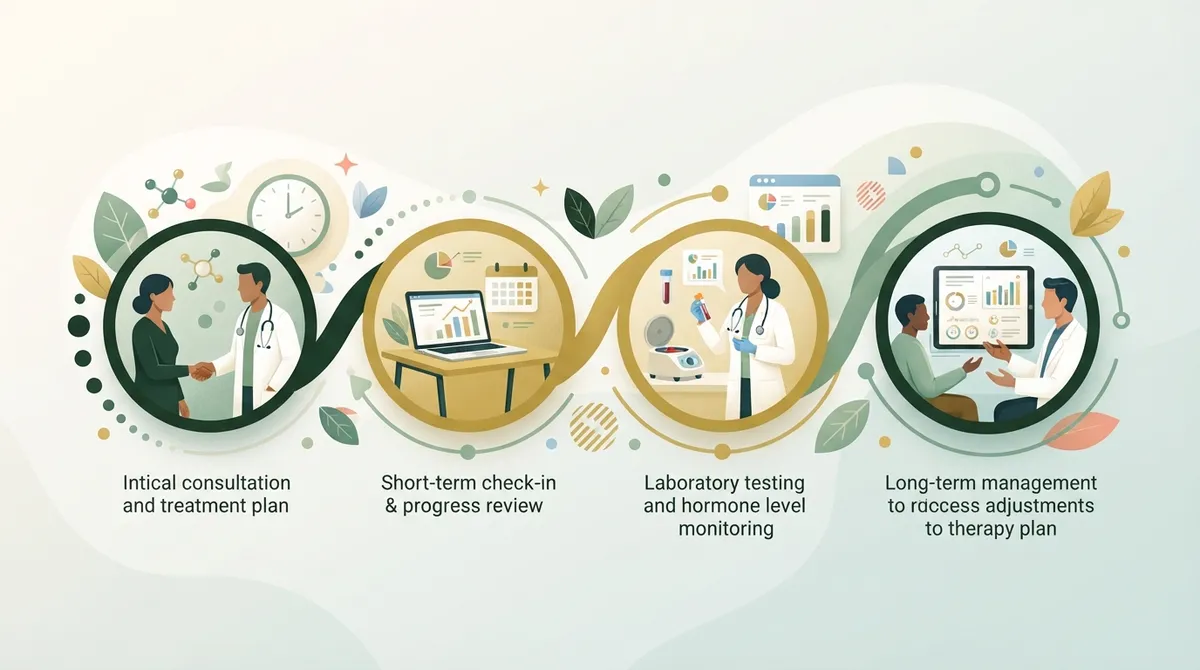
The Typical Hormone Therapy Follow-Up Timeline
There’s no single monitoring schedule that fits every peptide or hormone. Your plan depends on the specific therapy, your age, your health history, and your goals. That said, most credible programs follow a similar rhythm.
- Baseline assessment: Before you start anything, you’ll get blood work and a full health review. This is non-negotiable and forms the foundation of your entire plan.
- Early follow-up during dose titration: In the first few weeks to months, your provider checks in often to see how you’re responding and to adjust your dose if needed.
- Reassessment after reaching a stable dose: Once you’re on a steady dose, you’ll have a check-in to confirm labs look good and symptoms have improved.
- Periodic long-term reviews: After stabilization, most people move to check-ins every few months to once or twice a year, depending on the therapy.
For example, Endocrine Society guidance on testosterone therapy recommends checking testosterone levels about 3 to 6 months after starting treatment, then monitoring hematocrit at baseline, 3 to 6 months, and annually after that. If you’re curious how this applies to your own protocol, our article on starting peptide therapy safely walks through the process step by step.
What Gets Checked at Each Type of Follow-Up Visit
Follow-up visits aren’t just a quick “how are you feeling” chat. A thorough visit covers several important areas to make sure your treatment stays safe and effective.
Symptoms and Physical Response
Your provider will ask about energy, sleep, mood, libido, and any new symptoms. They’ll also check vital signs like blood pressure and weight, since these can shift with hormone and peptide therapy.
Laboratory Monitoring
Blood work is the backbone of good follow-up care. What gets tested depends on your specific therapy:
| Therapy Type | Common Labs Monitored | Typical Timing |
|---|---|---|
| Testosterone therapy | Testosterone levels, hematocrit, PSA (age-dependent) | 3-6 months, then annually |
| Growth-hormone peptides (e.g., CJC-1295, Sermorelin) | IGF-1, glucose, sleep quality markers | Every 3-6 months |
| GLP-1 medications | Weight, blood pressure, glucose, kidney function | Monthly to quarterly during titration |
| Estrogen/gender-affirming hormone therapy | Hormone levels, lipids, prolactin, diabetes screening | Every 3 months in year one, then 1-2x yearly |
If you’re on a growth-hormone-secretagogue protocol, IGF-1 is one of the most useful markers. It shows whether your body is responding appropriately or getting too much exposure. Learn more about how these peptides work in our guide on how GHRP peptides really work in your body.
Adverse Effects and Injection Technique
Your provider should ask about injection-site reactions, headaches, joint pain, swelling, or digestive issues. If you’re new to self-administering peptides, proper technique matters. Check out our tips on preparing for safe, effective peptide injections to avoid common mistakes.
Follow-Up Care for GLP-1 Weight Loss Peptides
GLP-1 medications like semaglutide and tirzepatide have become incredibly popular for weight loss, and for good reason. But they also need consistent monitoring to stay safe and effective.
During GLP-1 follow-up visits, providers typically track:
- Weight change and body composition trends
- Blood pressure and heart rate
- Gastrointestinal symptoms like nausea or constipation
- Hydration status, especially if vomiting occurs
- Blood sugar control, particularly in people with insulin resistance
- Signs of gallbladder or pancreatic issues, which are rare but serious
If you’re dealing with digestive discomfort, our article on what causes GLP-1 side effects and how to manage them offers practical relief strategies. And if you want to understand the bigger picture of these medications, how to understand GLP-1 peptide therapy in 2026 is a great next read.
Compounded vs. FDA-Approved Peptides: Why Follow-Up Differs
Here’s something every peptide therapy patient needs to understand. FDA-approved hormone medications, like certain testosterone and GLP-1 products, come with established dosing guidelines and monitoring standards backed by large clinical trials.
Compounded peptides are different. They’re prepared by specialty pharmacies and aren’t reviewed by the FDA for safety, effectiveness, or quality in the same way. This doesn’t mean they’re unsafe, but it does mean your follow-up care needs to be even more careful and personalized.
A trustworthy provider will:
- Verify the compounding pharmacy’s credentials and sourcing
- Confirm the product identity, dose, and sterility
- Explain what evidence does and doesn’t exist for that specific peptide
- Set up a clear plan for reporting side effects
- Document informed consent, including uncertainties in the research
To learn more about navigating this space safely, read our breakdown of FDA-approved vs. compounded peptides: what wins. According to the what are peptides overview from WebMD, peptides can offer real benefits, but quality and oversight vary widely depending on the source.
Warning Signs That Need Immediate Medical Attention
Most people on peptide or hormone therapy do just fine with routine monitoring. But it’s important to know when something needs urgent attention rather than waiting for your next scheduled visit.
Contact your provider right away if you experience:
- Severe or persistent abdominal pain
- Repeated vomiting or signs of dehydration
- Yellowing of the skin or eyes (jaundice)
- Signs of an allergic reaction, like hives or swelling
- Severe headache or sudden vision changes
- Chest pain or shortness of breath
- Numbness, weakness, or other neurological symptoms
- Severe low blood sugar symptoms
- Rapidly worsening redness or swelling at an injection site
These symptoms don’t mean something is definitely wrong, but they need a fast professional evaluation. Never wait for your next scheduled appointment if something feels seriously off.
How to Build a Follow-Up Routine That Actually Sticks
Life gets busy. Between work, family, and everything else, it’s easy to let follow-up appointments slip. Here are a few simple habits that make consistent follow-up care much easier to maintain.
- Put lab dates on your calendar the same day you get your treatment plan, not weeks later.
- Track your symptoms weekly using a simple notes app or journal, so you have real data to share at your next visit.
- Keep a running list of questions as they come up, instead of trying to remember everything during your appointment.
- Choose telehealth care when possible, so follow-up doesn’t require taking time off work or driving across town.
- Set medication reminders to stay consistent with dosing, since missed doses can affect your lab results and how your provider interprets them.
This is exactly why convenient, structured telehealth programs matter so much. Comparing your options is worth the time, and our piece on local clinic vs. telehealth: best peptide therapy near you can help you decide what fits your lifestyle best.
Why Interpreting Lab Results Isn’t a DIY Job
It’s tempting to look at your own lab numbers and try to self-diagnose. But hormone levels never tell the whole story on their own. Timing of your blood draw relative to your last dose, other medications, underlying health conditions, and even the specific lab’s reference ranges all affect what a number actually means.
Chasing a “perfect” lab number without considering symptoms can actually backfire. Unnecessary dose increases based on lab numbers alone can raise your risk of side effects without adding real benefit. This is one of the biggest reasons working with an experienced, licensed provider matters so much. A study published through the National Library of Medicine highlights how individualized interpretation, not just raw numbers, drives safer and more effective hormone therapy outcomes.
What Sets Allura Longevity’s Follow-Up Care Apart
At Allura Longevity, follow-up care isn’t an afterthought. It’s built into every treatment plan from day one. Clients start with an affordable $50 virtual consultation, complete comprehensive blood work through LabCorp, and receive a personalized six-month plan designed around their specific goals and lab results.
From there, licensed providers, led by Ashley, a board-certified Family Nurse Practitioner, monitor progress and adjust treatment as needed. This isn’t a one-size-fits-all subscription. It’s real, ongoing medical supervision paired with the convenience of at-home delivery and telehealth visits. Whether you’re focused on peptides for fat loss, muscle recovery, or overall vitality, your plan gets adjusted based on how your body actually responds, not just a generic protocol.
Because spots are limited each month for new clients, it’s worth reaching out sooner rather than later if you’re ready to start. Allura Longevity is licensed to serve clients in Florida, Georgia, Texas, Connecticut, Indiana, Maryland, New York, and California.
Bringing It All Together
Hormone therapy follow-up care isn’t the boring part of your peptide journey. It’s the part that actually protects your results and your health long-term. From baseline labs to symptom check-ins to knowing exactly when to call for help, a solid follow-up plan is what separates a safe, effective protocol from a risky guessing game.
If you’re ready for a personalized plan with real medical oversight and none of the guesswork, our team is here to help you get started the right way. Request a consultation today and take the next step toward feeling like yourself again, with the follow-up support to back it up. You can also call us directly at (813) 510-6277 to ask questions before booking.
FAQs
Q: How soon should I follow up after starting peptide or hormone therapy?
A: Most people have their first follow-up within a few weeks to a few months after starting, depending on the therapy. During this early stage, your provider checks how you’re responding and fine-tunes your dose. Think of it as the tuning phase before things settle into a steady rhythm.
Q: What blood tests are needed before and during peptide therapy?
A: Before starting, you’ll typically get baseline blood work covering hormone levels, metabolic markers, and general health indicators. During treatment, tests like IGF-1, testosterone, glucose, or lipids may be rechecked depending on your specific peptide and goals. Your provider will tailor this list to exactly what your body needs.
Q: Is follow-up different for compounded peptides compared with FDA-approved peptide medications?
A: Yes, and it’s an important distinction. Compounded peptides aren’t reviewed by the FDA the same way approved medications are, so follow-up care needs extra attention to sourcing, dosing, and side-effect monitoring. A good provider will be upfront about what’s known and unknown for compounded options.
Q: What should I do if I miss a peptide dose or develop an injection-site reaction?
A: Don’t panic. Missing a dose usually just means checking in with your provider about how to adjust your next one. For injection-site reactions, mild redness is common, but worsening swelling, pain, or warmth should be reported right away so your care team can take a look.
Q: When should peptide therapy be stopped or referred to an endocrinologist?
A: If your labs show concerning changes, symptoms worsen instead of improve, or you develop a health condition that changes the risk-benefit balance, your provider may pause treatment or refer you to a specialist. This is a normal part of responsible, safety-first care, not a sign that something went wrong on your end.





