

Key Takeaways
-
Hormone therapy costs range from $99-$300 monthly for telehealth TRT to $500+ for clinic-based packages; always request an itemized breakdown showing medication, labs, visits, and fees separately to avoid hidden charges.
-
Peptide therapy is billed separately from testosterone replacement and has no reliable national average pricing; never assume peptides are bundled into a TRT quote and always request a separate cost breakdown from your provider.
-
Ask specific questions before committing: confirm what's included (labs, visits, medication), verify lab testing frequency, check for cancellation fees, and confirm your provider is licensed in your state to ensure proper medical oversight.
-
Telehealth typically costs less than in-person clinics due to lower overhead, while personalized care with licensed providers and ongoing monitoring—though potentially more expensive—delivers safer results than one-size-fits-all subscription models.
Trying to figure out hormone therapy men price can feel like a maze. One website says $99 a month. Another quotes $500. Some clinics add mystery fees for labs, visits, and shipping. You just want a straight answer before you commit your money and your health to a plan.
Here’s the good news. Once you know what actually makes up the cost, pricing starts to make sense. This guide breaks down what you’re really paying for, how peptide therapy fits into the picture, and how to spot a fair price versus a confusing one. Whether you’re a busy professional short on time or a biohacker who wants every number to add up, you’ll walk away knowing exactly what to ask before you sign up.
What Hormone Therapy Men Price Actually Covers
When people search for hormone therapy men price, they usually mean testosterone replacement therapy, or TRT. But many clinics now pair TRT with peptide therapy to boost results even further. Peptides are short chains of amino acids that can support muscle recovery, fat loss, sleep, and energy. Learn more about what peptides actually are before comparing costs.
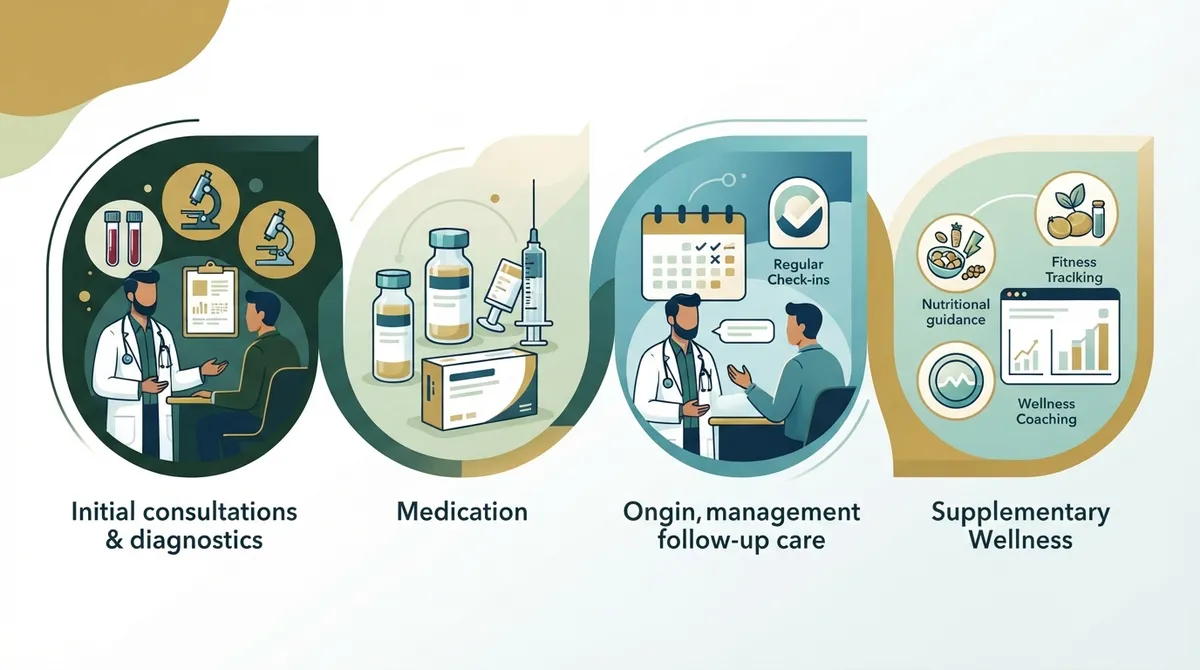
The truth is, there’s no single fixed price for hormone therapy. Your total cost depends on several moving parts:
- The type of medication (injectable, topical, or pellet)
- Lab testing and bloodwork frequency
- Provider visits and ongoing monitoring
- Whether peptides or other add-ons are included
- Shipping and supply fees
This is why one man might pay $99 a month and another pays $400 for what sounds like the same treatment. Always ask for an itemized breakdown before assuming a quoted price includes everything you need.

Average Price Ranges You’ll See in 2026
Based on current market data, here’s what men are typically paying for hormone therapy in 2026. These numbers come from a mix of telehealth providers and in-person clinics.
| Service Type | Typical Monthly Price | What’s Usually Included |
|---|---|---|
| Telehealth TRT plans | $99–$300 | Medication, virtual visits, some labs |
| Clinic-based TRT packages | $150–$500+ | Medication, in-person visits, labs, monitoring |
| Generic injectable testosterone (medication only) | $20–$100+ | Medication only, no visits or labs |
| Brand-name topical testosterone | $200–$500+ | Medication only, without insurance |
| Peptide add-ons | Varies widely by provider | Depends on protocol; always request a quote |
A recent review of eight clinics that publish their prices found a median of $199 per month, but the range stretched from $35 to $1,500. That’s a massive gap, which tells you pricing alone doesn’t tell the whole story. You need to know what’s inside that number.
How to Compare Hormone Therapy Men Price the Right Way
Shopping for hormone therapy shouldn’t feel like guesswork. Follow these steps to get a true apples-to-apples comparison.
- Ask what’s included in the quoted price. Does it cover labs, visits, medication, and follow-ups, or just one piece?
- Request an itemized quote. This helps you see exactly where your money goes each month.
- Check if peptide therapy is separate. Many clinics market peptides alongside testosterone, but they are billed differently. Don’t assume they’re bundled.
- Confirm lab testing frequency. Some plans include quarterly bloodwork, others charge extra for each test.
- Ask about cancellation and enrollment fees. Some clinics tack on hidden charges that inflate your first bill.
- Verify the provider is licensed in your state. This protects you legally and medically.
If you want a deeper dive into common pricing traps, check out this guide on hormone therapy cost mistakes that drain your wallet.
Why Peptide Therapy Changes the Cost Conversation
Peptide therapy is not the same thing as testosterone replacement. It’s a separate category of treatment that some clinics offer alongside TRT to support recovery, metabolism, and vitality. Peptides like CJC-1295, ipamorelin, and BPC-157 are popular choices, but their pricing is highly specific to each provider and protocol.
Here’s the important part: there is no reliable national average for peptide therapy pricing yet. That means you should never assume a peptide add-on is included in your TRT quote. Always ask for a separate breakdown. For men curious about combining these two approaches, this comparison of peptide therapy vs testosterone replacement is a helpful starting point.
It’s also worth understanding the regulatory side. FDA-approved testosterone products go through strict safety review. Compounded peptides do not receive the same review before they reach the market. The FDA has flagged safety concerns and limited human data for peptides like BPC-157, CJC-1295, ipamorelin, and injectable GHK-Cu. This doesn’t mean these peptides are off the table, but it does mean you should talk with a licensed provider and understand the regulatory status of anything you’re prescribed. You can read more about this distinction from the National Library of Medicine.
What Drives Up or Down Your Total Price
A handful of factors have the biggest impact on what you’ll pay each month. Understanding these can help you avoid overpaying.
- Delivery method: Injectables tend to cost less than brand-name gels or patches.
- Insurance coverage: Some plans cover testosterone therapy but rarely cover peptide therapy.
- Bundled services: Clinics that include labs and visits in one price often save you money long-term.
- Provider experience: Licensed nurse practitioners and physicians who specialize in hormone health may charge more, but often deliver safer, better-monitored care.
- Location: In-person clinics in major cities often cost more than nationwide telehealth options.
If insurance is a concern, this resource on navigating hormone therapy insurance coverage walks through what’s typically covered and what isn’t.
Questions to Ask Before You Commit
Before signing up with any hormone therapy provider, run through this checklist. It only takes a few minutes and can save you hundreds of dollars.
- Is the advertised price monthly, or does it cover a longer treatment period?
- Are bloodwork and lab fees included, or billed separately?
- How many provider visits are included in the price?
- Is peptide therapy bundled in, or is it a separate charge?
- What happens if my dosage needs adjusting mid-treatment?
- Is there a cancellation fee or long-term contract?
Getting clear answers here protects you from surprise bills later. It also helps you compare providers fairly since not everyone structures pricing the same way.
The Value of Personalized, Medically Supervised Care
Cheaper isn’t always better when it comes to hormone health. TRT is a real medical treatment, not a wellness purchase you make on impulse. Diagnosis should be based on your symptoms and properly timed testosterone testing, not just a quiz on a website.
At Allura Longevity, care starts with a $50 virtual consultation and thorough bloodwork through LabCorp. From there, licensed providers, led by board-certified Family Nurse Practitioner Ashley, build a personalized six-month treatment plan based on your actual lab results and goals. Everything ships straight to your door, and your plan is adjusted over time as your body responds. This kind of ongoing monitoring is what separates a real medical program from a one-size-fits-all subscription. You can explore peptides for men to see how personalized plans are built around your specific needs.
If you’re new to this space and want to understand the basics first, this guide on how to start peptide therapy safely and see real results is a great next read.
Telehealth vs In-Person: Which Fits Your Budget and Schedule
For busy professionals, telehealth often wins on convenience and price. You skip the commute, the waiting room, and often the higher overhead costs that in-person clinics pass on to patients. Many telehealth providers, including Allura Longevity, are licensed across multiple states including Florida, Georgia, Texas, Connecticut, Indiana, Maryland, New York, and California, making it easier to get quality care no matter where you live.
That said, in-person clinics can offer same-day labs and face-to-face exams, which some patients prefer. If you want a side-by-side breakdown, this comparison of local clinic vs telehealth peptide therapy covers the pros and cons of each option.
Ready to Get a Clear, Honest Price
Hormone therapy men price shouldn’t be a guessing game. With the right questions and a trustworthy provider, you can know exactly what you’re paying for and why. Whether your goal is more energy, better recovery, or long-term vitality, personalized care built around your bloodwork is the smartest way to spend your money.
Spots fill up fast each month, so if you’re ready to get real answers backed by lab work and licensed medical guidance, now is a great time to request a consultation and start your personalized plan today.
FAQs
Q: How much does hormone therapy for men cost per month?
A: It really depends on the provider, but most telehealth plans run about $99 to $300 a month, while clinic-based packages can reach $500 or more. The best way to know your real cost is to ask for an itemized quote that shows exactly what’s included.
Q: Does the price include blood tests and doctor visits?
A: Sometimes, but not always! Some plans bundle labs and visits into one flat fee, while others charge separately for each. Always double-check before you sign up so you’re not caught off guard by extra bills.
Q: Does insurance cover testosterone therapy or peptide therapy?
A: Insurance coverage varies a lot, and peptide therapy is rarely covered at all. Testosterone therapy may be covered if it’s medically necessary, so it’s worth calling your insurance provider to ask directly.
Q: Are peptides like BPC-157 or CJC-1295 FDA-approved?
A: Not exactly. These are compounded peptides, which means they haven’t gone through the same FDA review process as approved medications. That’s why it’s so important to work with a licensed provider who can walk you through the risks and benefits.
Q: What’s the difference between testosterone therapy and peptide therapy?
A: Testosterone therapy directly replaces a hormone your body isn’t making enough of, while peptide therapy uses amino acid chains to support things like recovery, sleep, and metabolism. They can work well together, but they’re not the same treatment, and they’re priced differently too.





