

Key Takeaways
-
Read your specific lab order first: fasting and prep rules depend on the tests ordered, not on a general rule, so don't copy a friend's instructions.
-
Fast only when instructed, typically 8-12 hours with plain water allowed; a morning draw makes fasting easiest, and fasting glucose and insulin commonly require it.
-
Tell your clinician about every prescription, supplement, and vitamin you take, especially high-dose biotin, which can interfere with thyroid and hormone results.
-
Never stop prescription medicines or change your peptide dose on your own; ask your clinician whether to test before or after a dose and keep timing consistent for repeat tests.
-
Bring your lab order, ID, insurance card, a medication and supplement list, and peptide details including dose, route, and last dose time.
-
If you missed a prep instruction or ate before a test, tell the collection staff and your clinician so results can be interpreted correctly rather than worried over.
So you’ve booked a peptide therapy consultation, and now there’s a lab order headed your way. Exciting! But also, a little nerve-wracking, right? You might be wondering, what should I prepare for peptide lab work, and whether you need to skip breakfast, hold your supplements, or time your dose a certain way.
Here’s the friendly truth: there is no single, one-size-fits-all rule. The tests ordered, and the instructions that go with them, depend on the specific peptide, your health history, and your clinician’s monitoring plan. That’s actually good news. It means your care is built around you.
Still, a few simple habits make lab day smoother and your results more accurate. Whether you’re a busy professional squeezing a draw in before work, a biohacker who loves tracking every marker, or someone newer to wellness care, this guide walks you through exactly what to do before, during, and after your blood draw. Let’s make lab day easy.
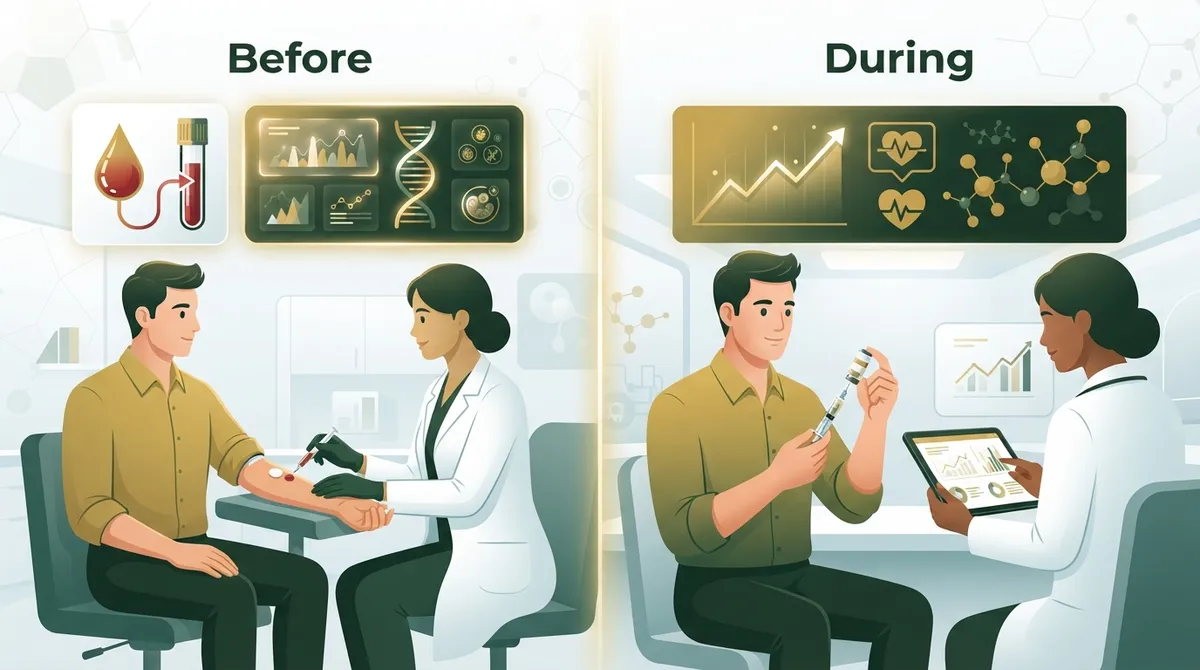
Why Lab Work Matters Before and During Peptide Therapy
Blood work is the roadmap for personalized care. It shows your clinician where you’re starting, helps shape a safe plan, and gives a way to track how your body responds over time. If you’re curious about the bigger picture, our guide on lab work for peptide therapy explains what gets tested and why.
Accurate results start with good preparation. A skipped instruction, a supplement you forgot to mention, or an unexpected coffee can nudge certain numbers. Nothing here is scary, but the details matter. If you want more background on why testing is so central, take a look at 7 reasons lab work matters before peptide therapy.
Also worth knowing: peptides are short chains of amino acids that signal your body to do specific things. If you’d like a refresher, what are peptides is a good plain-language starting point.

Start With the Most Important Step: Read Your Lab Order
Before anything else, look at the lab order or instructions your clinician sent. Different tests have different rules. For example, according to Labcorp’s test-preparation guidance, a CBC, thyroid tests, many vitamin tests, and most hormone panels can usually be done without dietary restrictions, while fasting glucose and fasting insulin commonly require fasting.
That’s why you shouldn’t assume. Never fast just because a friend did, or skip fasting because “it’s only a quick draw.” Follow the instructions for the tests actually ordered for you. If anything is unclear, send a message to your provider before the appointment, not after.
Quick Prep Reference Table
| Common Test Category | Fasting Usually Needed? | Prep Notes |
|---|---|---|
| Complete blood count (CBC) | Typically no | Stay hydrated; follow clinician instructions |
| Thyroid tests | Typically no | Disclose biotin use; it can interfere with some assays |
| Fasting glucose / fasting insulin | Commonly yes | Usually 8-12 hours; plain water generally allowed |
| Hormone panels | Often no | Time of day may matter; ask your clinician |
| Vitamin levels | Often no | Report all supplements you take |
Treat this table as a general guide only. Your order is the final word, and your clinician is the best person to confirm it.
Fasting: When It’s Needed and How to Do It Right
Here’s one of the most common questions: do I need to fast? The honest answer is, only if you’re told to. When fasting is required, MedlinePlus notes the usual window is 8 to 12 hours, with the exact length depending on the test and clinician instructions.
If you are told to fast, here’s a simple way to handle it:
- Confirm the exact fasting window with your clinician or the lab.
- Plan your last meal so the window ends right at your appointment. A morning draw makes this easy because most of your fast happens while you sleep.
- Drink plain water. It’s generally allowed and helps with hydration.
- Skip coffee, tea, juice, gum, and smoking during the fast if instructed to fast.
- Avoid hard exercise during the fasting period.
- Eat a good meal right after your draw. Pack a snack so you’re not hangry on the drive home.
When to Call Your Clinician First
Fasting isn’t right for everyone. If you have diabetes, are pregnant, have a history of fainting, or have another condition that makes fasting risky, contact your clinician before the test for individualized instructions. And please don’t delay urgent care just to complete routine lab prep. Your safety always comes first.
Medications, Vitamins, and Supplements: Tell Everything, Change Nothing
This is the part people often get wrong in both directions. Two rules keep it simple.
- Don’t stop prescription medicines or change peptide doses on your own. MedlinePlus cautions against stopping medicines unless your clinician directs it.
- Do tell your clinician about everything you take. That includes prescriptions, over-the-counter products, vitamins, and supplements.
Why the full disclosure? Some products can change results. High-dose biotin is a classic example, since it can interfere with certain thyroid and hormone assays. That doesn’t mean biotin is bad. It just means your clinician needs to know so they can interpret your numbers correctly, or tell you whether to pause it for a few days before testing.
What to Disclose Checklist
- Prescription medications and doses
- Over-the-counter pain relievers, allergy meds, and sleep aids
- Vitamins and minerals, especially biotin
- Herbal products and powders
- Hormone therapies or other injections
- Any peptide you’re currently using, including the name, dose, and last dose time
Timing Your Peptide Dose Around Your Blood Draw
This is a big one for peptide users and a common point of confusion. Should you take your dose before the draw, or wait until after? There’s no universal answer. Some hormone measurements vary by time of day, and results during treatment can depend on when you last dosed.
The smart move is simple: ask your ordering clinician whether to test before or after a dose, then keep that timing consistent for repeat tests. Consistency lets you compare apples to apples across visits. There’s no universal “trough” rule that applies to every peptide or every assay, so don’t borrow advice from a forum post.
If you’re newer to how dosing works, our article on how to prepare for safe, effective peptide injections covers the day-to-day basics.
What to Bring to Your Lab Appointment
A little organization goes a long way, especially for busy professionals. Pack a small folder, or use your phone, with the following:
- Your lab order. Print it or have it ready to show.
- Photo ID and insurance card if you plan to use insurance for the draw.
- A medication and supplement list. Include doses and timing.
- Your peptide details. Name, dose, route, last dose and time, and treatment start date.
- A note of symptoms or side effects you’ve noticed.
- A water bottle and a snack for after the draw.
If you did not follow a preparation instruction, say so right away. Tell the collection staff, and let your clinician know. It’s not a mistake that ruins everything. It simply helps your provider read the result in context.
Day-Before and Day-Of Prep Timeline
Here’s an easy way to put all of this together.
| When | What to Do |
|---|---|
| 3-7 days before | Read your lab order. Ask your clinician about fasting, supplements, and dose timing. Schedule a morning draw if fasting is required. |
| Day before | Stay hydrated, eat normally unless told otherwise, get good sleep, and gather your documents. Avoid unusually hard workouts. |
| Morning of | Follow fasting rules if applicable. Drink plain water. Take or hold doses exactly as instructed. |
| At the lab | Share your medication list and last dose time. Mention any missed instructions. |
| After the draw | Eat, rehydrate, and watch for lightheadedness. Follow up with your clinician for results. |
Tips for a Smoother Blood Draw
Even with perfect prep, nerves can make a draw feel longer than it is. A few friendly tricks help.
- Hydrate well. Good hydration can make veins easier to find.
- Wear short or loose sleeves. Easy access means less fuss.
- Breathe slowly. Look away if needles make you uneasy.
- Speak up. If you feel dizzy, tell the technician right away so you can lie down.
- Keep timing consistent for repeat tests so your trend lines make sense.
What Gets Tested During Peptide Therapy?
The monitoring panel is individualized. Depending on the treatment and the clinical question, a clinician may order metabolic, blood-count, hormone, or other tests. Online commercial panels shouldn’t be treated as a universal requirement, or as a replacement for clinician-directed care. A “more tests is better” mindset can lead to confusion, extra cost, and numbers nobody needs.
If you want to understand the difference between a basic panel and a more targeted one, check out basic vs. targeted labs. And if you’re wondering what’s typically required up front, how to know what labs are required before peptides breaks it down.
Data-loving biohackers will appreciate that results aren’t just a one-time snapshot. Repeat testing helps your provider see trends and adjust. How often you repeat labs depends on your treatment and your clinician’s plan, so ask at your first visit. For published background on peptides in medicine, the National Library of Medicine hosts helpful research.
Common Mistakes to Avoid
Learning from other people’s slip-ups is the easiest way to avoid your own. Watch out for these:
- Fasting when you weren’t asked to. It’s unnecessary and can leave you feeling off.
- Not fasting when you were told to. It can skew glucose and insulin readings.
- Stopping a medicine or changing a dose on your own. Always check first.
- Forgetting to mention supplements. Biotin is the usual culprit.
- Inconsistent dose timing between tests. It makes trends hard to read.
- Not reporting what went wrong. A quick heads-up helps interpret results.
For a deeper dive, 5 lab work mistakes to avoid before peptide therapy is a handy companion read.
How Telehealth Makes Lab Prep Easier
One of the nicest things about telehealth is that you don’t have to guess alone. You message your provider, ask your questions, and get clear answers tailored to your plan. With Allura Longevity, clients start with a virtual consultation, complete blood work through LabCorp, and receive a customized six-month plan, with ongoing monitoring and adjustments by licensed providers.
That convenience is especially helpful for busy professionals who can’t carve out half a day for appointments. If you’re curious how the process flows, see what really happens during a peptide telehealth visit, or learn more about how to build a bloodwork-based BHRT peptide plan.
After the Draw: Results and Next Steps
Once your blood is drawn, the hard part is over. Results typically get reviewed by your clinician, who connects the numbers to your symptoms, history, and goals. Don’t panic over a single out-of-range value. Context matters, and your provider can tell you what’s meaningful and what’s noise.
If you accidentally ate, took a supplement, or mistimed a dose, just say so. Your clinician can account for it, and in some cases may recommend a repeat test. Honest communication is always better than worry.
Ready to Take the Next Step?
Preparing for peptide lab work really comes down to a handful of simple habits: read your order, confirm fasting, tell your clinician everything you take, keep dose timing consistent, and bring the right details. Do those, and you’ll show up confident and walk out with accurate, useful results.
If you’re ready to start with a plan built around your own blood work and goals, request a consultation with Allura Longevity. Our licensed providers, led by a board-certified Family Nurse Practitioner, guide you from labs to a personalized treatment plan delivered to your door, with telehealth care available in Florida, Georgia, Texas, Connecticut, Indiana, Maryland, New York, and California. Spots for new clients are limited each month, so reach out today or call (813) 510-6277.
FAQs
Q: Do I need to fast before peptide therapy blood work?
A: Only if your clinician or lab order says so. Many tests, like a CBC or most hormone panels, typically don’t need fasting, while fasting glucose and insulin commonly do. When fasting is required, it’s usually 8 to 12 hours with plain water allowed.
Q: Should I take my peptide dose before blood work?
A: There’s no one rule for every peptide or test, so ask your ordering clinician whether to test before or after a dose. Whatever they advise, keep the timing consistent for repeat tests so your results are easy to compare.
Q: Should I stop medications, vitamins, or supplements before peptide labs?
A: Please don’t stop anything on your own. Tell your clinician about everything you take, since some products, like high-dose biotin, can affect certain results. They’ll let you know if any pause is needed.
Q: What if I accidentally ate or took a supplement before my lab test?
A: No need to stress! Simply tell the collection staff and your clinician so they can interpret your results in context. In some cases, they may suggest repeating the test.
Q: What should I bring to a peptide therapy lab appointment?
A: Bring your lab order, ID, and a list of your medications and supplements. It also helps to note your peptide name, dose, last dose time, treatment start date, and any symptoms or side effects.





