

Key Takeaways
-
Stubborn midlife weight usually has several overlapping causes, including aging, muscle loss, estrogen shifts, poor sleep, and stress, rather than menopause alone.
-
Research suggests overall weight gain is more tied to aging than menopause status, while menopause appears to shift fat toward the waistline, with about a 4.63 cm waist increase in one review.
-
Resistance training two or three times a week and adequate protein help protect lean muscle, which supports a higher resting calorie burn.
-
Tracking sleep, stress, steps, and waist circumference for two weeks, plus getting thyroid, blood sugar, and hormone labs, helps identify which factors apply to you.
-
FDA-approved GLP-1 medications like semaglutide and tirzepatide have the strongest evidence for weight management, but they require clinician oversight and carry side effects.
-
Unapproved compounded peptides such as BPC-157 and CJC-1295 lack proven weight-loss benefit, and the FDA has flagged safety and quality concerns about them.
If you’re a woman in your 40s or 50s, you may have noticed something frustrating. The same eating habits and workouts that once kept you steady now seem to stop working. The scale creeps up. Your waistline gets thicker. And no matter how hard you try, that weight just won’t budge.
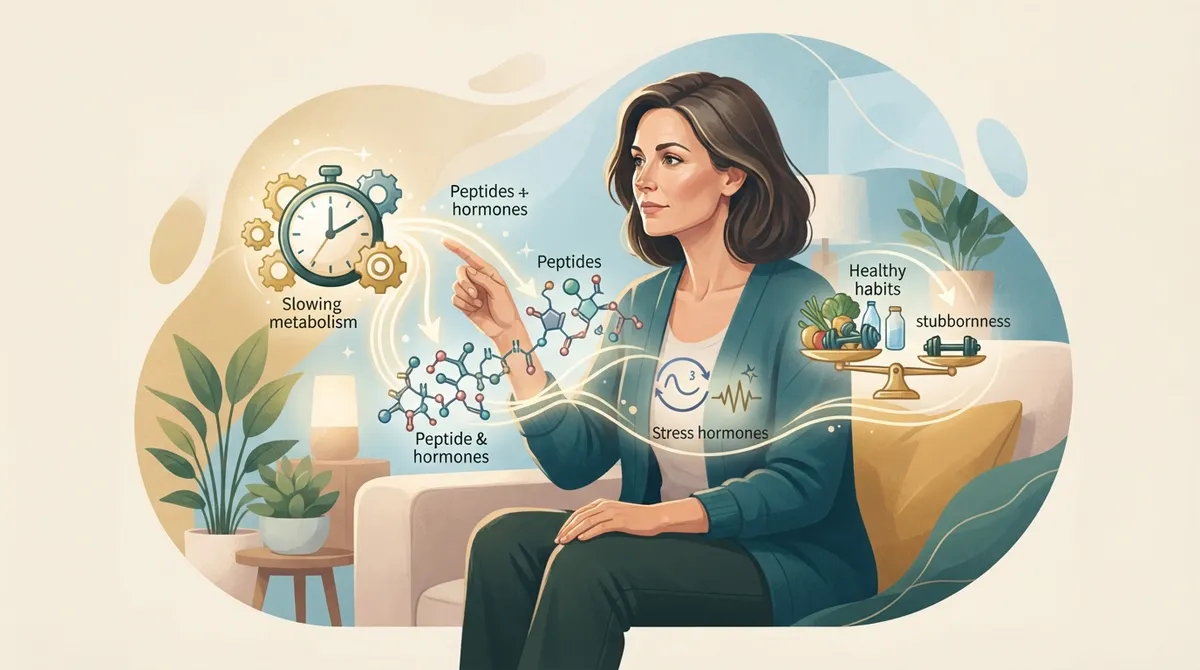
First, a quick hug: you’re not lazy, and you’re not imagining it. Understanding what causes stubborn weight in midlife women is the first step toward doing something about it. The truth is, there is rarely one single culprit. Several changes stack up at the same time, and they work together.
In this guide, we’ll walk through the real reasons weight gets stubborn in midlife, based on current research. We’ll also show you how to figure out which factors apply to you, and where peptide-based medicine fits in (and where it doesn’t). Whether you’re a health optimizer, a busy professional, or simply tired of guessing, this step-by-step approach can help you get clear answers.
Why Midlife Weight Feels So Different
Many women assume menopause is the one thing to blame. It’s a natural guess, but the research tells a more nuanced story.
A 2024 review in the NIH’s PMC library looked at a systematic review of 2,472 women. It found that overall weight gain was more tied to aging than to menopause status itself. What menopause did seem to change was where fat gets stored. The same review reported an average 4.63 cm (1.82 inch) increase in waist circumference during the menopause transition.
So the picture looks like this: aging nudges your weight up, while shifting hormones push fat toward your belly. That’s a double hit. Some long-term studies, such as the SWAN data cited in a 2025 review, estimate about 1.5 kg of gain per year during perimenopause. But weight patterns vary a lot from woman to woman, so treat that number as a rough guide, not a rule.
The Main Causes of Stubborn Weight in Midlife Women
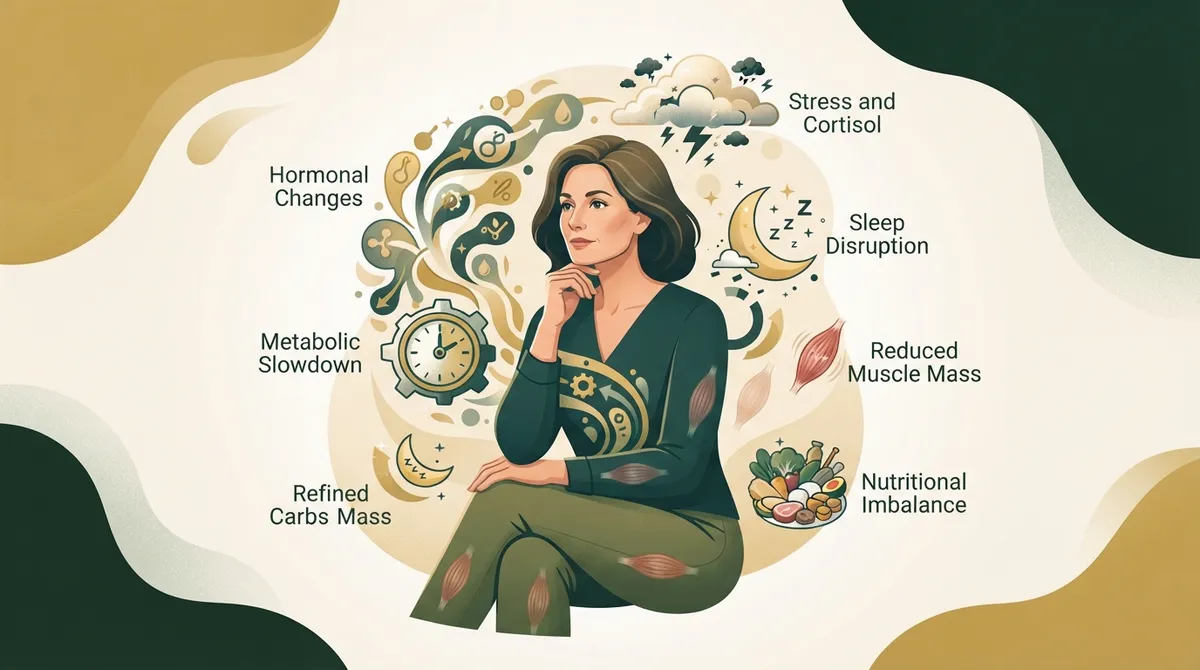
Let’s break down the biggest contributors. Most women have more than one of these going on at once.
1. Aging-Related Drops in Energy Burn
As we get older, our bodies tend to burn fewer calories per day. We also tend to move a little less, often without noticing. Desk jobs, busy schedules, and sore joints all play a part. Over a few years, a small daily gap adds up to real weight.
2. Loss of Lean Muscle
Muscle is your metabolic engine. After about age 30, most adults slowly lose muscle unless they train to keep it. Less muscle means a lower resting calorie burn. It also changes your body composition, so you can look softer even if the scale barely moves.
3. Estrogen Changes and Belly Fat
Falling estrogen is linked more clearly to a shift in fat toward the abdomen than to weight gain on its own. Belly (visceral) fat is the kind that sits deep around your organs. It’s more than a cosmetic concern, since it’s tied to metabolic health. If you want to dig deeper into this stage of life, our guide on how to navigate perimenopause with BHRT and peptides is a helpful read.
4. Poor or Broken Sleep
Hot flashes, night sweats, stress, and racing thoughts can wreck your sleep. Short or choppy sleep can raise hunger and cravings the next day. It also makes workouts feel harder. Many women are surprised by how much better their appetite feels after their sleep improves.
5. Stress and Cortisol
Midlife often brings a lot at once: careers, kids, aging parents, and your own changing body. Ongoing stress can affect eating habits, recovery, and where your body stores fat. It’s not the whole story, but it’s a big chapter.
6. Medications and Health Conditions
Some medicines can make weight harder to manage. So can certain conditions. This is why persistent or rapid weight changes deserve a real clinical look. Thyroid disease, for example, shouldn’t be assumed to be “just menopause.”
| Contributing Factor | What It Does | Is It Modifiable? |
|---|---|---|
| Aging | Lowers daily calorie burn and activity | Partly, through movement and strength training |
| Muscle loss | Reduces resting metabolism | Yes, with resistance training and protein |
| Estrogen decline | Shifts fat toward the belly | Discuss options with a clinician |
| Poor sleep | Raises hunger, lowers energy | Often, with sleep and symptom support |
| Chronic stress | Affects appetite and recovery | Yes, with lifestyle and support |
| Medications and conditions | Can promote weight gain | Needs medical review |
How to Figure Out Your Personal Causes: A Step-by-Step Plan
Here’s the practical part. You don’t have to guess. Follow these steps to narrow down what’s really going on.
- Track the basics for two weeks. Note your sleep hours, rough food intake, daily steps, stress level, and any hot flashes or night sweats. You’re looking for patterns, not perfection.
- Measure more than the scale. Record your waist circumference, how your clothes fit, and your strength in the gym. Midlife body changes often show up in your waist before your weight.
- List your medications and supplements. Bring the full list to your provider. Some products can affect appetite, fluid, or weight.
- Get lab work done. Ask about thyroid markers, blood sugar, lipids, and hormones. Blood work turns guesses into data. If you’re curious which tests matter, see our post on lab work for peptide therapy and what to test and why.
- Talk to a licensed provider. A clinician can tell you whether hormones, metabolism, sleep, or something else is the main driver for you.
- Build your plan around your findings. Nutrition, strength training, sleep support, and (when appropriate) medical treatment all come after the data, not before.
This approach is especially helpful for biohackers and data-driven women who like to see numbers before making decisions.
Where Peptide Therapy Fits In
Now let’s talk about peptides, because this is where a lot of confusion lives. The word “peptide” covers a huge range of products. Some are rigorously studied, FDA-approved medicines. Others are barely studied at all. It’s important to tell them apart. If you’re new to the term, WebMD offers a simple explainer on what are peptides.
Peptide-Based Medicines With Strong Evidence
For chronic weight management, the peptide-based medicines with the strongest evidence are the FDA-approved GLP-1 receptor agonists, such as semaglutide, and the dual GIP/GLP-1 agonist tirzepatide. The FDA’s 2025 prescribing information for Zepbound lists weight reduction and long-term maintenance of weight reduction among its indications for eligible adults with obesity.
These medicines can lower appetite and support weight loss. But they are real prescription drugs. They come with warnings, and common side effects include stomach-related symptoms. Whether one is right for you depends on your medical history and the specific product. To learn more, check out how you qualify for GLP-1 medication in 2026 and semaglutide vs. tirzepatide.
Unapproved “Research Peptides” Are a Different Story
Please don’t lump everything labeled “peptide” together. The FDA has flagged safety concerns with some compounded substances. It notes limited safety information and possible quality and immunogenicity concerns for compounded BPC-157. For CJC-1295, it cites limited clinical data and reports of increased heart rate and systemic vasodilatory reactions.
That doesn’t mean these should be dismissed out of hand in every setting, but it does mean they shouldn’t be treated as proven weight-loss tools. A good clinic will be honest about this difference. You can read more in our piece on approved peptides vs. wellness peptides.
| Option | Evidence for Weight Management | Key Considerations |
|---|---|---|
| Semaglutide (GLP-1) | Strong, FDA-approved for eligible patients | Needs clinician oversight; GI side effects common |
| Tirzepatide (GIP/GLP-1) | Strong, FDA-approved for eligible patients | Labeling includes important warnings |
| Compounded BPC-157 | Limited human data for weight loss | FDA notes safety and quality concerns |
| CJC-1295 | Limited clinical data | FDA cites reported adverse events |
What About Hormone Therapy and Weight?
Many women ask whether hormone therapy will fix midlife weight gain. The honest answer: menopausal hormone therapy is not a weight-loss treatment. Evidence doesn’t support prescribing it mainly to cause meaningful weight loss.
That said, it can be a good choice for menopause symptoms like hot flashes and poor sleep, after a careful risk-benefit talk with your provider. And better symptom control can make healthy habits easier to keep. If you’re weighing this decision, see our article on facts about hormone therapy for weight gain.
Everyday Habits That Support Your Plan
Whatever medical path you choose, daily habits still do the heavy lifting. Here are the ones with the biggest payoff for midlife women:
- Lift something heavy, two or three times a week. Strength training protects muscle and helps your metabolism.
- Eat enough protein. It helps you stay full and supports lean mass.
- Protect your sleep. Keep a steady bedtime and cool bedroom, and ask for help with night sweats.
- Walk more. Daily steps add up and support heart and joint health.
- Manage stress on purpose. Even short breaks, breathing practice, or time outdoors can help.
These aren’t glamorous, but they’re the foundation. Medications and peptides work best when they sit on top of this base, not in place of it. Our post on fat loss peptides that protect muscle explains why keeping lean mass matters so much.
Red Flags That Mean You Should See a Provider Soon
Not all weight changes are “normal midlife.” Reach out to a clinician if you notice:
- Fast or unexplained weight gain or loss
- Extreme fatigue, cold intolerance, or hair thinning (possible thyroid issues)
- Very heavy or unusual bleeding
- Swelling in your legs or face
- Mood changes that feel out of character
A proper evaluation can rule out other causes and keep you from chasing the wrong fix.
Getting Personalized, Supervised Support
The big lesson here is that stubborn weight in midlife is multi-factor, and the best plan is built around you. That’s where a telehealth clinic can make life easier, especially for busy women who don’t have time for repeated office visits.
Allura Longevity offers medically supervised, personalized peptide therapy delivered through telehealth. You start with a virtual consultation and lab work through LabCorp. Licensed providers, led by a board-certified Family Nurse Practitioner, then design a customized plan based on your results and goals. Treatment is shipped to your home, with ongoing monitoring and adjustments along the way. Services include GLP-1 weight loss medications for eligible patients, along with hormone and wellness support. Allura is licensed in Florida, Georgia, Texas, Connecticut, Indiana, Maryland, New York, and California.
Not sure if it’s a fit? Our guide to peptide consultation questions to ask can help you prepare.
Conclusion: You Don’t Have to Guess Anymore
Stubborn midlife weight isn’t a character flaw. It’s the result of aging, muscle loss, shifting hormones, sleep disruption, stress, and sometimes medications or health conditions, all working together. Menopause alone doesn’t explain it, and no single peptide is a magic fix.
The smartest path is simple: gather your data, rule out medical causes, strengthen your daily foundation, and add evidence-based treatment when it’s appropriate for you. If you’re ready for a personalized plan from licensed providers, request a consultation with Allura Longevity today. Spots for new clients are limited each month, so don’t wait. You can also call (813) 510-6277 to talk with our team.
FAQs
Q: What causes stubborn weight in midlife women?
A: It’s usually several things at once: aging-related drops in calorie burn and activity, muscle loss, poor sleep, stress, and menopause-related shifts in where fat is stored. Medications and health conditions like thyroid disease can also play a role. That’s why a personal evaluation beats guessing.
Q: Is menopause itself responsible for weight gain, or is it aging?
A: Research suggests overall weight gain is more tied to aging than to menopause status. Menopause seems to matter more for belly fat, with one review reporting about a 4.63 cm increase in waist size during the transition. So it’s a mix of both, with different roles.
Q: Can GLP-1 medications help midlife women lose weight?
A: Yes, for eligible patients. FDA-approved options like semaglutide and tirzepatide can reduce appetite and support weight loss. They require clinician oversight, and common side effects include stomach-related symptoms, so suitability depends on your health history.
Q: Are compounded or “research” peptides safe for weight loss?
A: They’re not proven for weight loss, and the FDA has raised safety and quality concerns about some, including compounded BPC-157 and CJC-1295. It’s best to stick with evidence-based, clinician-supervised options and ask any provider tough questions first.
Q: Does hormone therapy help with menopause weight gain?
A: Hormone therapy isn’t a weight-loss treatment, and it shouldn’t be prescribed mainly for that goal. It can help with menopause symptoms like hot flashes and poor sleep after a personalized risk-benefit discussion, which may indirectly make healthy habits easier.





