

Key Takeaways
-
Skin confidence peptide therapy is a marketing phrase, not a standardized medical treatment, so clarify whether you're considering topical products, oral collagen peptides, or clinician-guided plans.
-
A 2024 systematic review of nine studies found topical peptides showed modest improvements in fine lines, texture, and elasticity, but the research is small and randomized controlled trials are scarce.
-
Evidence from topical peptide creams cannot be applied to injectable or compounded peptides, since ingredient, dose, and delivery route all change safety and results.
-
No topical peptide products were FDA-approved as drugs for skin rejuvenation in the 2024 review, and compounded peptides are not FDA-reviewed for safety, effectiveness, or quality.
-
Sunscreen, gentle cleansing, moisturizing, sleep, and good nutrition do more for skin than any single peptide, so build these foundations first.
-
Before starting, ask which specific peptide is used, its regulatory status, the evidence for your goal, possible side effects, who oversees your care, and how progress will be measured.
Let’s be honest: most of us have stood in front of a bathroom mirror, tilted our head toward the light, and wondered where that fine line came from. Skin changes can quietly shake our confidence. So it’s no surprise that “skin confidence peptide therapy” is a phrase popping up everywhere in 2026.
Here’s the friendly truth up front. “Skin confidence peptide therapy” is not a single, standardized medical treatment. It’s a marketing phrase for peptide-based products and services meant to support how your skin looks and feels. Some have promising research behind them. Others are mostly hype.
In this guide, we’ll walk you through how to approach this topic with a clear head. You’ll learn what peptides are, what the evidence really says, how topical and injectable options differ, and how to build a smart, safe plan with a qualified clinician. No guarantees, no pressure. Just honest information from one curious person to another.
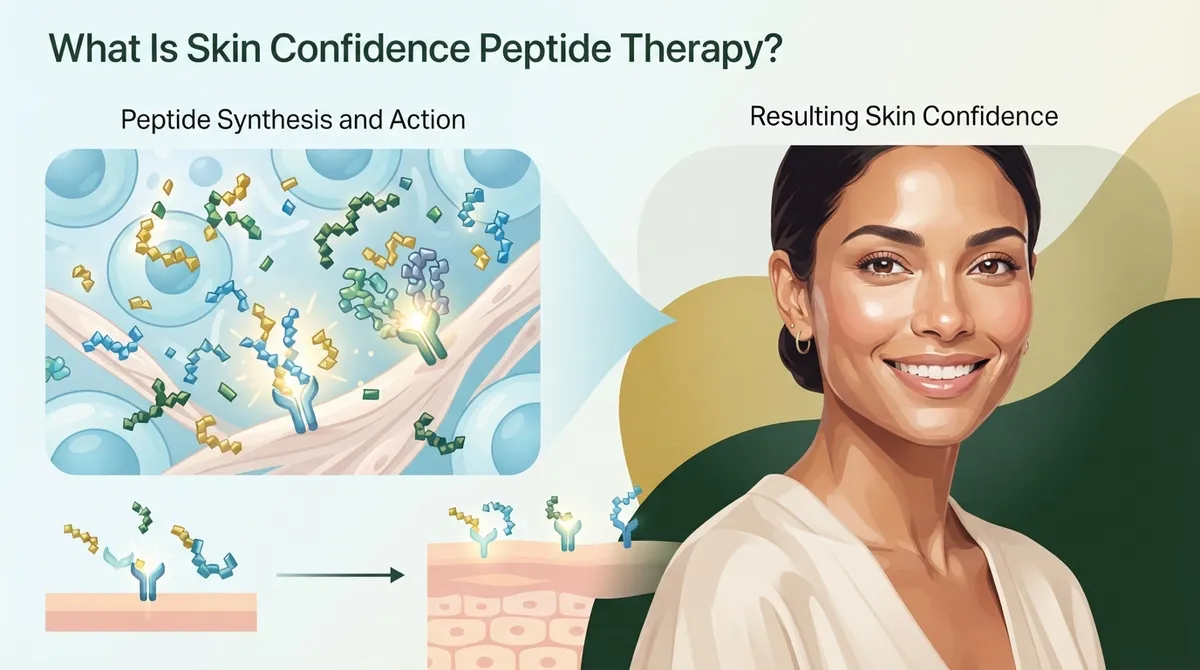
What Is Skin Confidence Peptide Therapy?
Peptides are short chains of amino acids, the building blocks of proteins. Your body makes them naturally, and they act as tiny messengers that help cells do their jobs. If you’d like a deeper primer, 8 Facts That Explain What Are Peptides in 2026 covers the basics, and what are peptides from WebMD offers a general overview.
When people say skin confidence peptide therapy, they usually mean one of three things:
- Topical peptide skin care: serums and creams applied to the skin’s surface.
- Oral collagen peptides: supplements taken by mouth.
- Clinician-guided peptide therapy: personalized plans designed by a licensed provider, often based on lab work and overall health goals.
These are very different things. Lumping them together is where confusion starts, so let’s untangle them.

What Does the Research Actually Say?
Good news first: there is real science here. Now the honest caveat: it’s early, and it’s limited.
A 2024 systematic review looked at nine studies of topical peptides for skin outcomes. According to the research shared through the National Library of Medicine and related databases, the findings were encouraging but small in scale.
| Skin Outcome | Studies Reporting Improvement (out of 9) |
|---|---|
| Fine lines or wrinkle appearance | 3 |
| Skin texture | 3 |
| Elasticity or viscoelasticity | 2 (one study found no difference) |
| Wound-healing benefits | 2 |
| Increased skin thickness | 1 |
The review also reported no negative side effects among human participants. That’s reassuring, but with so few studies, it doesn’t prove every product is risk-free. Randomized controlled trials were scarce, and the evidence was not strong enough to support broad claims.
So what’s the takeaway? Peptides may help some people see modest improvements in certain skin measures. They are not a miracle, and anyone promising guaranteed results deserves a raised eyebrow.
Topical vs. Injectable: Why the Difference Matters
This is the most important section of the whole article, so grab your tea and stick with us.
Research on a peptide cream cannot be applied to an injectable peptide. The ingredient, dose, formulation, and route of administration all change the picture. Evidence for one tells you very little about the other.
| Feature | Topical Peptide Skin Care | Injectable or Compounded Peptides |
|---|---|---|
| How it’s used | Applied to the skin surface | Injected under a clinician’s direction |
| Typical regulatory path | Often sold as cosmetics | Compounded products are not FDA-approved |
| Evidence level | Small studies, limited trials | Varies widely; cannot borrow topical data |
| Who guides it | You, or a skin care professional | A licensed medical provider |
Regulation deserves a quick note. The 2024 review reported that no topical peptide products were FDA-approved as drugs for skin rejuvenation. Cosmetic status isn’t proof that a product treats a medical condition. Meanwhile, compounded drugs are not FDA-approved, and the FDA does not review them for safety, effectiveness, or quality before they are marketed. If you’d like to explore this further, read FDA-Approved vs. Compounded Peptides: What Wins?
How to Build Skin Confidence With Peptides: A Step-by-Step Plan
Ready for the practical part? Here is a simple, sensible path you can follow.
- Define your goal honestly. Are you hoping to soften fine lines, improve texture, or simply feel more energized and healthy overall? Clear goals keep you away from vague promises.
- Start with the basics. Daily sunscreen, gentle cleansing, moisturizer, good sleep, hydration, and balanced nutrition do more for your skin than any single ingredient.
- Talk to a qualified professional. A dermatologist or licensed clinician can look at your skin, your history, and your health goals.
- Get data when it makes sense. For clinician-guided peptide therapy, blood work can show how your body is doing from the inside.
- Choose evidence-supported options first. Topical peptides in well-formulated products are a lower-commitment place to begin.
- Track your progress. Take photos in the same lighting every few weeks and keep simple notes.
- Review and adjust. Check in with your provider and tweak the plan as needed.
Prefer a broader roadmap? How to Start Peptide Therapy Safely and See Real Results pairs nicely with this list.
The Skin Care Foundations That Come First
We know it’s not the flashy part, but a solid routine is what makes any peptide product worth using. Peptides can’t do much if your skin barrier is stressed or sun-damaged every day.
- Sunscreen daily: UV exposure is one of the biggest drivers of visible aging.
- Gentle cleansing: harsh scrubs can irritate and undo your progress.
- Moisturizer: a healthy barrier holds onto water and looks smoother.
- Sleep and stress care: your skin repairs itself while you rest.
- Protein and colorful produce: your skin is built from what you eat.
Think of peptides as the supporting actor, not the lead. The foundations are the real stars.
Oral Collagen Peptides: Worth a Look?
Collagen peptide supplements are another popular route. Early research has explored how oral collagen peptides may influence skin measures like hydration and elasticity, though studies vary in quality and design. Supplements also aren’t a medical treatment, and results differ from person to person.
If you’re curious, our guide on how to boost collagen naturally after 30 and the overview What Peptides Do for Skin: A Real-World Guide for 2026 are friendly next reads.
Where Clinician-Guided Peptide Therapy Fits In
Many of our readers are health optimizers, busy professionals, and biohackers who like data. If that sounds like you, a personalized approach may appeal. A licensed provider can review your labs, your symptoms, and your goals, then discuss whether any peptide-based plan makes sense for you.
This is where careful language matters. A responsible provider will separate cosmetic skin care from medical treatment, explain what is and isn’t FDA-approved, avoid guaranteeing outcomes, and tell you plainly when the evidence is thin.
Allura Longevity offers personalized, medically supervised peptide therapy through telehealth, with plans built around your blood work and goals and delivered to your door. Clients begin with a $50 virtual consultation and LabCorp blood work, led by Ashley, a board-certified Family Nurse Practitioner. Allura Longevity is licensed in Florida, Georgia, Texas, Connecticut, Indiana, Maryland, New York, and California. Curious about the process? Peek at How to Get Prescription Peptides Safely in 2026 or learn about peptides for women and peptides for men.
Questions to Ask Before You Start
Good questions protect you. Bring this list to any consultation:
- Is this product or therapy FDA-approved, compounded, or sold as a cosmetic?
- What specific peptide is involved, and what is the evidence for my goal?
- How is it taken, and what are the possible side effects?
- Who is overseeing my care, and what are their credentials?
- How will we measure progress, and when will we reassess?
- What should I avoid, especially if I have damaged skin or other health conditions?
A trustworthy provider will welcome these questions. If you feel rushed or brushed off, that’s useful information too. For more ideas, see 15 Peptide Consultation Questions to Ask in 2026.
Red Flags to Watch For
The wellness world moves fast, and not every seller plays fair. Be cautious if you see:
- Promises of guaranteed or dramatic results
- “FDA-approved” claims that aren’t backed by proof
- No consultation, no labs, and no licensed provider
- Injectable peptides sold casually for cosmetic or wellness use
- Pressure tactics or countdown timers pushing you to buy now
Safety first, always. Injections and use on damaged skin deserve a conversation with a qualified clinician beforehand. You can read more in Is Peptide Therapy Safe? What You Really Need to Know.
How Long Might Results Take?
Skin renews itself slowly, so patience is part of the deal. Topical products are often used consistently for weeks to months before anyone judges the outcome, and individual results vary quite a bit. Because the research is small and varied, no honest source can promise a specific timeline or result.
A helpful mindset is to aim for gradual, realistic progress rather than overnight transformation. If you want a deeper look at timing across different peptide approaches, check When Do Peptide Therapy Before and After Results Show?
Building Confidence Beyond the Skin
Here’s something we love to remind people of: skin confidence isn’t only about skin. How you feel in your body, your energy, your sleep, and your stress all show up on your face. Many people find that feeling well overall makes them feel more at home in their appearance.
That’s why a whole-person approach tends to work best. Pair your skin care with movement you enjoy, restful sleep, and regular check-ins with your care team. If you’re curious about the bigger picture, How to Pick the Best Peptides for Aging in 2026 is a good companion read.
Final Thoughts: Confidence Starts With Clear Information
Skin confidence peptide therapy isn’t a magic wand, and that’s okay. The best path combines solid skin care basics, realistic expectations, and honest guidance from a licensed professional. Topical peptides show some promise in small studies, but the evidence is still growing, and injectable or compounded options need extra care and medical oversight.
If you’d like a personalized, lab-informed conversation about your goals, we’d love to help. Request a consultation with Allura Longevity today. New client spots are limited each month, and you can reach us at (813) 510-6277. You deserve a plan that fits you, and a team that tells you the truth.
FAQs
Q: What is skin confidence peptide therapy?
A: It’s a marketing phrase, not a standardized medical treatment. It usually refers to peptide-based products or clinician-guided plans meant to support skin appearance and, in turn, how confident you feel. Because it covers very different things, it’s wise to ask exactly which peptide and which method is being offered.
Q: Can peptides improve skin firmness, texture, or fine lines?
A: Some small studies of topical peptides reported improvements in fine lines, texture, and elasticity. That said, the evidence base is small, trials are limited, and results vary from person to person, so no one can promise a specific outcome.
Q: Are peptide skin treatments FDA-approved?
A: A 2024 review found no topical peptide products FDA-approved as drugs for skin rejuvenation. Many are sold as cosmetics, and compounded peptides are not FDA-approved, so it’s smart to ask any provider about the regulatory status of what you’re considering.
Q: What’s the difference between topical peptide skin care and injectable peptide therapy?
A: Topical products are applied to the skin’s surface, while injectable peptides are given under a clinician’s direction. Evidence for one cannot be applied to the other, since the ingredient, dose, and delivery route all affect safety and results.
Q: What should I ask a clinician before trying peptide therapy?
A: Ask what specific peptide is used, whether it’s FDA-approved or compounded, what the evidence is for your goal, and what side effects to watch for. Also ask who oversees your care and how progress will be measured, especially before any injections or use on damaged skin.





