
Key Takeaways
-
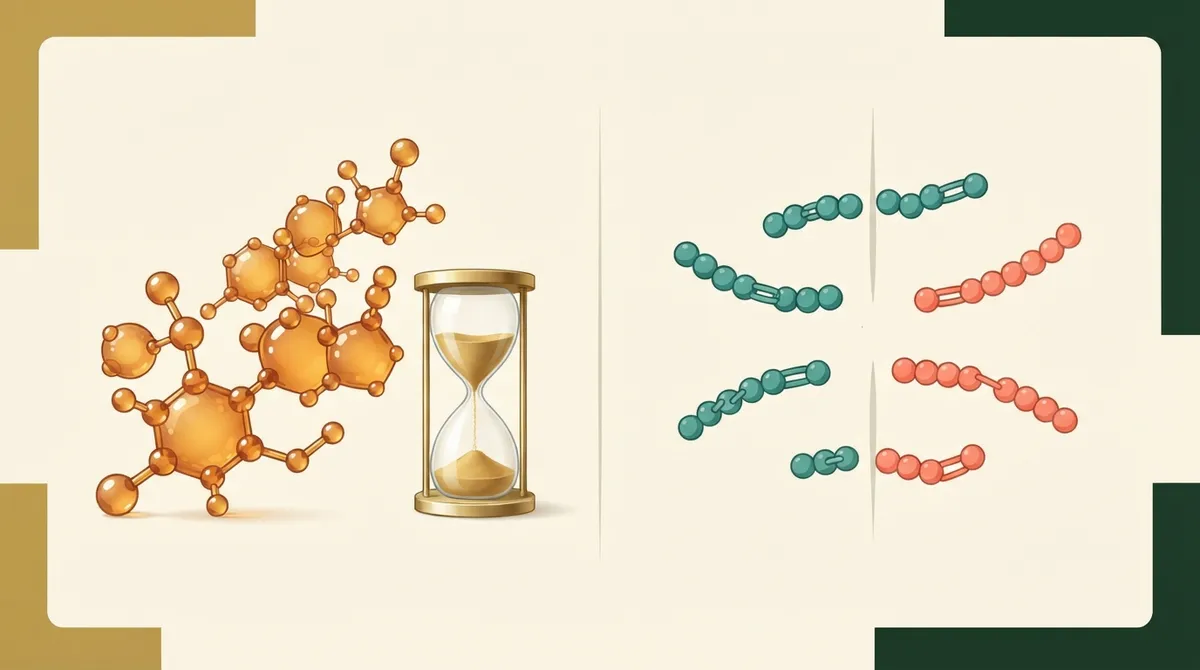
BHRT uses hormones like estradiol and progesterone, while peptides are short amino acid chains; they are separate categories and one cannot replace the other.
-
"Bioidentical" describes molecular structure only; it does not mean a product is safer or more effective, and compounded versions are not FDA-approved as finished products.
-
Hormone therapy has the strongest evidence for hot flashes, night sweats, vaginal dryness, and bone loss prevention in appropriate patients.
-
Timing matters: starting hormone therapy before age 60 or within 10 years of menopause onset generally has a more favorable benefit-risk balance than starting later.
-
Peptides are a diverse group with varied evidence, so claims about recovery, skin, or libido should be judged individually for each specific peptide.
-
Before starting either therapy, ask whether it is FDA-approved for your use, what evidence supports it, what monitoring is required, and insist on baseline labs and licensed provider oversight.
If you’re a woman in midlife, you’ve probably heard two terms tossed around in wellness circles: BHRT and peptides. They sound similar. They’re often sold side by side. But they are not the same thing, and mixing them up can lead to confusion, wasted money, and unmet expectations.
Here’s the friendly truth: both can have a place in a thoughtful health plan, but they do very different jobs. Understanding BHRT and peptides for women starts with knowing what each one is, what the research says, and what questions to ask before you begin. Whether you’re a busy professional chasing better energy, a data-driven biohacker who loves lab work, or someone simply wanting to feel like yourself again, this guide will help you sort fact from hype.
We’ll compare the two side by side, look at what the evidence supports in 2026, and show you how a licensed provider can help you build a safe, personalized plan. Grab your coffee and let’s dig in.

What Is BHRT, Really?
BHRT stands for bioidentical hormone replacement therapy. The word “bioidentical” means the hormones are chemically identical to the ones your body makes. Think estradiol and micronized progesterone.
Here’s an important detail that often gets lost. “Bioidentical” describes a molecule’s structure. It does not mean a product is more natural, safer, or more effective. Some FDA-approved hormone medicines contain bioidentical estradiol and progesterone. Other products are custom-compounded by a pharmacy and are not FDA-approved as finished products.
The FDA has said it lacks evidence that compounded bioidentical hormones are safe and effective, or safer or more effective than FDA-approved hormone therapy. Compounded products can also vary in dose and purity. If you’d like a deeper look at the hormone side, our guide on bioidentical hormone replacement breaks it down in plain language.
What BHRT May Help With
For the right patient, menopausal hormone therapy is the most effective treatment for hot flashes and night sweats. It also helps with genitourinary syndrome of menopause, which includes vaginal dryness and discomfort. It helps prevent bone loss and fractures too.
- Hot flashes and night sweats (vasomotor symptoms)
- Vaginal dryness and urinary symptoms
- Bone loss prevention
- Sleep disruption tied to hormone shifts

What Are Peptides, and How Are They Different?
Peptides are short chains of amino acids, the building blocks of proteins. Your body makes thousands of them, and they act as messengers that tell cells what to do. If you’re new to the topic, what are peptides is a helpful overview, and our post on 8 facts that explain what are peptides in 2026 covers the basics.
Here’s the key point: estradiol and progesterone are not peptides. They are steroid hormones. Peptide therapy is also not one single treatment. It’s a broad, varied category, and each peptide has its own evidence, its own uses, and its own safety profile.
That means claims about peptides should be judged one at a time. A peptide with strong evidence for one use may have little evidence for another.
Common Reasons Women Explore Peptides
- Better recovery from workouts and injuries
- Support for skin quality and collagen
- Metabolic and weight goals
- Sleep and energy support
- Sexual wellness and libido
You can explore peptides for women in more detail to see how these goals map to specific options.
BHRT vs. Peptides: A Side-by-Side Comparison
Here’s a quick snapshot to make the differences easy to see.
| Feature | BHRT / Hormone Therapy | Peptide Therapy |
|---|---|---|
| What it is | Hormones like estradiol and progesterone | Short amino acid chains that signal cells |
| Main evidence base | Strong for hot flashes, vaginal symptoms, bone loss | Varies widely by peptide; not established for menopause symptoms |
| FDA status | Some bioidentical products are FDA-approved; compounded versions are not | Some peptide medicines are approved for specific uses; many wellness peptides are not |
| Best known for | Menopause symptom relief | Recovery, skin, metabolism, wellness goals |
| Needs lab guidance | Yes | Yes |
The big takeaway? They are separate tools. One is not a substitute for the other. For a longer head-to-head, see bioidentical hormones vs. peptides.
What the Evidence Says About Menopause and Hormone Therapy
The North American Menopause Society (NAMS) published a 2022 position statement that remains a key reference. It says hormone therapy is the most effective treatment for vasomotor symptoms and genitourinary syndrome of menopause. It also reports that hormone therapy prevents bone loss and fracture.
It also gives guidance on timing. For most healthy, symptomatic women younger than 60 or within 10 years of menopause onset, with no contraindications, the benefit-risk balance is generally favorable. You can read the FDA’s overview on menopause for more background.
Starting later changes the picture. Beginning hormone therapy more than 10 years after menopause onset, or at age 60 or older, is linked to a less favorable balance. The absolute risks of coronary heart disease, stroke, venous thromboembolism, and dementia are higher.
This is why a one-size-fits-all approach doesn’t work. Your age, time since menopause, medical history, dose, route (pill, patch, gel), and need for a progestogen all matter. Our article on the safest hormone therapy options for women walks through these choices.
What the Evidence Says About Peptides for Women
Let’s be honest and kind about this part. The research reviewed for this article does not establish peptides as proven substitutes for menopausal hormone therapy. It also does not establish them as proven treatments for women’s menopause symptoms.
That doesn’t mean peptides are useless. It means claims need to be checked peptide by peptide. A few things to keep in mind:
- Peptides are not one standardized treatment
- Claims about energy, libido, weight, skin, or “hormone balance” should be evaluated individually
- Some peptide medicines are approved for specific uses, while many wellness peptides are not
- Safety monitoring matters, no matter which peptide you consider
If you’re curious about the current picture, our post on whether peptide therapy can ease menopause symptoms goes deeper. And the National Library of Medicine is a great place to read published research yourself.
Can You Use BHRT and Peptides Together?
Some women do pursue both under clinical guidance. The key phrase there is “under clinical guidance.” Because the two treatments do different things, a provider may consider them for different goals rather than as a combo that fixes everything.
For example, hormone therapy may be considered for hot flashes and bone protection. A peptide may be considered for a separate goal, like recovery or skin support, if the evidence and your health profile support it. You can learn more about how clinicians think about this in can menopause treatment include peptides and BHRT.
The best plans start with data. That means a conversation about your symptoms and goals, plus blood work to see where you stand.
How to Decide What Fits You: A Simple Step-by-Step
Feeling a little overwhelmed? Totally normal. Here’s an easy path to follow.
- Name your top goal. Is it hot flashes, sleep, recovery, skin, energy, or weight? Your main goal points you toward the right tool.
- Get baseline labs. Blood work gives your provider a clear starting point instead of guesswork.
- Review your history. Your age, time since menopause, family history, and medications all shape what’s safe.
- Ask about evidence. For any treatment, ask what research supports it for your specific goal.
- Plan for follow-up. Good care includes monitoring and adjustments over time.
If you want a roadmap for getting started, check out how to start peptide therapy safely.
Questions to Ask Before You Start Either Therapy
A good provider will welcome your questions. Bring this list to your consultation:
- Is this an FDA-approved medicine for my intended use, or is it compounded?
- What clinical evidence supports it for my specific goal?
- What are the risks for someone with my age and history?
- What labs and monitoring will I need?
- How will we know it’s working, and when do we reassess?
Our peptide consultation questions guide has even more ideas to bring along.
Why Personalization and Supervision Matter
Whether you choose hormone therapy, peptides, or a mix, the safest path is a personalized plan built around your own labs and goals. Generic protocols and one-size-fits-all packages tend to miss the mark.
That’s the approach at Allura Longevity. Our telehealth model pairs you with licensed medical providers, led by Ashley, a board-certified Family Nurse Practitioner. You start with a $50 virtual consultation, complete blood work through LabCorp, and receive a customized six-month plan delivered to your home. Ongoing monitoring means your plan can be adjusted as your body and goals change. Telehealth is available in Florida, Georgia, Texas, Connecticut, Indiana, Maryland, New York, and California.
If you like the convenience angle, see how telehealth compares with a local clinic.
Red Flags to Watch For
Be a smart shopper. Walk away or ask more questions if you notice any of these:
- Promises that peptides “replace” hormone therapy
- Claims that compounded or “natural” means automatically safer
- No blood work before a plan is built
- No licensed provider overseeing your care
- Pressure to buy a big package right away
To dig into this topic, read is peptide therapy safe and FDA-approved vs. compounded peptides.
The Bottom Line on BHRT and Peptides for Women
Here’s the simple summary. Hormone therapy has strong evidence for menopause symptoms like hot flashes and vaginal dryness, and for bone protection, when used in the right patient at the right time. Peptides are a diverse group with varied evidence, and they should not be treated as a stand-in for hormone therapy.
Neither is magic. Both work best when guided by labs, a careful health history, and a provider who explains the pros and cons honestly. You deserve a plan that fits you, not a trend.
Ready to talk it through with a licensed provider? Request a consultation with Allura Longevity today, or call (813) 510-6277. Spots for new clients are limited each month, so reach out while there’s room on the schedule.
FAQs
Q: What is the difference between BHRT and peptide therapy for women?
A: BHRT uses hormones like estradiol and progesterone that are chemically identical to the ones your body makes. Peptides are short chains of amino acids that act as signaling messengers, and they are a completely separate category. Estradiol and progesterone are not peptides, so one does not replace the other.
Q: Are bioidentical hormones FDA-approved?
A: Some are! FDA-approved medicines can contain bioidentical estradiol and progesterone. Custom-compounded bioidentical products, however, are not FDA-approved as finished products, and the FDA says it lacks evidence that they are safer or more effective than approved options.
Q: Can peptides help with menopause symptoms?
A: The research reviewed here does not establish peptides as proven treatments for menopause symptoms. Hormone therapy remains the most effective option for hot flashes and vaginal symptoms in appropriate patients. If you’re curious about peptides, a licensed provider can help you weigh each one by its own evidence.
Q: Is it risky to start hormone therapy after age 60?
A: Starting hormone therapy at age 60 or older, or more than 10 years after menopause begins, is linked to a less favorable benefit-risk balance. Absolute risks of heart disease, stroke, blood clots, and dementia are higher. This is why a personal review with a provider is so important before starting.
Q: What should I ask before starting peptide therapy?
A: Ask whether the peptide is an approved medicine for your intended use, what clinical evidence supports it, and what safety monitoring is needed. It’s also smart to confirm that blood work and a licensed provider are part of the plan. A good clinic will happily answer every question.





