
Key Takeaways
-
No peptide is broadly approved specifically to preserve muscle during weight loss in 2026; 'lean muscle preserving peptides' is a marketing phrase, not an official medical category.
-
Semaglutide and tirzepatide are approved for weight management but not muscle protection; a 2025 review estimated roughly 25% to 40% of weight lost on GLP-1 medicines may be lean mass.
-
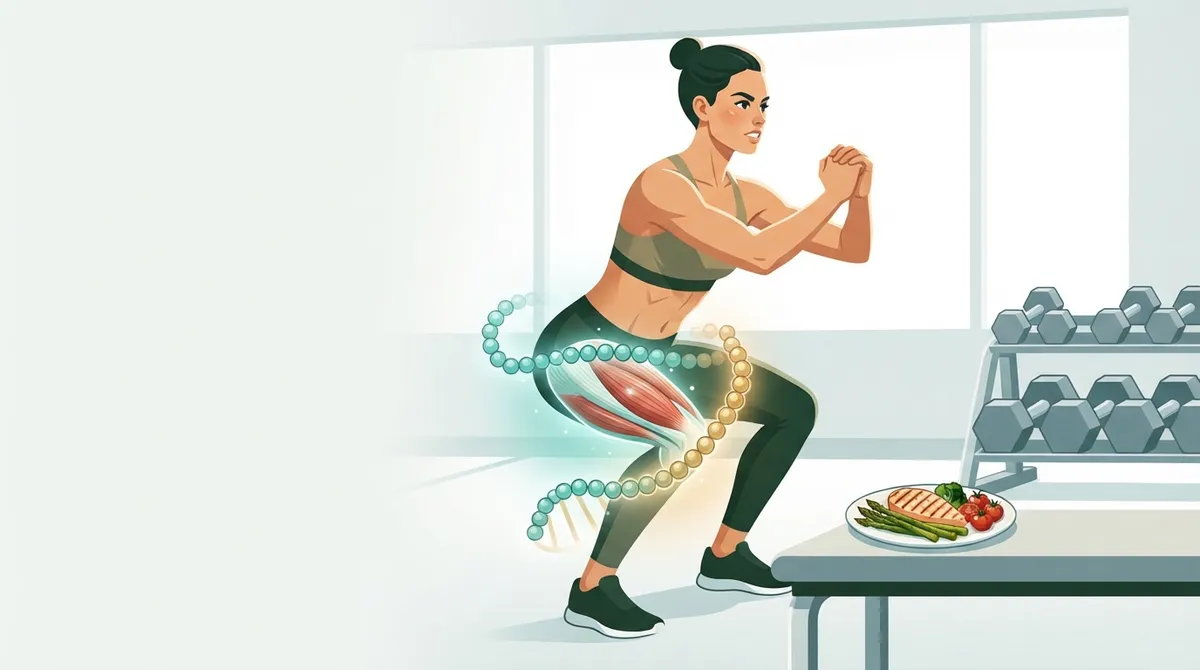
Resistance training two or three times a week, adequate protein at every meal, and avoiding crash dieting are the best-established ways to protect muscle during weight loss.
-
Lean mass on a DXA scan includes water and organs, so track trends over time alongside strength and function rather than reacting to a single scan.
-
Myostatin-pathway agents like trevogrumab and garetosmab showed promise in a phase 2 trial but remain investigational and are not available as standard care.
-
Before trying any peptide, ask which exact compound it is, whether it is FDA-approved for that use, who makes it, and what human research supports the claim.
If you have searched for lean muscle preserving peptides, you are not alone. More people than ever are using peptide-based weight loss medicines. And many of them have the same worry: “Will I lose muscle along with the fat?”
That is a smart question. The honest answer is a little more complicated than the marketing you may have seen online. “Lean muscle preserving peptides” is a catchy phrase, not an official medical category. In 2026, no peptide is broadly approved just to protect muscle during weight loss.
The good news? There is a lot you can do. This guide walks you through nine clear truths. You will learn what the phrase really means, what the research shows, and how a licensed provider can help you protect your strength while you reach your goals. Think of it as a friendly chat with someone who wants you to feel strong, not just smaller.
1. The Phrase Is a Marketing Term, Not a Medical Category
First, let’s clear up the label. “Lean muscle preserving peptides” is not a recognized treatment class. You will not find it in medical guidelines. Instead, it is a phrase used in wellness circles to describe a few different ideas.
Most often, it points to one worry. Peptide-based GLP-1 medicines help people lose weight, and some of that lost weight can be lean tissue. People then wonder if another peptide can offset that loss. The phrase can also be used loosely for compounds sold online with big promises.
Because it can mean many things, always ask one question: which exact compound are we talking about? Good providers name the substance, explain its regulatory status, and tell you what the evidence does and does not show. If you are new to the basics, our guide 8 Facts That Explain What Are Peptides in 2026 is a helpful starting point.

2. Peptides Are Short Chains of Amino Acids With Many Different Jobs
Peptides are small chains of amino acids, the same building blocks that make up proteins. Your body already makes thousands of them. They act like tiny messengers, helping control hunger, growth, healing, and more. For a plain-language overview, see what are peptides from WebMD.
Here is the key point. “Peptide” is a huge family, not a single product. Some peptide medicines are FDA-approved for specific conditions. Others are investigational. Others are sold without approval for the claims made about them. Lumping them together is how confusion starts.
- Approved peptide medicines: Reviewed by regulators for specific uses, like semaglutide and tirzepatide.
- Investigational peptides: Still being studied in clinical trials.
- Unapproved or loosely regulated products: Marketed with claims that may not be backed by strong evidence.
3. GLP-1 Medicines Promote Weight Loss, Not Muscle Protection
Semaglutide and tirzepatide are peptide-based medicines. They are approved for certain uses, including type 2 diabetes and, for specific products, chronic weight management. They work by changing appetite signals and helping you feel full sooner.
They are designed to help you lose weight. They are not approved to preserve muscle. That does not make them bad. It simply means they are one tool, and the best results come when a clinician pairs them with smart nutrition and movement. To learn more about how they work, read How to Understand GLP-1 Peptide Therapy in 2026.
If you are curious about the broader picture of weight support, our article on How to Lose Weight With Peptide Therapy in 2026 walks through what a medically guided approach can look like.
4. Any Weight Loss Can Include Lean Tissue
Here is something that surprises many people. Losing weight by almost any method can mean losing some lean tissue along with fat. Diets, surgery, and medicines can all do it. This is not unique to peptides.
A 2025 review in BMJ Nutrition, Prevention & Health noted that GLP-1 medicines can reduce lean mass, and so can calorie restriction. The takeaway is simple: the issue is how much weight you lose and how you lose it, not just which tool you use.
Let’s look at how some major trials described it.
| Study | Medicine | Approx. Body-Weight Loss | Share of Loss Attributed to Lean Mass |
|---|---|---|---|
| STEP-1 DXA substudy (68 weeks) | Semaglutide 2.4 mg | About 14.9% | About 34% |
| SURMOUNT-1 DXA substudy (72 weeks) | Tirzepatide (pooled doses) | About 21.3% | About 25% |
| COURAGE phase 2 (26 weeks) | Semaglutide alone | Varies by group | About 33% (3.3 kg lean mass loss) |
A 2025 review also estimated that roughly 25% to 40% of weight lost on GLP-1 medicines may be lean mass. But please remember: that range varies by study, population, length of treatment, and how it was measured. It is not a guarantee for you personally.
5. Lean Mass Is Not the Same Thing as Muscle
This one matters a lot, especially for data-loving readers. When a DXA scan says you lost “lean mass,” that number includes more than skeletal muscle. It also counts water, organs, connective tissue, and other non-fat tissue.
So a drop in lean mass does not automatically mean weaker muscles or poor function. Water shifts alone can change the number. This is why interpreting your scan with a clinician is so important.
Here are smart ways to read your results:
- Look at trends, not single scans. One reading can be noisy.
- Check function too. Track grip strength, lifting numbers, and how you feel climbing stairs.
- Compare methods consistently. Use the same type of scan and similar conditions each time.
- Talk through hydration. Fluid changes can shift lean mass readings.
- Review with your provider. Context turns numbers into a useful plan.
For a deeper look at tracking, see 12 Body Composition Facts Peptide Users Need in 2026.
6. Investigational Myostatin Pathway Drugs Show Promise but Are Not Approved
Now for the exciting science. Researchers are studying agents that target the myostatin and activin pathways, which help control muscle growth. Two names you may hear are trevogrumab and garetosmab.
In the phase 2 COURAGE trial, people took semaglutide alone or with these investigational agents. Semaglutide alone was linked to 33% of weight loss coming from lean mass at week 26. Adding trevogrumab, with or without garetosmab, reduced the measured lean mass loss. The sponsor reported that trevogrumab prevented about half of the loss.
That is encouraging. But here is the honest caveat: these agents are investigational. They are not approved for weight loss or muscle preservation, and phase 2 results do not make them routine options. Be cautious of any website that claims to sell them as proven solutions.
| Category | Examples | Status in 2026 | What It Means for You |
|---|---|---|---|
| Approved GLP-1 peptide medicines | Semaglutide, tirzepatide | Approved for specific indications | Effective for weight loss; not muscle-preserving on their own |
| Myostatin/activin pathway agents | Trevogrumab, garetosmab | Investigational | Promising early data; not available as standard care |
| Online “muscle peptides” | Varies by seller | Often unapproved for claimed uses | Marketing is not proof; check quality and regulation |
7. Resistance Training and Protein Are Still the Gold Standard
If there is one “secret,” it is not a vial. It is lifting weights and eating enough protein. These are the best-established ways to support muscle during weight loss, and no unapproved peptide replaces them.
You do not need to become a gym rat. Even two or three short sessions a week can make a real difference. The goal is to give your muscles a reason to stay.
Try these friendly, practical habits:
- Strength train regularly. Think squats, rows, presses, and carries, using weights that challenge you.
- Prioritize protein at every meal. Your provider can help set a target that fits your body and health history.
- Don’t crash diet. Very fast loss can raise the odds of losing lean tissue.
- Sleep well. Recovery happens while you rest.
- Stay hydrated and keep moving daily. Walking counts too.
Busy professional? Short, focused workouts can work. Ten to twenty minutes of resistance moves at home is far better than skipping the week because you cannot fit in a long session. If strength gains are your main goal, you may enjoy How Can You Build Muscle After 40 and Keep It?
8. Compounded and Online Peptides Need a Compound-by-Compound Look
You may see websites offering peptides “for muscle” with exciting claims. Please slow down here. Each compound needs its own evidence check. A good sales pitch is not clinical proof.
Unapproved or poorly sourced products can have uncertain quality, dosing, safety, and legal status. That is a real concern when you are injecting something into your body. Our guide on FDA-Approved vs. Compounded Peptides: What Wins? explains the differences in plain language.
Before you try anything, ask these questions:
- What is the exact compound, and what is it being used for?
- Is it FDA-approved for that use, or is it investigational or unapproved?
- Who prepares it, and how is quality verified?
- What human research supports the claim?
- Who is monitoring my labs and symptoms?
You can also check the research yourself. The National Library of Medicine is a trusted place to read published studies. And our article on How to Get Prescription Peptides Safely in 2026 walks you through finding legitimate care.
9. A Personalized, Provider-Guided Plan Is the Smartest Path
Every body is different. Your age, hormones, activity level, medical history, and goals all shape what makes sense. That is why one-size-fits-all muscle promises usually fall flat.
A thoughtful plan often starts with blood work. Labs can reveal things like thyroid function, hormone levels, and metabolic markers that influence energy and body composition. Then a licensed provider builds a plan around you, with check-ins to adjust as you go. Many aging adults and biohackers love this data-driven approach because it replaces guesswork with real numbers.
This is where Allura Longevity can help. Allura Longevity offers personalized, medically supervised peptide therapy through telehealth. Clients begin with a $50 virtual consultation and complete blood work through LabCorp. Licensed providers, led by Ashley, a board-certified Family Nurse Practitioner, design a customized six-month plan and deliver it to your home, with ongoing monitoring and adjustments. Services include GLP-1 weight loss support, testosterone replacement, injury recovery with BPC-157, and more. Care is available nationwide through telehealth, and Allura Longevity is licensed in Florida, Georgia, Texas, Connecticut, Indiana, Maryland, New York, and California.
If you are weighing options for your health goals, our article How to Start Peptide Therapy Safely and See Real Results is a helpful next read. And if you are comparing delivery options, see Local Clinic vs. Telehealth: Best Peptide Therapy Near You?
Quick-Reference: What Actually Helps Protect Muscle
| Strategy | Evidence Level | Practical Tip |
|---|---|---|
| Resistance exercise | Well established | Aim for a few sessions each week |
| Adequate protein and nutrition | Well established | Work with your provider on a daily target |
| Gradual, steady weight loss | Supported by clinical reasoning | Avoid extreme calorie cuts |
| Routine lab and body-composition monitoring | Good clinical practice | Track trends, not single readings |
| Investigational myostatin agents | Early (phase 2) | Not approved; do not self-source |
Ready to Protect Your Strength While You Reach Your Goals?
The big takeaway is encouraging. You do not need a mystery peptide to hold onto your strength. You need a smart, personalized plan, regular strength training, enough protein, and a licensed provider watching your progress. Lean muscle preserving peptides may sound like a magic fix, but real results come from honest guidance and consistent habits.
If you want a plan built around your labs, your schedule, and your goals, we would love to help. Request a consultation with Allura Longevity today. Spots for new clients are limited each month, so reach out early or call (813) 510-6277. Your future, stronger self will thank you!
FAQs
Q: What does “lean muscle preserving peptides” mean?
A: It is a marketing phrase, not an official medical category. It usually points to concerns about lean mass loss during GLP-1 weight loss, or to investigational and unapproved products. Always ask which exact compound is being discussed and whether it is approved.
Q: Can semaglutide or tirzepatide cause muscle loss?
A: Weight loss from any method can include some lean tissue, and GLP-1 medicines are no exception. A 2025 review estimated about 25% to 40% of weight lost may be lean mass, though results vary widely by person and study. Strength training and enough protein can help support your muscle.
Q: Are there FDA-approved peptides that preserve muscle during weight loss?
A: Not at this time. Semaglutide and tirzepatide are approved for specific uses like diabetes and weight management, not for muscle preservation. Agents like trevogrumab and garetosmab are still investigational.
Q: How can I protect muscle while taking a GLP-1 medication?
A: Focus on resistance training, adequate protein, steady weight loss, and good sleep. Work with a licensed provider who can monitor your labs and body composition. A personalized plan makes it much easier to stay on track.
Q: Does a drop in lean mass on a DXA scan always mean muscle loss?
A: No. Lean mass includes water and other non-fat tissue, so changes do not always mean weaker muscles. Looking at trends, strength, and function with your provider gives you the real picture.





