

Key Takeaways
-
Low desire is not automatically HSDD: a medical visit makes sense only if the change bothers you or strains your relationship or well-being.
-
Skip the product-first approach; a good program starts with a medical assessment, labs, and a review of medications, hormones, mood, and sleep.
-
Only bremelanotide (Vyleesi) is FDA-approved, and only for acquired, generalized HSDD in premenopausal women; other libido peptides lack comparable evidence.
-
Follow the label strictly: 1.75 mg subcutaneous, at least 45 minutes before sex, max one dose per 24 hours and eight per month, and stop after eight weeks without improvement.
-
Expect side effects like nausea, flushing, and headache, and avoid use with uncontrolled high blood pressure or known cardiovascular disease, which requires a provider who checks your history and blood pressure.
-
Verify who prescribes and where compounded products are made, and combine any treatment with sleep, stress relief, exercise, and open partner communication for better results.
If your desire has gone quiet, you are far from alone. Lots of women notice a dip in libido at some point, and many start searching for a quick fix. That search often leads to a women’s libido peptide program, a phrase you will see all over wellness websites in 2026.
Here is the thing: that phrase is a marketing label, not a medical diagnosis or a standard treatment plan. Some programs are built on solid medical care. Others lean on hype. The difference can save you money, frustration, and even your health.
In this friendly guide, we walk through nine common mistakes women make when exploring libido peptides, and how to avoid each one. Whether you are a busy professional, a data-loving biohacker, or simply someone who wants to feel like yourself again, you will leave with a clear, safe path forward. For a broader look at the basics, see 8 Facts That Explain What Are Peptides in 2026.

What Is a Women’s Libido Peptide Program?
A women’s libido peptide program is a plan that uses a peptide, which is a short chain of amino acids, to support sexual desire. There is no single, standard version. Each clinic builds its own, and quality varies a lot.
The best-established option is bremelanotide, sold under the brand name Vyleesi. It is an FDA-approved peptide-based medicine for one specific diagnosis: acquired, generalized hypoactive sexual desire disorder (HSDD) in premenopausal women. If you want a refresher on peptides in general, what are peptides is a handy starting point.
Other libido-related peptides or compounded protocols are not the same thing. They should never be described as equal to the FDA-approved option without real evidence. A good program starts with a medical assessment, not a product.
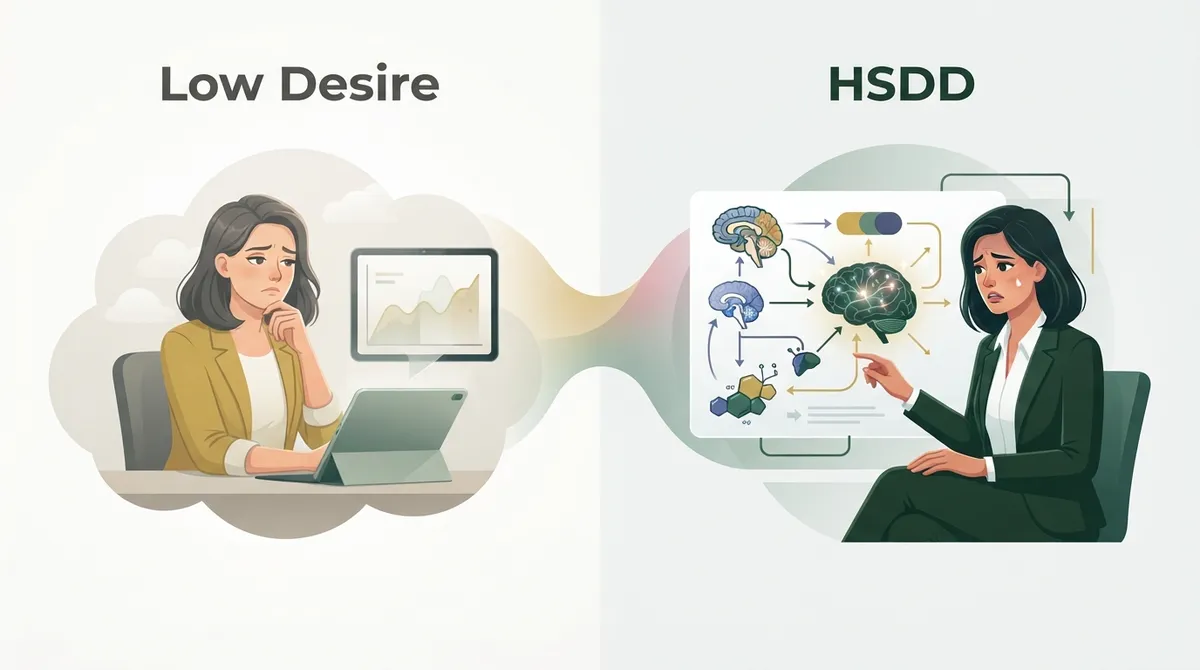
Mistake 1: Treating Low Desire and HSDD as the Same Thing
Low desire is common and often normal. It can shift with stress, sleep, life stages, and relationship seasons. HSDD is different. It means low desire that causes marked distress or strain in your relationship.
Published estimates of HSDD vary by study, but one review reports roughly 8% to 19% in large general-population groups. Another older summary cites about 5.4% to 13.6%. Because definitions and methods differ, treat these numbers as rough guides.
Ask yourself two questions:
- Has my desire changed in a way that bothers me?
- Is this distress affecting my well-being or my relationship?
If the answer to both is yes, a medical visit makes sense. If you simply feel less interested but are not bothered, you may not need treatment at all.
Mistake 2: Skipping the Medical Assessment
Jumping straight to a peptide is the most common misstep. Desire is shaped by many things at once, a mix of body, mind, and relationship factors. A good clinician looks at the whole picture first.
Common contributors include:
- Hormone shifts around perimenopause, menopause, or after pregnancy
- Medications, including some antidepressants and birth control options
- Mood and mental health, such as anxiety or depression
- Sleep, stress, and fatigue
- Relationship strain or past experiences
- Other health conditions, such as thyroid or pelvic floor concerns
The FDA-approved option is only meant for cases where low desire is not mainly caused by another medical or psychiatric condition, relationship problems, or a medication. That is why labs and a thorough history matter so much. Our guide on 6 Real Treatments for Low Libido in Women (2026) explains the wider menu of options.
Mistake 3: Assuming Every Libido Peptide Is FDA-Approved
This one trips up a lot of smart, careful people. Bremelanotide (Vyleesi) has FDA approval for a defined group of women. Other peptides marketed for libido do not have comparable approval or strong clinical evidence behind them.
The table below shows how to tell the difference.
| Question to Ask | FDA-Approved Bremelanotide | Other Libido Peptide Claims |
|---|---|---|
| Approved for women’s low desire? | Yes, for acquired, generalized HSDD in premenopausal women | Not established in the same way |
| Tested in large trials? | Yes, two 24-week placebo-controlled trials with 1,247 women | Evidence is limited or unclear |
| Clear label with dosing limits? | Yes | Varies by product |
| Best next step | Discuss eligibility with a licensed clinician | Ask about evidence, quality, and risks |
If you want to understand how approved and compounded products differ, read FDA-Approved vs. Compounded Peptides: What Wins?
Mistake 4: Ignoring Who the Approved Option Is Actually For
Vyleesi is approved for premenopausal women with acquired, generalized HSDD. That wording matters. Here is what it means in plain English:
- Acquired: your desire was fine before, then changed
- Generalized: the change is not tied to one situation or partner
- Premenopausal: you have not yet gone through menopause
It is not indicated for postmenopausal women, for men, or for improving sexual performance. So if you are past menopause, a clinician may suggest other routes, like hormone support or other care. Our article on 10 Safest Hormone Therapy Options for Women (2026) is a good next read.
Mistake 5: Getting the Dosing Rules Wrong
Peptide programs are not a “more is better” situation. The FDA label for Vyleesi gives clear limits that protect your safety.
| Label Detail | What It Says |
|---|---|
| Dose | 1.75 mg by subcutaneous injection |
| Where | Abdomen or thigh |
| Timing | At least 45 minutes before anticipated sexual activity |
| Daily limit | No more than one dose in 24 hours |
| Monthly limit | No more than eight doses per month |
| Reassessment | Stop after eight weeks if symptoms have not improved |
Never adjust these on your own or based on something you read online. Your clinician sets the plan. If you have never given yourself an injection, learn the basics first with How to Prepare for Safe, Effective Peptide Injections.
Mistake 6: Overlooking Side Effects and Safety Limits
Every treatment has trade-offs, and being honest about them builds trust. Common side effects of bremelanotide include nausea, flushing, headache, vomiting, and injection-site reactions. Nausea is the one people mention most. One review summarized in our research reported it in about 40% of patients, so check the current FDA label for exact rates.
Other points worth knowing:
- It can temporarily raise blood pressure and lower heart rate.
- It is contraindicated in uncontrolled high blood pressure and known cardiovascular disease.
- The label warns about focal skin darkening.
- Effective contraception is advised during treatment, and use during pregnancy is not recommended.
None of this means you should be scared off. It means you deserve a provider who reviews your health history, checks your blood pressure, and walks you through what to expect. For a bigger safety picture, see Is Peptide Therapy Safe? What You Really Need to Know.
Mistake 7: Trusting Unverified or Compounded Products Blindly
It is tempting to grab a cheaper peptide you found online. But product quality, purity, and sourcing really matter. Unverified products can be mislabeled or contaminated, and you may not know what you are injecting.
Before starting anything, ask:
- Who is the licensed prescriber, and can I speak with them?
- Where is the product made, and what quality standards apply?
- What evidence supports this product for women’s desire?
- What are the risks, and how will you monitor me?
A trustworthy clinic answers these clearly. Learn more in How to Get Prescription Peptides Safely in 2026 and the research on the National Library of Medicine site.
Mistake 8: Expecting Instant, Guaranteed Results
No peptide is a magic switch. Even with the approved option, the label advises stopping after eight weeks if you do not notice improvement. That built-in checkpoint is a good reminder to stay realistic and patient.
Desire also responds to things outside a syringe. Better sleep, stress relief, exercise, open talks with your partner, and sometimes counseling can make a real difference. The most successful plans combine medical care with healthy habits. If you are curious about timelines, our guide on When Do Peptide Therapy Before and After Results Show? sets honest expectations.
Mistake 9: Choosing a One-Size-Fits-All Program
Your body, hormones, and goals are unique. A cookie-cutter program ignores that. The strongest plans are built on your own lab work, health history, and priorities, then adjusted over time.
Here is what a thoughtful, personalized approach looks like:
- A clear medical review of your symptoms and distress level
- Blood work to check hormones and related markers
- An honest talk about whether an approved option fits you
- Ongoing follow-ups so your plan can change as you do
This is exactly how Allura Longevity works. Our licensed telehealth providers, led by a board-certified Family Nurse Practitioner, start with a virtual consultation and LabCorp blood work, then build a customized plan delivered to your door. We are licensed in Florida, Georgia, Texas, Connecticut, Indiana, Maryland, New York, and California. Explore our peptides for women approach, or read How to Build a Women’s Wellness Peptide Plan for a step-by-step view.
How a Safe Program Should Begin
Want a simple roadmap? Here is the order a responsible women’s libido peptide program should follow.
- Talk through your symptoms. Share when your desire changed and how it affects you.
- Review health and medications. Some medicines quietly lower desire.
- Get blood work. Labs help rule out thyroid, hormone, and other issues.
- Check eligibility. Decide together whether an approved option fits your situation.
- Start with clear rules. Follow dosing limits and safety guidance exactly.
- Follow up. Review results and side effects, then adjust or stop as needed.
This process keeps you safe and keeps your plan honest. It also fits busy schedules, since telehealth lets you do most of it from home. For more on starting out right, see How to Start Peptide Therapy Safely and See Real Results.
Ready to Feel Like Yourself Again?
A women’s libido peptide program can be a helpful piece of the puzzle, but only when it is built on real medical care, honest evidence, and a plan made just for you. Avoid these nine mistakes, and you will be miles ahead of most people who go down this road.
You deserve answers, not hype. If you are ready to talk it through with a licensed provider, request a consultation with Allura Longevity today, or call (813) 510-6277. Spots for new clients are limited each month, so reach out while there is room. This article is for education only and is not medical advice.
FAQs
Q: What is a women’s libido peptide program?
A: It is a marketing term for a plan that uses a peptide to support sexual desire, not a standard medical diagnosis. The best-established option is FDA-approved bremelanotide (Vyleesi), and a good program starts with a full medical assessment before any treatment.
Q: Is bremelanotide (Vyleesi) FDA-approved for low libido in women?
A: Yes, but only for acquired, generalized HSDD in premenopausal women, meaning low desire that causes real distress. It is not approved for postmenopausal women, men, or for boosting sexual performance.
Q: How is Vyleesi used, and how often can it be taken?
A: It is a 1.75 mg injection under the skin of the abdomen or thigh, given at least 45 minutes before anticipated sexual activity. You can use no more than one dose in 24 hours and no more than eight doses per month, and your provider will guide you.
Q: What are the side effects of libido peptide therapy?
A: Common ones include nausea, flushing, headache, vomiting, and injection-site reactions. It can also briefly raise blood pressure, so it is not right for anyone with uncontrolled hypertension or known heart disease.
Q: Are compounded peptides for women’s libido safe and effective?
A: The evidence is not comparable to FDA-approved bremelanotide, so they should not be treated as equivalent. Talk with a licensed clinician about product quality, sourcing, risks, and what research actually supports before you start.





