
Key Takeaways
-
Topical peptides show early promise with some studies reporting improvements in fine lines and elasticity, but evidence is limited, varies by formula, and results from one product cannot be applied to another.
-
Injectable peptides lack robust clinical trial evidence for treating wrinkles despite social media hype, and the FDA has not approved cosmetic peptide products for systemic use, making poorly sourced injectables a safety risk.
-
Oral collagen peptides supported by 26 randomized trials may improve skin hydration and elasticity, but they are not a cure for deep wrinkles and work best paired with sun protection, sleep, and balanced nutrition.
-
Always work with a licensed clinician rather than buying injectables online, verify product sourcing and purity, check your labs before starting peptide therapy, and set realistic expectations since skin changes take time.
-
Peptide therapy works best as part of a comprehensive skin plan that includes established treatments like daily sunscreen and prescription retinoids rather than as a standalone wrinkle solution.
-
Watch for red flags including overnight wrinkle-erasure promises, vague ingredient lists, claims that topical studies prove injections work, and pressure to buy large bundles immediately.
If you have ever stared at a fine line in the mirror and wondered whether a peptide could smooth it away, you are in good company. Peptides are one of the most talked-about ideas in skin care and longevity right now. But the phrase peptide therapy for wrinkles covers a lot of very different things. It can mean a face cream, a collagen powder in your morning coffee, or an injectable compound prescribed by a clinician.
Here is the friendly truth: those options are not the same. The research behind each one is different. So are the risks. In this guide, we break it all down in plain language. You will learn what the science says, where the evidence is thin, and how to make smart choices about your skin. Whether you are a busy professional, a data-driven biohacker, or simply someone who wants to age well, you deserve honest answers. Let’s dive in.

What Does Peptide Therapy for Wrinkles Really Mean?
Peptides are short chains of amino acids. Think of them as tiny messengers. Your body uses them to send signals, like “make more collagen” or “repair this tissue.” If you want a refresher, our guide 8 Facts That Explain What Are Peptides in 2026 covers the basics, and what are peptides is a helpful outside overview.
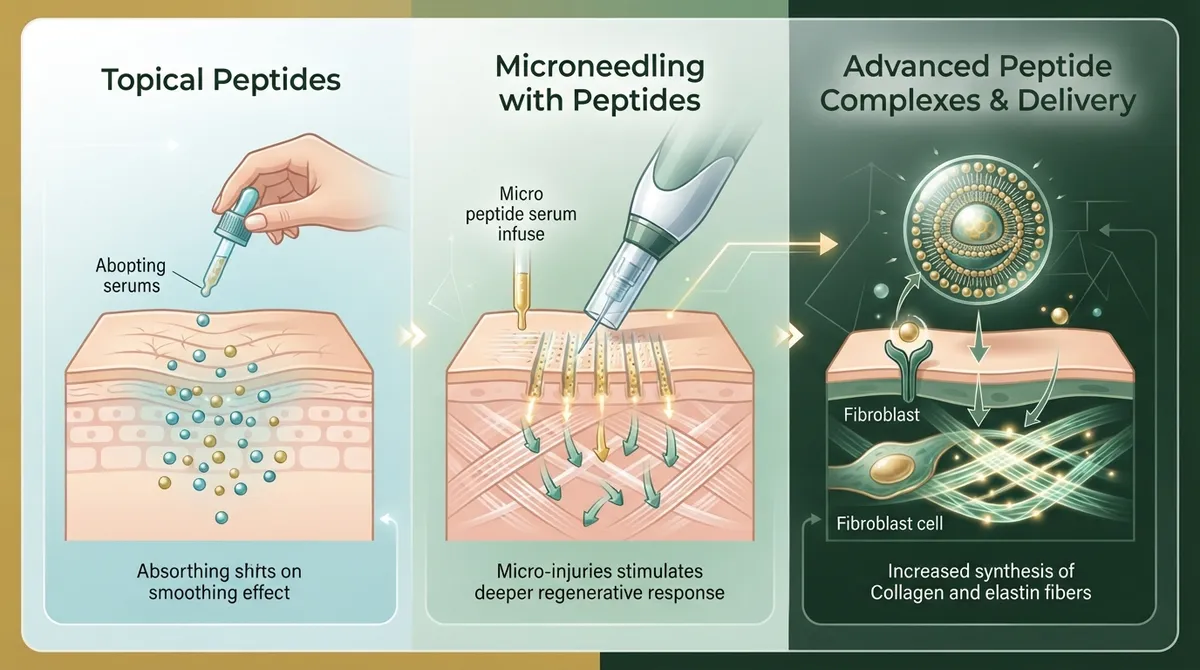
When people search for peptide therapy for wrinkles, they usually mean one of three things:
- Topical peptides: Creams and serums applied to the skin.
- Oral collagen peptides: Powders or capsules you swallow.
- Systemic or injectable peptides: Compounds given by injection under the direction of a clinician.
These three routes should never be lumped together. A study on a face cream tells us nothing about an injection. And a study on collagen powder tells us nothing about a serum. Keeping them separate is the first step to being an informed consumer.
Three Approaches Compared
This quick table shows how the approaches differ. It is a simplified snapshot, not medical advice.
| Approach | How It Is Used | Evidence for Wrinkles | Main Caution |
|---|---|---|---|
| Topical peptides | Creams and serums on the skin | Some small human studies show benefits; quality varies | Results depend heavily on the exact formula |
| Oral collagen peptides | Powders or capsules by mouth | Multiple trials suggest gains in hydration and elasticity | Protocols and products vary widely |
| Injectable or systemic peptides | Injection, prescribed by a clinician | No robust clinical trials establish wrinkle treatment | Unapproved or poorly made products may be risky |
What the Research Says About Topical Peptides
Topical peptides are the most common route for skin-focused products. They are marketed to support collagen, skin repair, and cell signaling. So do they work?
A 2024 systematic review looked at topical peptide studies in humans. It found some encouraging signals. Three studies reported improvement in fine lines or wrinkles. Two reported better elasticity, while one found no difference. Three reported better skin texture.
That sounds promising, and it is worth noting. But the same review was careful to point out the limits:
- Many studies were small or lacked a control group.
- Formulas and delivery systems differed a lot from study to study.
- There were no standard ways of measuring results.
- Randomized controlled trials were limited.
The review also searched a major trial registry and found only two trials of topical peptide formulas for cosmetic use at the time of its search in October 2023. In short, there is early promise, but not a mountain of proof. Results for one product cannot simply be applied to another.
Oral Collagen Peptides and Your Skin
Collagen peptides are chopped-up pieces of collagen that you swallow. They have their own research track, separate from injections. A 2023 meta-analysis, summarized in a later review, pulled together 26 randomized trials with 1,721 participants. These trials looked at skin hydration and elasticity after collagen supplementation.
That is a fairly large body of work compared with many beauty ingredients. Still, the study designs and doses varied, so results were not identical across the board. Collagen supplements may support skin hydration and elasticity, but they are not a magic eraser for deep lines.
If you like the idea of supporting your skin from the inside, see our take on how to boost collagen naturally after 30. It pairs well with sun protection, good sleep, and a balanced diet.
Do Injectable Peptides Treat Wrinkles?
This is where honesty matters most. There is currently no robust clinical trial evidence showing that systemic or injectable peptides effectively treat wrinkles. That is a big gap, and it is easy to miss when social media makes big promises.
Take GHK-Cu, a peptide often mentioned in anti-aging circles. It has real interest as a topical ingredient. But evidence for using it systemically for cosmetic anti-aging is especially limited. A topical product being used in skin care does not prove that injecting or swallowing it is safe or effective.
The FDA has not approved cosmetic peptide products for systemic use as wrinkle treatments. Compounded products are not FDA-approved either. Poorly characterized injectables can have uncertain identity, purity, dosing, and long-term safety. That is why we always encourage working with a licensed clinician rather than self-injecting something bought online. For more on this, read FDA-Approved vs. Compounded Peptides: What Wins?
A Note on Growth-Factor Products
You may also see “growth factor” serums mentioned alongside peptides. A 2023 review covered 33 studies (9 randomized trials and 24 uncontrolled case series) with 1,180 participants on topical growth-factor preparations. Those are a different category. Their results should not be treated as proof that injectable peptide therapy works for wrinkles.
How Peptides Fit Into a Bigger Skin Plan
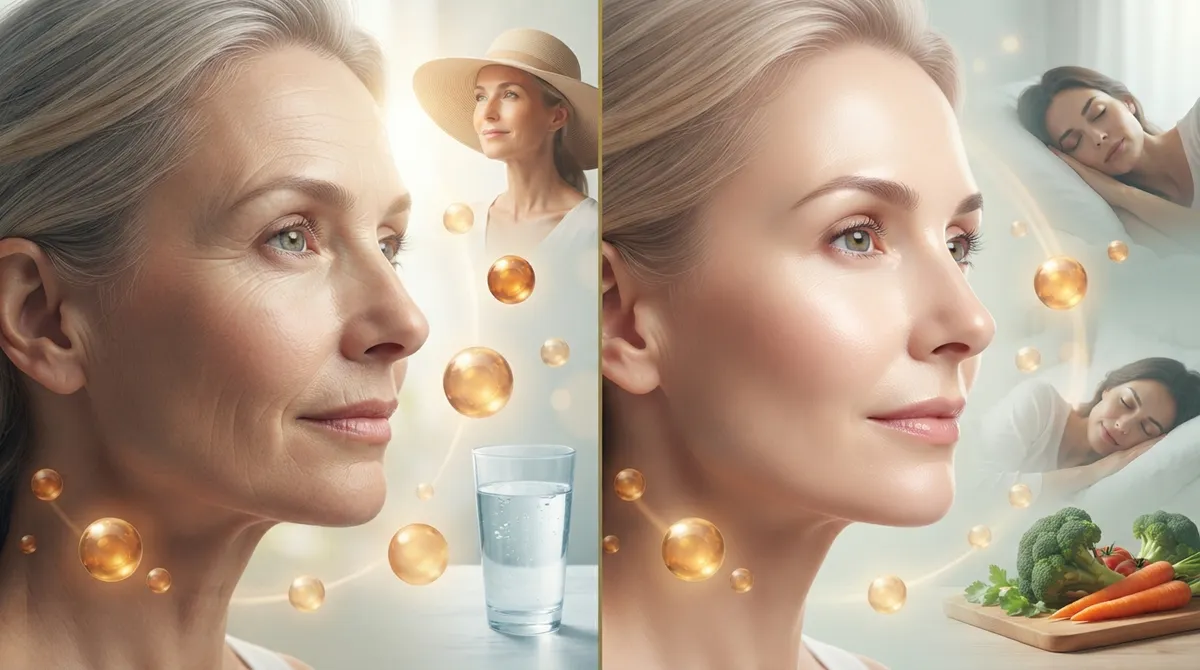
Here is a friendly reframe. Instead of asking, “Which peptide erases wrinkles?” try asking, “What does my whole body need to look and feel its best?” Skin reflects sleep, hormones, stress, nutrition, and sun exposure. A wrinkle-only mindset can miss the bigger picture.
At Allura Longevity, the focus is on personalized care built around your blood work and goals. Peptide therapy in this setting is designed to support overall vitality, including energy, sleep, recovery, and skin rejuvenation, rather than promising a quick fix for lines. If skin is a top priority, our guide to what peptides do for skin gives a grounded look at realistic expectations.
Habits That Support Younger-Looking Skin
- Wear broad-spectrum sunscreen every day.
- Prioritize seven to nine hours of sleep.
- Eat enough protein and colorful produce.
- Stay hydrated and limit smoking and heavy alcohol use.
- Ask a clinician about hormone and nutrient status if your skin changes suddenly.
Comparing Peptides With Established Wrinkle Options
It helps to see peptides in context. Established treatments have longer track records, though they also carry their own considerations. This table is a general guide to spark good questions for your clinician.
| Option | What It Does | Level of Evidence |
|---|---|---|
| Daily sunscreen | Helps prevent further sun damage | Strong |
| Prescription retinoids | Support collagen and smoother texture | Strong |
| In-office procedures | Target lines through a clinician-led plan | Established, varies by procedure |
| Topical peptides | May support texture and fine lines | Early and mixed |
| Injectable peptides for wrinkles | Not established for wrinkles | Lacking |
Notice that peptides can sit alongside these options, especially topical ones. They just should not replace the basics. For a broader look at what may help visible aging, try What’s the Best Treatment for Sagging Skin in 2026?
How to Approach Peptide Therapy Safely
If you are curious about peptides for skin or overall longevity, a careful process protects you. Here is a simple path to follow.
- Get clear on your goal. Are you after smoother skin, more energy, better recovery, or all three?
- Talk to a licensed provider. Avoid buying injectables from unverified online sellers.
- Check your labs. Blood work shows hormones, nutrients, and markers that shape your plan.
- Ask about sourcing. Find out how a product is made and who prepares it.
- Set realistic expectations. Skin changes take time and are often subtle.
- Follow up regularly. Adjustments and monitoring keep your plan on track.
Our article on how to start peptide therapy safely walks through this in more detail. You may also want to read Is Peptide Therapy Safe? What You Really Need to Know before making any decisions.
Red Flags to Watch For
The wellness world moves fast, and hype travels faster. Keep an eye out for these warning signs:
- Promises of “erasing” wrinkles overnight.
- Products sold without a prescription or clinician review.
- Vague ingredient lists or unclear dosing.
- Claims that a topical study proves an injection works.
- Pressure to buy large bundles right away.
A recent review of unregulated peptide use in the age of biohacking raised similar concerns about quality and safety. You can explore broader research through the National Library of Medicine. Being curious is great. Being cautious is even better.
What Allura Longevity Offers
Allura Longevity is a telehealth clinic offering personalized, medically supervised peptide therapy. New clients start with a $50 virtual consultation and complete blood work through LabCorp. From there, licensed providers, led by Ashley, a board-certified Family Nurse Practitioner, build a customized six-month plan. Treatments are delivered to your home, with ongoing monitoring and adjustments along the way.
The focus areas include energy, sleep, mental clarity, immune support, skin rejuvenation, muscle recovery, metabolism, and sexual wellness. Care is available in Florida, Georgia, Texas, Connecticut, Indiana, Maryland, New York, and California. To see how telehealth compares with visiting a clinic, check out Local Clinic vs. Telehealth: Best Peptide Therapy Near You?
Whether you are exploring peptides for women or peptides for men, the goal is the same: a plan that fits your body, your schedule, and your goals, with honest guidance at every step.
Final Thoughts: Smooth Skin Starts With Smart Choices
So, does peptide therapy for wrinkles work? The honest answer is: it depends on what kind. Topical peptides and oral collagen peptides show some encouraging, though varied, results. Injectable peptides have not been proven as a wrinkle treatment. Knowing the difference keeps you safe and saves you money.
The best skin plans start with the basics, add evidence-informed extras, and stay guided by a real clinician. If you would like personalized support for your skin, energy, and long-term vitality, we would love to help. New client spots are limited each month, so request a consultation today or call (813) 510-6277 to get started.
FAQs
Q: Do peptide injections reduce wrinkles?
A: Right now, there is no strong clinical-trial evidence showing that injectable peptides treat wrinkles. Some topical and oral products have early, mixed research, but injections have not been proven for this purpose. It is best to talk with a licensed clinician before trying any injectable.
Q: What is the difference between topical peptides and injectable peptide therapy for wrinkles?
A: Topical peptides are creams or serums applied to the skin, and some small human studies suggest modest improvements in fine lines and texture. Injectable peptides work throughout the body and have a much thinner evidence base for wrinkles, plus different safety concerns. Results from one route cannot be applied to the other.
Q: Do oral collagen peptides improve skin hydration or wrinkles?
A: A 2023 meta-analysis summarized in a later review covered 26 randomized trials and 1,721 participants and looked at skin hydration and elasticity. Results suggest possible benefits, though study designs varied. Collagen supplements may support skin quality but are not a cure for deep wrinkles.
Q: Are peptide treatments for wrinkles FDA-approved?
A: The FDA has not approved cosmetic peptide products for systemic use as wrinkle treatments. Compounded products are also not FDA-approved. That is why sourcing, quality, and clinician oversight really matter.
Q: What are the risks of injectable peptides used for anti-aging?
A: Unapproved or poorly characterized injectables can have uncertain identity, purity, dosing, and long-term safety. Self-injecting products bought online adds even more risk. Working with a licensed provider who reviews your labs and health history helps lower those risks.





