
Key Takeaways
-
No peptide therapy has been proven or FDA-approved specifically for menopause symptoms like hot flashes and night sweats; researchers found zero randomized controlled trials testing non-GLP-1 peptides in menopausal women.
-
Menopausal hormone therapy (MHT) remains the most effective evidence-based treatment for hot flashes and night sweats, especially for women aged 60 or younger or within 10 years of their last period.
-
Many injectable peptides sold online are unapproved and labeled 'for research use only,' creating risks including unclear purity, inconsistent dosing, and unknown immune reactions in humans.
-
Effective non-hormonal alternatives to peptides include SSRIs, SNRIs, gabapentin, fezolinetant, cognitive behavioral therapy, and clinical hypnosis—all backed by solid clinical research.
-
Peptides may support general wellness goals like energy, recovery, and sleep during menopause, but should complement proven menopause treatments, not replace them.
-
Before starting any peptide product, ask your provider if it's FDA-approved for your specific concern, what clinical evidence supports it, and who manufactures it with verified quality control.
If you’re waking up drenched in sweat at 3 a.m., snapping at your family over nothing, or wondering why your body suddenly feels unfamiliar, you’re not alone. Menopause hits differently for every woman, and it’s totally normal to look for new solutions when hot flashes and sleepless nights take over your life. You may have seen ads or social posts about peptide therapy for menopause symptoms, promising better sleep, more energy, or an easier transition. But before you spend your hard-earned money, let’s talk honestly about what the science actually says.
At Allura Longevity, we believe in real talk backed by real evidence. We’re a telehealth peptide therapy clinic, and we care deeply about helping women feel like themselves again. That means being upfront about what peptides can and cannot do for menopause, while also pointing you toward treatments that actually work. Let’s dig into the facts together, so you can make a confident, informed choice for your body.

What Is Peptide Therapy, Anyway?
Peptides are small chains of amino acids that act like messengers in your body. They tell your cells to do specific jobs, like building tissue, managing metabolism, or supporting recovery. If you want a deeper dive, this guide on what are peptides breaks down the basics in simple terms.
Some peptides are FDA-approved medicines. Others are sold as “research chemicals” without proper testing or oversight. This difference matters a lot, especially when a peptide is being marketed for something as personal and important as your menopause symptoms.
Why Menopause Makes Women Look for New Options
Menopause isn’t just about periods stopping. It can bring hot flashes, night sweats, mood swings, weight gain, brain fog, and low energy. These changes happen because your estrogen and progesterone levels drop. Naturally, many women want options beyond just “waiting it out.”
This search for relief has opened the door to peptide marketing aimed at menopausal women. Unfortunately, some of these claims move faster than the science does.

Do Peptides Actually Treat Menopause Symptoms?
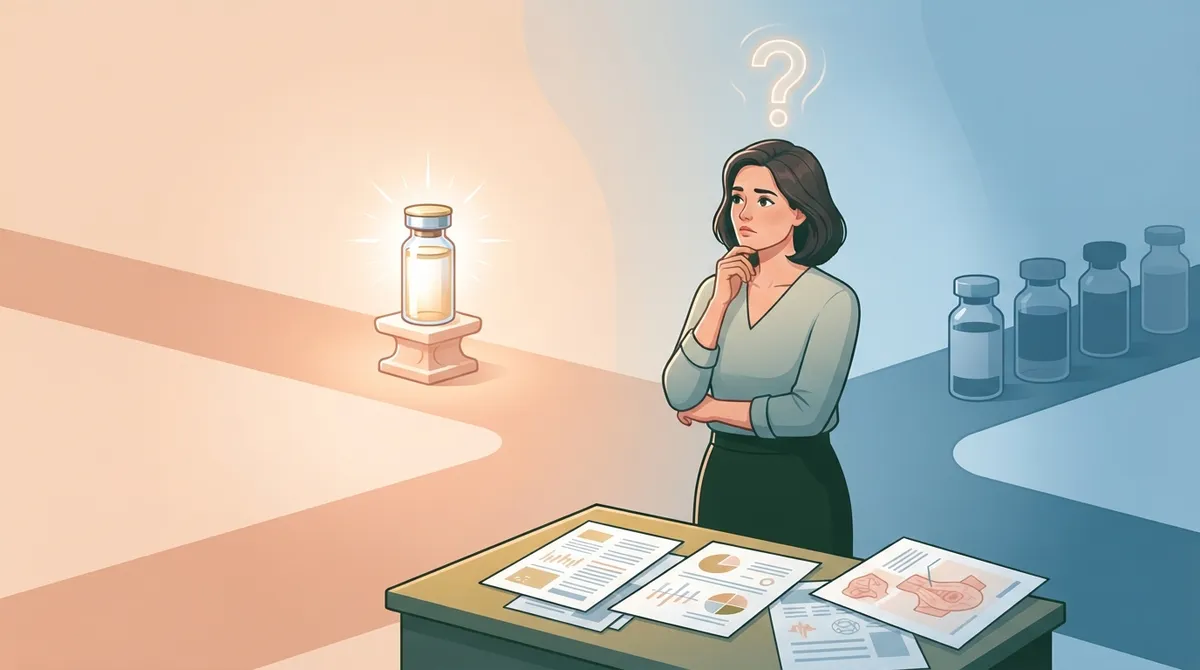
Here’s the honest answer: right now, there is no peptide therapy proven and approved specifically for menopause symptoms. Researchers looked hard for solid studies on non-GLP-1 peptides in perimenopausal or postmenopausal women. They found no relevant randomized controlled trials. That’s a big gap in the evidence.
This doesn’t mean every peptide is useless. It just means we can’t say a specific peptide will fix your hot flashes or mood swings, because nobody has properly tested that idea in menopausal women yet.
Popular Peptides You’ve Probably Heard About
Let’s look at three peptides commonly mentioned in menopause marketing, and what the research actually shows.
| Peptide | Common Marketing Claim | What the Evidence Shows |
|---|---|---|
| CJC-1295/Ipamorelin | Better sleep, energy, body composition | No menopause-specific trials; used mainly for general wellness goals |
| BPC-157 | Tissue repair, gut health, recovery | Only three small human studies exist; none tested menopause symptoms |
| Tesamorelin | Fat loss, metabolic support | Approved for a specific medical condition, not menopause symptoms |
If you’re curious about how these peptides work in other contexts, our articles on 9 BPC-157 Peptide Facts to Know Before You Start and How to Use CJC-1295 Peptide Safely for Real Results go into more detail.
What About GLP-1 Medications and Menopause?
GLP-1 medications are peptide-based drugs approved for diabetes or weight management. Many women in menopause struggle with weight gain, so it makes sense that GLP-1s get brought up often.
A 2025 review looked at GLP-1 use in menopausal women. The studies were small, often short-term, and sometimes retrospective. The review called for larger, better-designed studies before drawing firm conclusions. In short: GLP-1s may help with weight, but they are not an approved or proven fix for hot flashes or other menopause symptoms. You can learn more about how these medications work in our guide, How to Understand GLP-1 Peptide Therapy in 2026.
Why This Matters for Your Health Decisions
It’s easy to see a hopeful headline and want to try something new. But using a product for a purpose it hasn’t been tested for carries real risk. You deserve treatments backed by solid research, not just good marketing.
What Treatments Actually Work for Menopause Symptoms?
The good news is that effective, well-studied treatments do exist. Let’s walk through your real options.
- Menopausal Hormone Therapy (MHT): This remains the most effective treatment for hot flashes and night sweats. The 2025 Menopausal Hormone Therapy Guidelines confirm it works especially well for healthy women aged 60 or younger, or within 10 years of their last period.
- SSRIs and SNRIs: These medications, often used for mood support, can also reduce hot flashes for women who can’t or don’t want to use hormones.
- Gabapentin: Originally used for nerve pain, this medication has shown benefits for reducing night sweats and hot flashes.
- Fezolinetant: A newer nonhormonal option specifically approved for treating moderate to severe hot flashes.
- Cognitive Behavioral Therapy (CBT) and Clinical Hypnosis: These approaches are backed by research and recommended in current guidance for managing menopause symptoms.
Every woman’s health history is different, so the right choice depends on your personal risks and preferences. That’s why working with a licensed provider matters so much. Our article on How to Treat Perimenopause Symptoms Safely in 2026 covers this in more depth.
How Peptide Therapy Fits Into Your Bigger Wellness Picture
Even though peptides aren’t proven for hot flashes, that doesn’t mean they have no place in your wellness journey. Peptide therapy can support other goals during midlife, like muscle recovery, energy, sleep quality, and skin health. Many women use peptide therapy alongside standard menopause treatment, not as a replacement for it.
At Allura Longevity, we design plans based on your actual blood work and goals, not guesswork. If you want to explore whether peptides make sense for your broader wellness goals, our piece on 8 Best Hormone Therapy Peptides for Women in 2026 is a great next read.
The Risks of Unapproved or Compounded Peptides
Here’s something every woman should know before buying peptides online. Many injectable peptides sold today are not FDA-approved. They may be labeled “for research use only,” which is a red flag that they were never meant to be used as medicine in humans.
The FDA has raised concerns about these products, including:
- Limited or missing human safety data
- Unclear purity and dosing accuracy
- Possible immune system reactions
- No guarantee the product matches its label
Compounded peptides are not automatically the same as FDA-approved medicines. According to a detailed comment submitted to the FDA, quality control problems can create real safety risks for patients. For a deeper look at how to protect yourself, check out our guide, FDA-Approved vs. Compounded Peptides: What Wins?
Smart Questions to Ask Before Trying Any Peptide
Before starting any peptide product, ask your provider these questions:
- Is this peptide FDA-approved for my specific health concern?
- What clinical evidence supports using it for my symptoms?
- What are the proven alternatives I should also consider?
- Who is manufacturing this product, and how is quality verified?
- What side effects or interactions should I watch for?
If a provider can’t answer these clearly, that’s a sign to pause and look elsewhere. Learn more about smart evaluation in our article, How to Verify FDA Approval Before Peptide Therapy.
How Allura Longevity Approaches Menopause and Wellness
We know menopause is more than a list of symptoms. It’s a major life transition, and you deserve care that treats you like a whole person. That’s why our process starts with a $50 virtual consultation and complete blood work through LabCorp. From there, our licensed providers, led by board-certified Family Nurse Practitioner Ashley, build a personalized six-month plan based on your actual lab numbers and goals.
We’re honest about what peptides can do, and just as honest about what they can’t. If hot flashes or mood swings are your biggest concern, we’ll guide you toward evidence-based options and coordinate care that fits your life. If you’re looking to support energy, recovery, or overall vitality alongside your menopause care, our team can help build that plan too.
We proudly serve clients across Florida, Georgia, Texas, Connecticut, Indiana, Maryland, New York, and California, all through convenient, nationwide telehealth visits. Peptides are shipped directly to your home, so you never have to rearrange your busy schedule for an in-person visit.
Comparing Your Menopause Symptom Relief Options
| Treatment Type | Best For | Evidence Level |
|---|---|---|
| Menopausal Hormone Therapy | Hot flashes, night sweats, vaginal symptoms | Strong, guideline-recommended |
| SSRIs/SNRIs, Gabapentin, Fezolinetant | Women who can’t use hormones | Strong, evidence-based |
| CBT/Clinical Hypnosis | Mood, sleep, coping with symptoms | Recommended in guidelines |
| Non-GLP-1 Peptides (CJC-1295, BPC-157, etc.) | General wellness, recovery, energy | No menopause-specific trials yet |
According to a review published through the National Library of Medicine, understanding the biological role of peptides helps clarify why some are well-studied medicines while others remain experimental. This distinction is exactly why we build your plan around real data, not trends.
Simple Steps to Start Your Personalized Plan
- Schedule your $50 virtual consultation with a licensed provider.
- Complete blood work through LabCorp to understand your hormone levels.
- Review your results together and discuss your goals and symptoms.
- Receive a customized six-month treatment plan shipped to your home.
- Check in regularly so your provider can adjust your plan as needed.
This process ensures you’re never guessing. Every recommendation is based on your body, your labs, and your goals, not a one-size-fits-all approach.
Bringing It All Together
Menopause can feel overwhelming, but you don’t have to navigate it alone or fall for empty promises. Right now, peptide therapy isn’t proven to treat hot flashes or other core menopause symptoms directly. What is proven includes menopausal hormone therapy, certain medications like fezolinetant, and therapies like CBT. Peptides may still support your broader wellness goals, like energy, recovery, and vitality, when used safely and appropriately alongside your menopause care.
You deserve a provider who tells you the truth, even when it’s not the flashy answer you hoped for. Our team at Allura Longevity is here to build a plan around real evidence and your unique body, not hype. Spots fill up quickly each month, so if you’re ready for honest, personalized care, request a consultation today and let’s talk about what’s really right for you. You can also call us directly at (813) 510-6277 to get started.
FAQs
Q: Do peptide therapies help with menopause symptoms?
A: Right now, there’s no strong evidence that non-GLP-1 peptides directly treat menopause symptoms like hot flashes or night sweats. Researchers haven’t found solid clinical trials proving these peptides work for menopausal women specifically. That said, peptides may still support other wellness goals like energy and recovery during this life stage.
Q: Are any peptides FDA-approved to treat hot flashes or menopause?
A: No, there are currently no peptides FDA-approved specifically for treating hot flashes or menopause symptoms. The most effective FDA-approved options remain menopausal hormone therapy and nonhormonal medications like fezolinetant. Always check with a licensed provider before trying any product marketed for menopause relief.
Q: Can GLP-1 medications help with menopause-related weight gain or hot flashes?
A: GLP-1 medications are approved for diabetes and weight management, and they may help with menopause-related weight gain in some cases. However, a 2025 review found the research is limited, with mostly small or short-term studies. They aren’t approved or proven to treat hot flashes specifically, so it’s worth discussing realistic expectations with your provider.
Q: Are compounded peptides safe for women in perimenopause or menopause?
A: Compounded peptides can carry real risks, including unclear purity, inconsistent dosing, and limited safety testing in humans. The FDA has raised concerns about these products, especially those labeled for research use only. We always recommend working with a licensed provider who can explain exactly what you’re getting and why.
Q: What nonhormonal treatments are available for hot flashes?
A: Great nonhormonal options include SSRIs, SNRIs, gabapentin, and fezolinetant, all backed by solid research. Cognitive behavioral therapy and clinical hypnosis are also recommended in current medical guidelines. These can be wonderful choices if you can’t or don’t want to use hormone therapy.





