
Key Takeaways
-
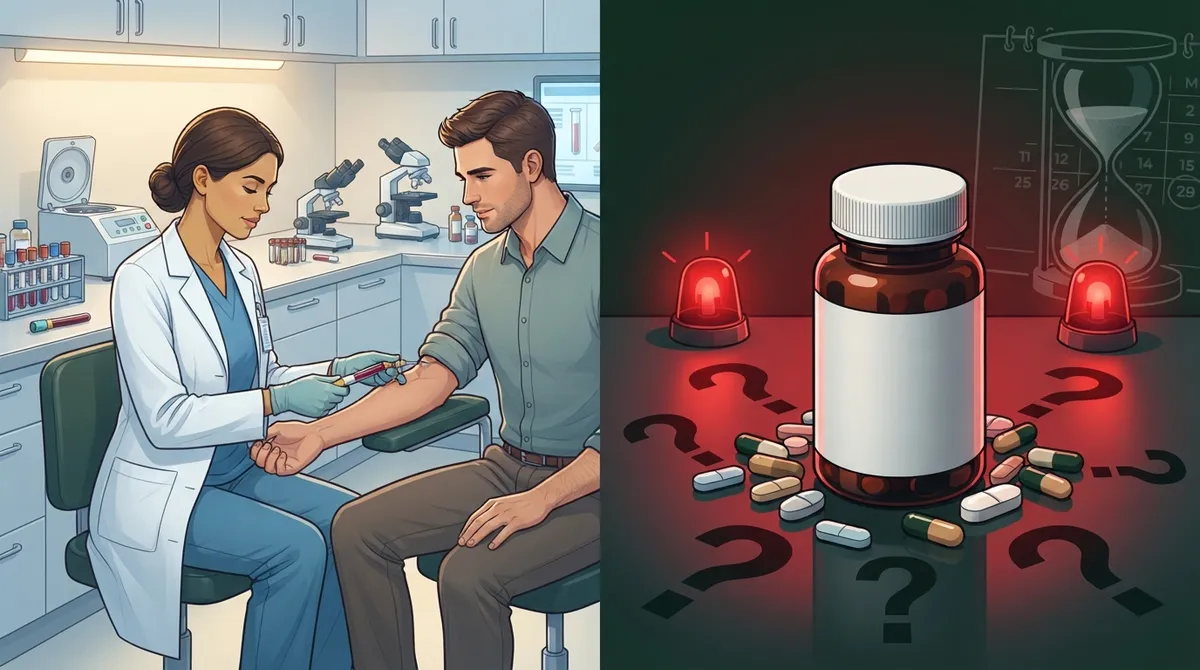
About 30% of men with low testosterone on initial testing have normal levels when retested, making repeat morning fasting blood tests essential before starting any treatment to avoid unnecessary therapy.
-
61.5% of testosterone-boosting supplements studied have no data proving they actually increase testosterone levels, and many contain undeclared drug ingredients that pose safety risks when combined with other medications.
-
Prescription testosterone replacement therapy requires diagnosis via repeated blood work and ongoing monitoring by a licensed provider, while over-the-counter supplements lack clinical oversight and cannot replace treatment for diagnosed hypogonadism.
-
Exogenous testosterone can suppress natural sperm production, making it unsuitable for men planning to conceive, so personalized medical consultation is essential before starting any hormone-related treatment.
If you’ve spent any time scrolling through wellness content, you’ve seen the promises. Bottles claiming to “naturally boost testosterone.” Peptides marketed as miracle fixes for low energy and muscle loss. And somewhere in the mix, real testosterone replacement therapy (TRT) that actually requires blood work and a licensed provider. It’s confusing, and honestly, a little exhausting to sort through.
Here’s the good news: you don’t need a medical degree to understand the difference. You just need clear facts. In this guide, we’re breaking down exactly how hormone therapy compares to supplements for men, where peptides fit into the picture, and how to figure out which path actually makes sense for your body. Whether you’re a busy professional who wants straightforward answers, a biohacker who lives for lab data, or someone simply trying to feel like yourself again, this article will help you separate real science from marketing hype.

1. Understand What Hormone Therapy Actually Treats
Testosterone replacement therapy isn’t a general wellness boost or an anti-aging shortcut. It’s a prescription treatment designed for men with diagnosed hypogonadism, meaning consistently low testosterone paired with real symptoms. The Endocrine Society is clear on this: diagnosis should only happen when symptoms line up with unequivocally and repeatedly low testosterone levels, not just a single low reading on a random day.
This distinction matters because it separates medical treatment from lifestyle marketing. TRT is not meant for men who feel a little tired but have normal hormone levels. It’s meant for men whose bodies are genuinely not producing enough testosterone, and who are experiencing symptoms like fatigue, low libido, or muscle loss because of it. If you’re curious whether your symptoms line up with a true deficiency, learning what low testosterone symptoms in men really look like is a smart first step.
Why Diagnosis Requires More Than One Blood Draw
Here’s something that surprises a lot of guys: about 30% of men who test low on an initial testosterone check turn out to have normal levels when retested. That’s a huge number. It’s why guidelines recommend repeat, morning, fasting testosterone testing using an accurate lab assay before anyone starts treatment.
Clinicians also look deeper than just the testosterone number. They often check luteinizing hormone (LH) and follicle-stimulating hormone (FSH) to figure out whether the issue starts in the testes or somewhere else, like the pituitary gland. This kind of thorough approach is exactly why working with a real provider matters more than guessing based on symptoms alone.

2. Compare Hormone Therapy and Supplements Side by Side
Let’s put this in plain terms. Prescription hormone therapy and over-the-counter supplements are not interchangeable, even though marketing sometimes blurs the line. Here’s a simple breakdown.
| Factor | Hormone Therapy (TRT) | Testosterone Supplements |
|---|---|---|
| Requires prescription | Yes | No |
| Requires diagnosis via blood work | Yes, repeated testing | No standard requirement |
| Clinical evidence | Strong, guideline-based | Often limited or absent |
| Monitoring required | Yes, ongoing labs | Not typically monitored |
| Regulatory oversight | FDA-regulated medication | Regulated as a supplement, not a drug |
This table isn’t meant to scare you away from supplements entirely. Some have a legitimate place in overall health. But it should make clear why they’re not a substitute for treating an actual diagnosed hormone deficiency.
3. Know the Real Evidence Behind Testosterone Supplements
This is where a lot of men get let down. A widely cited review of testosterone-boosting supplements found that 61.5% of the products studied had no data at all showing an effect on testosterone levels. That doesn’t mean every single supplement is useless. It means the majority of what’s marketed simply hasn’t been proven to work the way the label suggests.
There’s also a safety angle worth knowing about. The National Institutes of Health’s Office of Dietary Supplements has noted that products marketed for bodybuilding or sexual performance sometimes contain undeclared drug ingredients. That’s a real risk, especially if you’re combining supplements with other medications or peptide therapy.
When Supplements Might Actually Help
- Correcting a documented nutrient deficiency, like low vitamin D or zinc, found through blood work
- Supporting general health alongside a monitored treatment plan, not replacing it
- Filling gaps identified by an actual lab panel, not guesswork
Notice the pattern? Even in cases where supplements help, they work best when guided by real testing. That’s very different from grabbing a bottle off a shelf because the label promises big gains.
4. See Where Peptide Therapy Fits Into the Conversation
Peptides have become a hot topic in wellness circles, and for good reason. Some peptide-based medicines are legitimately approved for specific health conditions. But many peptides sold in wellness settings, like BPC-157, CJC-1295, and ipamorelin, are not FDA-approved treatments for low testosterone specifically. That doesn’t mean they lack value; it means their use has to be understood clearly, indication by indication, and administered under medical guidance.
If you want to understand this category more deeply, our guide on what peptides really are breaks down how these compounds work in the body and why they’re different from both hormones and traditional supplements. You can also learn more from this overview of what peptides are from a trusted medical resource.
Peptides Are Not One-Size-Fits-All
It’s important to remember that “peptide therapy” covers a huge range of compounds, each with different purposes. Some support muscle recovery, some support metabolic health, and some are being studied for anti-aging benefits. None of them are a direct swap for testosterone replacement, and none should be self-prescribed. This is exactly why working with a provider who understands both how peptide therapy compares to testosterone replacement matters so much for getting a safe, effective plan.
5. Watch Out for These Compounding and Safety Concerns
The FDA has raised real concerns about certain peptides sold through compounding pharmacies, including limited safety data, inconsistent product quality, and potential impurity issues. Compounded products are not FDA-approved, and being available through a compounding pharmacy does not mean a peptide is proven safe or effective for treating low testosterone.
This is one of the biggest reasons working with a licensed telehealth provider matters. A provider who orders real lab work, monitors your levels, and adjusts your plan based on data is operating in a completely different category than a supplement company making bold claims with zero oversight. According to research published by the National Library of Medicine, proper monitoring is a core part of safe hormone-related treatment, not an optional extra.
Fertility Is a Critical Factor Too
Here’s something men planning to grow their family need to know: exogenous testosterone can suppress natural sperm production. Guidelines actually recommend against starting TRT in men who want to conceive in the near term. This is a perfect example of why a personalized consultation, not a generic supplement stack, is the safer starting point.
6. Follow the Right Steps Before Starting Any Treatment
Whether you’re leaning toward hormone therapy, curious about peptides, or wondering if supplements alone could help, following the right process protects your health and your wallet. Here’s a simple roadmap.
- Get real blood work done, ideally morning and fasting, to check actual hormone levels
- Confirm results with a repeat test before assuming a diagnosis
- Talk with a licensed provider about your specific symptoms and goals
- Ask which treatments, whether hormone therapy or peptides, have solid evidence for your situation
- Set up a monitoring plan so your provider can track testosterone and hematocrit over time
- Avoid starting unmonitored supplements or peptides without medical guidance
Guidelines recommend checking testosterone levels three to six months after starting therapy, along with monitoring hematocrit at baseline, three to six months in, and then yearly. That kind of structured follow-up is something a bottle of supplements simply cannot offer.
Why Personalized, Monitored Care Wins Every Time
At the end of the day, the real difference between hormone therapy and supplements for men comes down to one thing: evidence backed by monitoring. Prescription hormone therapy works because it’s guided by labs, symptoms, and ongoing check-ins with a licensed provider. Supplements, in contrast, often skip all of that, leaving you to guess whether something is actually working.
This is where Allura Longevity stands out as a trusted option for men who want real answers instead of guesswork. Every treatment plan starts with a $50 virtual consultation and complete blood work through LabCorp, so your provider actually knows what’s happening in your body before recommending anything. From there, you get a personalized six-month plan, delivered right to your door, with ongoing monitoring led by Ashley, a board-certified Family Nurse Practitioner. If you want to explore whether peptides could complement your goals, our resource on what every man should know before trying peptides is a great next read.
If you’ve been stuck choosing between random supplements and wondering if hormone therapy is right for you, it might be time for a clearer answer. Learn more about personalized peptide therapy for men and see how a data-driven approach can help you feel like yourself again.
Spots for new clients are limited each month, so if you’re ready for answers backed by real labs and real monitoring, request a consultation today and take the first step toward a plan built specifically for you.
FAQs
Q: What is the difference between testosterone replacement therapy and testosterone booster supplements?
A: Great question, and one we hear all the time! TRT is a prescription treatment for diagnosed low testosterone, backed by blood work and ongoing monitoring. Supplements, on the other hand, are sold over the counter and often lack solid evidence proving they actually raise testosterone.
Q: Can supplements increase testosterone if my levels are normal?
A: Honestly, probably not in any meaningful way. If your levels are already normal, most supplements won’t push them higher, and the marketing claims often outpace the actual science behind them.
Q: How is low testosterone diagnosed in men?
A: It starts with a morning, fasting blood test, then a repeat test to confirm the results are consistent. Providers also look at LH and FSH levels to understand exactly what’s causing the deficiency, not just treat the number on paper.
Q: Can peptide therapy raise testosterone or treat low testosterone?
A: Peptide therapy covers a wide range of compounds, and not all of them are approved specifically for treating low testosterone. It’s important to talk with a licensed provider about which peptides, if any, fit your specific health goals safely.
Q: Are peptides like BPC-157, CJC-1295, or ipamorelin FDA-approved for low testosterone?
A: Not for that specific use, no. These peptides are studied for other purposes, and their legal status and evidence should be checked individually rather than assumed to work like traditional hormone therapy.





