
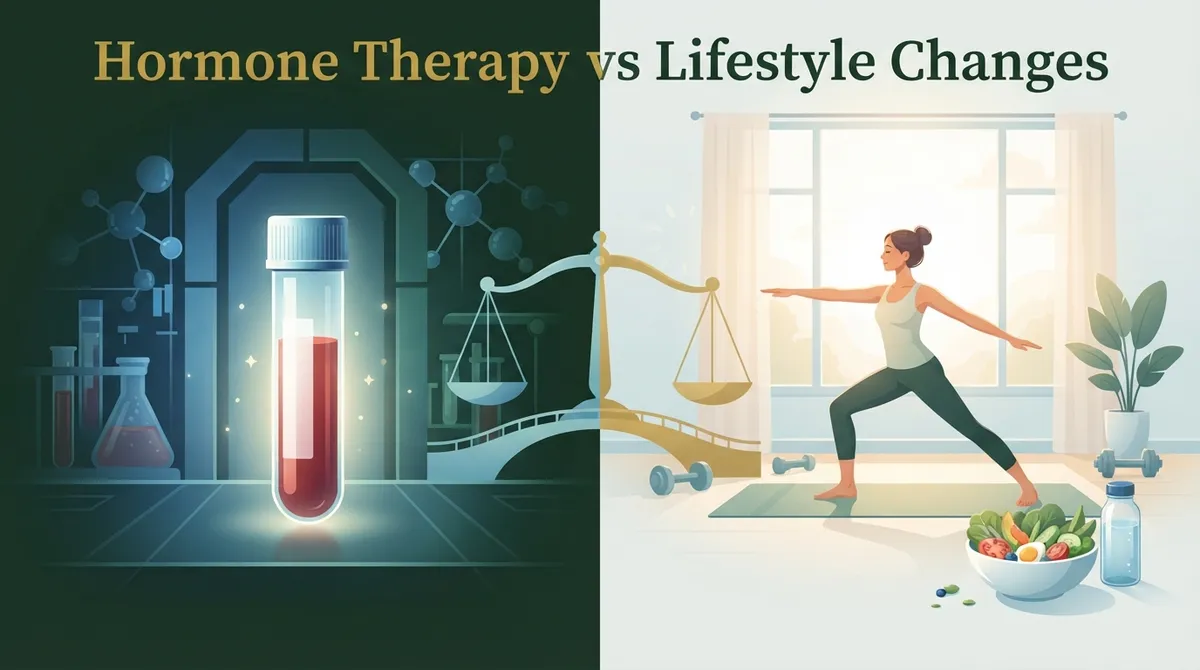
Key Takeaways
-
Diagnosis through blood work must come before treatment—symptoms like fatigue overlap many conditions, so testing confirms whether hormone levels are actually the problem and guides whether you need therapy or lifestyle changes.
-
For menopause symptoms like hot flashes and night sweats, hormone therapy is the most effective treatment according to The Menopause Society; lifestyle changes alone are often insufficient for significant symptom relief.
-
Weight loss of 5 kg correlates with roughly 1 nmol/L testosterone increase in men, but results vary widely and lifestyle changes may not fully normalize hormone levels for everyone without additional treatment.
-
Peptide therapy is not a proven substitute for hormone therapy—most wellness peptides lack FDA approval and human clinical evidence, so it should only complement medically-supervised care, never replace it.
If you’ve been feeling tired, foggy, or just not like yourself, you’ve probably wondered: should I fix this with lifestyle changes, or do I need actual hormone therapy? It’s a fair question, and honestly, one of the most common ones we hear. The good news is you don’t have to guess. This guide breaks down what science actually says about hormone therapy vs lifestyle changes, so you can make a smart, confident choice for your body.
We’ll walk through real data, honest comparisons, and where peptide therapy fits into the picture. No hype, no scare tactics. Just clear facts to help you feel good about your next step. Let’s dig in.
1. Hormone Therapy Isn’t One-Size-Fits-All
First things first: “hormone therapy” isn’t a single treatment. It could mean estrogen and progesterone for menopause symptoms. It could mean testosterone for confirmed low levels in men. Or it could mean a clinician-guided plan built around your specific blood work and goals.
This matters because the right comparison between hormone therapy and lifestyle changes depends entirely on your diagnosis. A woman managing hot flashes has different needs than a man with fatigue from low testosterone. That’s why guessing at solutions rarely works, and why testing comes first.
At Allura Longevity, every plan starts with LabCorp blood work, so your provider knows exactly what’s happening in your body before recommending anything. If you’re curious what this looks like from the very beginning, this guide on how to know if you need hormone therapy in 2026 is a great starting point.
Why Diagnosis Comes Before Treatment
You can’t treat what you haven’t measured. Symptoms like fatigue, low mood, and weight gain overlap across many conditions. Proper lab testing rules out other causes and confirms whether hormone levels are actually the problem.

2. Lifestyle Changes Can Help, But They Have Limits
Here’s something encouraging: lifestyle changes really can move the needle, especially for men with obesity-related low testosterone. A 2025 review found that diet-related weight loss averaging 9.8% was linked to an average testosterone increase of about 84 ng/dL.
Even more specific, a meta-analysis of 22 studies involving 567 men found that every 5 kg of weight lost was tied to roughly a 1 nmol/L rise in total testosterone. That’s a meaningful connection between your waistline and your hormone panel.
But here’s the catch: results vary a lot from person to person. Lifestyle changes may not fully normalize hormone levels or resolve symptoms for everyone. The American Urological Association guideline recommends counseling men about weight loss and activity, but it’s a supportive step, not a guaranteed fix, and it carries what’s called a “conditional” recommendation with Grade B evidence.
Practical Lifestyle Steps That Support Hormone Health
- Aim for gradual, sustainable weight loss rather than crash dieting.
- Add strength training two to three times a week to support muscle and metabolism.
- Prioritize seven to nine hours of quality sleep each night.
- Cut back on alcohol and quit smoking, both of which affect hormone balance.
- Manage stress, since chronic stress raises cortisol and can suppress other hormones.
These habits are worth building no matter what. Combined with a personalized plan, they can amplify your results. Our article on how to raise testosterone naturally in 2026 goes deeper into this topic.
3. For Menopause Symptoms, Hormone Therapy Often Wins
When it comes to hot flashes, night sweats, and vaginal dryness during menopause, lifestyle changes alone often aren’t enough. The Menopause Society’s 2022 position statement is clear: hormone therapy is the most effective treatment for these symptoms in appropriate patients. It can also help prevent bone loss and fracture.
That doesn’t mean lifestyle habits don’t matter. Exercise, a healthy diet, and quitting smoking all support overall health and can ease some symptoms. But for many women, they simply aren’t a substitute for hormone therapy when symptoms are significant.
If you’re navigating this stage of life, our guide on how to treat perimenopause symptoms safely in 2026 covers what to expect and how personalized care can help.
Comparing Hormone Therapy and Lifestyle Changes by Goal
| Health Goal | Lifestyle Changes Alone | Hormone Therapy |
|---|---|---|
| Obesity-related low testosterone | Can raise levels moderately with weight loss | May be needed if deficiency persists after weight loss |
| Menopause hot flashes | Mild symptom support | Most effective treatment for appropriate patients |
| Bone density protection | Helps with weight-bearing exercise | Proven to prevent bone loss in appropriate contexts |
| Energy and mental clarity | Improves with sleep, diet, exercise | May resolve symptoms tied to confirmed deficiency |
4. Peptide Therapy Is Not a Proven Substitute for Hormone Treatment
This is an important one, and we want to be upfront about it. Peptide therapy is not a single, established alternative to hormone therapy or lifestyle changes. Some peptides are FDA-approved medicines for specific uses. Many others marketed for wellness or anti-aging lack FDA approval for those claims and have limited human research behind them.
Take BPC-157, for example. It’s a popular peptide in wellness circles, but it is not FDA-approved, and there isn’t reliable human clinical evidence confirming its safety or effectiveness. You can learn more in our detailed breakdown of 9 BPC-157 peptide facts to know before you start.
Regulatory reporting has also flagged safety concerns for certain compounded peptides, including limited human safety data and potential impurity issues. If you want to understand this landscape better, check out FDA-approved vs. compounded peptides: what wins. According to what are peptides, these short chains of amino acids can influence many body processes, but that doesn’t mean every peptide product on the market is safe or proven.
So where does peptide therapy actually fit? It can be a valuable complement to hormone care and lifestyle habits, when it’s medically supervised and based on your labs. Think of it as one tool among several, not a magic replacement for anything else.
What Peptide Therapy Can Realistically Support
- Energy and mental clarity when paired with proper lab monitoring
- Muscle recovery and metabolism support alongside healthy habits
- Skin rejuvenation and general wellness goals
- Sexual wellness concerns, when appropriate for your health profile
- Weight management support through GLP-1 medications under medical supervision
For a broader look at how peptides and hormone therapy relate to one another, our article on hormone therapy vs. peptide therapy: which wins is worth a read.
5. The Smartest Path Combines Testing, Lifestyle, and Personalized Care
Here’s the honest truth: it’s rarely “hormone therapy vs lifestyle changes” as an either-or choice. The best approach usually blends both, guided by real lab data and a licensed provider who knows your history.
A sound plan starts with assessing your symptoms, reviewing your medical history, and running appropriate lab tests. From there, your provider weighs the benefits, risks, and your personal preferences before recommending anything. Lifestyle changes can complement hormone treatment beautifully, but neither should delay evaluation of symptoms that could point to something more significant.
This is exactly the model Allura Longevity follows. Every client starts with a simple $50 virtual consultation, then completes blood work through LabCorp. From there, licensed providers, led by board-certified Family Nurse Practitioner Ashley, build a personalized six-month treatment plan. Everything ships straight to your door, and your plan gets adjusted along the way based on how your body responds.
If you want to see what this process looks like from start to finish, take a look at how to start peptide therapy safely and see real results. And for those weighing the convenience factor, local clinic vs. telehealth: best peptide therapy near you breaks down why so many people are choosing virtual care.
Steps to Take Before Starting Any Treatment
- Get comprehensive blood work to identify actual hormone levels.
- Discuss your symptoms honestly with a licensed provider.
- Try foundational lifestyle changes if appropriate for your situation.
- Review evidence-based treatment options, including hormone therapy or supportive peptide therapy.
- Schedule regular follow-ups to monitor progress and adjust your plan.
Research from the National Library of Medicine reinforces that personalized, evidence-based care leads to better outcomes than one-size-fits-all approaches. That’s the whole philosophy behind Allura’s model.
Finding Your Best Path Forward
Choosing between hormone therapy and lifestyle changes doesn’t have to feel overwhelming. With the right testing and a provider who actually listens, you can build a plan that fits your body, your goals, and your schedule. Lifestyle habits lay the foundation. Hormone therapy and supportive peptide protocols can fill in the gaps when needed.
Allura Longevity makes this process simple with nationwide telehealth care, personalized six-month plans, and ongoing support from licensed providers. Spots are limited each month, so if you’re ready to feel like yourself again, don’t wait too long. Request a consultation today and take the first step toward a plan built just for you. You can also call (813) 510-6277 to speak with our team directly.
FAQs
Q: What is the difference between hormone therapy and lifestyle changes?
A: Hormone therapy directly addresses confirmed deficiencies through clinician-guided treatment, while lifestyle changes support overall health and may improve some hormone levels naturally. They often work best together rather than as an either-or choice, and the right combo really depends on your specific labs and symptoms.
Q: Can lifestyle changes increase testosterone naturally?
A: Yes, especially if weight loss is involved. Studies show meaningful testosterone increases tied to weight loss in men with obesity-related low levels, though results vary and may not fully resolve symptoms for everyone.
Q: Can weight loss improve low testosterone?
A: It can, particularly for men with obesity-related hypogonadism. Research shows about a 1 nmol/L testosterone increase for every 5 kg lost, but weight loss alone doesn’t always normalize levels completely.
Q: Is hormone therapy more effective than lifestyle changes for menopause symptoms?
A: For many women, yes. The Menopause Society identifies hormone therapy as the most effective treatment for hot flashes and related symptoms, though healthy lifestyle habits still support overall wellbeing during this transition.
Q: Can peptide therapy replace hormone replacement therapy?
A: Not as a proven substitute. Peptide therapy can be a helpful complement when medically supervised, but it shouldn’t be viewed as a direct replacement for evidence-based hormone treatment without proper diagnosis and monitoring.





